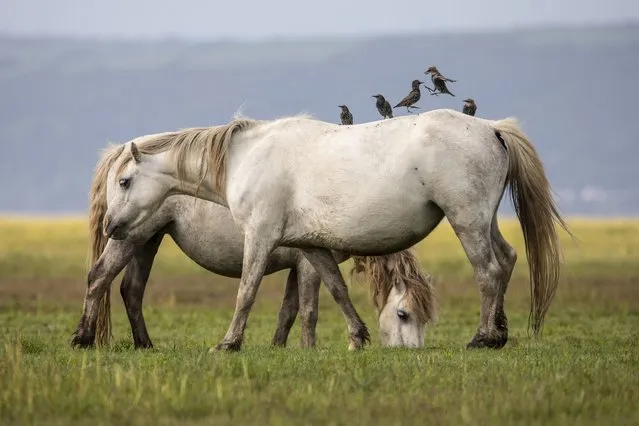
Semi-feral, conservation ponies, graze on the salt marsh's of Gower, Swansea, Wales, United Kingdom on September 7, 2022. (Photo by Joann Randles/Cover Images)
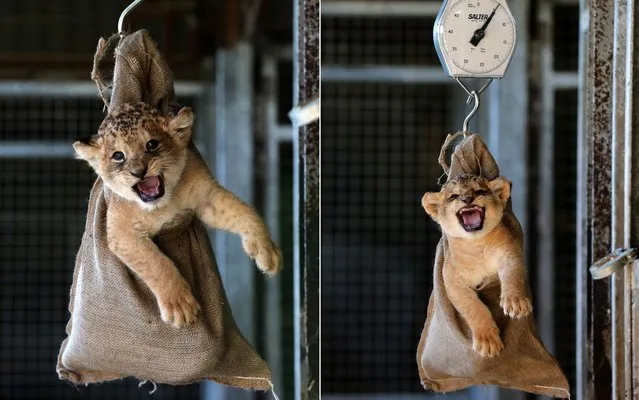
Karis, a one month old lion cub being weighed at Blair Drummond Safari Park near Stirling, Scotland, Thursday October 10, 2013. Weighing in at 5kg, the cub will stay with her mother, Teekay until she is 12 weeks old before they are returned to the pride. (Photo by Andrew Milligan/AP Photo/PA Wire)
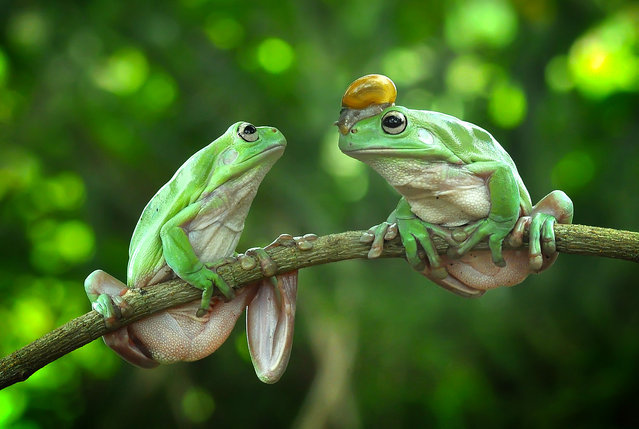
A Australian green tree frog wearing a small turtle as a hat, keeping its head dry during its swim in Padang West Sumatra, Indonesia in May 2023. The Australian green tree frog grows up to 11 centimetres tall, the males being smaller that the females. They can live to the age of 25 and their colour alters between green, brown and blue depending on their mood. (Photo by Yan Hidayat/Media Drum Images)
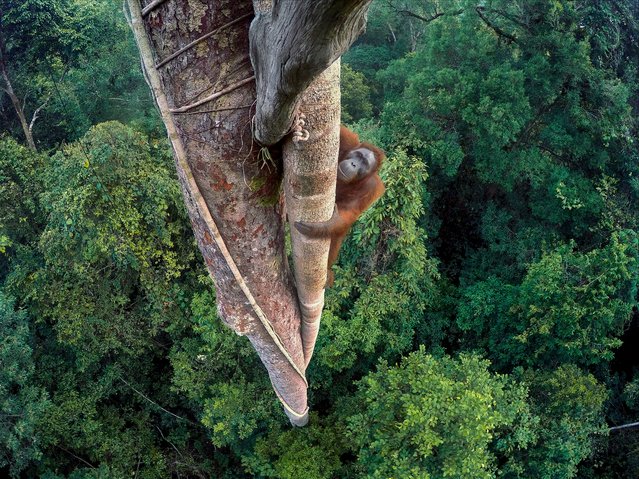
“Entwined Lives”. Tim Laman, US Winner, Wildlife photographer of the year. A young male orangutan makes the 30-metre climb up the thickest root of the strangler fig high above the canopy in Gunung Palung national park, one of the few protected orangutan strongholds in Indonesian Borneo. Laman had to do three days of climbing to position several GoPro cameras that he could trigger remotely. This shot was the one he had long visualised, looking down on the orangutan within its forest home. (Photo by Tim Laman/2016 Wildlife Photographer of the Year)
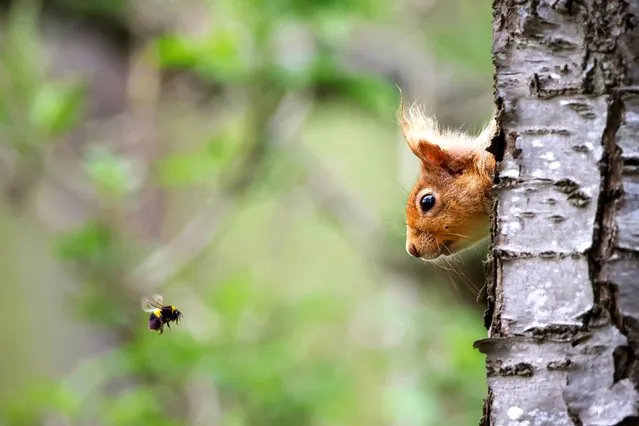
A bee and a red squirrel eyeball each other in the winning entry of the Mammal Society’s annual photography contest, taken by Gary Watson from Dingwall in the Scottish Highlands. (Photo by Gary Watson/Mammal Society/Bav Media)
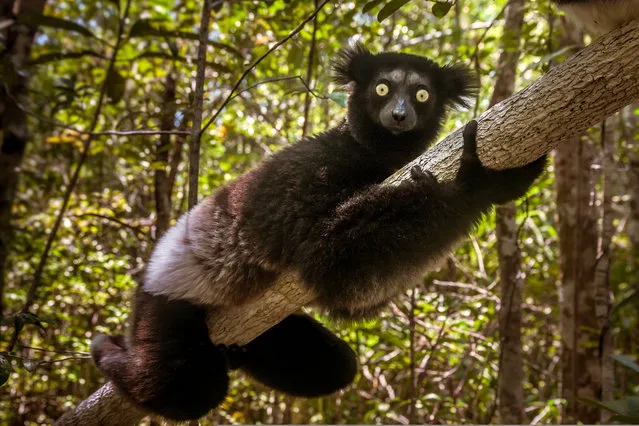
The secretive indri (Indri indri) of Madagascar, the largest living lemur. It is also critically endangered and highly evolutionarily distinct with no close relatives, which makes its branch one of most precarious on the mammal evolutionary tree. In the likely event that the indri goes extinct, we will lose 19m years of unique evolutionary history from the mammal tree of life. (Photo by Pierre-Yves Babelon/Aarhus University)
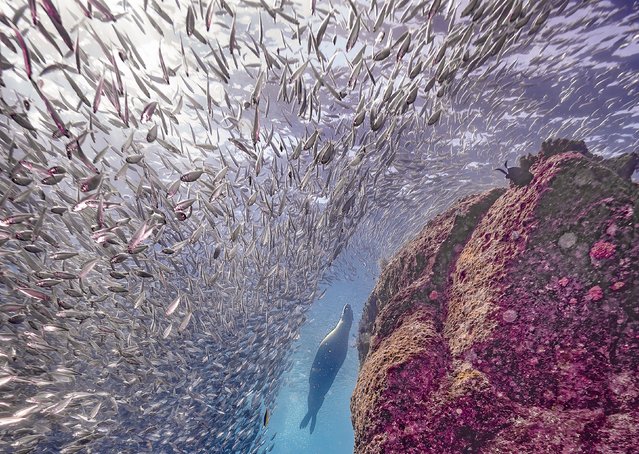
Sea lions make dinner plans in the Gulf of California early July 2024. The gulf is a primary source of sardines and anchovies, two of Mexico’s top marine resources. (Photo by Glenn Ostle/Solent News)
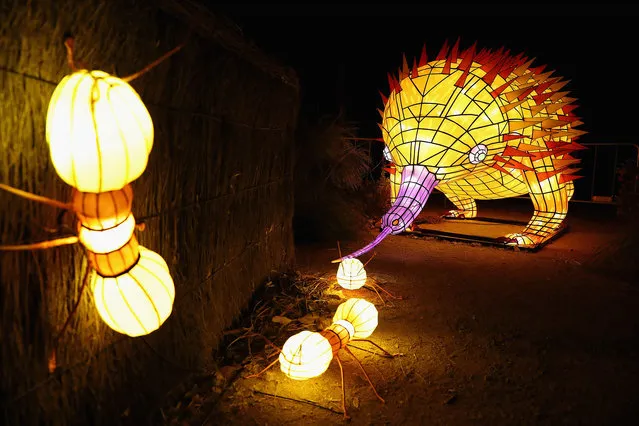
An echidna light sculpture eating ants is displayed during a media preview of Vivid Sydney illuminated displays at Taronga Zoo on May 24, 2016 in Sydney, Australia. Vivid is lighting up at Taronga Zoo for the first time with ten giant animal sculptures representing critical species the zoo is committed to protecting. Held annually, Vivid Sydney is the world's largest festival of light, music and ideas running for 23 days. (Photo by Cameron Spencer/Getty Images)