Norway's Karsten Warholm celebrates winning the men's 400m hurdles at the Diamond League in London, July 21, 2018. (Photo by Andrew Boyers/Action Images via Reuters)
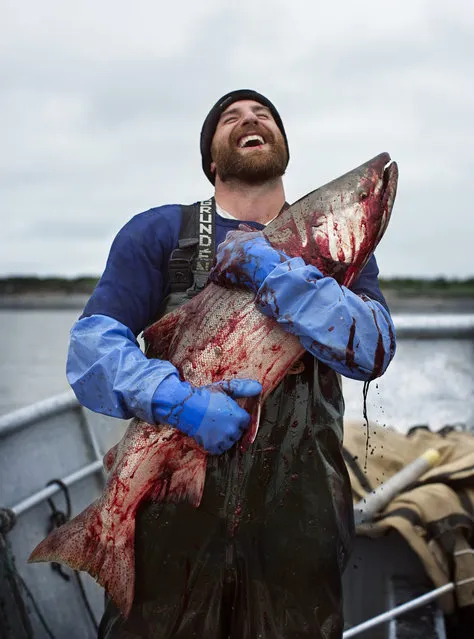
Well before Corey Arnold ever thought about photography, he fished. As a child, he dressed as a fisherman for four consecutive Halloweens, and once brought a dead 3-foot Mako shark to school for show-and-tell. He knew he wanted to be a professional fisherman, even if he didn’t understand what that actually meant.
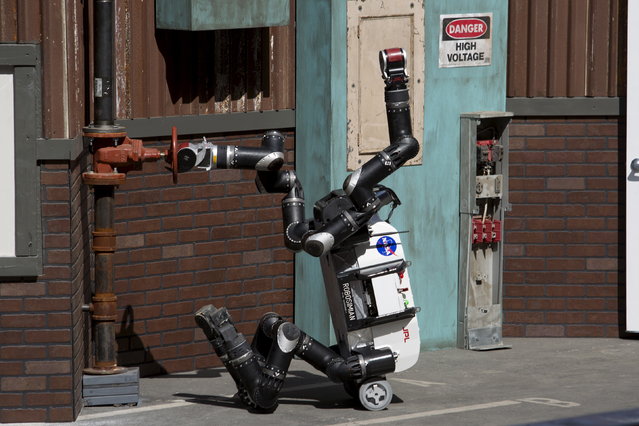
The Jet Propulsion Lab team's RoboSimian robot turns on a valve at a simulated disaster-response course during day one of the Defense Advanced Research Projects Agency (DARPA) Robotics Challenge finals in Pomona, California, June 5, 2015. (Photo by David McNew/Reuters)
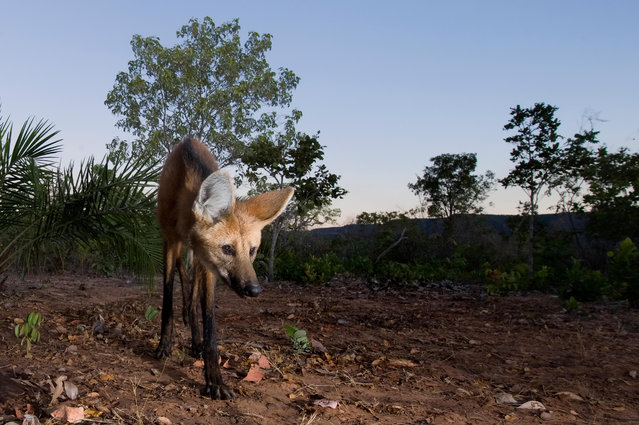
Global wildlife populations will decline by 67% by 2020 unless urgent action is taken to reduce human impact on species and ecosystems, warns the biennial Living Planet Index report from WWF (World Wide Fund for Nature) and ZSL (Zoological Society of London). From elephants to eels, here are some of the wildlife populations most affected by human activity. Here: The maned wolf is among the large mammals in the Brazilian Cerrado that are threatened by the increasing conversion of grasslands into farmland for grazing and growing crops. (Photo by Ben Cranke/Nature Picture Library/Alamy Stock Photo)
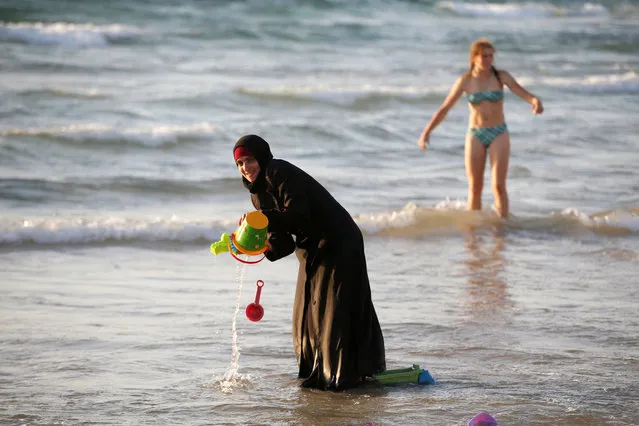
A Muslim woman wearing a Hijab stands in the waters in the Mediterranean Sea as an Israeli stands nearby on the beach in Tel Aviv, Israel August 21, 2016. (Photo by Baz Ratner/Reuters)
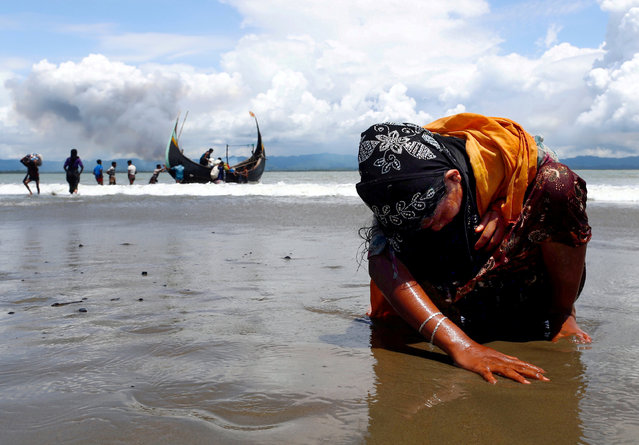
An exhausted Rohingya refugee woman touches the shore after crossing the Bangladesh-Myanmar border by boat through the Bay of Bengal, in Shah Porir Dwip, Bangladesh, September 11, 2017. (Photo by Danish Siddiqui/Reuters)
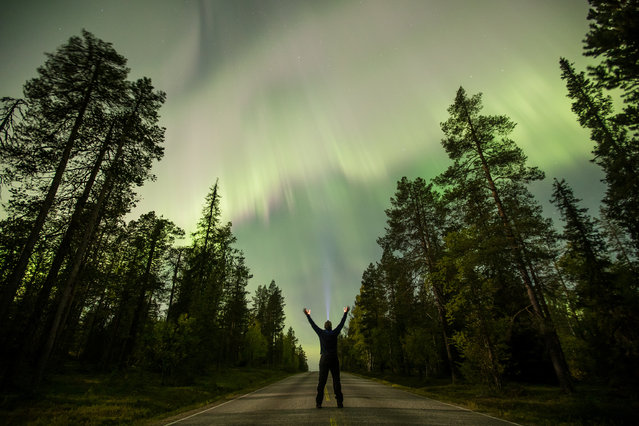
The Aurora Borealis (Northern Lights) lights up the sky near the village of Pallas (Muonio region) of Lapland, Finland September 8, 2017. (Photo by Alexander Kuznetsov/Reuters/All About Lapland)