Loading...
Done
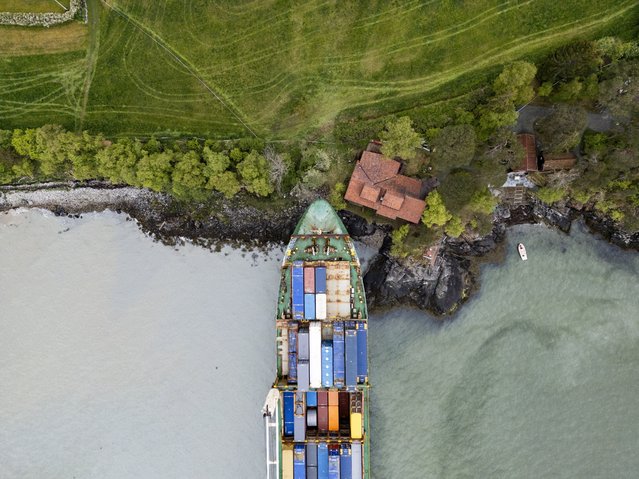
The container ship NCL Salten ran aground at Byneset, outside Trondheim, Norway. A man in Norway woke up to find a massive container ship in his front garden. The 135-metre (443-foot) vessel missed Johan Helberg's house by a few metres at around 5am local time on Thursday, May 22, 2025 in Byneset, near Trondheim. Mr. Helberg was only made aware of the incident after his panicked neighbour, who had seen the ship heading straight for shore, repeatedly rang his doorbell and eventually called him on the phone. (Photo by South West News Service)

The container ship NCL Salten ran aground at Byneset, outside Trondheim, Norway. A man in Norway woke up to find a massive container ship in his front garden. The 135-metre (443-foot) vessel missed Johan Helberg's house by a few metres at around 5am local time on Thursday, May 22, 2025 in Byneset, near Trondheim. Mr. Helberg was only made aware of the incident after his panicked neighbour, who had seen the ship heading straight for shore, repeatedly rang his doorbell and eventually called him on the phone. (Photo by South West News Service)
Details
07 Jul 2025 03:32:00
Larissa Neto, a muse of the Unidos da Tijuca Samba School, poses as she wears a carnival dress in Sao Goncalo near Rio de Janeiro, Brazil, February 3, 2016. (Photo by Ricardo Moraes/Reuters)

Larissa Neto, a muse of the Unidos da Tijuca Samba School, poses as she wears a carnival dress in Sao Goncalo near Rio de Janeiro, Brazil, February 3, 2016. Rio de Janeiro's carnival parades are known the world over for the glitz and glamour, high-tech allegorical floats and shimmering bodies, which battle it out each year for the championship title. Each school is fronted by the Queen of the Drums, who dances alongside the raging percussion, and her court of sparkling, sculpted dancers known as “muses”. (Photo by Ricardo Moraes/Reuters)
Details
05 Feb 2016 10:52:00
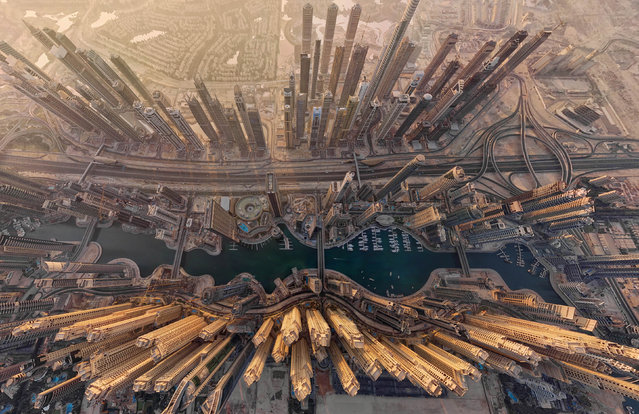
Dubai. (Photo by Airpano/Caters News)

These are the stunning panoramic shots of some of the worlds most beautiful locations. Company AirPano travel the world photographing its wonders from above. Their shots include famous cities – such as New York, Paris and Barcelona – as well as natural marvels, like volcanoes and waterfalls. The team, which consists of 12 members – nine photographers and three tech specialists – began looking into this style of photography in 2006. Project coordinator Sergey Semenov revealed after initially working with spherical panoramas on land, the group decided to take to the skies. They made a list of the 100 Best Places on the Planet, which they hoped to photograph over the coming years. Here: Dubai. (Photo by Airpano/Caters News)
Details
20 Mar 2015 11:23:00
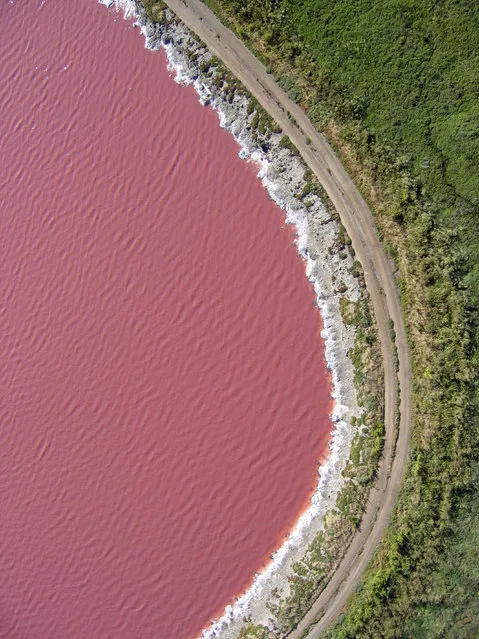
Aerial view of the salt ponds in San Francisco, California. (Photo by Cris Benton/Caters News)

These spectacular landscapes may look like something from another planet – but they are in fact colorful salt ponds which stretch for miles. Despite being better known for tech companies and expensive property – San Francisco, California is also home to this vibrant quilt of color spanning the South Bay Area. From eerie green pools to gothic shades of red the surreal landscapes are caused by the organisms or micro-algae living within them. Photo: Aerial view of the salt ponds in San Francisco, California. (Photo by Cris Benton/Caters News)
Details
02 Jul 2014 10:18:00


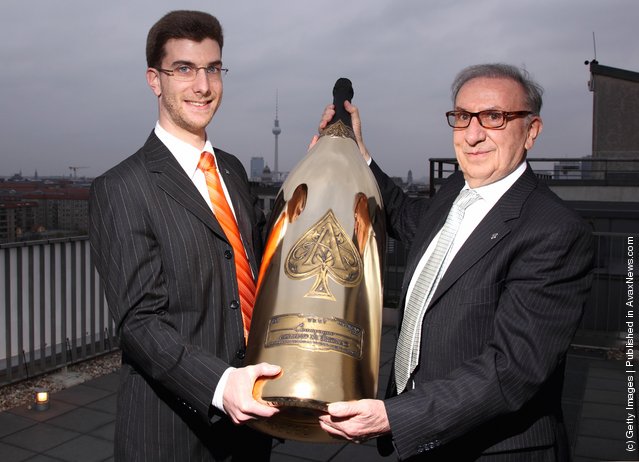
(R-L) Jean-Jacques Cattier and his son Alexandre Cattier pose with the world largest bottle of Champagne “The Midas” by Armand de Brignac on April 6, 2011 in Berlin, Germany. The Midas is a massive 30-liter vessel and weights exactly 100 pounds. It's like having 40 pieces of the 750ml in one. Number one champagne brand in the world, Armand de Brignac is the luxury Champagne from the award-winning Champagne Cattier chateau of Chigny-les-Roses, France. (Photo by Andreas Rentz/Getty Images)
Details
09 Apr 2011 06:50:00
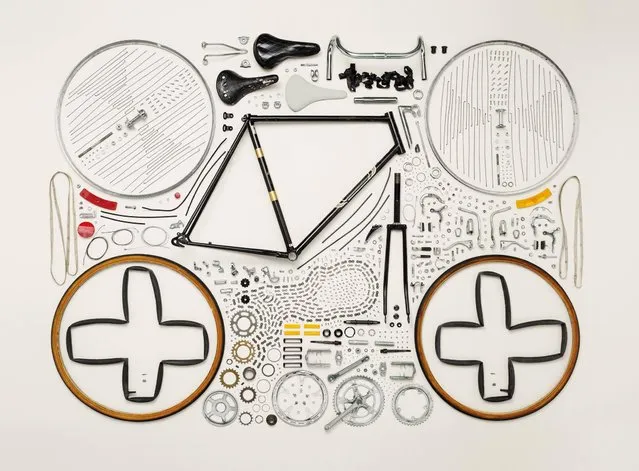
Deconstructed Objects By Todd McLellan

It is simply staggering how complicated some items really are. We never think about it, but some items that we use every day consist of hundreds of parts meticulously put together and working perfectly. Todd McLellan is a photographer who based his newest book “Things Come Apart” on the complexity of various old and new tech. By carefully taking apart various items and arranging all of the parts in perfect order, Todd has allowed us not only to look inside various appliances, but also to appreciate the astounding complexity of these items. Just like the human mind, we are so used to seeing and talking with people that we forget just how complicated their minds really are. It would be great if we could “take apart” the human mind in order to gain some insight into the person’s thoughts and desires. However, very few people are capable of doing it, while the rest will remain blind to the obvious. (Photo by Todd McLellan)
Details
15 Nov 2014 12:30:00
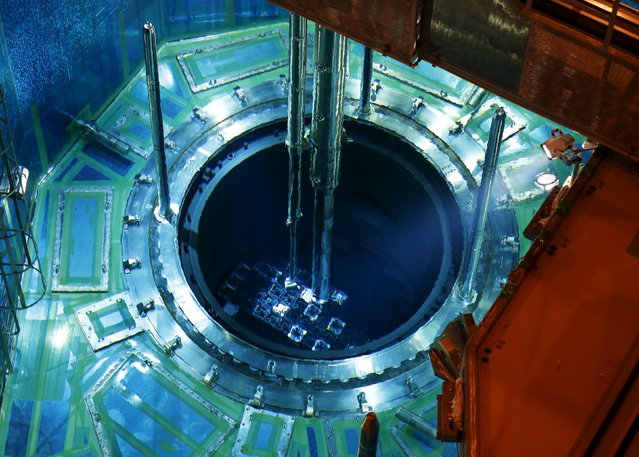
A fuel rod is inserted into a reactor vessel inside the No. 1 reactor building at Kyushu Electric Power's Sendai nuclear power station in Satsumasendai, Kagoshima prefecture, Japan, July 8, 2015. (Photo by Issei Kato/Reuters)

A fuel rod is inserted into a reactor vessel inside the No. 1 reactor building at Kyushu Electric Power's Sendai nuclear power station in Satsumasendai, Kagoshima prefecture, Japan, July 8, 2015. Kyushu Electric Power Co started loading uranium fuel rods into a reactor on Tuesday, marking the first attempt to reboot Japan's nuclear industry in nearly two years after the sector was shutdown following the 2011 Fukushima disaster. (Photo by Issei Kato/Reuters)
Details
09 Jul 2015 11:52:00
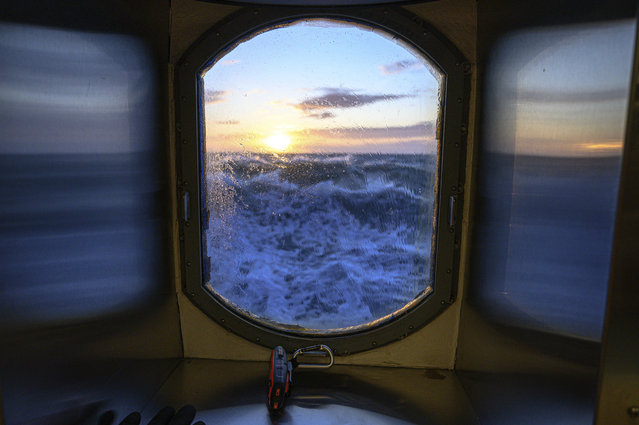
This November 8, 2019, photo provided by John Guillote shows a view from the main lab of the Sikuliaq in the Chukchi Sea. University of Washington scientists onboard the research vessel are studying the changes and how less sea ice will affect coastlines, which already are vulnerable to erosion because increased waves delivered by storms. More erosion would increase the chance of winter flooding in villages and danger to hunters in small boats. (Photo by John Guillote via AP Photo)

This November 8, 2019, photo provided by John Guillote shows a view from the main lab of the Sikuliaq in the Chukchi Sea. University of Washington scientists onboard the research vessel are studying the changes and how less sea ice will affect coastlines, which already are vulnerable to erosion because increased waves delivered by storms. More erosion would increase the chance of winter flooding in villages and danger to hunters in small boats. (Photo by John Guillote via AP Photo)
Details
26 Aug 2021 08:22:00