Loading...
Done
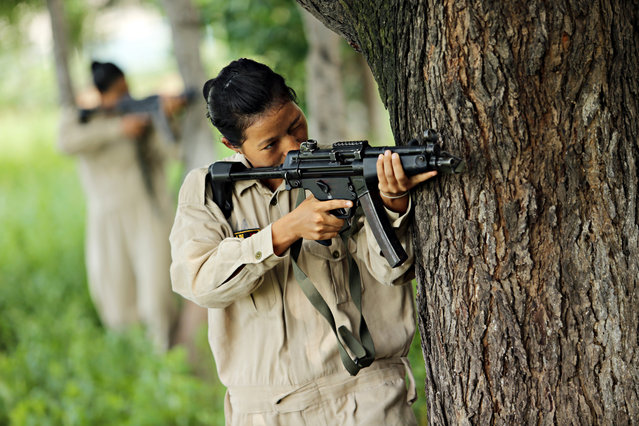
Northeastern girls getting commando training at the Delhi Police Training Centre, Jharoda Kalan on September 4, 2017 in New Delhi, India. (Photo by Manoj Verma/Hindustan Times via Getty Images)

Northeastern girls getting commando training at the Delhi Police Training Centre, Jharoda Kalan on September 4, 2017 in New Delhi, India. For the first time ever, Delhi Police are providing commando training to 40 young women from the Northeast. Once the commando training is over, these girls will be a part of the «Parakram Vans», an initiative taken by Delhi Police against terrorism. (Photo by Manoj Verma/Hindustan Times via Getty Images)
Details
22 Sep 2017 07:27:00
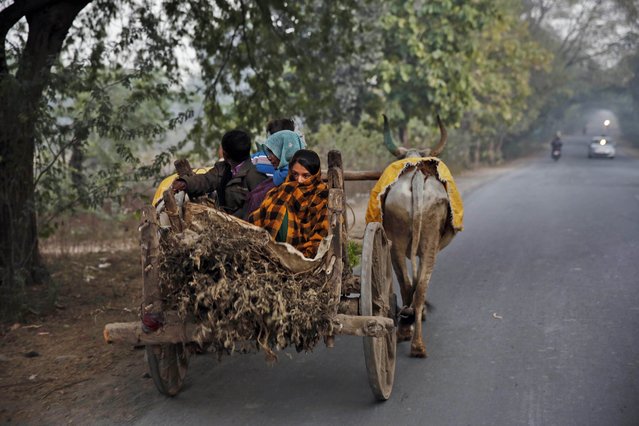
An Indian woman wrapped in a shawl travels with others on a bullock cart on a cold day at Jhansi district, in Bundelkhand, India, Monday, December 29, 2014. Most parts of north India Monday continued to shiver under biting cold with the mercury dipping several notches. (Photo by Rajesh Kumar Singh/AP Photo)

An Indian woman wrapped in a shawl travels with others on a bullock cart on a cold day at Jhansi district, in Bundelkhand, India, Monday, December 29, 2014. Most parts of north India Monday continued to shiver under biting cold with the mercury dipping several notches. (Photo by Rajesh Kumar Singh/AP Photo)
Details
31 Dec 2014 14:11:00
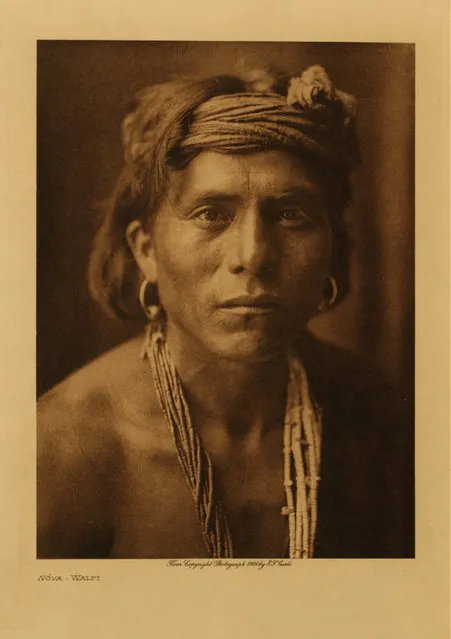
Nova, a Walpi, in 1906. (Photo by Edward S. Curtis)

At the beginning of the 20th century, Edward S. Curtis set out to document what he saw as a disappearing race: the Native American. From 1907 to 1930, Curtis took more than 2,000 photos of 80 tribes stretching from the Great Plains to the Pacific Northwest and Alaska. He then published and sold these photos, along with narrative text, in 20 volumes of work known as “The North American Indian”. It is one of the most significant collections of its kind, “probably the most important photographic document of its age and its topic,” said Jeffrey Garrett, associate university librarian for Special Libraries at Northwestern University. (Photo by Edward S. Curtis)
Details
07 Sep 2014 12:57:00
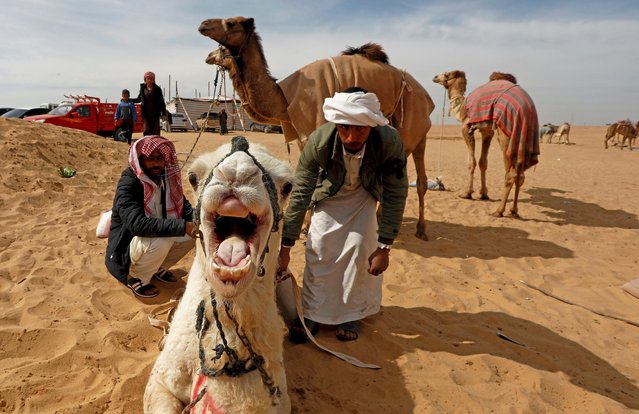
Bedouin breeders fix a robot jockey mounted on a camel before the 18th International Camel Racing festival at the Sarabium desert in Ismailia, Egypt, March 12, 2019. (Photo by Amr Abdallah Dalsh/Reuters)

Bedouin breeders fix a robot jockey mounted on a camel before the 18th International Camel Racing festival at the Sarabium desert in Ismailia, Egypt, March 12, 2019. Several Gulf countries have banned child jockeys from the traditional Bedouin sport after rights groups said the youngsters were often injured and some had been abducted or sold by their families. (Photo by Amr Abdallah Dalsh/Reuters)
Details
21 Mar 2019 00:01:00


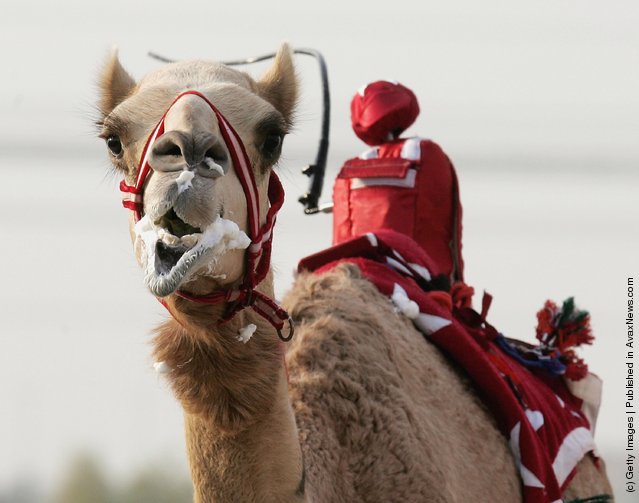
A camel foams at the mouth as he is whipped by a robot jockey during a race at Nad al-Sheba on December 6, 2006 in Dubai, United Arab Emirates. This is the first season that robotic jockeys have been used to race camels in Dubai. Controversially children from India were used to ride the camels in past seasons. These robot jockeys costing 15000GBP and up, were designed in Geneva and include shock absorbers and GPS tracking systems. The camel's owners control them from their speeding four wheel drives at the side of the track. (Photo by Chris Jackson/Getty Images)
Details
01 May 2011 09:01:00
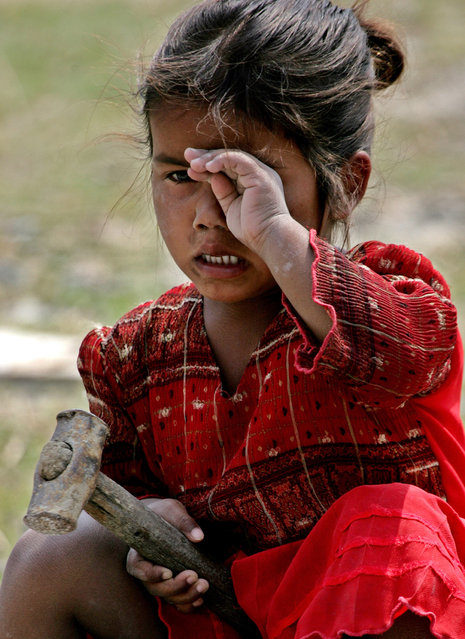
5-year-old Rina Kumari rubs her eye while cracking stones on the banks of Mahananda river in Siliguri, northeast India, March 5, 2005. Over 400 million people in India live below the internationally agreed poverty line (living on less than US $1 per day). According to estimates, several hundred thousand children work as labourers and beg on the streets in India. Photo taken on March 5, 2005. (Photo by Desmond Boylan/Reuters)

5-year-old Rina Kumari rubs her eye while cracking stones on the banks of Mahananda river in Siliguri, northeast India, March 5, 2005. Over 400 million people in India live below the internationally agreed poverty line (living on less than US $1 per day). According to estimates, several hundred thousand children work as labourers and beg on the streets in India. (Photo by Desmond Boylan/Reuters)
Details
13 Jun 2014 12:07:00
A poster for the IMAX presentation of “The Hunger Games: Catching Fire” (left), and a teaser poster for “The Hunger Games: Mockingjay, Part I”, both created by the Los Angeles-based design firm IGNITION. (Photo by Key Art Awards 2014)

A poster for the IMAX presentation of “The Hunger Games: Catching Fire” (left), and a teaser poster for “The Hunger Games: Mockingjay, Part I”, both created by the Los Angeles-based design firm IGNITION. Both are nominated for the 2014 Key Art Awards in the category of Theatrical Domestic One-Sheet. The Hollywood Reporter's annual competition for the best in film and TV advertising honors some of the most creative imagery used in movie posters. Here is a selection of some of this year's nominees. (Photo by Key Art Awards 2014)
Details
08 Oct 2014 12:25:00
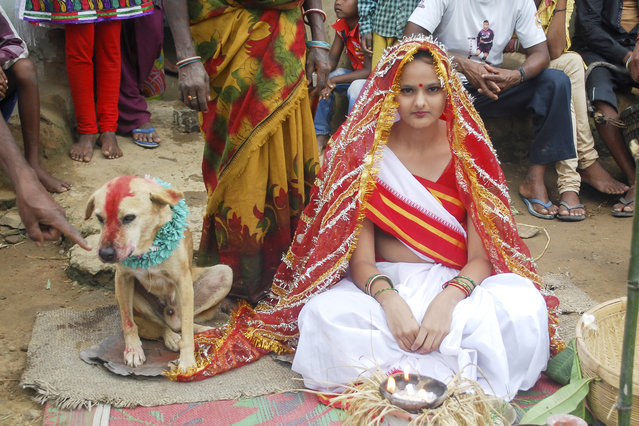
Mangli Munda poses on her wedding day with a stray dog in Jharkhand, India on August 30, 2014. An 18-year-old Indian girl has married a stray dog as a part of a tribal ritual designed to ward off an evil spell. (Photo by Barcroft Media/ABACAPress)

Mangli Munda poses on her wedding day with a stray dog in Jharkhand, India on August 30, 2014. An 18-year-old Indian girl has married a stray dog as a part of a tribal ritual designed to ward off an evil spell. Village elders hastily organised the wedding between Mangli Munda and the canine as the teenager is believed to be bringing bad luck to her community in a remote village in Jharkhand state. Mangli's father Sri Amnmunda agreed and even found a stray dog named Sheru as a match for his daughter. And while Mangli was a hesitant bride, she believes that the ceremony will help ensure that her future human husband will have a long life. (Photo by Barcroft Media/ABACAPress)
Details
04 Sep 2014 08:31:00