Loading...
Done
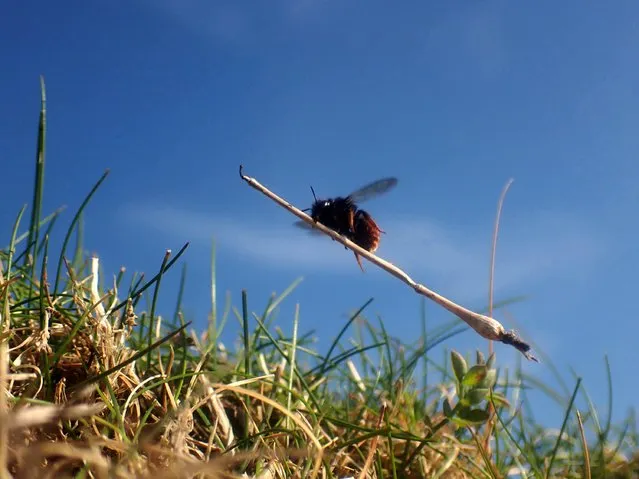
Undated BBC handout photo of a female two-coloured Mason Bee carrying a dried grass stalk back to her snail-shell nest on the British Isles in the latest episode of Sir David Attenborough's Wild Isles series. Issue date: Sunday March 26, 2023. (Photo by John Walters/Silverback Films/BBC/PA Wire)

Undated BBC handout photo of a female two-coloured Mason Bee carrying a dried grass stalk back to her snail-shell nest on the British Isles in the latest episode of Sir David Attenborough's Wild Isles series. Issue date: Sunday March 26, 2023. (Photo by John Walters/Silverback Films/BBC/PA Wire)
Details
31 Mar 2023 04:13:00
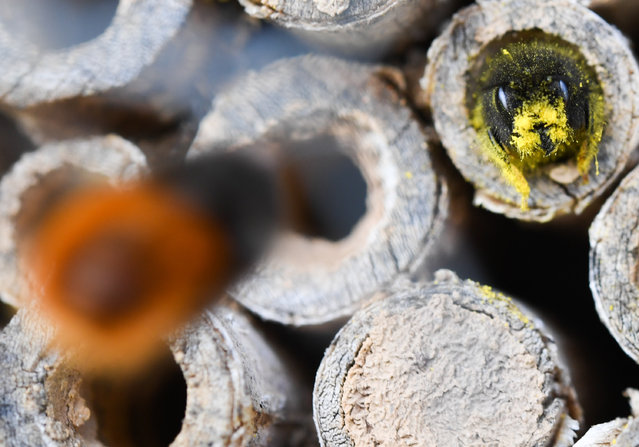
A mason bee deposits its collected pollen in an elderberry stick near Hessen, Germany on March 27, 2020. The food supply is sufficient for the eleven-month development of the brood from the egg to the finished bee. Wild bees are active in March and April and die before their offspring hatch. (Photo by Arne Dedert/dpa)

A mason bee deposits its collected pollen in an elderberry stick near Hessen, Germany on March 27, 2020. The food supply is sufficient for the eleven-month development of the brood from the egg to the finished bee. Wild bees are active in March and April and die before their offspring hatch. (Photo by Arne Dedert/dpa)
Details
22 Jul 2020 00:03:00
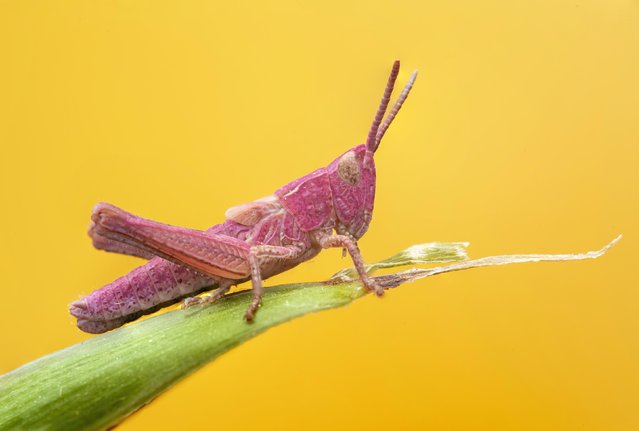
A pink grasshopper is spotted at the Messingham Sand Quarry in Scunthorpe, Lincolnshire, UK in the second decade of July 2023. The dazzling creature is incredibly rare, with experts estimating that a person has a chance of about 1 per cent of seeing one in their lifetime. (Photo by Calvin Taylor Lee/Animal News Agency)

A pink grasshopper is spotted at the Messingham Sand Quarry in Scunthorpe, Lincolnshire, UK in the second decade of July 2023. The dazzling creature is incredibly rare, with experts estimating that a person has a chance of about 1 per cent of seeing one in their lifetime. (Photo by Calvin Taylor Lee/Animal News Agency)
Details
05 Sep 2023 03:43:00
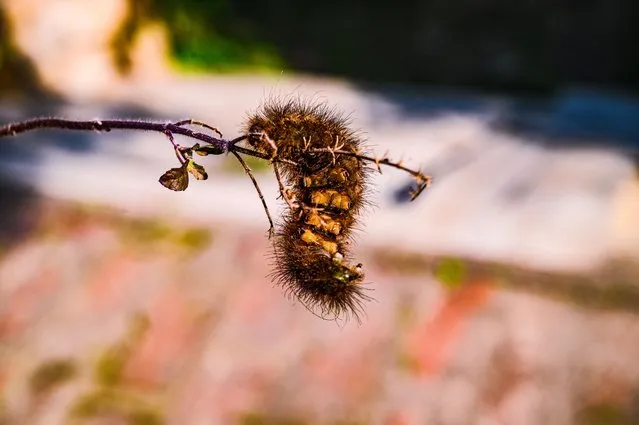
A fuzzy caterpillar on a basil plant in west Bengal, India on December 25, 2023. The caterpillar’s defence system is its hair, which has microscopic barbs that break off easily in the skin of would-be predators. (Photo by Soumyabrata Roy/NurPhoto/Rex Features/Shutterstock)

A fuzzy caterpillar on a basil plant in west Bengal, India on December 25, 2023. The caterpillar’s defence system is its hair, which has microscopic barbs that break off easily in the skin of would-be predators. (Photo by Soumyabrata Roy/NurPhoto/Rex Features/Shutterstock)
Details
09 Feb 2024 10:47:00
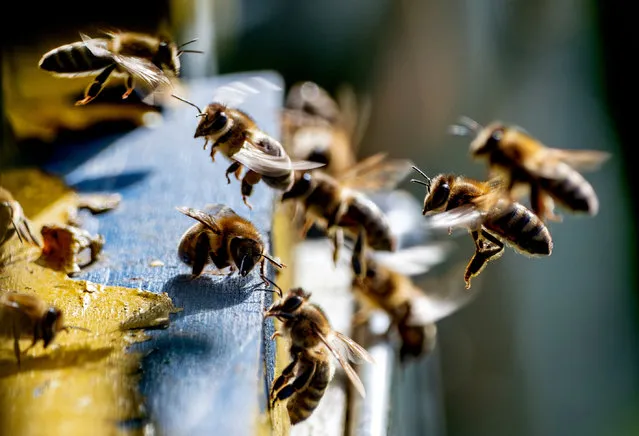
Bees fly in front of a beehive in the outskirts of Frankfurt, Germany, Monday, April 8, 2024. (Photo by Michael Probst/AP Photo)

Bees fly in front of a beehive in the outskirts of Frankfurt, Germany, Monday, April 8, 2024. (Photo by Michael Probst/AP Photo)
Details
22 Apr 2024 04:16:00
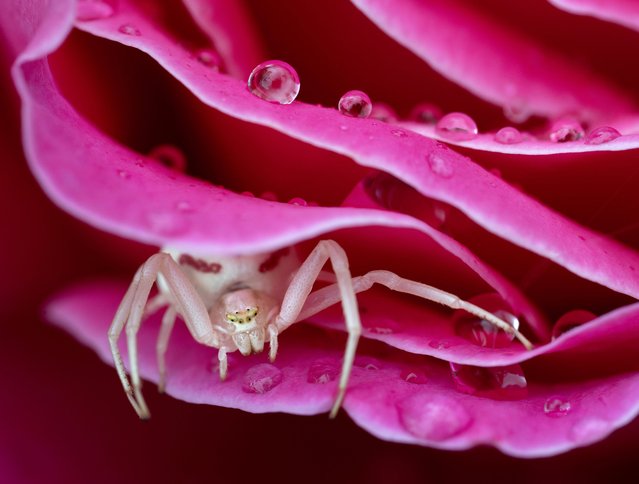
A white crab spider hides between the petals of a rain spotted rose blossom in the garden of a home near Oakland in southwestern Oregon on August 23, 2024. Crab spiders are ambush predators and wait patiently for their prey to approach. (Photo by Robin Loznak/ZUMA Press Wire/Rex Features/Shutterstock)

A white crab spider hides between the petals of a rain spotted rose blossom in the garden of a home near Oakland in southwestern Oregon on August 23, 2024. Crab spiders are ambush predators and wait patiently for their prey to approach. (Photo by Robin Loznak/ZUMA Press Wire/Rex Features/Shutterstock)
Details
31 Aug 2024 03:16:00
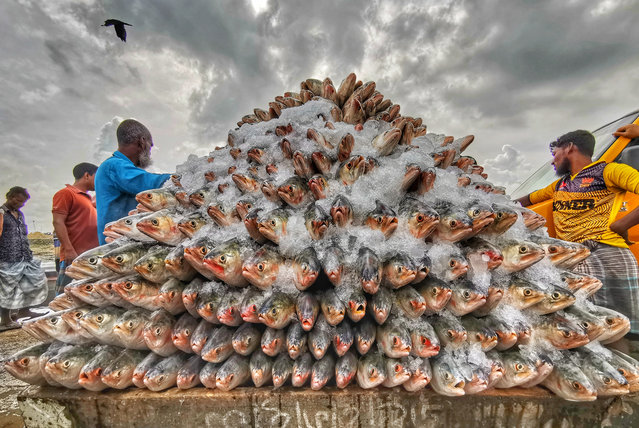
On the phone – Fishes of Hilsa by Azim Khan Ronnie. (Photo by Azim Khan Ronnie/Pink Lady Food Photographer Award 2020)

A selection of winning images from the Pink Lady food photographer of the year awards. Here: On the phone – Fishes of Hilsa by Azim Khan Ronnie. (Photo by Azim Khan Ronnie/Pink Lady Food Photographer Award 2020)
Details
03 May 2020 00:03:00
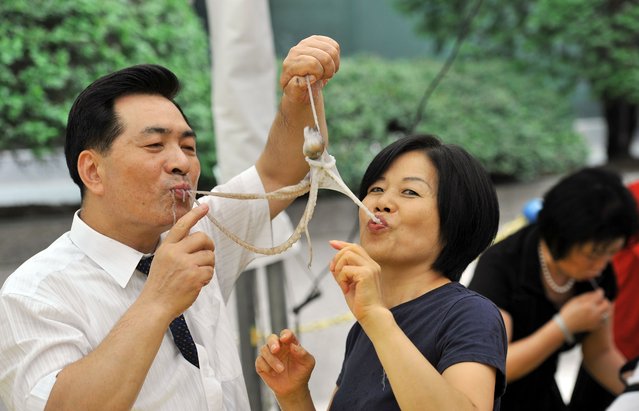
A South Korean man and a woman eat a live octopus during an event to promote a local food festival in Seoul on September 12, 2013. (Photo by Jung Yeon-Je/AFP Photo)

Live octopus is a delicacy in South Korea but is a known choking hazard, since the still-moving suction cups can cause tentacle pieces to stick in a person's throat. A baby octopus is often consumed whole, while larger varieties are cut up and the still-wriggling tentacles eaten with a splash of sesame oil. Photo: A South Korean man and a woman eat a live octopus during an event to promote a local food festival in Seoul on September 12, 2013. (Photo by Jung Yeon-Je/AFP Photo)
Details
13 Sep 2013 09:40:00