Loading...
Done
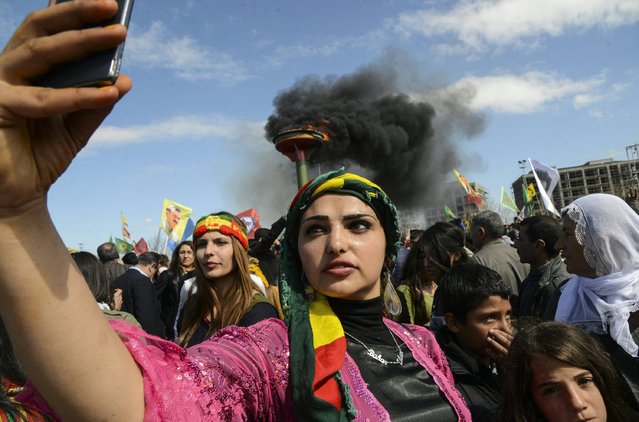
A woman takes a selfie picture as Turkish Kurds gather as part of Newroz celebrations in Diyarbakir, on March 21, 2016. Nowruz, the Farsi-language word for “New Year”, is an ancient Persian festival, celebrated on the first day of spring, on March 21, in Central Asian republics, Iraq, Turkey, Afghanistan and Iran. (Photo by Ilyas Akengin/AFP Photo)

A woman takes a selfie picture as Turkish Kurds gather as part of Newroz celebrations in Diyarbakir, on March 21, 2016. Nowruz, the Farsi-language word for “New Year”, is an ancient Persian festival, celebrated on the first day of spring, on March 21, in Central Asian republics, Iraq, Turkey, Afghanistan and Iran. (Photo by Ilyas Akengin/AFP Photo)
Details
10 Apr 2016 11:58:00
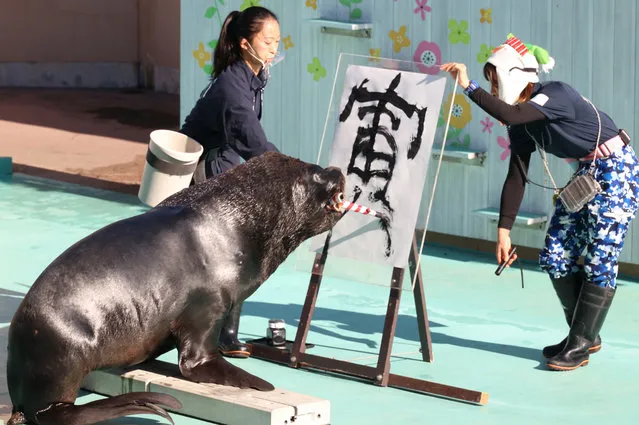
A male sea lion Leo writes the word of tiger in Chinese character at a New Year's attraction to celebrate the Year of the Tiger at the Hakkeijima Sea Paradise aquarium in Yokohama, suburban Tokyo on Monday, January 3, 2022. The calligraphy attraction by the sea lion will be carried through January 31. (Photo by Yoshio Tsunoda/AFLO/Rex Features/Shutterstock)

A male sea lion Leo writes the word of tiger in Chinese character at a New Year's attraction to celebrate the Year of the Tiger at the Hakkeijima Sea Paradise aquarium in Yokohama, suburban Tokyo on Monday, January 3, 2022. The calligraphy attraction by the sea lion will be carried through January 31. (Photo by Yoshio Tsunoda/AFLO/Rex Features/Shutterstock)
Details
04 Jan 2022 07:54:00
Australian cosplay enthusiast Sunni Daniele dressed up as his favourite character from either animation, comic or video game poses for a photograph during Oz Comic Con in Sydney, Australia, 27 September 2015. Cosplay is a combination of the words 'costume' and 'play' where fans dress up as their favourite Japanese comic characters. (Photo by Dan Himbrechts/EPA)

Australian cosplay enthusiast Sunni Daniele dressed up as his favourite character from either animation, comic or video game poses for a photograph during Oz Comic Con in Sydney, Australia, 27 September 2015. Cosplay is a combination of the words 'costume' and 'play' where fans dress up as their favourite Japanese comic characters. (Photo by Dan Himbrechts/EPA)
Details
29 Sep 2015 08:07:00
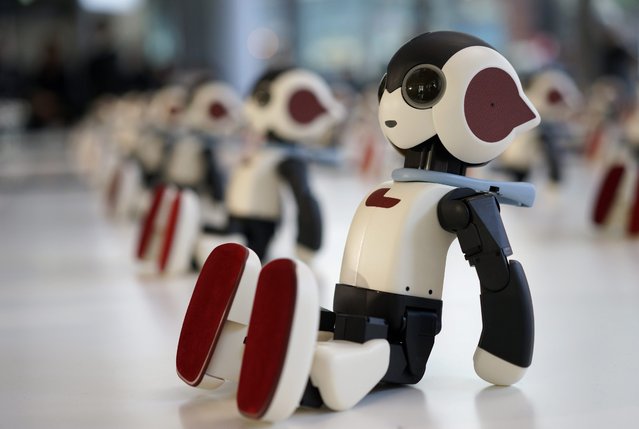
A humanoid robot named “Robi” sits during a promotional event for the launch of a weekly Robi Magazine in Tokyo, Japan, 20 January 2015. Created by roboticist Tomotaka Takahashi, the 34-centimeter tall humanoid robot can recognize and respond to more than 200 words and phrases, walk and dance. (Photo by Franck Robichon/EPA)

A humanoid robot named “Robi” sits during a promotional event for the launch of a weekly Robi Magazine in Tokyo, Japan, 20 January 2015. Created by roboticist Tomotaka Takahashi, the 34-centimeter tall humanoid robot can recognize and respond to more than 200 words and phrases, walk and dance. Parts of the robot will be put on sale in a weekly magazine to be fully assembled with 70 issues. (Photo by Franck Robichon/EPA)
Details
21 Jan 2015 13:19:00


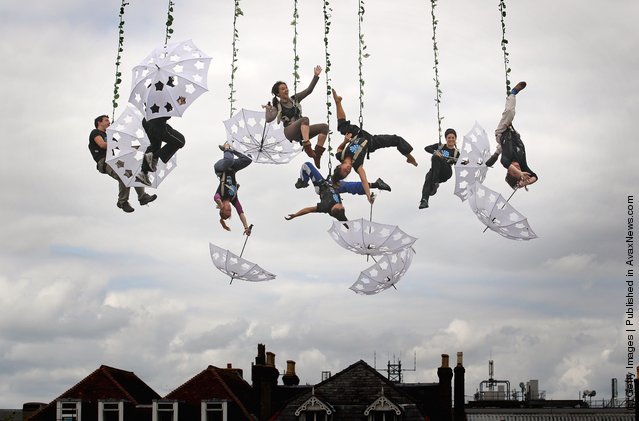
Aerial dancers from Voloa, perform a dress rehearsal ahead of their performance at the opening night of Salisbury International Arts Festival on May 20, 2011 in Salisbury, England. The 39th Salisbury International Arts Festival runs from tonight until Saturday 4 June 2011 and features a programme of theatre, dance, circus, film, music, comedy and spoken word in locations around the historic city, from Salisbury Cathedral to Stonehenge. (Photo by Matt Cardy/Getty Images)
Details
21 May 2011 07:42:00
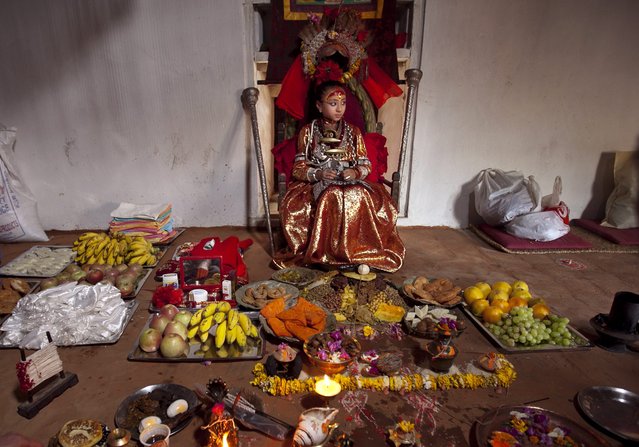
Kumari Samita Bajracharya sits in front of devotees offers during a special puja at Kumari Ghar in Patan, Nepal, 09 April 2011. It is believed that worshipping Kumari and receiving tika from her reduces illness and avoid problems. Kumari, or Kumari Devi, is a “living goddess”. The word literally means virgin in Nepali. The Living Goddesses are young pre-pubescent girls that are considered to be incarnations of the Hindu Goddess of Power, Kali. The Kumari retires when she reaches puberty. (Photo by Narendra Shrestha/EPA)

Kumari Samita Bajracharya sits in front of devotees offers during a special puja at Kumari Ghar in Patan, Nepal, 09 April 2011. It is believed that worshipping Kumari and receiving tika from her reduces illness and avoid problems. Kumari, or Kumari Devi, is a “living goddess”. The word literally means virgin in Nepali. The Living Goddesses are young pre-pubescent girls that are considered to be incarnations of the Hindu Goddess of Power, Kali. The Kumari retires when she reaches puberty. (Photo by Narendra Shrestha/EPA)
Details
18 Jun 2014 12:31:00
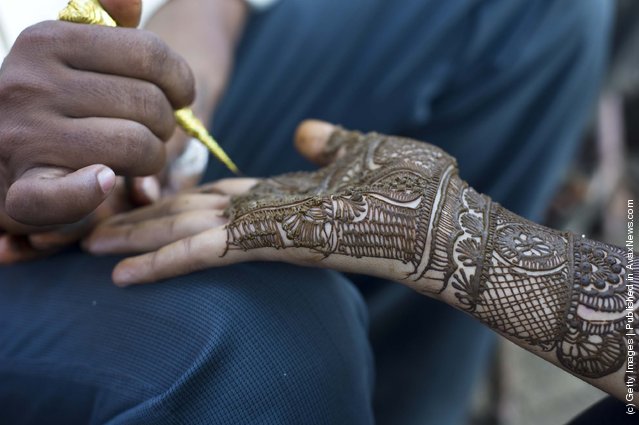
Application of henna or “Mehndi”  to a girls hand in a market in Jaipur, India

“Mehndi or menhdi is the application of henna as a temporary form of skin decoration in India, as well as by expatriate communities from the country. The word mehndi is derived from the Sanskrit word mendhikā. The use of mehndi and turmeric is described in the earliest Vedic ritual books. Haldi (Staining oneself with turmeric paste) as well as mehndi are important Vedic customs as a symbolic representation of the Outer and the Inner Sun. Vedic customs are meant to awaken the “inner light” and so the gold of the inner Sun has an important symbolic function”. – Wikipedia

Photo: Application of henna or “Mehndi” to a girls hand in a market on October 18, 2010 in Jaipur, India. (Photo by Simon de Trey-White/Getty Images)
Details
23 Nov 2011 13:33:00
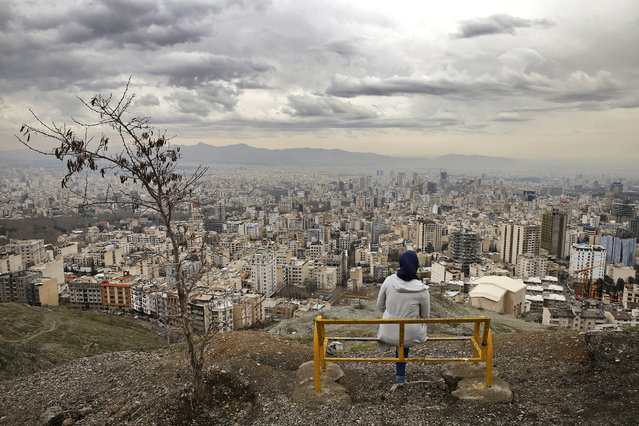
A woman spends her time outdoors to observe the ancient festival of Sizdeh Bedar, an annual public picnic day on the 13th day of the Iranian new year, at the Tochal mountainous area northern Tehran, Iran, Sunday, April, 2, 2017. Sizdeh Bedar, which comes from the Farsi words for “thirteen” and “day out”, is a legacy from Iran's pre-Islamic past that hard-liners in the Islamic Republic never managed to erase from calendars. (Photo by Ebrahim Noroozi/AP Photo)

A woman spends her time outdoors to observe the ancient festival of Sizdeh Bedar, an annual public picnic day on the 13th day of the Iranian new year, at the Tochal mountainous area northern Tehran, Iran, Sunday, April, 2, 2017. Sizdeh Bedar, which comes from the Farsi words for “thirteen” and “day out”, is a legacy from Iran's pre-Islamic past that hard-liners in the Islamic Republic never managed to erase from calendars. (Photo by Ebrahim Noroozi/AP Photo)
Details
21 Apr 2017 07:38:00