Loading...
Done
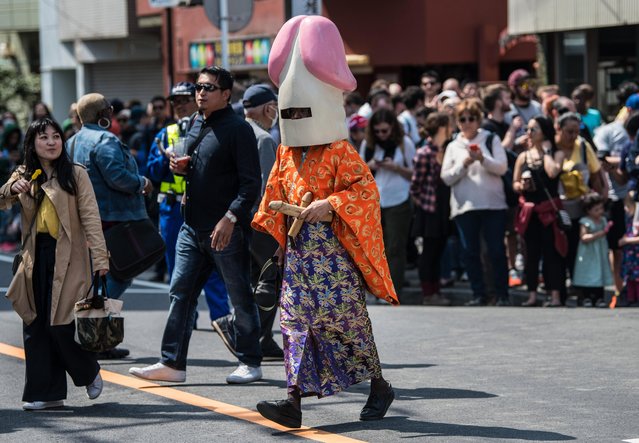
A man wear a phallic-shaped hat during Kanamara Matsuri (Festival of the Steel Phallus) on April 1, 2018 in Kawasaki, Japan. The Kanamara Festival is held annually on the first Sunday of April. The pen*s is the central theme of the festival, focused at the local pen*s-venerating shrine which was once frequented by prostitutes who came to pray for business prosperity and protection against sexually transmitted diseases. Today the festival has become a popular tourist attraction and is used to raise money for HIV awareness and research. (Photo by Carl Court/Getty Images)

A man wear a phallic-shaped hat during Kanamara Matsuri (Festival of the Steel Phallus) on April 1, 2018 in Kawasaki, Japan. The Kanamara Festival is held annually on the first Sunday of April. The pen*s is the central theme of the festival, focused at the local pen*s-venerating shrine which was once frequented by prostitutes who came to pray for business prosperity and protection against sexually transmitted diseases. Today the festival has become a popular tourist attraction and is used to raise money for HIV awareness and research. (Photo by Carl Court/Getty Images)
Details
04 Apr 2018 09:41:00
A motorcyclist performs the superman stunt on a highway in Kuala Lumpur, Malaysia, September 14, 2014. Crowds of small motorbikes ridden by racers – or “Mat Rempit”, as they are known in Malaysian slang – face off in impromptu races in the Malaysian capital after dark. The decades-old culture is widely frowned upon by largely conservative Malaysians, who fear its potential to encourage gambling, drug abuse, snatch thefts and sexual promiscuity. (Photo by Olivia Harris/Reuters)

A motorcyclist performs the superman stunt on a highway in Kuala Lumpur, Malaysia, September 14, 2014. Crowds of small motorbikes ridden by racers – or “Mat Rempit”, as they are known in Malaysian slang – face off in impromptu races in the Malaysian capital after dark. The decades-old culture is widely frowned upon by largely conservative Malaysians, who fear its potential to encourage gambling, drug abuse, snatch thefts and sexual promiscuity. (Photo by Olivia Harris/Reuters)
Details
09 Apr 2016 13:39:00


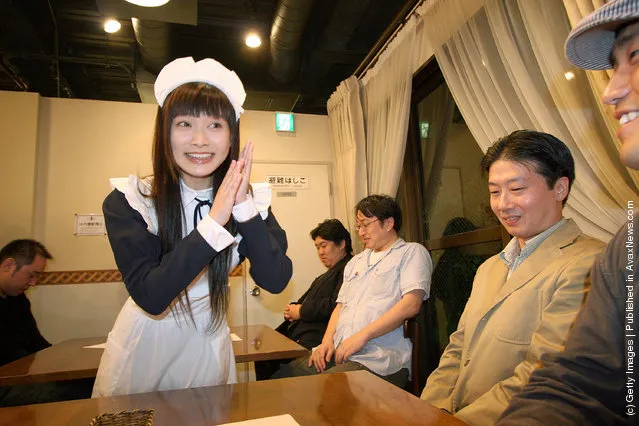
A woman in a maid costume serves customers the Maid Coffee Shop in the Akihabara District October 23, 2005 in Tokyo, Japan. The Akihabara District is known as the world's biggest electrical appliance and equipment town, but recently this area has also became famous for having many shops delivering products and healing services by employees in the costume of maids and animation characters. Some popular shops include coffee, hair salon and massage shops where females deliver services dressed as maids. (Photo by Koichi Kamoshida/Getty Images)
Details
10 Jul 2011 09:32:00
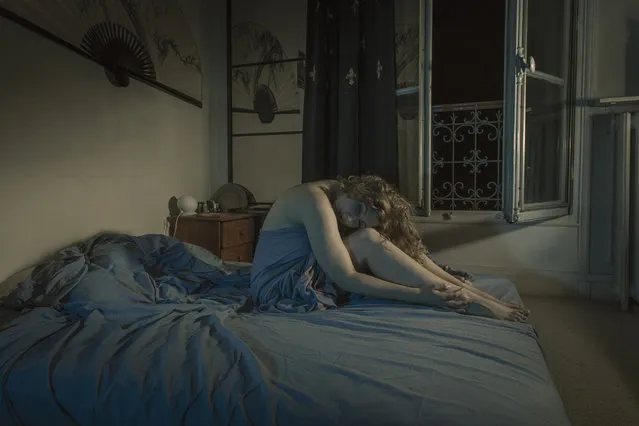
“Jessica” is photographed at her Paris home in this scene staged by photographer Laura Stevens. (Photo by Laura Stevens)

At the end of a six-year relationship, photographer Laura Stevens needed to find a creative, external outlet for all the complicated feelings she was processing internally. “Another November” is the end product, a photo series that aims to mirror those agonizing emotions that Stevens felt at the time of the breakup – and the subsequent healing process. Here: “Jessica” is photographed at her Paris home in this scene staged by photographer Laura Stevens. (Photo by Laura Stevens)
Details
11 Nov 2014 11:55:00
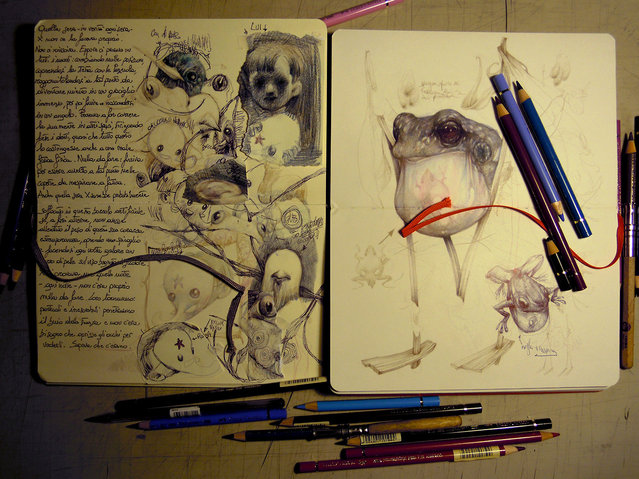
Pencil Artist Marco Mazzoni

Italian pencil artist Marco Mazzoni‘s work goes far beyond technical perfection. His representation of historical healing women is enigmatic and sublime. Often leaving the eyes blank or covered with an abundance of birds, butterflies and flowers, he gives the impression of a deeper inward focused sight, as well as obscuring the identity of the individual. Many female healers in the past – both medicine woman and midwives – were brutally persecuted by religion, some even burnt as witches… Mazzoni’s work captures their deep connection with nature and their innate power and femininity with delicacy and beautiful detail.
Details
24 Mar 2015 09:33:00
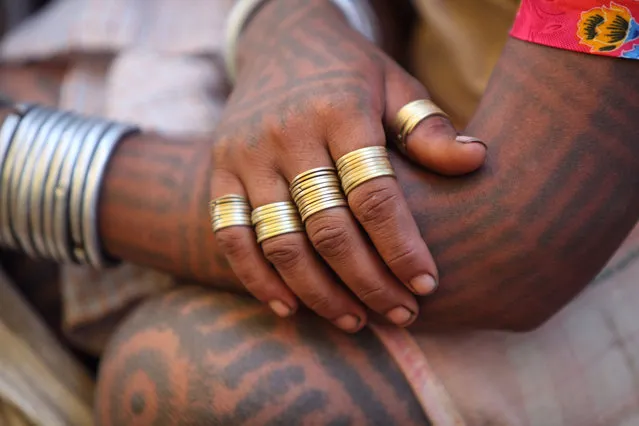
Once applied, the designs are washed using warm water and cow dung. Herbs are applied to promote faster healing. (Photo by Ronny Sen/WaterAid/The Guardian)

For more than 2,000 years, women from the Baiga tribe in the highland district of Dindori, in central India’s Madhya Pradesh state, have been tattooed. Sumintra, 25, from Bona village, has the markings across her forehead, legs and arms. The women who work as tattoo artists are knowledgable about the different types of designs and pigments preferred by various tribes, and their meanings are passed to them by their mothers. The tattooing ‘season’ begins with the approach of winter. (Photo by Ronny Sen/WaterAid/The Guardian)
Details
19 Aug 2017 08:48:00
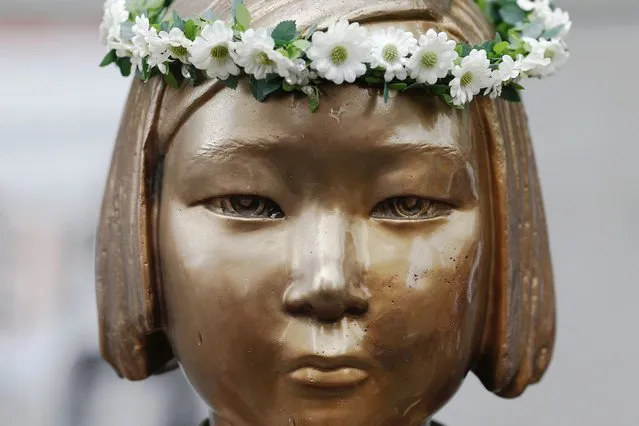
Flowers are placed on a “comfort woman” statue during the weekly Wednesday protest in front of Japanese embassy demanding for an apology and compensation from Japanese government in Seoul, South Korea, July 22, 2015. (Photo by Kim Kyung-Hoon/Reuters)

Flowers are placed on a “comfort woman” statue during the weekly Wednesday protest in front of Japanese embassy demanding for an apology and compensation from Japanese government in Seoul, South Korea, July 22, 2015. “Comfort women” is the Japanese euphemism for women who were forced into prostitution and sexually abused at Japanese military brothels before and during World War Two. (Photo by Kim Kyung-Hoon/Reuters)
Details
13 Aug 2015 11:06:00
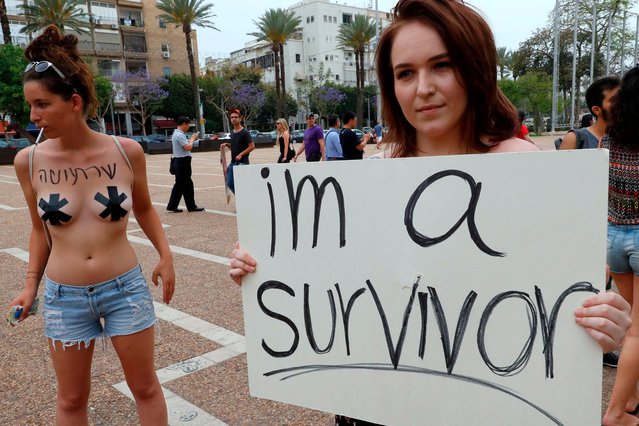
Participants of the annual “SlutWalk” march through the Israeli Mediterranean coastal city of Tel Aviv on May 4, 2018 to protest against rape culture, including sexual assault and harassment directed at women. The campaign, which has gained international notoriety, was inspired by group of Canadian women who launched the protest in 2011 in response to a policeman' s comment that if women want to avoid being attacked they should not dress like sl*ts. (Photo by Jack Guez/AFP Photo)

Participants of the annual “SlutWalk” march through the Israeli Mediterranean coastal city of Tel Aviv on May 4, 2018 to protest against rape culture, including sexual assault and harassment directed at women. The campaign, which has gained international notoriety, was inspired by group of Canadian women who launched the protest in 2011 in response to a policeman' s comment that if women want to avoid being attacked they should not dress like sl*ts. (Photo by Jack Guez/AFP Photo)
Details
06 May 2018 07:06:00