Loading...
Done
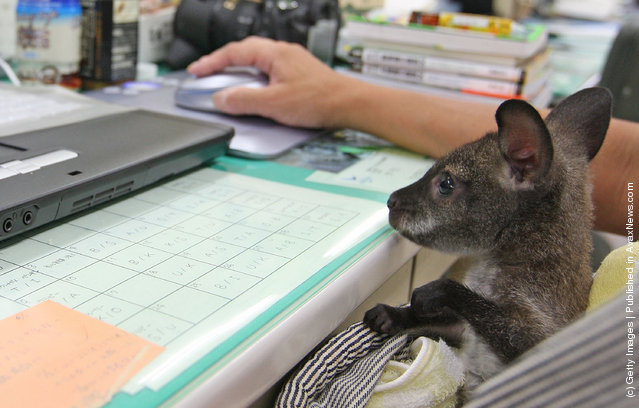
A baby wallaby

“Very small forest-dwelling wallabies are known as pademelons (genus Thylogale) and dorcopsises (genera Dorcopsis and Dorcopsulus). The name wallaby comes from the Eora Aboriginal tribe who were the original inhabitants of the Sydney area. Wallabies are herbivores whose diet consists of a wide range of grasses, vegetables, leaves, and other types of foliage”. – Wikipedia

Photo: A baby wallaby sits in a zoo attendant's lap at Edogawa Natural Zoo on August 4, 2009 in Tokyo, Japan. The staff of the zoo have raised the young wallaby after her mother neglected her. (Photo by Junko Kimura/Getty Images)
Details
07 Sep 2011 13:33:00
The stunning Kamchatka Peninsula, Russia. (Photo by Vladimir Voychuk/Caters News)

These stunning images have captured UFO type clouds forming around world famous volcano. The Kamchatka peninsula contains the volcanoes of Kamchatka, which have been captured in a series of stunning shots by photographer Vladimir Voychuk, 37, from Klin, Russia. It is said that Kamchatka is one of the most picturesque distant corners of huge Russia and attracts hundreds of photographers with its unique nature. Here: The stunning Kamchatka Peninsula, Russia. (Photo by Vladimir Voychuk/Caters News)
Details
13 Oct 2017 06:18:00
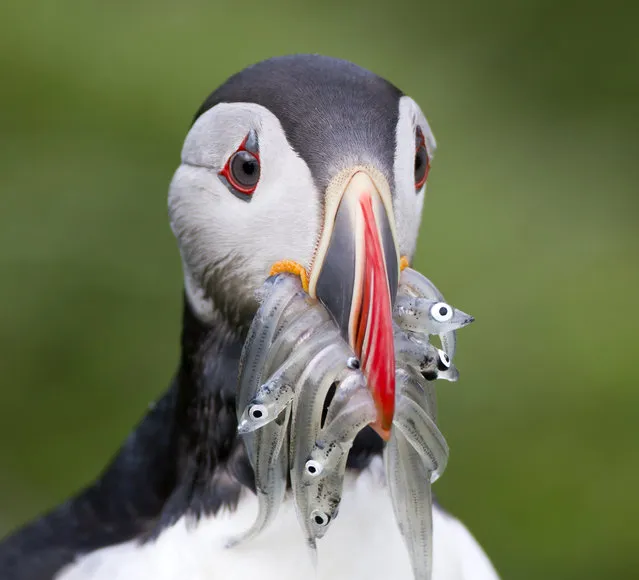
Atlantic Puffin Is AKA Puffins Or Puffin Birds

The Atlantic Puffin is definitely a curious-looking bird. The special coloring that this bird develops for the breeding season in the spring is very reminiscent of tropical birds. The bright colors of the beak and the markings around the eyes serve no particular advantage and have evolved as a result of sexual selection. However, Puffins don’t look that pretty all year round. They shed all these festive colors in partial moult after the breeding season is over. They lose the ornaments around their eyes, their face becomes darker, and their beak becomes very different. The natural habitat of these birds is the cold waters of the North Atlantic Ocean.
Details
12 Nov 2014 13:40:00
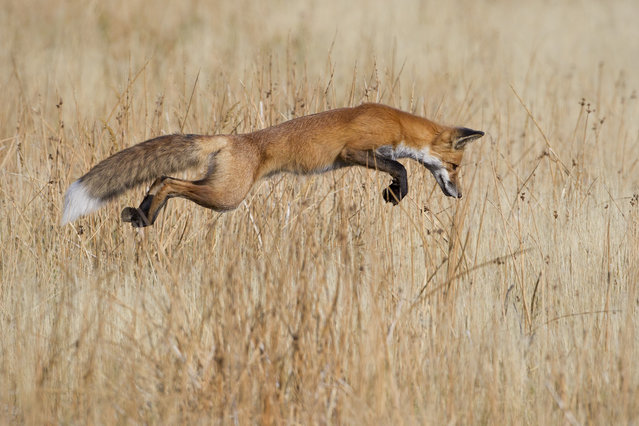
Canada: “Lucky pounce”. (Photo by Connor Stefanison/Wildlife Photographer of the Year 2013)

The winners of The London’s Natural History Museum's prestigious Wildlife Photographer of the Year for 2013 have finally been unveiled. Selected from almost 43,000 entries from 96 countries, the winners offer a glimpse of the stunning array of natural beauty on our planet. Photo: Canada: “Lucky pounce”. “Anticipating the pounce – that was the hardest part”, says Connor, who had come to Yellowstone National Park, Wyoming, USA, in search of wildlife as much as the spectacular landscape. He had found this fox, his first ever, on his last day in the park. It was so absorbed in hunting that Connor had plenty of time to get out of the car and settle behind a rock. It quartered the grassland, back and forth, and then started staring intently at a patch of ground, giving Connor just enough warning of the action to come. When it sprung up, Connor got his shot. And when it landed, the fox got his mouse. (Photo by Connor Stefanison/Wildlife Photographer of the Year 2013)
Details
17 Oct 2013 08:12:00
Israeli soldiers play the parts of wounded civilians during a drill simulating a toxic spill from an attack on a train in Beersheba, southern Israel, 13 January 2016, as Home Front medical teams, fire fighters and police carry out rescue operations. The large scale drill is the concluding exercise of the Fourth International Conference on Healthcare System Preparedness and Response to Emergencies and Disasters and includes some 200 of the world's experts on health system readiness from around the world. (Photo by Jim Hollander/EPA)

Israeli soldiers play the parts of wounded civilians during a drill simulating a toxic spill from an attack on a train in Beersheba, southern Israel, 13 January 2016, as Home Front medical teams, fire fighters and police carry out rescue operations. The large scale drill is the concluding exercise of the Fourth International Conference on Healthcare System Preparedness and Response to Emergencies and Disasters and includes some 200 of the world's experts on health system readiness from around the world. The conference is dealing with all types of medical emergencies from terrorist attacks to natural disasters. (Photo by Jim Hollander/EPA)
Details
15 Jan 2016 08:02:00
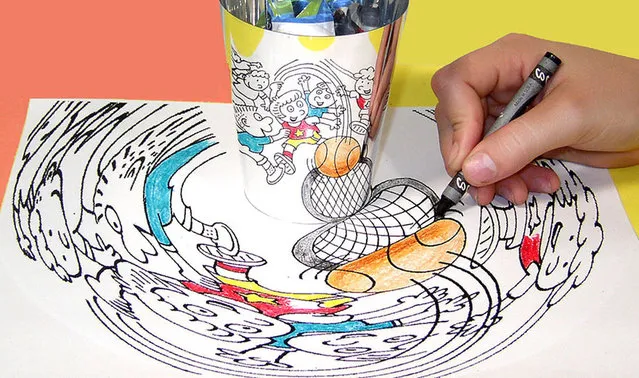
Anamorphic Art By Jonty Hurwitz

The truth can never be seen right away. Only by looking from a certain angle can we view the true nature of things. At other times, only with the help of some special object can we discern order in chaos. Anamorphosis is a form of art that allows us to see an object only by viewing it from a certain angle or by using cylindrical or conical mirror. Unsurprisingly, the first person in history to ever use this type of technique was the Leonardo Da Vinci. During late Renaissance period this technique was popularized as a children’s toy. Now, however, few people use this form of imagery due to its intricacy. Istvan Orosz, born in 1951, is one of the few people who specialize in anamorphosis. In our opinion, his most stunning piece of art is the one where a shipwreck scene turns into a portrait when viewed through a cylindrical mirror. (Photo by Jonty Hurwitz)
Details
05 Jan 2015 13:07:00


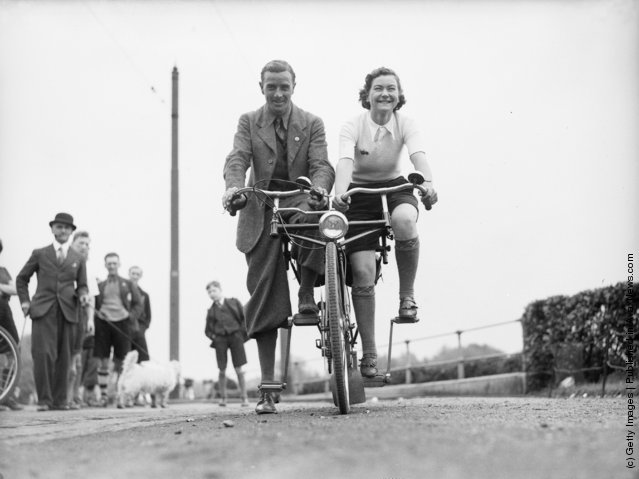
A new type of tandem at Alexandra Palace, London. (Photo by Fox Photos/Getty Images). June 1936
Details
12 Apr 2011 08:32:00
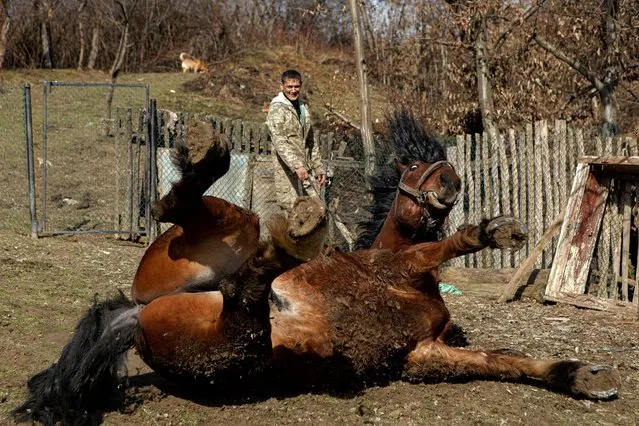
A horse rolls in mud in the Romani camp in Velykyi Bereznyi urban-type settlement, Zakarpattia Region, western Ukraine on February 28, 2021. (Photo by Ukrinform/Rex Features/Shutterstock)

A horse rolls in mud in the Romani camp in Velykyi Bereznyi urban-type settlement, Zakarpattia Region, western Ukraine on February 28, 2021. (Photo by Ukrinform/Rex Features/Shutterstock)
Details
09 Mar 2021 12:06:00