Loading...
Done
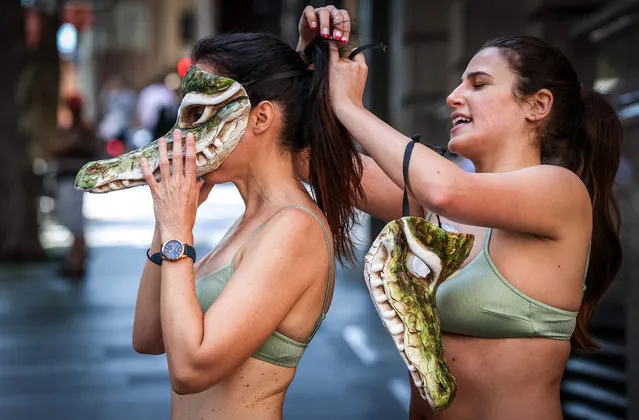
Activists from the animal rights group PETA wearing bikinis and crocodile masks assist each other outside a store of the French fashion label Hermes in Sydney on March 4, 2021, as they protest against their use of crocodile skins and the recent purchases by Hermes and LVMH of crocodile farms in Australia's Northern Territory. (Photo by David Gray/AFP Photo)

Activists from the animal rights group PETA wearing bikinis and crocodile masks assist each other outside a store of the French fashion label Hermes in Sydney on March 4, 2021, as they protest against their use of crocodile skins and the recent purchases by Hermes and LVMH of crocodile farms in Australia's Northern Territory. (Photo by David Gray/AFP Photo)
Details
22 Jan 2022 06:31:00
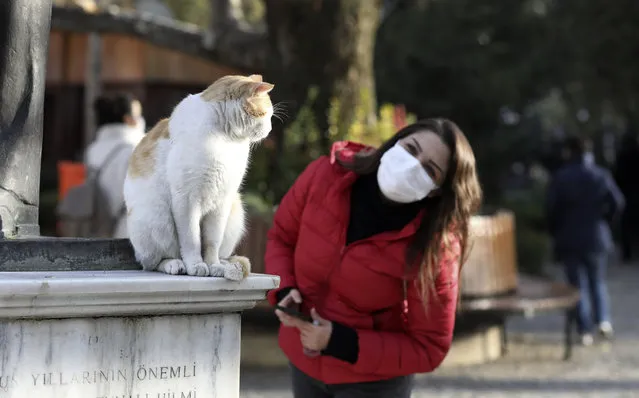
A woman wearing a mask to help protect against the spread of coronavirus, tries to communicate with Efe, a cat living in Kugulu public garden, in Ankara, Turkey, Monday, November 30, 2020.Turkey's President Recep Tayyip Erdogan has announced Monday the most widespread lockdown so far amid a surge in COVID-19 infections, extending curfews to weeknights and full lockdowns over weekends. (Photo by Burhan Ozbilici/AP Photo)

A woman wearing a mask to help protect against the spread of coronavirus, tries to communicate with Efe, a cat living in Kugulu public garden, in Ankara, Turkey, Monday, November 30, 2020.Turkey's President Recep Tayyip Erdogan has announced Monday the most widespread lockdown so far amid a surge in COVID-19 infections, extending curfews to weeknights and full lockdowns over weekends. (Photo by Burhan Ozbilici/AP Photo)
Details
29 Dec 2020 00:03:00
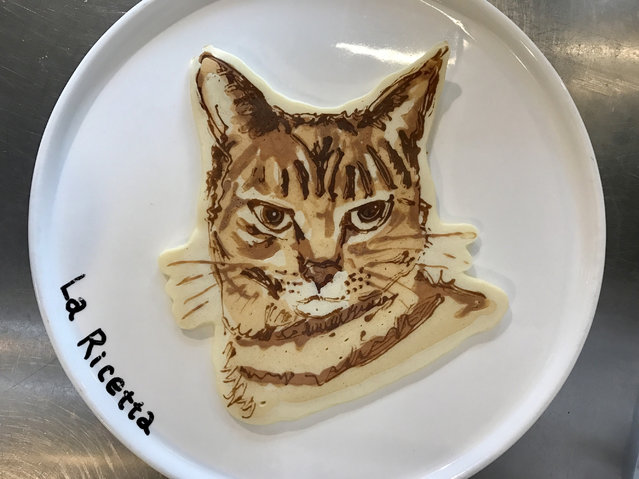
A pancake that looks like a cat, in Zama City, Japan. (Photo by Keisuke Inagaki/Barcroft Images)

As pancake day has creped up on us once again, a Japanese chef has combined our favourite things; cute animals and sugar. Keisuke Inagaki has been a chef at his restaurant La Ricetta in Zama City, Japan, for the last 18 years. He rose to Instagram fame from his Pokemon and anime pancake art, and the time around heis created a lifelike animal series. The 46-year-old chef began making pancakes in 2011 to raise spirits after the devastating nuclear disaster in Fukushima, Japan. Here: A pancake that looks like a cat, in Zama City, Japan. (Photo by Keisuke Inagaki/Barcroft Images)
Details
02 Mar 2017 00:03:00
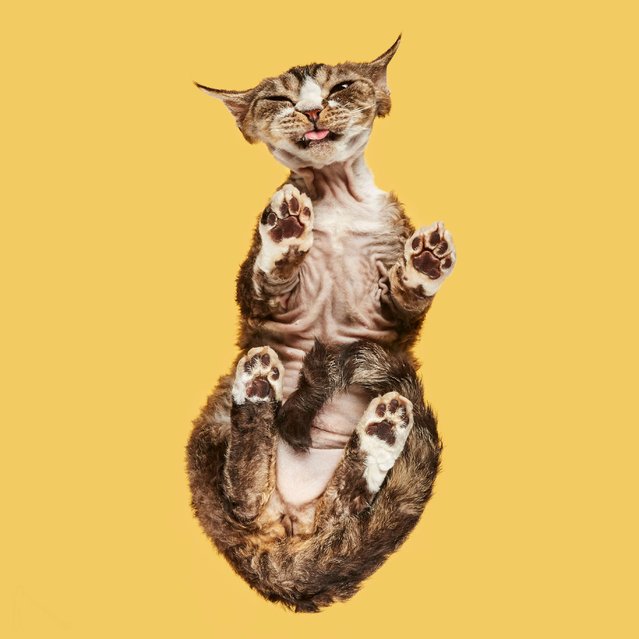
In his adorable series of images, photographer Andrius Burba takes a look at all kinds of furry and fantastic moggies – from underneath. From furry fluff-balls to hairless kitties, felines from all corners of the globe make up the creative photographer's latest project. Andrius, from Lithuania, created a technique whereby his camera is hidden in a Perspex box, that the cats are encouraged to walk across – resulting in some truly wonderful captures. (Photo by Andrius Burba/Caters News Agency/Underlook)

In his adorable series of images, photographer Andrius Burba takes a look at all kinds of furry and fantastic moggies – from underneath. From furry fluff-balls to hairless kitties, felines from all corners of the globe make up the creative photographer's latest project. Andrius, from Lithuania, created a technique whereby his camera is hidden in a Perspex box, that the cats are encouraged to walk across – resulting in some truly wonderful captures. (Photo by Andrius Burba/Caters News Agency/Underlook)
Details
05 Jun 2019 00:03:00
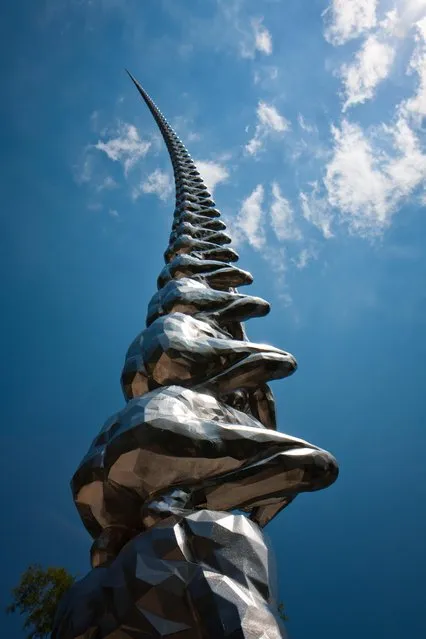
“Karma” by Do-Ho Suh. Sydney and Walda Besthoff Sculpture Garden, New Orleans Museum of Art, New Orleans, LA. (Photo by Alan Teo)

“Do-Ho Suh addresses issues of identity, memory, and relationships. Son of the famous Korean ink-painter Suh Se-Ok, Do-Ho Suh is a leading figure in the transnational avant-garde generation of Korean artists who came of age in the late 1990s, and his work eloquently represents a dual consciousness between East and West”.

Photo: “Karma” by Do-Ho Suh. Sydney and Walda Besthoff Sculpture Garden, New Orleans Museum of Art, New Orleans, LA. (Photo by Alan Teo)


Details
05 Mar 2013 09:37:00
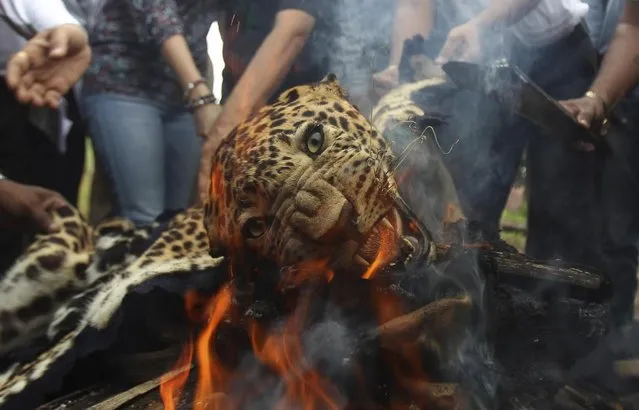
A leopard skin burns as Indian officials and activists burn wildlife contraband including tiger and leopard skins, and bones as part of a campaign to save the tiger in Mumbai, India, Tuesday, July 30, 2013. Despite conservation efforts, tiger numbers in India have declined due to rampant poaching of the cats for their valuable pelts and body parts that are highly prized in traditional Chinese medicine. (Photo by Rafiq Maqbool/AP Photo)

A leopard skin burns as Indian officials and activists burn wildlife contraband including tiger and leopard skins, and bones as part of a campaign to save the tiger in Mumbai, India, Tuesday, July 30, 2013. Despite conservation efforts, tiger numbers in India have declined due to rampant poaching of the cats for their valuable pelts and body parts that are highly prized in traditional Chinese medicine. (Photo by Rafiq Maqbool/AP Photo)
Details
01 Aug 2013 10:50:00
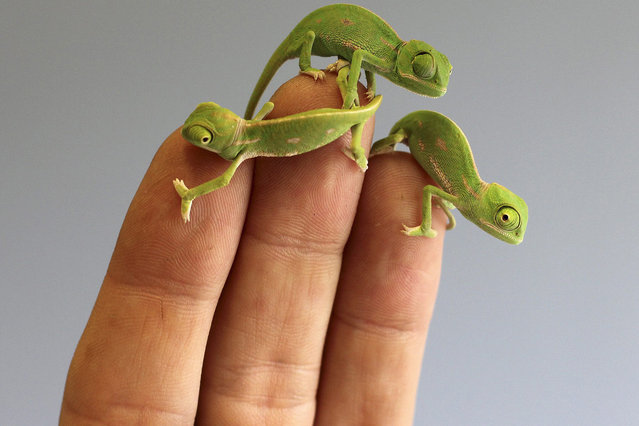
A handout image released by the Taronga Zoo shows Veiled Chameleon hatchlings at Taronga Zoo in Sydney, Australia, 11 March 2015. Taronga has welcomed more than 20 baby chameleons, with the last of three clutches of eggs hatching this week. Veiled Chameleons, or Chamaeleo calyptratus, are native to Saudi Arabia and Yemen and can live up to five years. (Photo by EPA/Taronga Zoo)

A handout image released by the Taronga Zoo shows Veiled Chameleon hatchlings at Taronga Zoo in Sydney, Australia, 11 March 2015. Taronga has welcomed more than 20 baby chameleons, with the last of three clutches of eggs hatching this week. Veiled Chameleons, or Chamaeleo calyptratus, are native to Saudi Arabia and Yemen and can live up to five years. (Photo by EPA/Taronga Zoo)
Details
21 Mar 2015 13:13:00
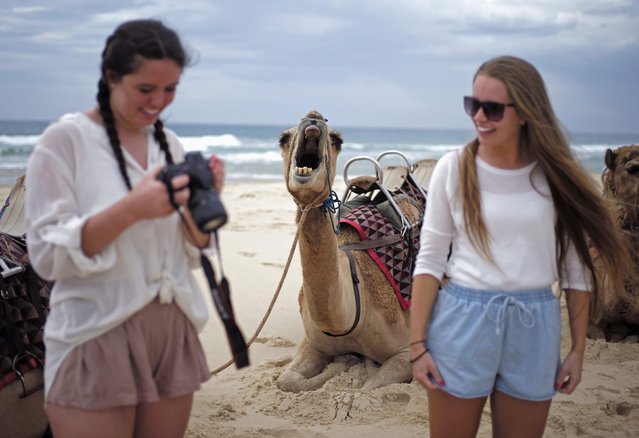
A camel yawns as a tourist checks images on her camera following a ride on a camel safari alongside the Pacific Ocean on Lighthouse Beach, north of Sydney, December 4, 2014. For 25 years camel rides on this beach have given visitors to Australia's holiday coast a rare experience available only in a handful of locations in the country. (Photo by Jason Reed/Reuters)

A camel yawns as a tourist checks images on her camera following a ride on a camel safari alongside the Pacific Ocean on Lighthouse Beach, north of Sydney, December 4, 2014. For 25 years camel rides on this beach have given visitors to Australia's holiday coast a rare experience available only in a handful of locations in the country. Australia's long history with the “ships of the desert” goes back to the 1800s when they were imported from Afghanistan and India for use as transportation across Australia's vast deserts before being released into the wild following their replacement by motorised transport. (Photo by Jason Reed/Reuters)
Details
06 Dec 2014 12:48:00