Loading...
Done
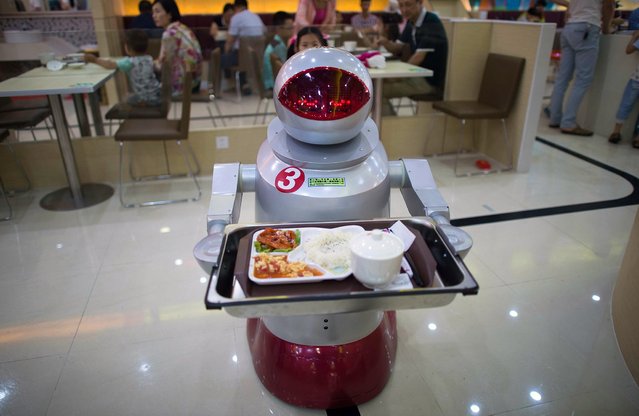
This photo taken on August 13, 2014, shows a robot carrying food to customers in a restaurant in Kunshan. It's more teatime than Terminator – a restaurant in China is electrifying customers by using more than a dozen robots to cook and deliver food. (Photo by Johannes Eisele/AFP Photo)

Located in Kunshan, eastern China, the restaurant relies on over a dozen machines for tasks such as greeting customers, waiting on tables and cooking basic meals. The eatery becomes the third café in the world to rely on the use of robot employees, potentially giving a glimpse into how future businesses could operate. Photo: This photo taken on August 13, 2014, shows a robot carrying food to customers in a restaurant in Kunshan. It's more teatime than Terminator – a restaurant in China is electrifying customers by using more than a dozen robots to cook and deliver food. (Photo by Johannes Eisele/AFP Photo)
Details
24 Aug 2014 09:40:00
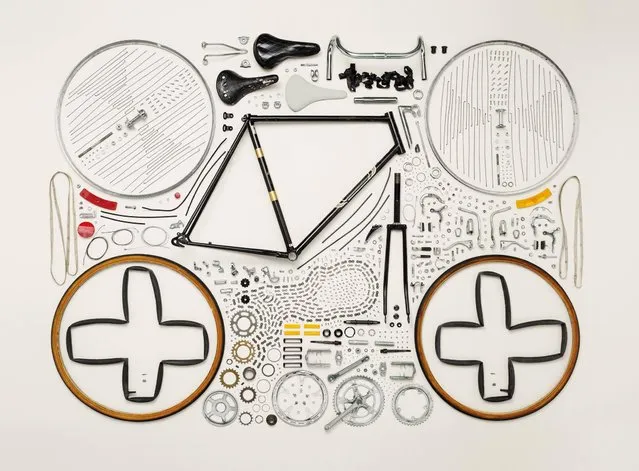
Deconstructed Objects By Todd McLellan

It is simply staggering how complicated some items really are. We never think about it, but some items that we use every day consist of hundreds of parts meticulously put together and working perfectly. Todd McLellan is a photographer who based his newest book “Things Come Apart” on the complexity of various old and new tech. By carefully taking apart various items and arranging all of the parts in perfect order, Todd has allowed us not only to look inside various appliances, but also to appreciate the astounding complexity of these items. Just like the human mind, we are so used to seeing and talking with people that we forget just how complicated their minds really are. It would be great if we could “take apart” the human mind in order to gain some insight into the person’s thoughts and desires. However, very few people are capable of doing it, while the rest will remain blind to the obvious. (Photo by Todd McLellan)
Details
15 Nov 2014 12:30:00
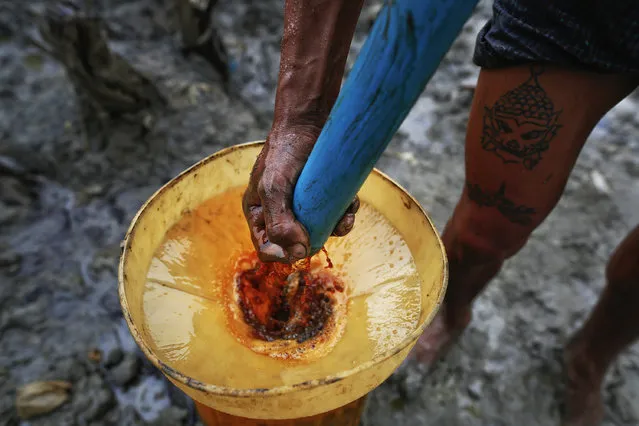
Ko Min, 26, manually extracts oil from one of three 300 feet deep wells he works on in the Minhla township of the Magwe district October 27, 2013. Everyday, Ko Min makes around $30 extracting crude oil from three small wells after he bought rights to use them for close to $1000 from a farmer who owns the land. (Photo by Damir Sagolj/Reuters)

Ko Min, 26, manually extracts oil from one of three 300 feet deep wells he works on in the Minhla township of the Magwe district October 27, 2013. Everyday, Ko Min makes around $30 extracting crude oil from three small wells after he bought rights to use them for close to $1000 from a farmer who owns the land. In Myanmar, an impoverished country rich with natural resources, people from poor communities find ways to supplement their income by exploiting such resources, such as the Minhla township, traditionally rich with oil, often using primitive and dangerous methods. (Photo by Damir Sagolj/Reuters)
Details
21 Apr 2014 10:06:00
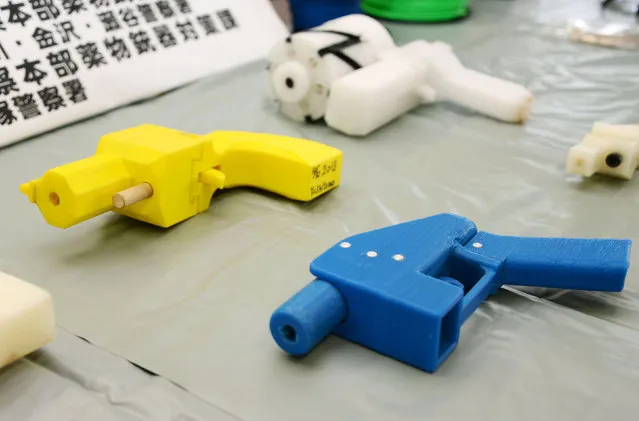
Seized plastic handguns which were created using 3D printing technology are displayed at Kanagawa police station in Yokohama, south of Tokyo, in this photo taken by Kyodo May 8, 2014. (Photo by Reuters/Kyodo)

Seized plastic handguns which were created using 3D printing technology are displayed at Kanagawa police station in Yokohama, south of Tokyo, in this photo taken by Kyodo May 8, 2014. Yoshimoto Imura became the first man to be arrested in Japan for illegal possession of two guns he created himself using 3D printing technology, Japanese media said on Thursday. The 27-year-old, a college employee in the city of Kawasaki, was arrested after police found video online posted by Imura claiming to have produced his own guns. Gun possession is strictly regulated in Japan. Police raided Imura's home and found five guns, two of which could fire real bullets, Japanese media said. (Photo by Reuters/Kyodo)
Details
12 May 2014 10:46:00
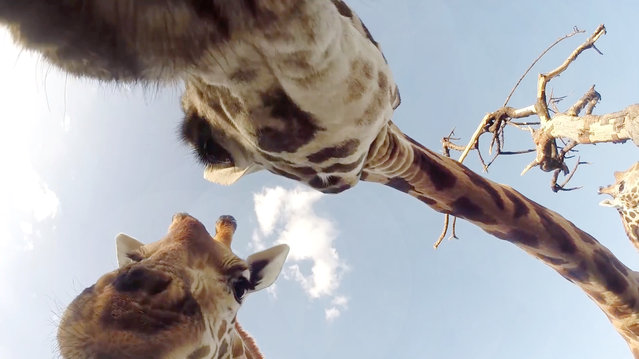
An innovative photographer attached a camera to a remote-controlled car, allowing him to capture angles of wild lions, rhinos and other animals. Over the last 11 years, Chris Bray has been taking pictures of animals using his toy car contraption while he takes guests on photography tours in Kenya. Bray purchased an ordinary remote-controlled car, stripped it of anything that could chewed or ripped off, leaving the chassis, then strapped a GoPro to the top of it. When a herd of animals has been sighted, Bray uses the toy car to approach the subjects’ general area without intruding. (Photo by Chris Bray/Caters News Agency)

An innovative photographer attached a camera to a remote-controlled car, allowing him to capture angles of wild lions, rhinos and other animals. Over the last 11 years, Chris Bray has been taking pictures of animals using his toy car contraption while he takes guests on photography tours in Kenya. (Photo by Chris Bray/Caters News Agency)
Details
25 Oct 2019 00:01:00
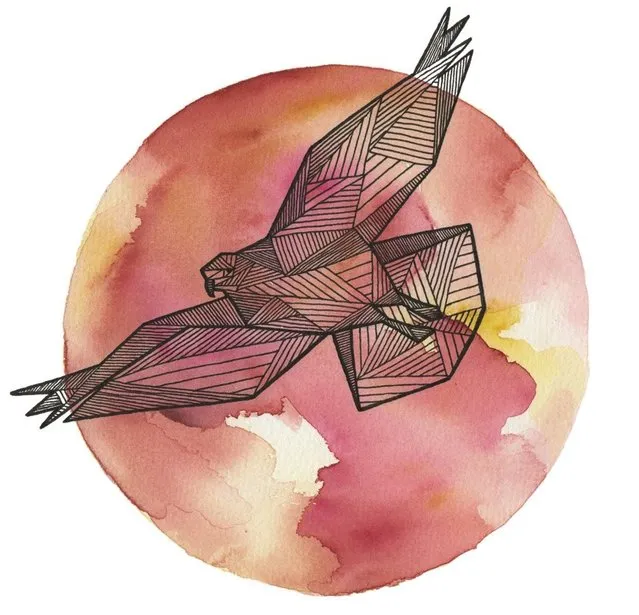
Geometric Animals By Allison Kunath

The combination of two different drawing styles in one picture never ceases to amaze us. The works of Allison Kunath are a vivid example of this technique. The background of her pictures is drawn using watercolors, while the actual image is broken down into rough geometrical shapes. This creates a very striking contrast, thanks to black, bold lines of the image on the forefront drawn over soft, cloudy shades of color. The skill of Allison is clearly seen in the way she manages to draw something as amorphous as a squid without making any curved lines. (Photo by Allison Kunath)
Details
22 Dec 2014 12:01:00
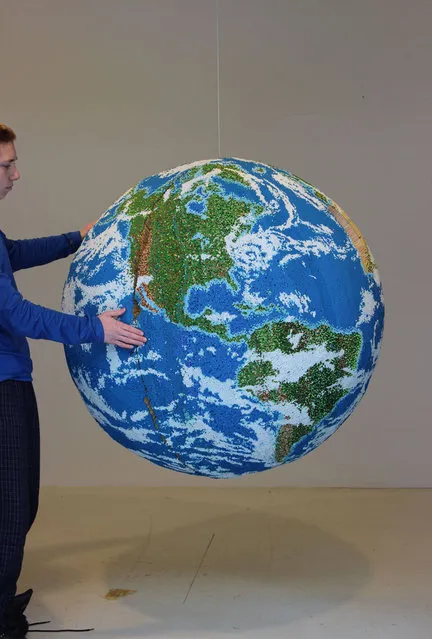
Giant Globe Made From Matches By Andy Yoder

Do you ever get the irresistible urge to light matches on fire, especially if there are many of them in one place? If you do, you shouldn’t come near the giant globe made by an American artist Andy Yoder. The thing is, this 42” globe is made entirely out of matches on the outside, while the center was made using plywood, foam, and cardboard. It took Andy two years to complete his work, finally finishing in 2014. Each of the matches used was hand-painted and then glued in place. Also, in order to prevent his masterpiece from catching fire, Andy Yoder has doused his work with a flame repellant.
Details
27 Feb 2015 03:32:00
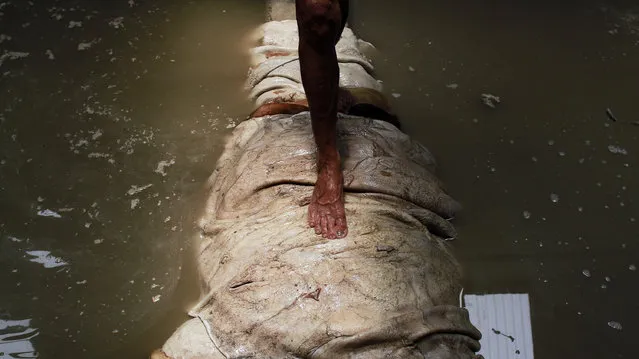
A man walks across a vat of water used to wash the hide. (Photo by Rezza Estily/JG Photo)

Sukaregang in Garut district, West Java, has long been a bustling center for Indonesia's leather trade, with some shops producing and selling various goods – including bags, shoes and jackets – since the 1940s. The industrial area is also a major supplier for high-end brands from across the globe, catering to the fashion, auto and motor-sports industry. Here: a man walks across a vat of water used to wash the hide. (Photo by Rezza Estily/JG Photo)
Details
31 Mar 2015 13:29:00