Loading...
Done
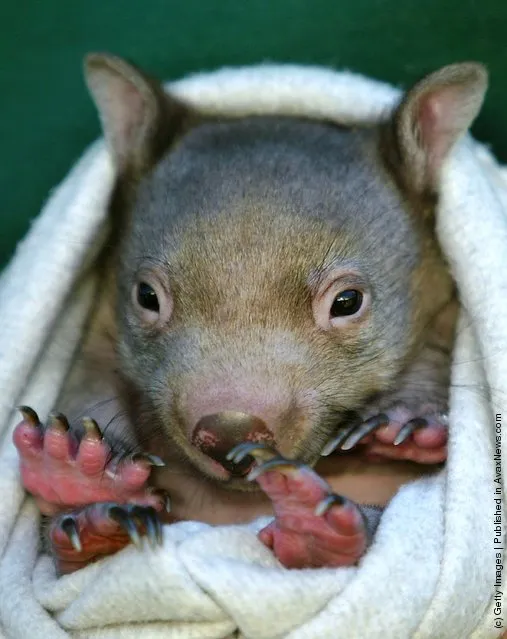
A baby Common Wombat

“Wombats are Australian marsupials; they are short-legged, muscular quadrupeds, approximately 1 metre (39 in) in length with a short, stubby tail. They are adaptable in their habitat tolerances, and are found in forested, mountainous, and heathland areas of south-eastern Australia, including Tasmania, as well as an isolated patch of about 300 ha in Epping Forest National Park in central Queensland”. – Wikipedia

Photo: “Abdul”, a baby Common Wombat, is one of the marsupials on show during the spring baby boom at Taronga Zoo September 1, 2005 in Sydney, Australia. “Abdul” was orphaned when his mother was killed by a car. (Photo by Mark Nolan/Getty Images)
Details
20 Aug 2011 11:23:00
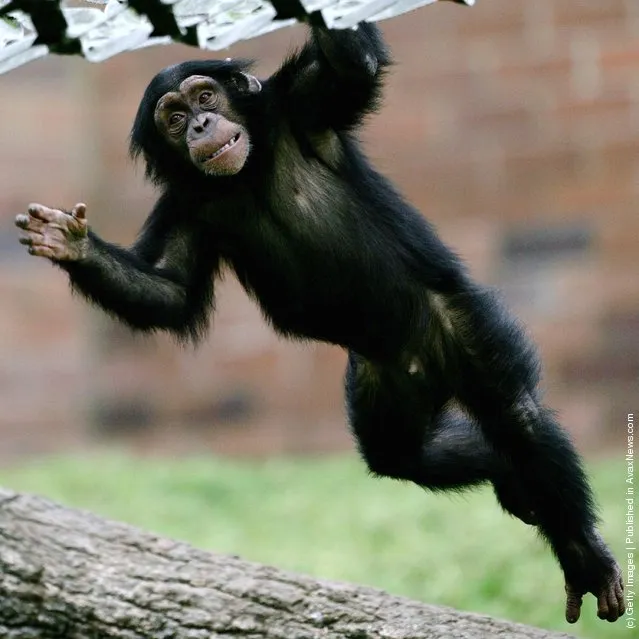
A baby Chimpanzee plays in its enclosure at Taronga Zoo

A baby Chimpanzee plays in its enclosure at Taronga Zoo July 14, 2006 in Sydney, Australia. (Photo by Ian Waldie/Getty Images)
Details
08 Oct 2011 13:22:00
1928: A fruit importer's lorry at Covent Garden, London, with its driver's cabin in the shape of an apple

A fruit importer's lorry at Covent Garden, London, with its driver's cabin in the shape of an apple. (Photo by Harold Clements/London Express/Getty Images). October 1928
Details
21 Oct 2011 10:24:00
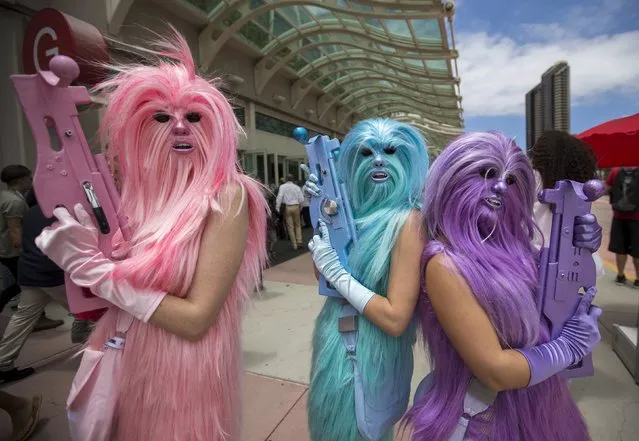
Star Wars enthusiasts wear costumes resembling what they say are three “Chew's Angels” during the 2015 Comic-Con International Convention in San Diego, California July 10, 2015. (Photo by Mario Anzuoni/Reuters)

Star Wars enthusiasts wear costumes resembling what they say are three “Chew's Angels” during the 2015 Comic-Con International Convention in San Diego, California July 10, 2015. (Photo by Mario Anzuoni/Reuters)
Details
12 Jul 2015 13:31:00
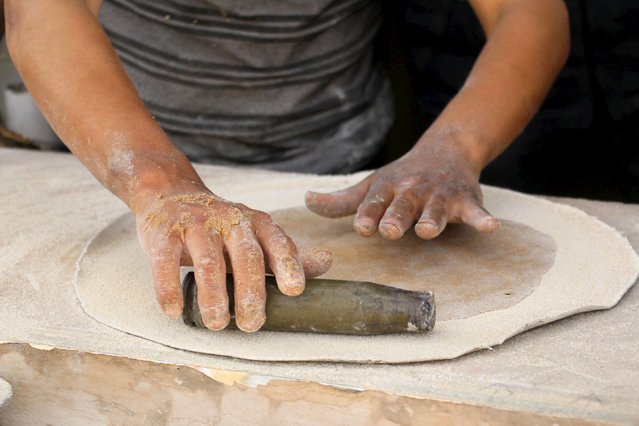
A boy uses remnants of ordnance as he prepares dough inside Abu Khaled's shop in the Douma neighborhood of Damascus April 28, 2015. Abu Khaled opened a shop for making “barley bread” using remnants of weapons including rockets, tank shells and other ordnance fired by forces loyal to Syria's President Bashar al-Assad. (Photo by Amer Almohibany/Reuters)

A boy uses remnants of ordnance as he prepares dough inside Abu Khaled's shop in the Douma neighborhood of Damascus April 28, 2015. Abu Khaled opened a shop for making “barley bread” using remnants of weapons including rockets, tank shells and other ordnance fired by forces loyal to Syria's President Bashar al-Assad. (Photo by Amer Almohibany/Reuters)
Details
09 Aug 2015 11:13:00
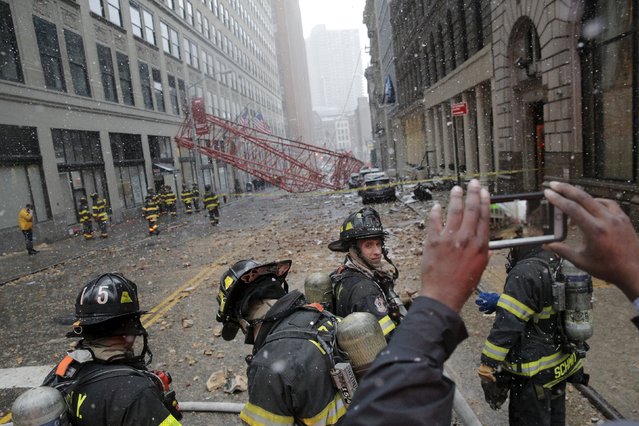
Emergency responders respond to the scene of a 565-foot-tall crane that toppled and flipped upside down, stretching along nearly two city blocks in downtown Manhattan in New York, February 5, 2016. (Photo by Brendan McDermid/Reuters)

Emergency responders respond to the scene of a 565-foot-tall crane that toppled and flipped upside down, stretching along nearly two city blocks in downtown Manhattan in New York, February 5, 2016. The massive construction crane collapsed in lower Manhattan during a swirling snowstorm on Friday, killing one person and crushing a line of parked cars in the first accident of its kind in New York City since 2008. (Photo by Brendan McDermid/Reuters)
Details
06 Feb 2016 13:22:00
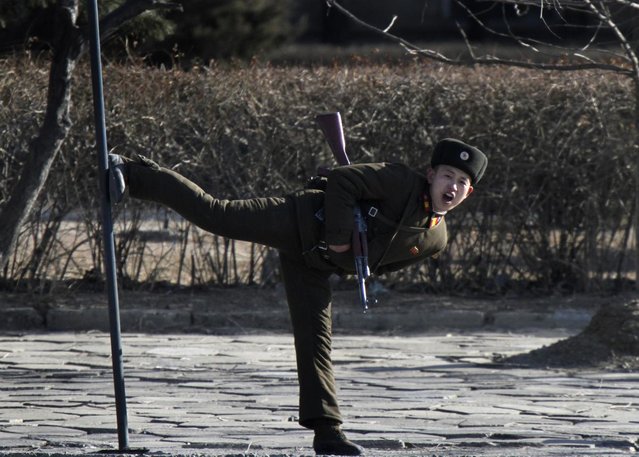
A North Korean soldier kicks a pole along the bank of Yalu River near the North Korean town of Sinuiju, opposite the Chinese border city of Dandong, February 4, 2014. (Photo by Jacky Chen/Reuters)

A North Korean soldier kicks a pole along the bank of Yalu River near the North Korean town of Sinuiju, opposite the Chinese border city of Dandong, February 4, 2014. (Photo by Jacky Chen/Reuters)
Details
14 Feb 2016 11:08:00
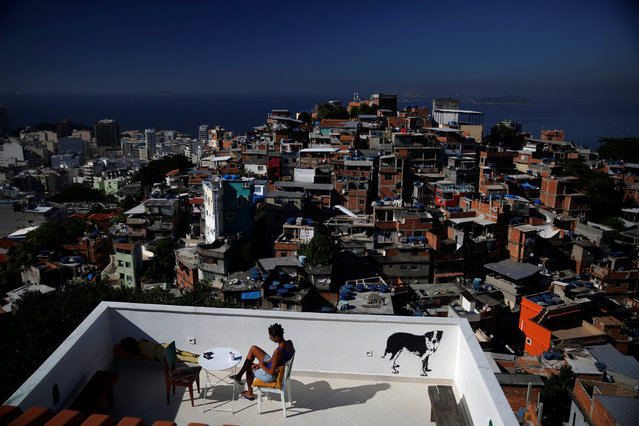
A woman sits on a terrace at Tiki hostel in Cantagalo favela, in Rio de Janeiro, Brazil, April 16, 2016. (Photo by Pilar Olivares/Reuters)

A woman sits on a terrace at Tiki hostel in Cantagalo favela, in Rio de Janeiro, Brazil, April 16, 2016. Hostels in a few of Rio's more than 1,000 slums serve not only as a cheap housing alternative for the more adventurous among the estimated 500,000 foreign tourists expected to arrive for the Olympics in August. The establishments also open up the rich culture of the city's shantytowns for travellers, giving them a glimpse into once “no-go” areas where about one-fifth of Rio's population lives. (Photo by Pilar Olivares/Reuters)
Details
04 May 2016 12:18:00