Loading...
Done
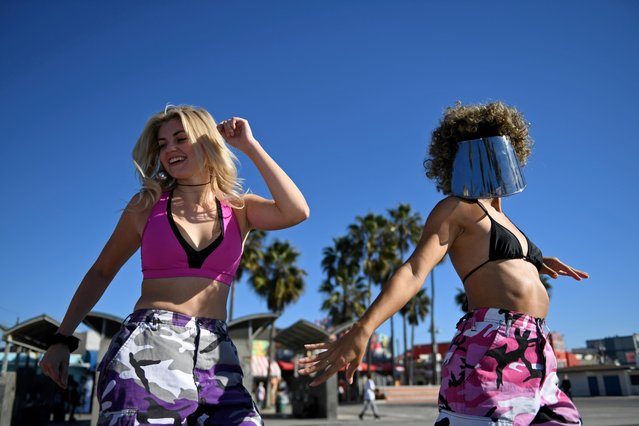
People rollerblade along the beach a day before renewed restrictions due to a surge of coronavirus disease (COVID-19) cases in Los Angeles, California, U.S. November 29, 2020. (Photo by Brandon Bell/Reuters)

People rollerblade along the beach a day before renewed restrictions due to a surge of coronavirus disease (COVID-19) cases in Los Angeles, California, U.S. November 29, 2020. (Photo by Brandon Bell/Reuters)
Details
08 Dec 2020 00:01:00
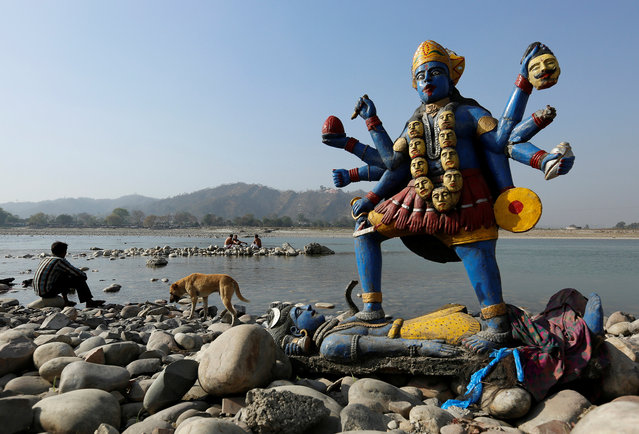
A man sits next to a damaged idol of Hindu goddess Kali which was taken out after its immersion in the river Ganges in Haridwar, India, March 29, 2017. (Photo by Danish Siddiqui/Reuters)

A man sits next to a damaged idol of Hindu goddess Kali which was taken out after its immersion in the river Ganges in Haridwar, India, March 29, 2017. (Photo by Danish Siddiqui/Reuters)
Details
20 Jul 2017 08:46:00
A youth dives into a crater filled with water in Aleppo's al-Shaar district, in this July 10, 2014 file photo. (Photo by Hosam Katan/Reuters)

A youth dives into a crater filled with water in Aleppo's al-Shaar district, in this July 10, 2014 file photo. (Photo by Hosam Katan/Reuters)
Details
04 Dec 2014 12:02:00
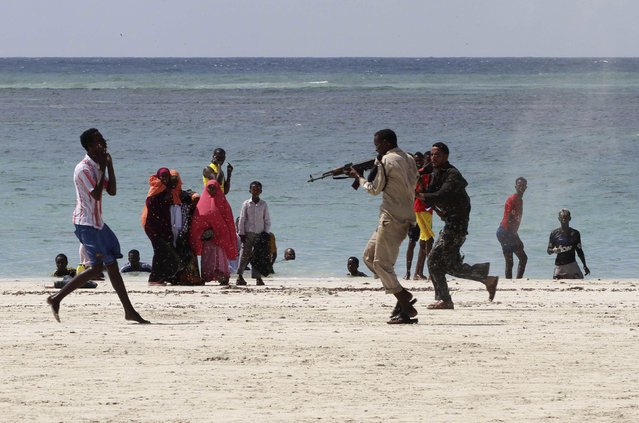
A Somali police officer arrests a suspected rebel member of the al Qaeda-affiliated al Shabaab among beach goers in Mogadishu. Al Shabaab claimed responsibility for today's pre-dawn attack on a Kenyan university campus near the Somali border.  (Photo by Feisal Omar/Reuters)

A Somali police officer arrests a suspected rebel member of the al Qaeda-affiliated al Shabaab among beach goers in Mogadishu. Al Shabaab claimed responsibility for today's pre-dawn attack on a Kenyan university campus near the Somali border. The following gallery examines who is al Shabaab. Here: Somali police officer (R) arrests a suspected rebel member (L) of the Al Qaeda-affiliated al Shabaab among beach goers at the Lido beach north of Somalia's capital Mogadishu March 23, 2012. (Photo by Feisal Omar/Reuters)
Details
03 Apr 2015 13:15:00
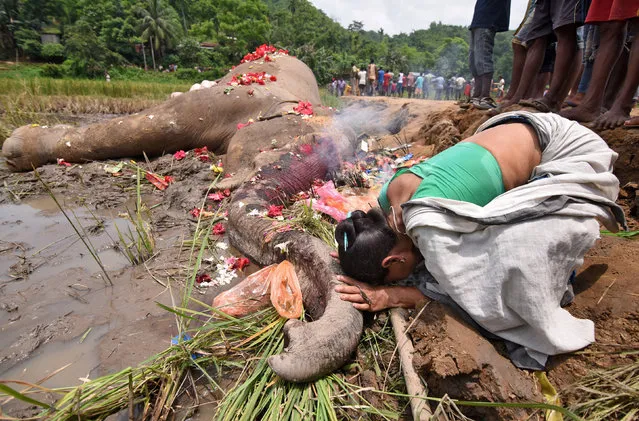
A woman prays as she touches the carcass of a male elephant after he, according to forest officials, was electrocuted early morning in a paddy field on the outskirts of Guwahati, India, June 20, 2017. (Photo by Anuwar Hazarika/Reuters)

A woman prays as she touches the carcass of a male elephant after he, according to forest officials, was electrocuted early morning in a paddy field on the outskirts of Guwahati, India, June 20, 2017. (Photo by Anuwar Hazarika/Reuters)
Details
26 Jun 2017 09:12:00
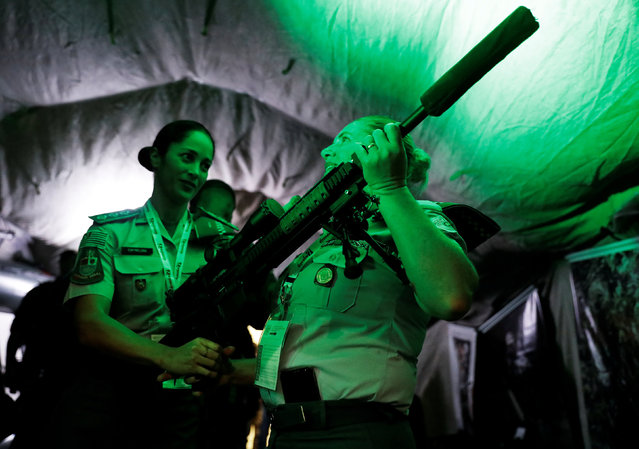
Military officers look at an AR-10 sniper rifle at LAAD, the biggest military industry expo in Latin America in Sao Paulo, Brazil April 10, 2018. (Photo by Nacho Doce/Reuters)

Military officers look at an AR-10 sniper rifle at LAAD, the biggest military industry expo in Latin America in Sao Paulo, Brazil April 10, 2018. (Photo by Nacho Doce/Reuters)
Details
13 Apr 2018 07:58:00
Children dressed as Hindu deities take part in an event to mark the consecration of Ayodhya Ram temple, in Bhopal on January 22, 2024. (Photo by Gagan Nayar/AFP Photo)

Children dressed as Hindu deities take part in an event to mark the consecration of Ayodhya Ram temple, in Bhopal on January 22, 2024. (Photo by Gagan Nayar/AFP Photo)
Details
26 Jan 2024 08:59:00
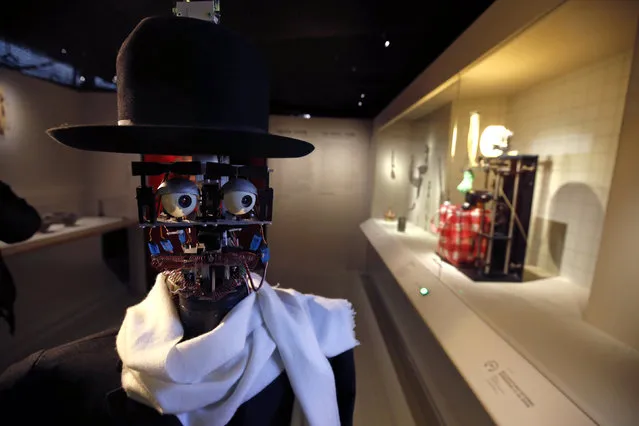
The Berenson robot strolls among visitors during the exhibition “Persona : Oddly Human” at the Quai Branly museum in Paris, France, February 23, 2016. The Berenson robot, developed in France in 2011, is the brainchild of anthropologist Denis Vidal and robotics engineer Philippe Gaussier. Its programming allows it to record reactions of museum visitors to certain pieces of art and then use the data to develop its own unique taste, which allows “Berenson” to judge whether or not it likes a certain work of art within an exhibition. (Photo by Philippe Wojazer/Reuters)

The Berenson robot strolls among visitors during the exhibition “Persona : Oddly Human” at the Quai Branly museum in Paris, France, February 23, 2016. The Berenson robot, developed in France in 2011, is the brainchild of anthropologist Denis Vidal and robotics engineer Philippe Gaussier. Its programming allows it to record reactions of museum visitors to certain pieces of art and then use the data to develop its own unique taste, which allows “Berenson” to judge whether or not it likes a certain work of art within an exhibition. (Photo by Philippe Wojazer/Reuters)
Details
25 Feb 2016 12:26:00