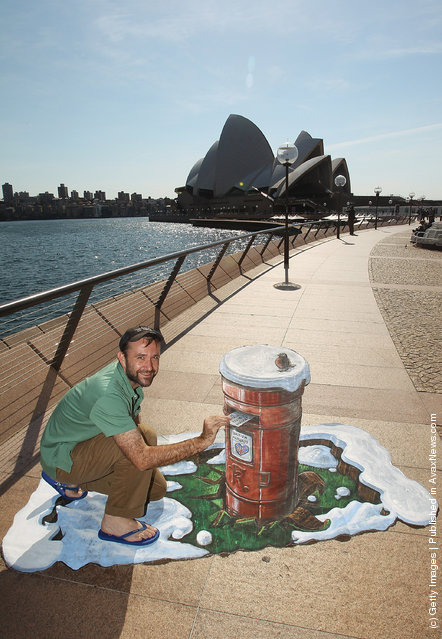
3D interactive artist Joe Hill poses with one of his works as part of the VisitBritain tourism campaign at Circular Quay on September 6, 2011 in Sydney, Australia. (Photo by Mark Metcalfe/Getty Images)
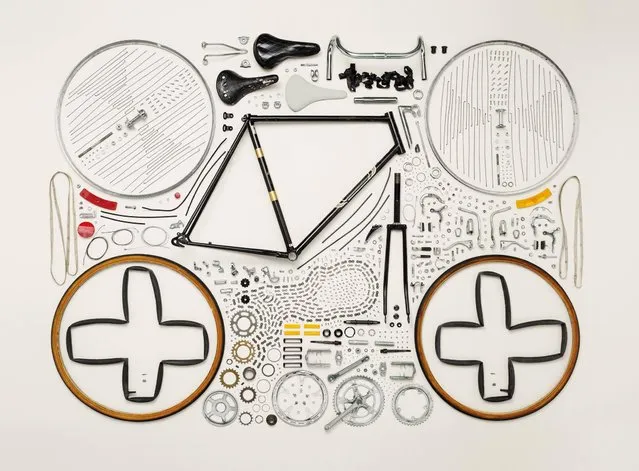
It is simply staggering how complicated some items really are. We never think about it, but some items that we use every day consist of hundreds of parts meticulously put together and working perfectly. Todd McLellan is a photographer who based his newest book “Things Come Apart” on the complexity of various old and new tech. By carefully taking apart various items and arranging all of the parts in perfect order, Todd has allowed us not only to look inside various appliances, but also to appreciate the astounding complexity of these items. Just like the human mind, we are so used to seeing and talking with people that we forget just how complicated their minds really are. It would be great if we could “take apart” the human mind in order to gain some insight into the person’s thoughts and desires. However, very few people are capable of doing it, while the rest will remain blind to the obvious. (Photo by Todd McLellan)
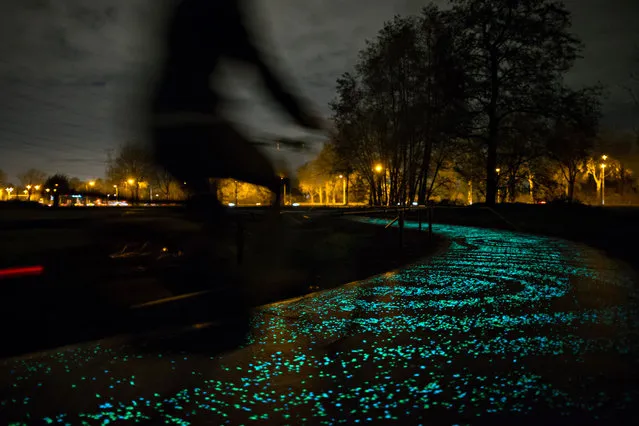
Dutch artist Daan Roosegaarde paid homage to Vincent Van Gogh's famous “Starry Night” painting by creating a glowing bike path relying on solar-powered LED lights. The 650-yard route which opened November 12, 2014 extends between Eindhoven and Neunen, Netherlands, where Van Gogh spent part of his life. Its the first event marking the 125th anniversary of Van Gogh's death July 29, 2015. (Photo by Pim Hendriksen/Studio Roosegaarde)
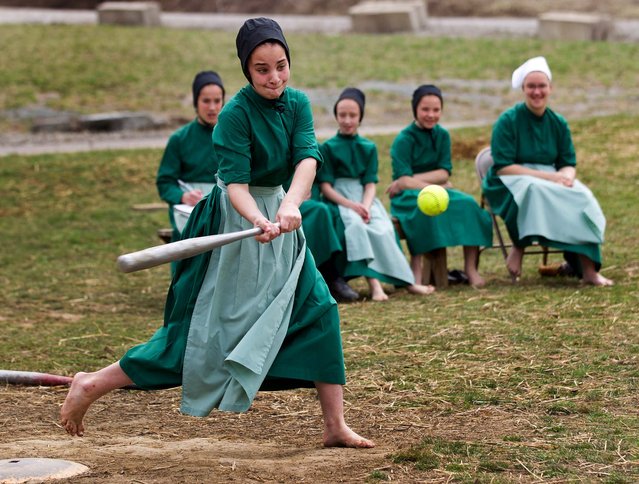
Amish girls play softball after class during an end of the school year celebration on Tuesday, April 9, 2013 in Bergholz, Ohio. The celebration was also part of a farewell picnic for four women and one man from this tight-knit group in rural eastern Ohio who will enter prison on Friday, April 12, joining nine already behind bars on hate crimes convictions for hair- and beard-cutting attacks against fellow Amish. (Photo by Scott R. Galvin/AP Photo)
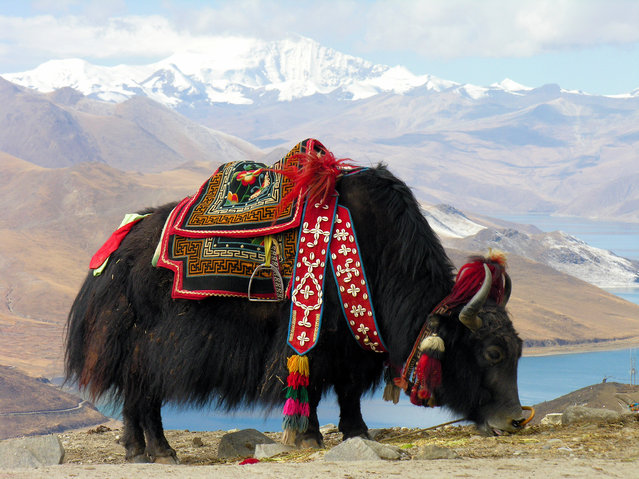
Yak near Yamdrok lake, Tibet. It is a long-haired bovinae found throughout the Himalayan region of south Central Asia, the Tibetan Plateau and as far north as Mongolia and Russia. The Tibetan economy is dominated by subsistence agriculture. Due to limited arable land, the primary occupation of the Tibetan Plateau is raising livestock, such as sheep, cattle, goats, camels, yaks, dzo, and horses. The Tibetan yak is an integral part of Tibetan life. (Photo by Dennis Jarvis)
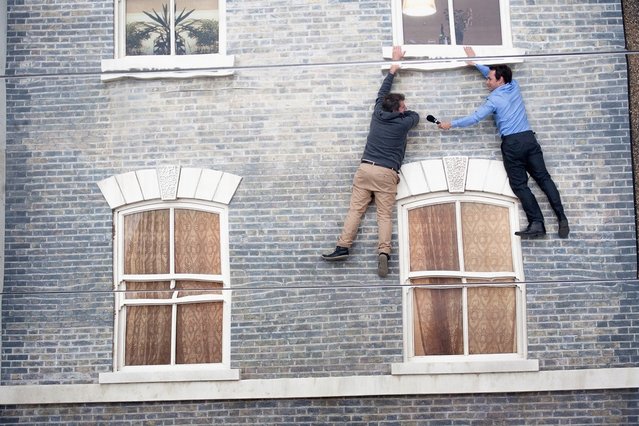
People appear dangling as a large-scale installation art piece by Leandro Erlich, named “Dalston House”, in London, England. Part of the “Beyond Barbican” summer series of events, the interactive installation is a full facade of a late nineteenth-century Victorian terraced house built on the ground with a large mirror above it to reflect people as to appear dangling from the structure. (Photo by Dan Dennison)