Loading...
Done
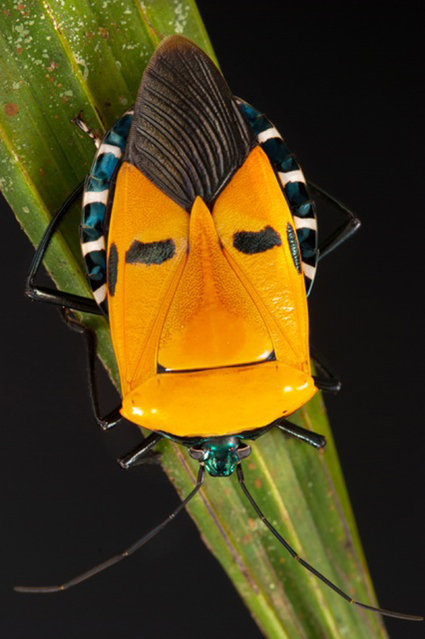
Pentomid bug. (Photo by Darlyne Murawsk/National Geographic Creative/Caters News)

It’s a bug’s life for these colorful insects – whose natural markings resemble incredible smiling faces. These dazzling insects, with their colorful patterns and markings, look as if they are living a happy bugs life. But they’re also the spitting image of a whole host of stars from stage and screen from a creeping Charlie Chaplin to Elvis Presley. Photo: Pentomid bug. (Photo by Darlyne Murawsk/National Geographic Creative/Caters News)
Details
29 Apr 2014 10:08:00
A decades-old television. (Photo by Mark C. O'Flaherty)

The official name for this tiny speck of land – the size of 12 football pitches – is Hashima, but few call it that. In English, its most commonly used name means “Battleship Island” and, viewed from a certain angle offshore, its silhouette is uncannily dreadnought in nature. It was a mining facility until 1974, when it was abandoned to the elements, before partially reopening as a tourist attraction in 2009. Photo: A decades-old television. (Photo by Mark C. O'Flaherty)
Details
15 Jun 2014 11:24:00
Greenhouse Greenhouse Bristol

A greenhouse is a contained quantity of air and light which extends the growing season and enables the thriving of plants otherwise alien to local climate. It creates a bubble of super-nature, where things otherwise impossible become possible. The smell, temperature, humidity and taste of things are significantly different than just outside the thin membrane. It enables us to create different kinds (or quantities) of food, but also to experience different climates and atmospheres. A greenhouse is by definition alien to its site, but creates a significant place in everyday life.
Details
25 Jun 2014 11:09:00
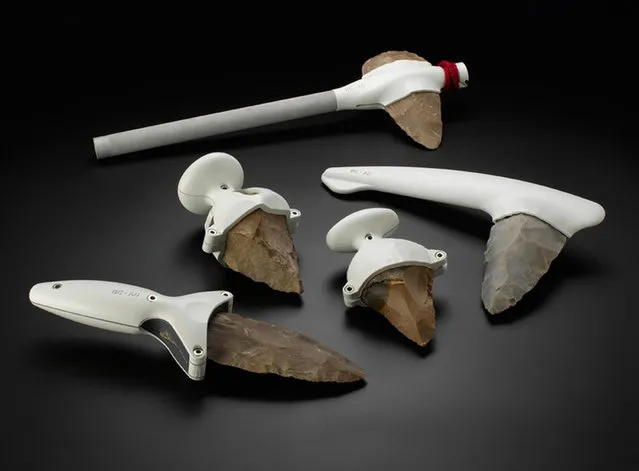
Primitive Tool By Ami Drach And Dov Ganchrow

This primitive tool set by Tel Aviv-based design studio Ami Drach and Dov Ganchrow was released at the 2012 Budapest design week. The white modernized handles are a contrasting design against the natural blades of stone. Computer imaging wraps each unique cut of stone to create a perfect fit handle. The set features knives and flint starters. We are invited to explore the usefulness of these beautiful ancient tool concepts in our everyday today.
Details
22 Feb 2013 14:36:00
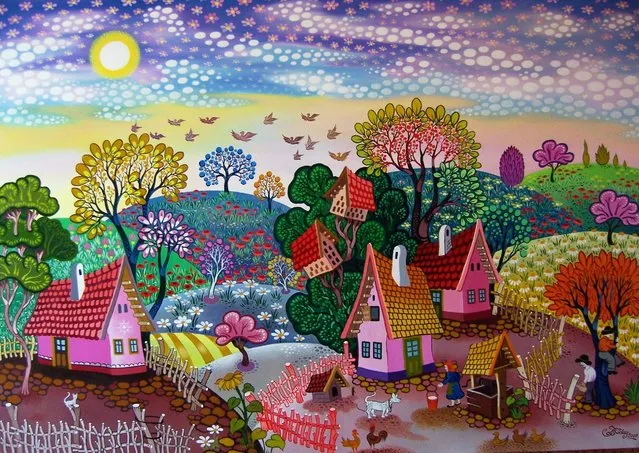
Painting By Koday Laszlo

Laszlo Koday was born in Hungary in 1945. In 1970 he began as a self-tought painter. The life and work of Henri Rousseau made a deep impression on him. His pictures are fairy tales expressed by pictorial means, human, animal and nature are equally important in them. There are bright, with unmixed pure colours, compositions wich spread calmness and gaiety. Kaday's works are know not only in Hungary but in many countries and are included in many private and public collections. His paintings can be found in galleries abroad, for example the GINA Gallery.
Details
23 Jul 2013 09:00:00
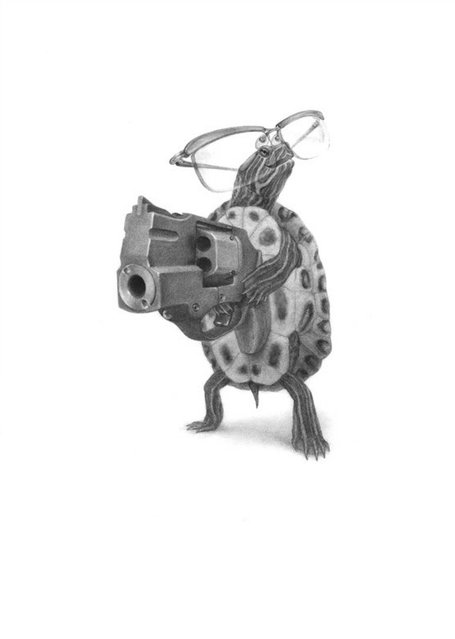
Gun-Toting Animals By Xiau Fong
Tempering the violence of modern weaponry with charmingly rendered creatures, artist Xiau-Fong Wee captures a dark humor in her quirky drawings. While some of the weapons appear terrifyingly realistic, others such as in the ray gun wielding bunny portrait, speaks more to the fantastical worlds of science fiction. The anthropomorphic dispositions of the spectacle-wearing creatures also range in merry reverie to stern seriousness, adding to the delightful nature of these well-executed portraits. View more of the drawings below.
Details
27 Jul 2013 08:08:00
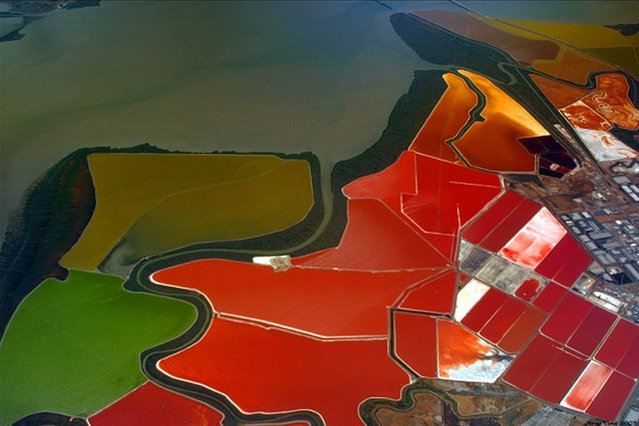
Salt ponds in San Francisco Bay

Salt evaporation ponds, also called salterns or salt pans, are shallow artificial ponds designed to produce salts from sea water or other brines. The seawater or brine is fed into large ponds and water is drawn out through natural evaporation which allows the salt to be subsequently harvested. The ponds also provide a productive resting and feeding ground for many species of waterbirds, which may include endangered species. The ponds are commonly separated by levees.
Details
11 Oct 2012 12:49:00
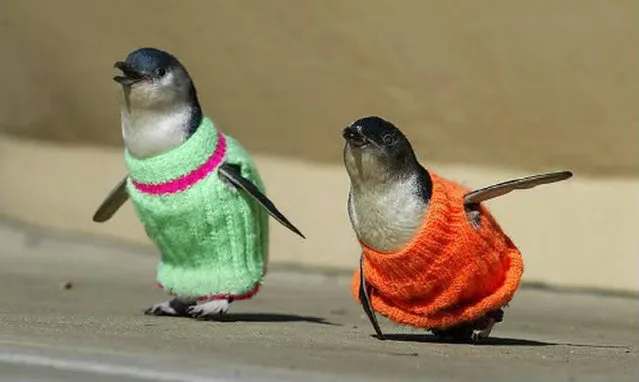
New Zealand Penguins in Need of Sweaters

Penguin sweaters, also known as penguin jumpers, are sweaters which are knitted for penguins that have been caught in oil slicks. When an oil spill affects penguins, they are dressed in knitted sweaters to stop them preening their feathers and to keep them warm, since the spilled oil destroys their natural oils. This also prevents them from poisoning themselves by ingesting the oil. The sweaters are removed and discarded as soon as the penguins can be washed. The original project has been completed, but the knitting pattern is still available on-line, as subsequent oil spills make it necessary. The extra sweaters are kept on behalf of the Wildlife Rescue Team.
Details
31 Oct 2012 13:06:00