Loading...
Done
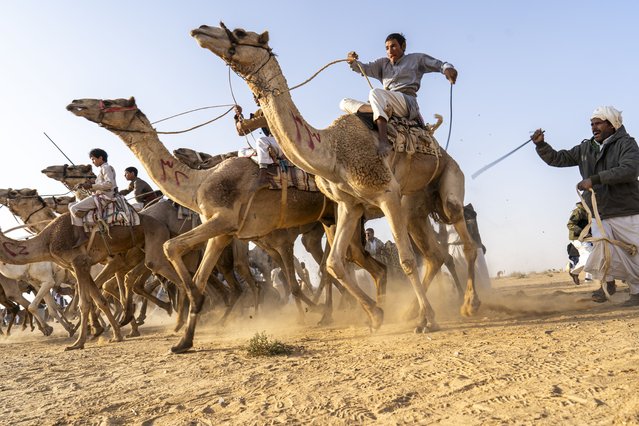
The start of the Al-Sirr camel race on November 19, 2025 in El Hassana, Egypt. The Al-Sirr camel race is one of the most culturally significant and widely celebrated sporting events among the Bedouin communities of Sinai. Every year, Bedouin tribes gather here to hold this traditional race, an event that preserves its authentic heritage. Unlike modern camel races elsewhere, the Bedouin here do not use robotic jockeys or advanced racing technologies. Instead, the camels are ridden by young boys aged approximately 5 to 16, maintaining a long-standing cultural practice. (Photo by Ali Moustafa/Getty Images)

The start of the Al-Sirr camel race on November 19, 2025 in El Hassana, Egypt. The Al-Sirr camel race is one of the most culturally significant and widely celebrated sporting events among the Bedouin communities of Sinai. Every year, Bedouin tribes gather here to hold this traditional race, an event that preserves its authentic heritage. Unlike modern camel races elsewhere, the Bedouin here do not use robotic jockeys or advanced racing technologies. Instead, the camels are ridden by young boys aged approximately 5 to 16, maintaining a long-standing cultural practice. (Photo by Ali Moustafa/Getty Images)
Details
03 Jan 2026 12:49:00
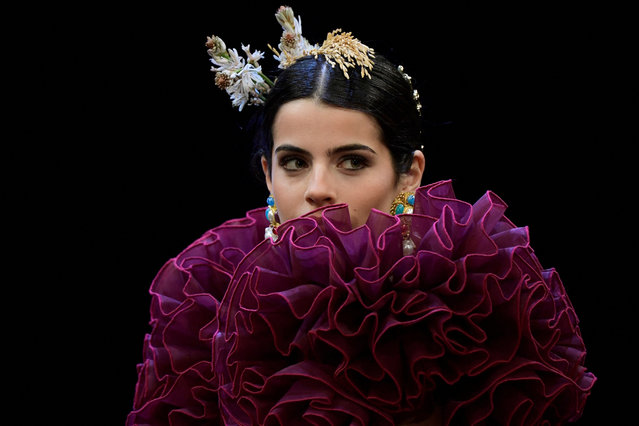
A model presents a creation by Isabel Japon during the Simof 2025 (International Flamenco Fashion Show) in Seville on January 31, 2025. (Photo by Cristina Quicler/AFP Photo)

A model presents a creation by Isabel Japon during the Simof 2025 (International Flamenco Fashion Show) in Seville on January 31, 2025. (Photo by Cristina Quicler/AFP Photo)
Details
05 Jul 2026 06:38:00
Honda MotoGP rider Dani Pedrosa (R) of Spain sprays champagne on an attendant next to Yamaha MotoGP rider Valentino Rossi (C) of Italy after winning the Japanese Grand Prix at the Twin Ring Motegi circuit in Motegi, north of Tokyo, Japan, October 11, 2015. Rossi placed second. (Photo by Issei Kato/Reuters)

Honda MotoGP rider Dani Pedrosa (R) of Spain sprays champagne on an attendant next to Yamaha MotoGP rider Valentino Rossi (C) of Italy after winning the Japanese Grand Prix at the Twin Ring Motegi circuit in Motegi, north of Tokyo, Japan, October 11, 2015. Rossi placed second. (Photo by Issei Kato/Reuters)
Details
13 Oct 2015 08:07:00
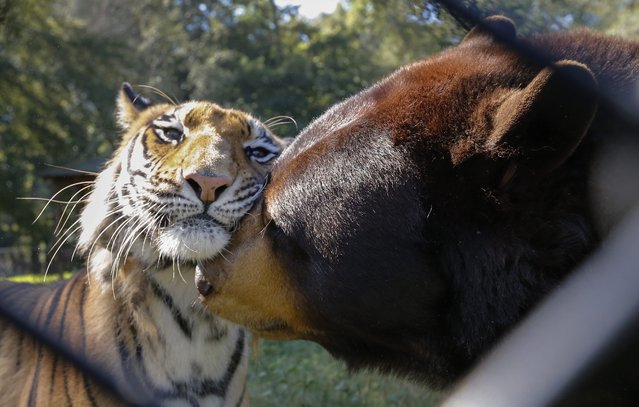
Baloo (R), a North American Black Bear, rubs snouts with his companion Shere Hkhan, a Bengal tiger, inside their shared enclosure at Noah's Ark animal sanctuary in Locust Grove, Georgia, USA, 28 August 2014. According to the facility, the pair and a lion named Leo, were confiscated at a young age from a drug dealer's basement in Atlanta, Georgia. Noah's Ark cares for about 100 different species of animals on a 250 acre farm since 1990. (Photo by Erik S. Lesser/EPA)

Baloo (R), a North American Black Bear, rubs snouts with his companion Shere Hkhan, a Bengal tiger, inside their shared enclosure at Noah's Ark animal sanctuary in Locust Grove, Georgia, USA, 28 August 2014. According to the facility, the pair and a lion named Leo, were confiscated at a young age from a drug dealer's basement in Atlanta, Georgia. Noah's Ark cares for about 100 different species of animals on a 250 acre farm since 1990. (Photo by Erik S. Lesser/EPA)
Details
30 Aug 2014 11:28:00
Firework display from the top of the Sky Tower to welcome the New Year on January 1, 2015 in Auckland, New Zealand. (Photo by Dave Rowland/Getty Images)

Firework display from the top of the Sky Tower to welcome the New Year on January 1, 2015 in Auckland, New Zealand. (Photo by Dave Rowland/Getty Images)
Details
01 Jan 2015 13:35:00
Breath of an Arctic fox by Marco Gaiotti, Italy. Marco was watching this little Arctic fox as it incessantly called another nearby. Gradually he noticed the fox’s wet breath was quickly freezing in the air after each call. It was late winter in Spitsbergen, Svalbard, and the air was -35C (-31F). Photographing Arctic foxes is often frustrating, as they are normally running around fast in search of food, but this one was very relaxed and let Marco get close enough to focus on it, with the light glowing perfectly in the background. (Photo by Marco Gaiotti/Wildlife Photographer of the Year 2021)

Breath of an Arctic fox by Marco Gaiotti, Italy. Marco was watching this little Arctic fox as it incessantly called another nearby. Gradually he noticed the fox’s wet breath was quickly freezing in the air after each call. It was late winter in Spitsbergen, Svalbard, and the air was -35C (-31F). Photographing Arctic foxes is often frustrating, as they are normally running around fast in search of food, but this one was very relaxed and let Marco get close enough to focus on it, with the light glowing perfectly in the background. (Photo by Marco Gaiotti/Wildlife Photographer of the Year 2021)
Details
05 Dec 2021 06:36:00
A Colombian soldier hugs his girlfriend during the graduation ceremony of soldiers in Nilo, Colombia, February 17, 2017. The soldiers will be deployed to occupy territories formerly controlled by FARC rebels. (Photo by Jaime Saldarriaga/Reuters)

A Colombian soldier hugs his girlfriend during the graduation ceremony of soldiers in Nilo, Colombia, February 17, 2017. The soldiers will be deployed to occupy territories formerly controlled by FARC rebels. (Photo by Jaime Saldarriaga/Reuters)
Details
18 Feb 2017 10:03:00
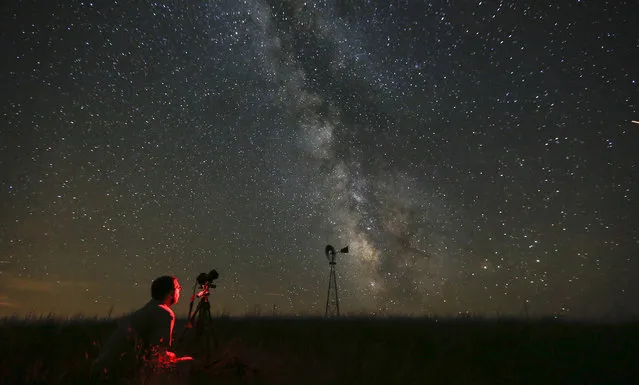
In this Wednesday, July 23, 2014 file photo, Omaha photographer Lane Hickenbottom photographs the night sky in a pasture near Callaway, Neb. With no moon in the sky, the Milky Way was visible to the naked eye. More than one-third of the world’s population can no longer see the Milky Way because of man-made lights, according to a scientific paper by Light Pollution Science and Technology Institute's Fabio Falchi and his team members, published on Friday, June 10, 2016. (Photo by Travis Heying/The Wichita Eagle via AP Photo)

In this Wednesday, July 23, 2014 file photo, Omaha photographer Lane Hickenbottom photographs the night sky in a pasture near Callaway, Neb. With no moon in the sky, the Milky Way was visible to the naked eye. More than one-third of the world’s population can no longer see the Milky Way because of man-made lights, according to a scientific paper by Light Pollution Science and Technology Institute's Fabio Falchi and his team members, published on Friday, June 10, 2016. (Photo by Travis Heying/The Wichita Eagle via AP Photo)
Details
11 Jun 2016 12:37:00