Loading...
Done
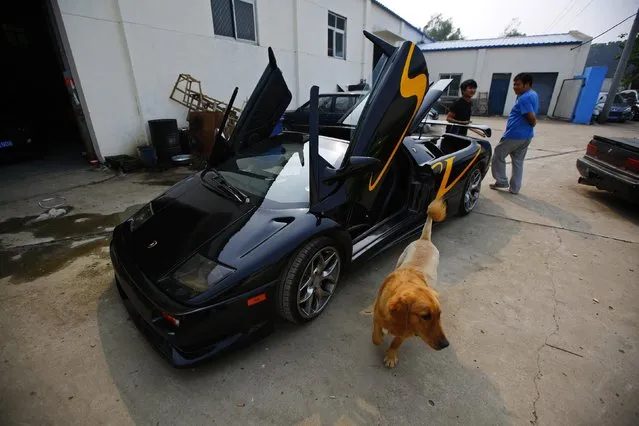
A dog walks past a handmade replica of Lamborghini Diablo outside a garage rented by Wang Yu and Li Lintao on the outskirts of Beijing, August 21, 2014. (Photo by Petar Kujundzic/Reuters)

A dog walks past a handmade replica of Lamborghini Diablo outside a garage rented by Wang Yu and Li Lintao on the outskirts of Beijing, August 21, 2014. Chinese race car enthusiasts Wang Yu and Li Lintao, both in their 30s, have finished designing and making two replicas of the Lamborghini Diablo, which can reach the top speed of 310km/h, and are currently working on a replica of the T-Rex motorcycle. They spent approximately 5 million yuan (around USD 811,899) to buy parts and hire workers, and about 6 years to assemble them with the knowledge they gained from studying mechanology for nearly a decade abroad. Wang and Li went popular after showing their first handmade replica of Lamborghini Diablo at the Beijing International Automobile Exhibition in 2012, and sold their second Lamborghini replica to Alibaba as a collection. (Photo by Petar Kujundzic/Reuters)
Details
26 Aug 2014 09:50:00
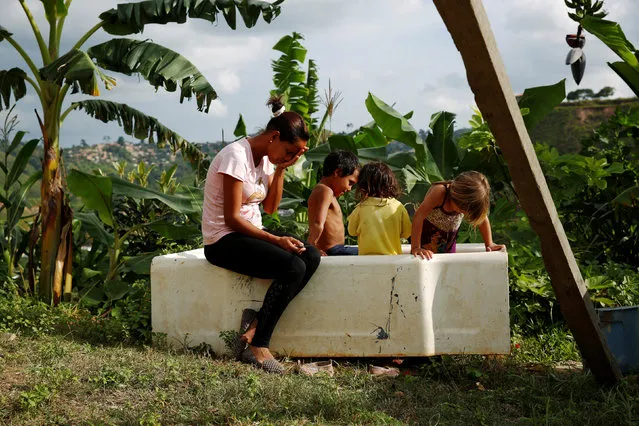
Lisibeht Martinez (L), 30, who was sterilized one year ago, sits next to her children while they play in a bathtub in the backyard of their house in Los Teques, Venezuela July 19, 2016. (Photo by Carlos Garcia Rawlins/Reuters)

Venezuela's food shortages, inflation and crumbling medical sector have become such a source of anguish that a growing number of young women are reluctantly opting for sterilizations rather than face the hardship of pregnancy and child-rearing. Traditional contraceptives like condoms or birth control pills have virtually vanished from store shelves, pushing women towards the hard-to-reverse surgery. While no recent national statistics on sterilizations are available, doctors and health workers say demand for the procedure is growing. (Photo by Carlos Garcia Rawlins/Reuters)
Details
04 Aug 2016 12:22:00
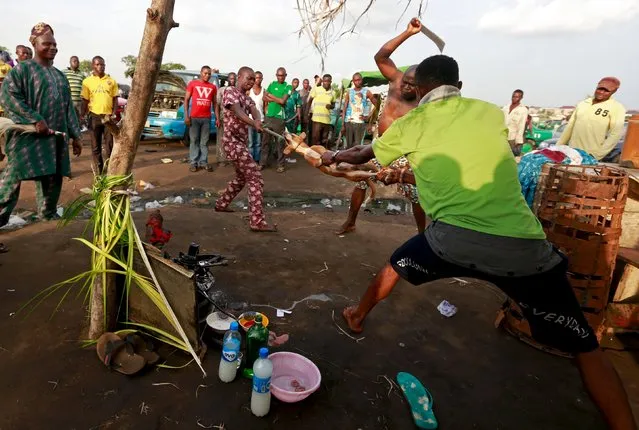
Chief priest Gbenga Saala raises a cutlass to kill a dog during an annual prayer and sacrifice celebration of the iron god Ogun in Abuja, Nigeria, June 23, 2015. (Photo by Afolabi Sotunde/Reuters)

Chief priest Gbenga Saala raises a cutlass to kill a dog during an annual prayer and sacrifice celebration of the iron god Ogun in Abuja, Nigeria, June 23, 2015. Every year worshippers offer a dog as sacrifice to Ogun, a traditional Nigerian deity, in hope of an auspicious year ahead. Taxi drivers, blacksmiths, panel beaters and mechanics – trades that depend on metal for their livelihood – pay homage to Ogun, led by high priest Gbenga Saala. As part of the ceremony, the priest pours the dog’s blood on symbols of these workers’ trade: keys, spanners and other tools piled up in a metal barrel. (Photo by Afolabi Sotunde/Reuters)
Details
15 Sep 2015 13:56:00
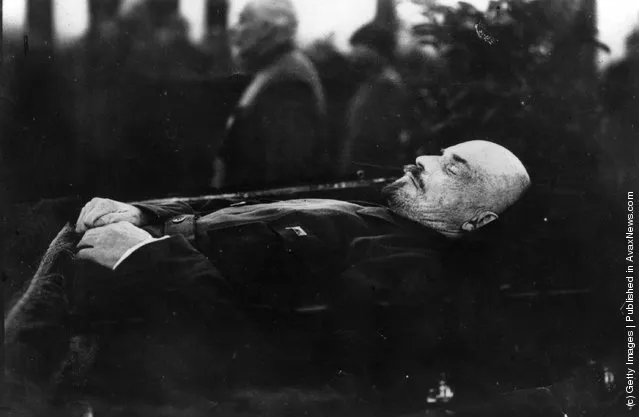
1924:  Vladimir Ilyich Lenin lying in state in the Kremlin

Photo: Vladimir Ilyich Lenin (1870 – 1924) lying in state in the Kremlin. (Photo by Hulton Archive/Getty Images). 1924

Important! For the same article in Russian language click here.

Something quite intriguing is happening within Russian-speaking internet during the last few – should you type a fully academic inquiry (at least, according to Russian academic requirements) in national search engines for "Lenin's mausoleum" – the first thing you get (even in top 10 searches) is website pages talking about black magic and occult. Website authors view this construction differently, but unconditionally agree on one thing: the mausoleum of the "leader of the world proletariat” – the essence of a magical artifact, a sort of “energy vampire”. It was built with a certain purpose: to drain the energy out of miserable Soviet citizens on one hand; and to poison the anthroposphere of one-sixth part of the earth with its vibes (the exact territory that was occupied by the former Soviet Union), depriving the Russian people of will to resist on the other hand. Complete nonsense? No doubt. Nevertheless, an intriguing one. Well, probably because some oddities do exist in mausoleum's history. These oddities are the thing we are going to discuss this time. First, let me refresh you memory on the subject.
Details
16 Oct 2011 11:27:00
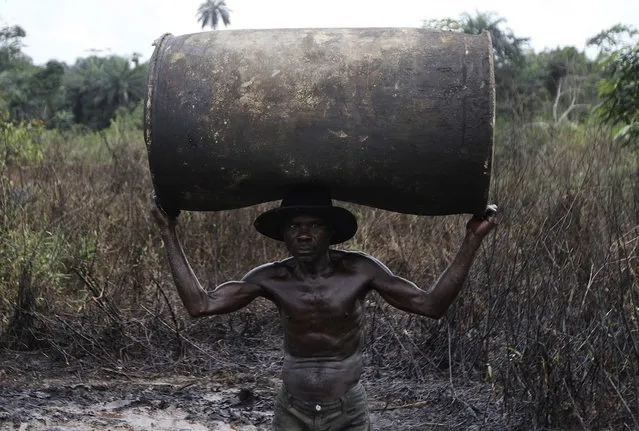
Ebiowei, 48, carries an empty oil container on his head to a place where it would be filled with refined fuel at an illegal refinery site near river Nun in Nigeria's oil state of Bayelsa November 27, 2012. (Photo by Akintunde Akinleye/Reuters)

Ebiowei, 48, carries an empty oil container on his head to a place where it would be filled with refined fuel at an illegal refinery site near river Nun in Nigeria's oil state of Bayelsa November 27, 2012. Locals in the industry say workers can earn $50 to $60 a day. Thousands of people in Nigeria engage in a practice known locally as “oil bunkering” – hacking into pipelines to steal crude then refining it or selling it abroad. The practice, which leaves oil spewing from pipelines for miles around, managed to lift around a fifth of Nigeria's two million barrel a day production last year according to the finance ministry. (Photo by Akintunde Akinleye/Reuters)
Details
18 Jan 2013 14:29:00
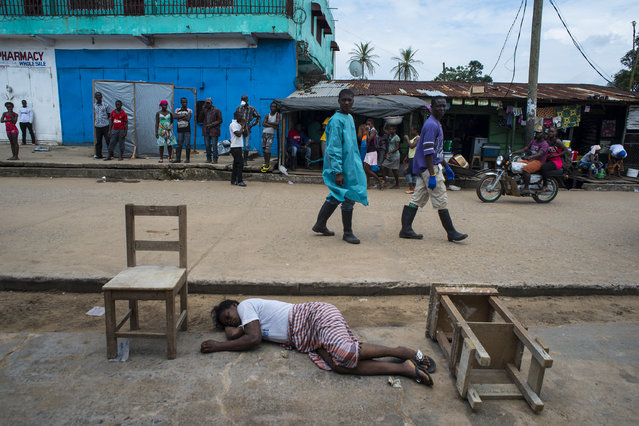
A woman lays dead outside the Redemption Hospital on Saturday September 20, 2014 in Monrovia, Liberia. Ebola patients come to the hospital, which has become a transfer and holding center to intake Ebola patients, but there is no space and some die while waiting outside. Redemption is located in one of the poorest neighborhoods of Monrovia that locals call "New Kru Town”. (Photo by Michel du Cille/The Washington Post)

A woman lays dead outside the Redemption Hospital on Saturday September 20, 2014 in Monrovia, Liberia. Ebola patients come to the hospital, which has become a transfer and holding center to intake Ebola patients, but there is no space and some die while waiting outside. Redemption is located in one of the poorest neighborhoods of Monrovia that locals call "New Kru Town”. Health workers are overwhelmed with a constant stream of new patients since the Ebola outbreak. (Photo by Michel du Cille/The Washington Post)
Details
16 Oct 2014 12:59:00
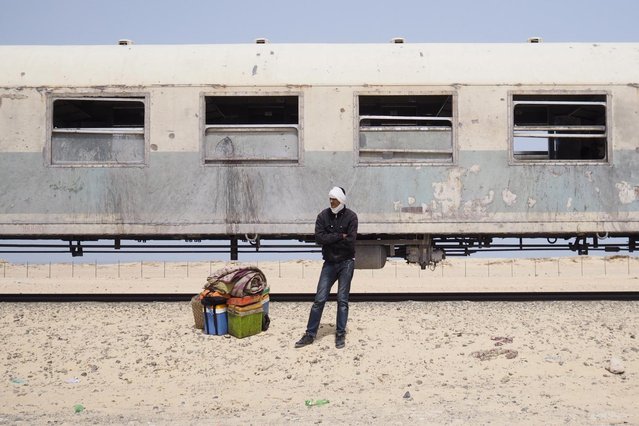
A passenger on a SNIM train carrying iron ore and mine workers waits for transport after arriving in Nouadhibou June 25, 2014. (Photo by Joe Penney/Reuters)

A passenger waits after his train arrived in Nouadhibou, Mauritania’s second largest city and the main export port for the country’s iron ore industry, on June 25, 2014. The mining company’s employees proudly call their firm the lung of their nation's economy and the train that ferries the ore to the coast stretches some two kilometres, making it one of the world's longest. SNIM mines black iron ore in the northern town of Zouerate, a remote desert location which nevertheless attracts people from all over the country looking for work. (Photo by Joe Penney/Reuters)
Details
27 Oct 2014 11:51:00
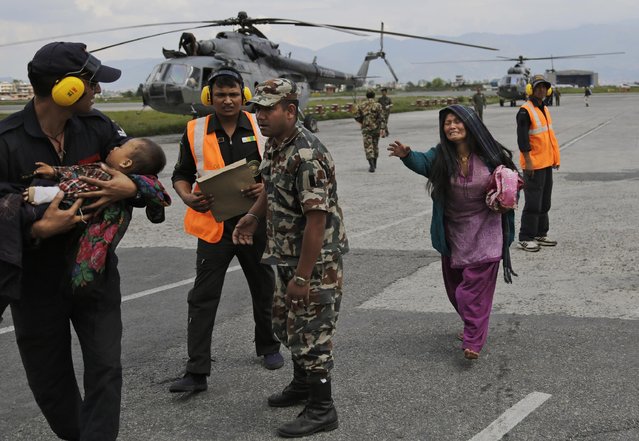
An Indian Air Force person walks carrying a Nepalese child, wounded in Saturday's earthquake, to a waiting ambulance as the mother rushes to join after they were evacuated from a remote area at the airport in Kathmandu, Nepal, Monday, April 27, 2015. (Photo by Altaf Qadri/AP Photo)

An Indian Air Force person walks carrying a Nepalese child, wounded in Saturday's earthquake, to a waiting ambulance as the mother rushes to join after they were evacuated from a remote area at the airport in Kathmandu, Nepal, Monday, April 27, 2015. The death toll from Nepal's earthquake is expected to rise depended largely on the condition of vulnerable mountain villages that rescue workers were still struggling to reach two days after the disaster. (Photo by Altaf Qadri/AP Photo)
Details
28 Apr 2015 13:52:00