Loading...
Done
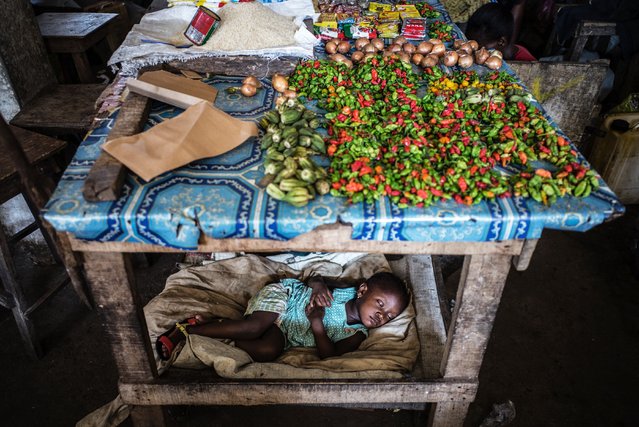
A child sleeps under a table at the Jorkpan market in Sinkor district in Monrovia, on May 2, 2016. (Photo by Marco Longari/AFP Photo)

A child sleeps under a table at the Jorkpan market in Sinkor district in Monrovia, Liberia on May 2, 2016. (Photo by Marco Longari/AFP Photo)
Details
10 May 2016 12:49:00
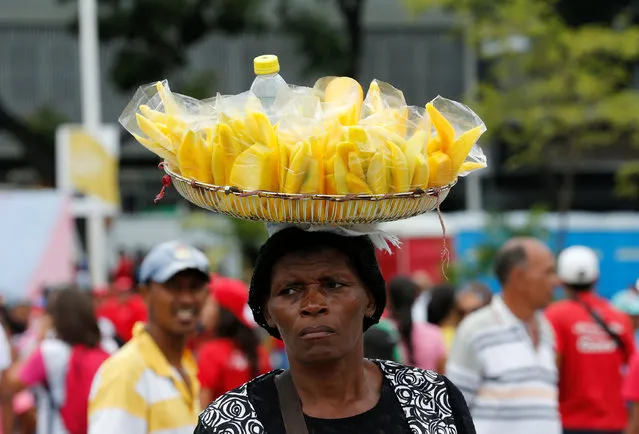
A street vendor sells sliced fruits during a pro-government rally in Caracas, Venezuela, June 21, 2016. (Photo by Mariana Bazo/Reuters)

A street vendor sells sliced fruits during a pro-government rally in Caracas, Venezuela, June 21, 2016. (Photo by Mariana Bazo/Reuters)
Details
28 Jun 2016 12:13:00
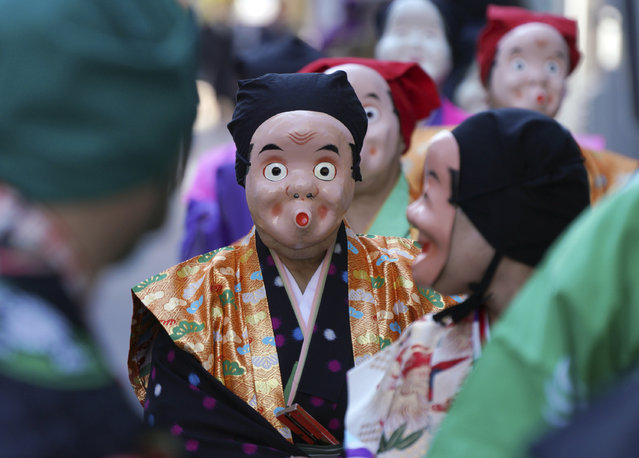
Artists wearing Japanese traditional clown masks march during the First Konpira Festival at Kotohiragu shrine in Tokyo Wednesday, January 10, 2018. The shrine is dedicated to sailors and seafaring. (Photo by Eugene Hoshiko/AP Photo)

Artists wearing Japanese traditional clown masks march during the First Konpira Festival at Kotohiragu shrine in Tokyo Wednesday, January 10, 2018. The shrine is dedicated to sailors and seafaring. (Photo by Eugene Hoshiko/AP Photo)
Details
30 Jan 2018 06:32:00
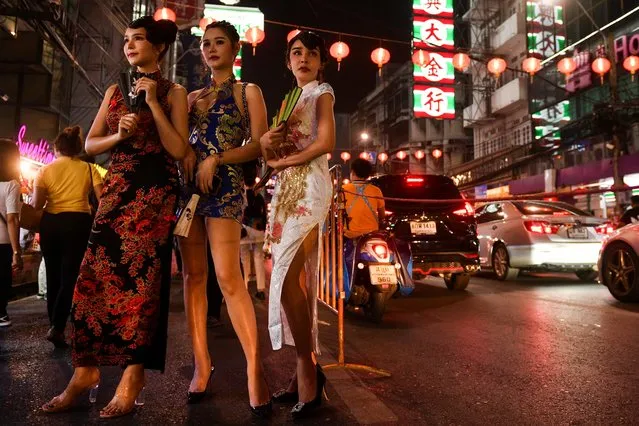
Women stand on a street ahead of the Lunar New Year celebration at the Chinatown in Bangkok, Thailand, February 10, 2021. (Photo by Chalinee Thirasupa/Reuters)

Women stand on a street ahead of the Lunar New Year celebration at the Chinatown in Bangkok, Thailand, February 10, 2021. (Photo by Chalinee Thirasupa/Reuters)
Details
13 Feb 2021 10:35:00
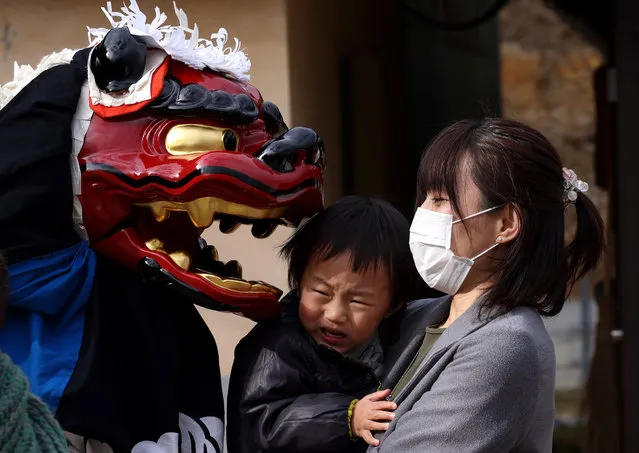
A performer wearing a lion mask performs the Ise Daikagura lion dance at the remote village of Yamanawa on February 08, 2021 in Ryuo, Japan. Ise Daikagura is a group of traditional Lion Dance performers who pray in front of farmers houses and businesses for good grain harvests and disease-free lives. Performers play sacred music using drums and flutes with two lion mask dancers. A lion mask is considered a symbol of God, who enters the house and performs in front of the Shinto God, a statue placed inside the house, mostly in the kitchen. These prayers are called “Kamodo Barai”. After the prayers, they are gifted with money, rice, sake and Japanese sweets from the householders. A group can travel for more than one hundred days to thousands of households and businesses throughout rural-villages in western Japan, and pray to those who are unable to visit the country’s most sacred shrine, the Grand Ise Shrine in Mie Prefecture. The group started its performance in the Edo era between 1603 to 1868 according to Japanese history. The Japanese government designated it as an important folk cultural national property in 1981. (Photo by Buddhika Weerasinghe/Getty Images)

A performer wearing a lion mask performs the Ise Daikagura lion dance at the remote village of Yamanawa on February 08, 2021 in Ryuo, Japan. Ise Daikagura is a group of traditional Lion Dance performers who pray in front of farmers houses and businesses for good grain harvests and disease-free lives. (Photo by Buddhika Weerasinghe/Getty Images)
Details
18 Feb 2021 09:27:00
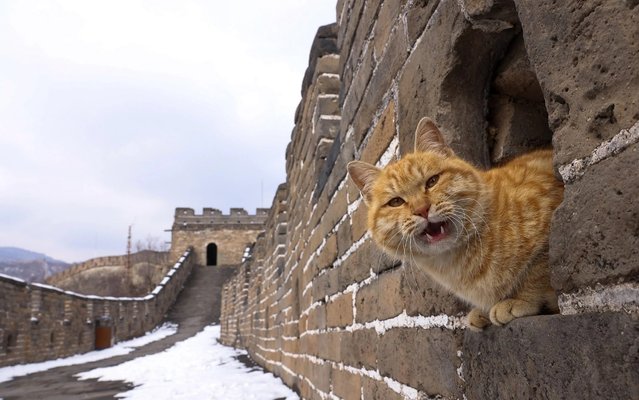
A cat sits on the empty Great Wall on February 23, 2021 in Beijing, China. Affected by the new coronavirus (COVID-19), the number of visitors to Mutianyu Great Wall in 2020 dropped by about 60%. (Photo by Lintao Zhang/Getty Images)

A cat sits on the empty Great Wall on February 23, 2021 in Beijing, China. Affected by the new coronavirus (COVID-19), the number of visitors to Mutianyu Great Wall in 2020 dropped by about 60%. (Photo by Lintao Zhang/Getty Images)
Details
03 Mar 2021 10:00:00
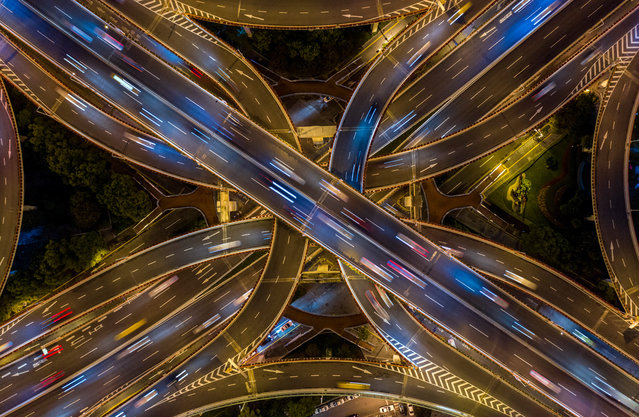
This aerial picture taken on the night of November 12, 2018 shows traffic on an elevated intersection in downtown Shanghai, China. (Photo by Johannes Eisele/AFP Photo)

This aerial picture taken on the night of November 12, 2018 shows traffic on an elevated intersection in downtown Shanghai, China. (Photo by Johannes Eisele/AFP Photo)
Details
26 Nov 2018 00:03:00
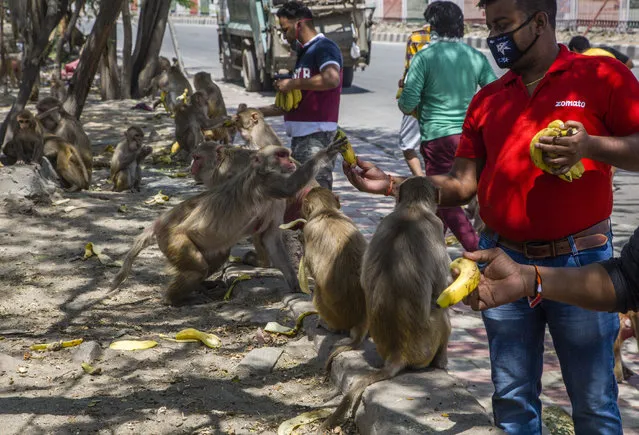
Men give bananas to monkeys gathered on the side of the road as India remains under an unprecedented lockdown over the highly contagious coronavirus (COVID-19) on April 08, 2020 in New Delhi, India. Wild animals, including monkeys, are roaming human settlements in India as people are staying indoors due to the 21-day lockdown. With India's 1.3 billion population and tens of millions of cars off the roads, wildlife is moving towards areas inhabited by humans. Wild animals in many countries have been seen roaming streets. A study says some 60 percent of the new diseases found around the globe every year are zoonotic, meaning they originate in animals and are passed on to humans. COVID-19 is a zoonotic disease that is suspected to have come from the wet markets of Wuhan, China. (Photo by Yawar Nazir/Getty Images)

Men give bananas to monkeys gathered on the side of the road as India remains under an unprecedented lockdown over the highly contagious coronavirus (COVID-19) on April 08, 2020 in New Delhi, India. Wild animals, including monkeys, are roaming human settlements in India as people are staying indoors due to the 21-day lockdown. (Photo by Yawar Nazir/Getty Images)
Details
12 Apr 2020 00:05:00