Loading...
Done


U.S. Army soldiers carry an injured soldier who was shot in the leg, through a poppy field on April 24, 2011 in the Arghandab River Valley, Kandahar Province, Afghanistan. The injured was evacuated to a waiting Blackhawk UH-60A helicopter by Task Force Thunder Brigade, Charlie company 1st of the 52nd Aviation regiment from Fairbanks, Alaska. It is feared that as weather improves with the approaching summer that the casualty toll will rise. (Photo by Paula Bronstein/Getty Images)
Details
27 Apr 2011 08:39:00
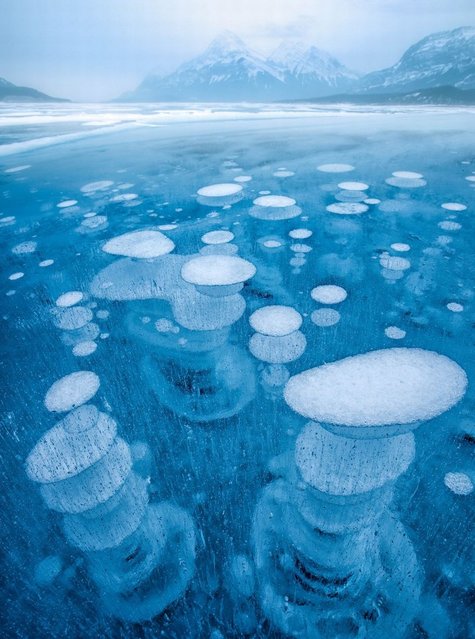
Ice bubbles in Abraham Lake, located at the foot of the Rocky Mountains in Canada. (Photo by Chip Phillips/Rex Features)

Located at the foot of the Rocky Mountains on the North Saskatchewan River, the rare phenomenon occurs each winter in the man-made lake. Photo: Ice bubbles in Abraham Lake. (Photo by Chip Phillips/Rex Features)
Details
27 Jun 2013 07:19:00
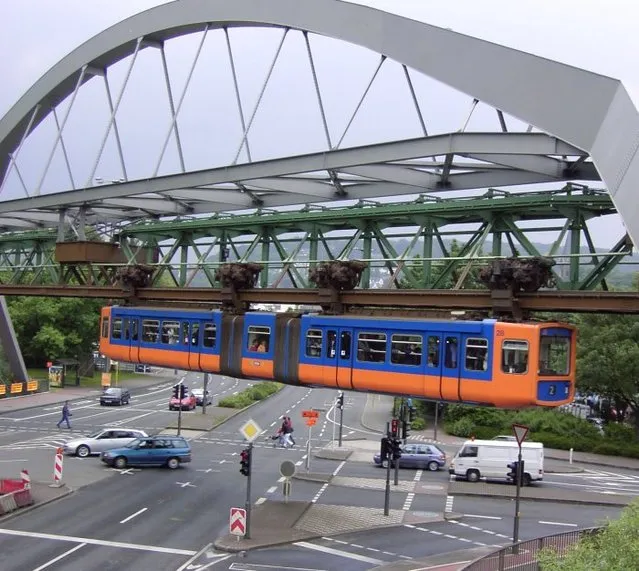
The Wuppertal Suspension Railway in Wuppertal, Germany

The Wuppertal Suspension Railways is one a kind elevated railway located in Wuppertak, Germany. It is the oldest elevated railway in the world, though it doesn’t look like it. It is kept in great condition by the government and provides for a great attraction for the tourists. It provides a great overview, as it runs above a number of city streets and a small river. Moreover, since it is powered by electricity, it proves an ecologically clean method of travel for the residents of the city.
Details
03 Apr 2015 11:38:00
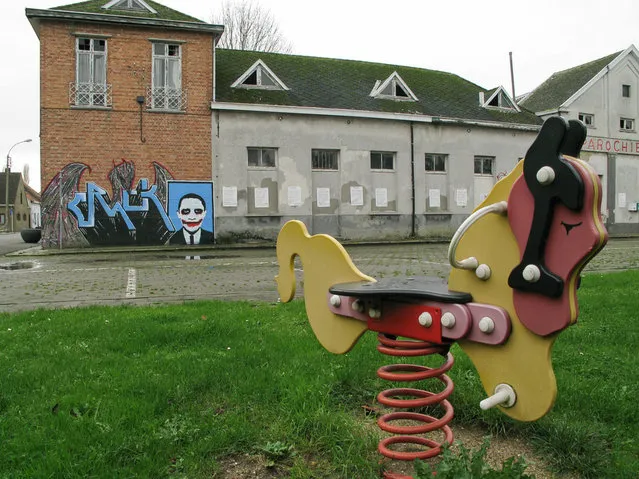
Abandon Village: Doel, Belgium

Doel is a 700 year old village on the river Scheldt in Belgium. Near to the local nuclear power plant, with its two giant cooling towers, it became the target for demolition not once but twice in order to make way for the ever expanding harbor. The successful protest groups of the seventies could not compete in the 90's and as residents began to leave, the government refused to rent out the properties again and instead let them fall into disrepair. On the 23rd of March 2007, the government decided that the village would be demolished by 2009 and in June 2008, residents received a letter informing them that they were to vacate their homes by the 1st of September 2009.
Details
20 Mar 2013 11:33:00
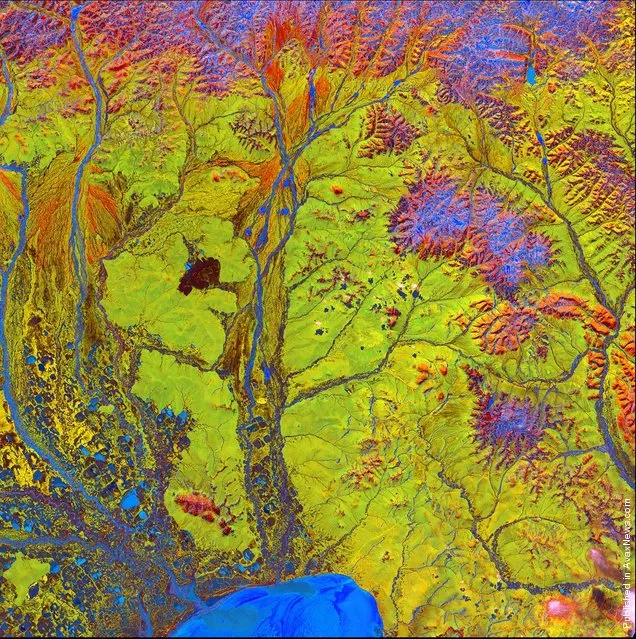
Vivid colors and bizarre shapes come together in a false-color image that could be an illustration for a fantasy story

Vivid colors and bizarre shapes come together in a false-color image that could be an illustration for a fantasy story. This labyrinth of exotic features winds its way along the edge of Russia’s Chaunskaya Bay in northeastern Siberia, seen as a vivid blue half-circle at the bottom of the image Two major rivers, the Chaun and Palyavaam, flow into the bay, which in turn opens into the Arctic Ocean. Ribbon lakes and bogs are present throughout the area, created by depressions left by receding glaciers. (Photo by USGS/NASA)
Details
14 Apr 2012 11:02:00
stone art by Hirotoshi Itoh

Hirotoshi Itoh graduated from Tokyo National Fine Arts University in 1982 and later went into his family business as a stonemason. He spent several years working with metal before turning his attention to stones. He utilizes stones found in a river bank near his home, and he creates sculptures that juxtapose the original shape and hardness of the material with surprising humor and texture. You can find more of his work on his Deviant Art page.
Details
17 May 2012 10:58:00
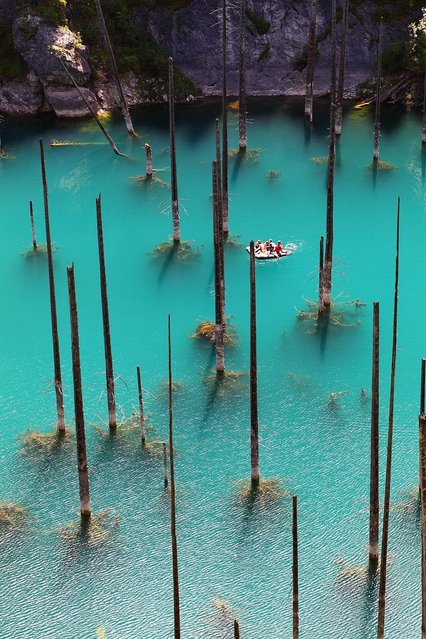
Kaindy Lake in Kazakhstan

Kaindy Lake (Kazakh: Қайыңды көлі, Qayındı köli) is a 400 metre long lake in Kazakhstan that reaches depths near 30 metres in some areas. It is located 129 km ESE of the city of Almaty and is 2,000 metres above sea level. It was created by the result of an enormous limestone landslide, triggered by the 1911 Kebin earthquake. The track to Kaindy lake has many scenic views to the Saty Gorge, the Chilik River valley and the Kaindy Gorge. Dried-out trunks of submerged Picea schrenkiana trees rise above the surface.
Details
06 Aug 2012 09:58:00
Victoria amazonica

The species has very large leaves, up to 3 m in diameter, that float on the water's surface on a submerged stalk, 7–8 m in length. The species was once called Victoria regia after Queen Victoria, but the name was superseded. V. amazonica is native to the shallow waters of the Amazon River basin, such as oxbow lakes and bayous. It is depicted in the Guyanese coat of arms. The flowers are white the first night they are open and become pink the second night. They are up to 40 cm in diameter, and are pollinated by beetles.
Details
03 Sep 2012 06:58:00