Loading...
Done
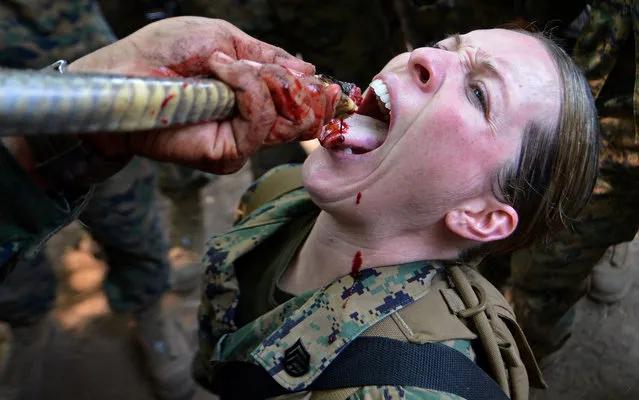
In a military base in the Thai province of Chon Buri February 20 U.S. Marines Navy with Thailand began their studies in jungle survival. The event is held in joint military exercises “Cobra Gold 2013”. During a jungle survival program February 20, 2013 taught by Royal Thai Special Forces in Sannapit, Thailand, U.S. Marines learned to catch cobras and drink their fresh blood, not to mention eat forest insects and pull the heads off of chicken. The training was part of Operation Cobra Gold 13, the 32nd edition of international military exercises hosted by the Thai. According to a U.S. Marines press release, Cobra Gold is the largest exercise of its kind in Asia and incorporates troops from five other nations in addition to the U.S. and Thailand. The Daily Mail reports that the Marines were invited to experience the local custom of drinking cobra blood after being taught to catch and kill cobras in the wild. As CNN notes, Cobra blood is believed to be a panacea and aphrodiasic in parts of Southeast Asia. In Jakarta, vendors can earn over $100 a night selling shots of cobra blood mixed with liquor. (Photo by Pornchai Kittiwongsakul/AFP Photo)

During a jungle survival program February 20, 2013 taught by Royal Thai Special Forces in Sannapit, Thailand, U.S. Marines learned to catch cobras and drink their fresh blood, not to mention eat forest insects and pull the heads off of chicken. The training was part of Operation Cobra Gold 13, the 32nd edition of international military exercises hosted by the Thai. According to a U.S. Marines press release, Cobra Gold is the largest exercise of its kind in Asia and incorporates troops from five other nations in addition to the U.S. and Thailand. The Daily Mail reports that the Marines were invited to experience the local custom of drinking cobra blood after being taught to catch and kill cobras in the wild. As CNN notes, Cobra blood is believed to be a panacea and aphrodiasic in parts of Southeast Asia. In Jakarta, vendors can earn over $100 a night selling shots of cobra blood mixed with liquor. (Photo by Pornchai Kittiwongsakul/AFP Photo)
Details
23 Feb 2013 11:52:00


“Henri Marie Raymond de Toulouse-Lautrec-Monfa or simply Henri de Toulouse-Lautrec (24 November 1864 – 9 September 1901) was a French painter, printmaker, draughtsman, and illustrator, whose immersion in the colourful and theatrical life of fin de siècle Paris yielded an œuvre of exciting, elegant and provocative images of the modern and sometimes decadent life of those times. Toulouse-Lautrec is known along with Cézanne, Van Gogh, and Gauguin as one of the greatest painters of the Post-Impressionist period. In a 2005 auction at Christie's auction house a new record was set when “La blanchisseuse”, an early painting of a young laundress, sold for $22.4 million U.S” – Wikipedia.

Photo: Full-length portrait of French artist Henri Toulouse-Lautrec wearing an overcoat, a bowler hat, and pince-nez eyeglasses while holding a cane. (Photo by Hulton Archive/Getty Images). Circa 1895
Details
20 Mar 2011 09:28:00


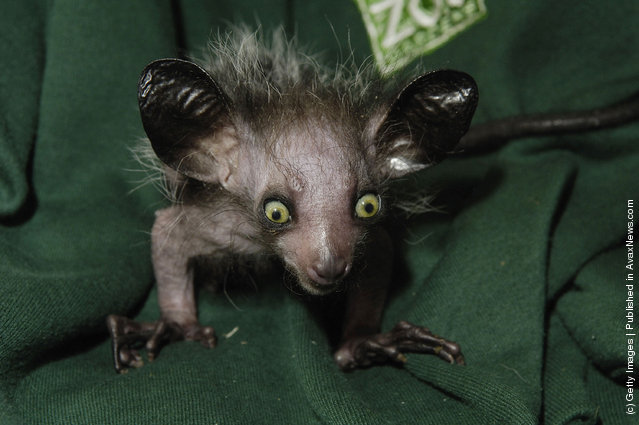
“The aye-aye (Daubentonia madagascariensis) is a lemur, a strepsirrhine primate native to Madagascar that combines rodent-like teeth and a special thin middle finger to fill the same ecological niche as a woodpecker. It is the world's largest nocturnal primate, and is characterized by its unusual method of finding food; it taps on trees to find grubs, then gnaws holes in the wood and inserts its narrow middle finger to pull the grubs out. The only other animal species known to find food in this way is the striped possum. From an ecological point of view the aye-aye fills the niche of a woodpecker as it is capable of penetrating wood to extract the invertebrates within”. – Wikipedia

Photo: In this handout image from Bristol Zoo is seen the first captive bred aye-aye in the UK named “Kintana” (meaning star in Malagasy) April 15, 2005 at Bristol Zoo Gardens, England. The zoo announced today only the second baby aye-aye to be hand-reared in the world (the first was in Jersey Zoo) and has now made his first public appearance since his birth on 11 February 2005. (Photo by Rob Cousins/Bristol Zoo via Getty Images)
Details
13 Apr 2011 13:33:00


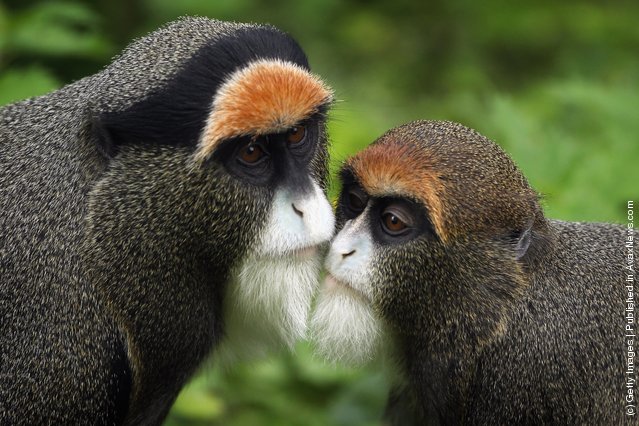
Two De Brazza's monkeys stand together at Port Lympne Wild Animal Park on June 21, 2011 in Hythe, England. Port Lympne has welcomed a host of new arrivals this year with wildebeest, colobus monkeys, gorillas and rhinos all adding to the current stock. Port Lympne and Howletts Wild Animal parks were set up by the late John Aspinall to protect and breed rare and endangered species and, where possible, return them to safe areas in the wild. The Aspinall Foundation which runs the parks also manages two gorilla rescue and rehabilitation projects in the central African countries of Gabon and Congo where they have successfully reintroduced over 50 gorillas to the wild. (Photo by Dan Kitwood/Getty Images)
Details
24 Jun 2011 10:12:00


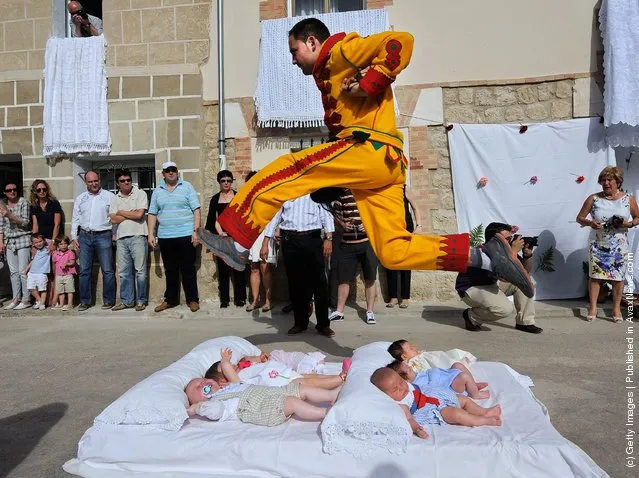
“Baby jumping (El Colacho) is a traditional Spanish practice dating back to 1620 that takes place annually to celebrate the Catholic feast of Corpus Christi in the village of Castrillo de Murcia near Burgos. During the act – known as El Salto del Colacho (the devil's jump) or simply El Colacho – men dressed as the Devil (known as the Colacho) jump over babies born during the previous twelve months of the year who lie on mattresses in the street. ... The festival has been rated as one of the most dangerous in the world”. – Wikipedia

Photo: A man representing the devil leaps over babies during the festival of El Colacho on June 26, 2011 in Castrillo de Murcia near Burgos, Spain. The festival, held on the first Sunday after Corpus Cristi, represents the devil taking away original sin from the newly born babies by leaping over them. (Photo by Denis Doyle/Getty Images)
Details
27 Jun 2011 09:20:00
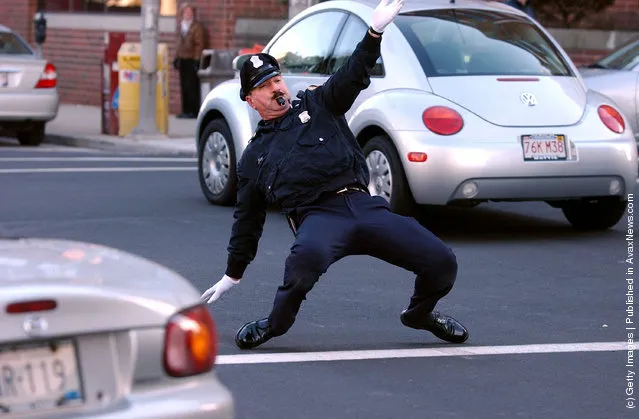
Dancing Cop Tony Lepore

“Tony Lepore (born October 17, 1947), aka the Dancing Cop, is a retired American police officer who has been entertaining on the streets of Providence, Rhode Island during the December holiday season by directing traffic using a dancing style since 1984”. – Wikipedia

Photo: Retired police officer Tony Lepore performs his dance routine while directing traffic December 14, 2004 in downtown Providence, Rhode Island. Lepore has been entertaining drivers and directing traffic at intersections around Providence for 20 years. He came upon the idea after seeing a “Candid Camera” clip of New York City police officers who flamboyantly directed traffic in the 1950's. (Photo by Darren McCollester/Getty Images)
Details
08 Aug 2011 11:06:00
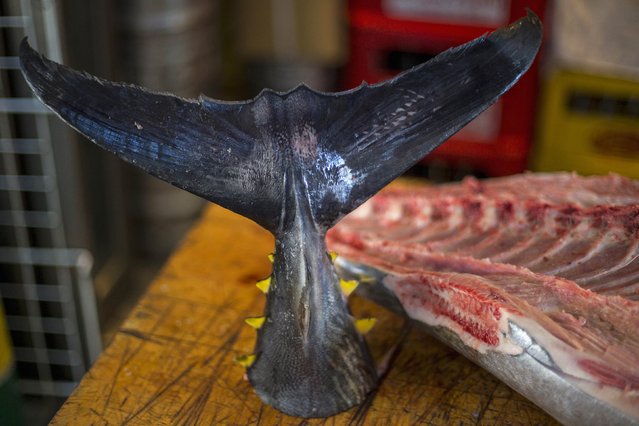
The fin of a tuna is seen on display in the outer part of the Tsukiji fish market, the Jogai Shijo, in Tokyo January 4, 2015. The famous Tsukiji wholesale fish and seafood market, is scheduled to leave its fabled 80-year-old halls to move into bigger, more modern facilities next year ahead of the 2020 Tokyo Olympics. (Photo by Thomas Peter/Reuters)

The fin of a tuna is seen on display in the outer part of the Tsukiji fish market, the Jogai Shijo, in Tokyo January 4, 2015. The famous Tsukiji wholesale fish and seafood market, is scheduled to leave its fabled 80-year-old halls to move into bigger, more modern facilities next year ahead of the 2020 Tokyo Olympics. The outer part of the market, the Jogai Shijo, that caters to the public will stay in its old place, but critics wonder about its chances for survival without the world's biggest fish trading place at its doorsteps. (Photo by Thomas Peter/Reuters)
Details
08 Jan 2015 14:50:00
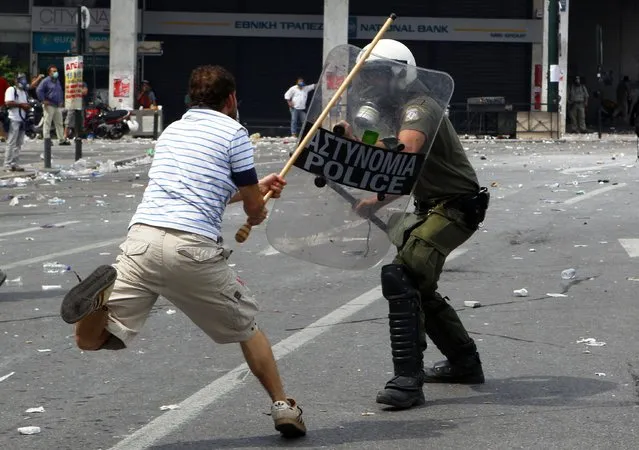
A protester clashes with a police officer in Athens' central Syntagma (Constitution) Square in this June 15, 2011 file photo. Greece triggered the regional financial crisis in 2009 when a far higher budget deficit than previously calculated emerged. (Photo by Yannis Behrakis/Reuters)

A protester clashes with a police officer in Athens' central Syntagma (Constitution) Square in this June 15, 2011 file photo. Greece triggered the regional financial crisis in 2009 when a far higher budget deficit than previously calculated emerged. The collapse of talks with creditors in Paris last November set off a month-long sequence of events leading to elections this week and proving Greece is still the region's weak link. The vote is expected to be won by Syriza, a far-left party opposed to the bailout, worrying investors and creditors alike. (Photo by Yannis Behrakis/Reuters)
Details
22 Jan 2015 13:44:00