Loading...
Done
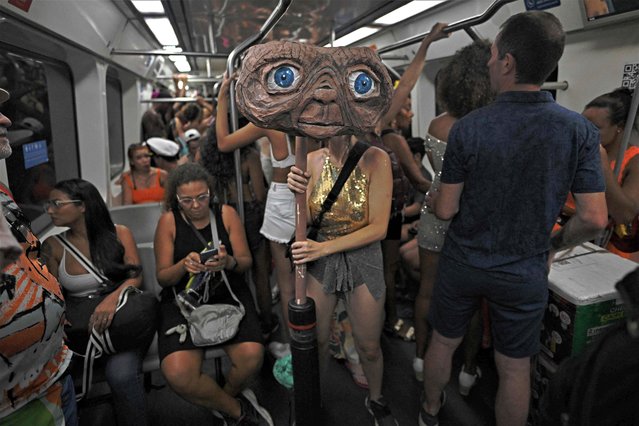
Carnival revellers take the metro in Rio de Janeiro, Brazil on February 19, 2023. Shaking the ground to the beat of their drums, Rio de Janeiro's famed carnival parades returned Sunday in a swirl of glitter, sequins and samba, the festival's first full-on edition since Covid-19 and Brazil's bitterly divisive elections. (Photo by Carl de Souza/AFP Photo)

Carnival revellers take the metro in Rio de Janeiro, Brazil on February 19, 2023. Shaking the ground to the beat of their drums, Rio de Janeiro's famed carnival parades returned Sunday in a swirl of glitter, sequins and samba, the festival's first full-on edition since Covid-19 and Brazil's bitterly divisive elections. (Photo by Carl de Souza/AFP Photo)
Details
29 Jun 2024 02:13:00
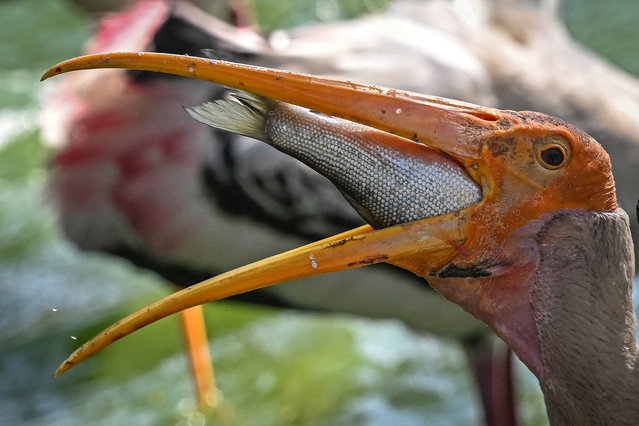
A painted stork eats a fish as it is pictured in the Delhi Zoo in New Delhi on December 5, 2024. (Photo by Sajjad Hussain/AFP Photo)

A painted stork eats a fish as it is pictured in the Delhi Zoo in New Delhi on December 5, 2024. (Photo by Sajjad Hussain/AFP Photo)
Details
15 Dec 2024 02:32:00
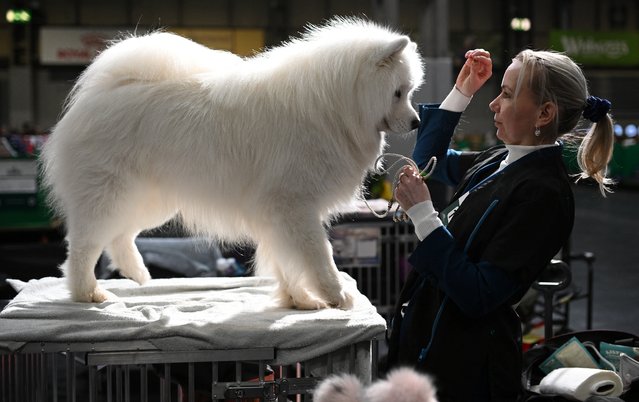
A Samoyed is groomed before being judged on the final day of the Crufts dog show at the National Exhibition Centre in Birmingham, central England, on March 9, 2025. (Photo by Oli Scarff/AFP Photo)

A Samoyed is groomed before being judged on the final day of the Crufts dog show at the National Exhibition Centre in Birmingham, central England, on March 9, 2025. (Photo by Oli Scarff/AFP Photo)
Details
23 Mar 2025 02:48:00
WWII: Women And The War Effort

These stunning color portraits, produced by the U.S. Office of War Information during World War II depict the role of women in the US war effort. All of the images were shot on 4x5 color transparency film by Howard R. Hollem and Alfred T. Palmer during 1942 and 1943 and were turned over to the Library of Congress Prints and Photographs Division in 1944. They are seen here with their original captions.
Details
18 Aug 2013 13:26:00
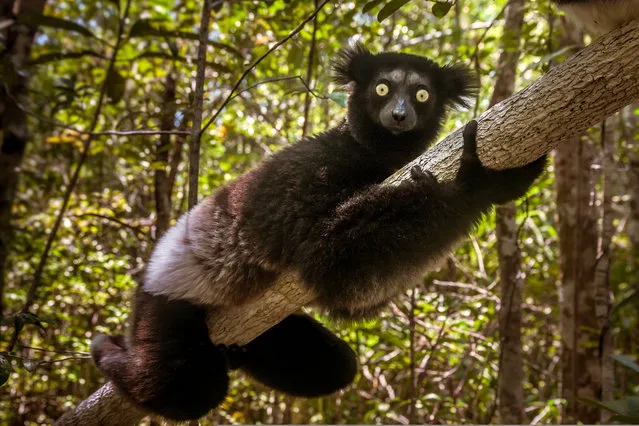
The secretive indri (Indri indri) of Madagascar, the largest living lemur. It is also critically endangered and highly evolutionarily distinct with no close relatives, which makes its branch one of most precarious on the mammal evolutionary tree. In the likely event that the indri goes extinct, we will lose 19m years of unique evolutionary history from the mammal tree of life. (Photo by Pierre-Yves Babelon/Aarhus University)

The secretive indri (Indri indri) of Madagascar, the largest living lemur. It is also critically endangered and highly evolutionarily distinct with no close relatives, which makes its branch one of most precarious on the mammal evolutionary tree. In the likely event that the indri goes extinct, we will lose 19m years of unique evolutionary history from the mammal tree of life. (Photo by Pierre-Yves Babelon/Aarhus University)
Details
18 Nov 2018 00:02:00
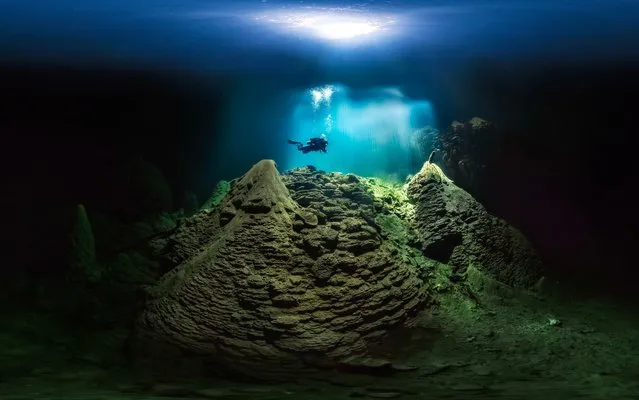
Cave Diver, Anhumas Abyss, Bonito, Brazil: The Anhumas Abyss is an underground cavern with a crystal-clear lake below, more than 260 feet (79 m) deep. A visitor must enter through a narrow opening at the top of the chamber and rappel into the cave. Snorkeling and scuba diving in the lake reveal amazing scenery. Distinctive, conical limestone stalagmites and stalactites occupy the lake and the surrounding area, some reaching 65 feet (20 m) high. “One must rappel about 235 feet (72 m) to get down into this deep lake. The photo was taken at a depth of 50 feet (15 m). It was a challenge to create the image because of the high contrast, plus the diver could not see into the darkness, making communication impossible”. (Photo by Marcio Cabral/Nature’s Best Photography Awards 2017)

Cave Diver, Anhumas Abyss, Bonito, Brazil: The Anhumas Abyss is an underground cavern with a crystal-clear lake below, more than 260 feet (79 m) deep. A visitor must enter through a narrow opening at the top of the chamber and rappel into the cave. Snorkeling and scuba diving in the lake reveal amazing scenery. Distinctive, conical limestone stalagmites and stalactites occupy the lake and the surrounding area, some reaching 65 feet (20 m) high. (Photo by Marcio Cabral/Nature’s Best Photography Awards 2017)
Details
26 Oct 2017 08:10:00
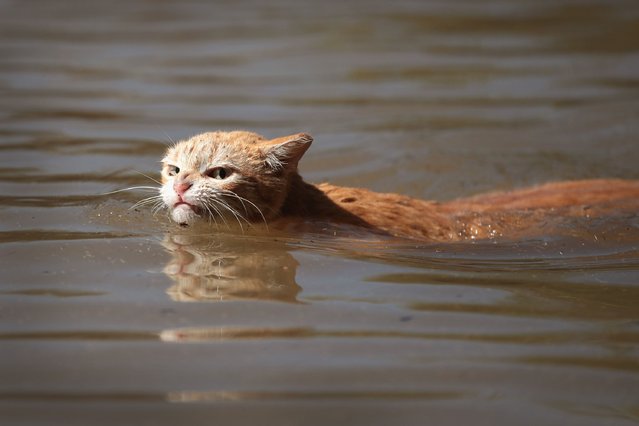
A cat tries to find dry ground around an apartment complex in Houston after Hurricane Harvey hit on Aug. 30. Harvey made landfall in South Texas on August 25, leading to days of downpours that dumped more than 50 inches of rain. Harvey damaged or destroyed about 200,000 homes as the storm system flooded much of Houston and smaller coastal communities. (Photo by Scott Olson/Getty Images)

A cat tries to find dry ground around an apartment complex in Houston after Hurricane Harvey hit on Aug. 30. Harvey made landfall in South Texas on August 25, leading to days of downpours that dumped more than 50 inches of rain. Harvey damaged or destroyed about 200,000 homes as the storm system flooded much of Houston and smaller coastal communities. (Photo by Scott Olson/Getty Images)
Details
26 Dec 2017 08:19:00
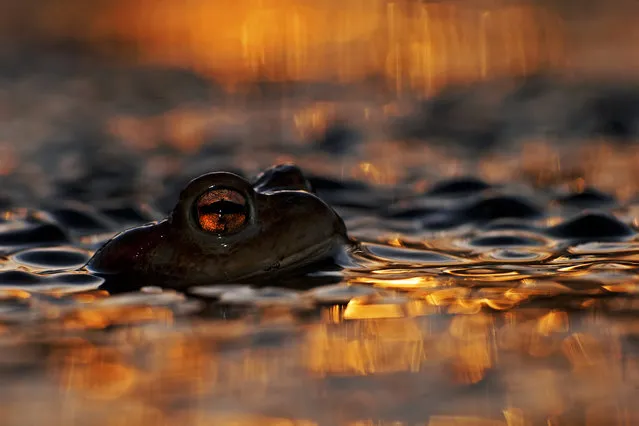
“Eye of a toad”. Animal Portraits, Łukasz Bożycki, Poland.  (Photo by Łukasz Bożycki)

“Eye of a toad”. Animal Portraits, Łukasz Bożycki, Poland. Early spring sees a pond near Łukasz’s home city of Warsaw, Poland, full of mating frogs and a few toads. On this March day, Łukasz shared the pond with them for an evening, sitting in the icy water in his chest-high waders, keeping as still as possible, despite the numbing cold, so that the amphibians could get used to him. “I wanted to find a fresh way of portraying the amphibians”, he says, “at water level”. Using a telephoto lens, he focused on one lone toad and waited for the sun to dip almost below the horizon before pressing the shutter, using flash to bring out the details in the shadow. His prize was “the glorious pool of sunset colour” and fiery glow of the toad’s eye. Nikon D80 + 70-300mm f4.5-5.6 lens + extension tube; 1/125 sec at f9 (-2.3 e/v); ISO 100; built-in flash. (Photo by Łukasz Bożycki)

Details
28 Aug 2013 11:45:00