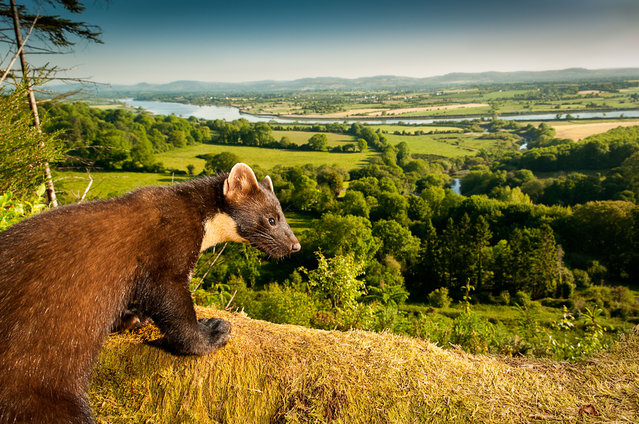
A pine marten – one of a few wild mammals doing well in Britain (although they number just 3,700). A fifth of the country’s wild mammals are at high risk of extinction, research shows. (Photo by Maurice Flynn/The Mammal Society)
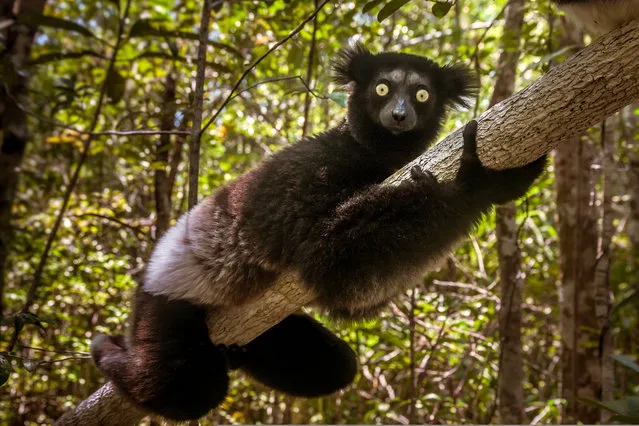
The secretive indri (Indri indri) of Madagascar, the largest living lemur. It is also critically endangered and highly evolutionarily distinct with no close relatives, which makes its branch one of most precarious on the mammal evolutionary tree. In the likely event that the indri goes extinct, we will lose 19m years of unique evolutionary history from the mammal tree of life. (Photo by Pierre-Yves Babelon/Aarhus University)
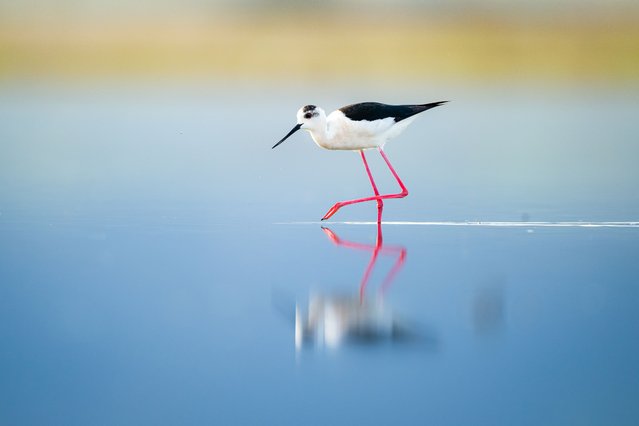
Black Winged Stilt is seen on Kavak Delta, a natural and ecologically important wetland for many migratory birds, in Canakkale, Turkiye on May 13, 2025. (Photo by Alper Tuydes/Anadolu via Getty Images)
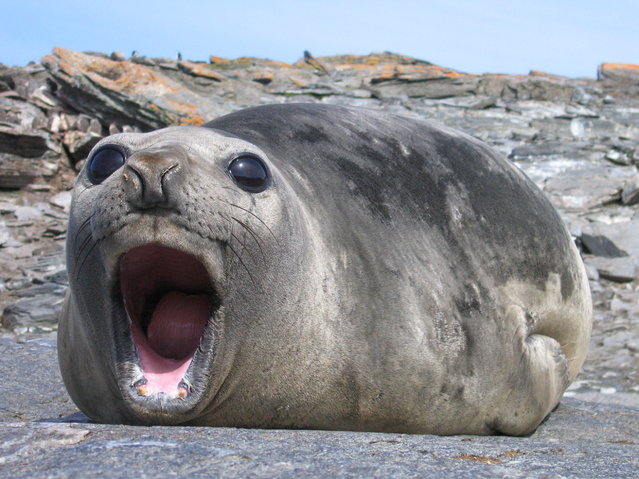
Weddell seal numbers in 2025 have declined sharply on Signy Island, part of the South Orkney Islands in the Southern Ocean, where British Antarctic Survey researchers have tracked seal populations for nearly 50 years to understand the impact of melting sea ice. (Photo by Michael Dunn/The Times)
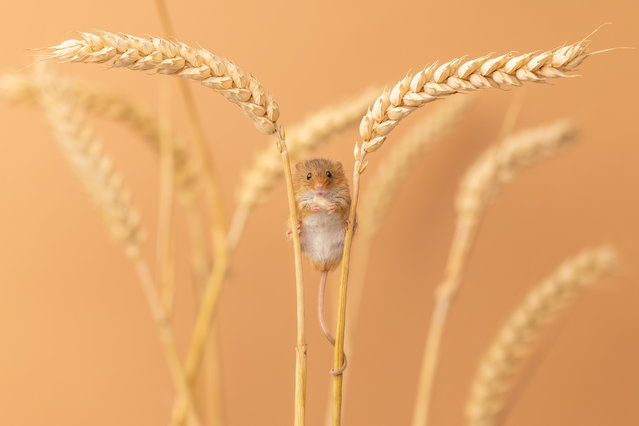
Stunning image capture the moment a tiny harvest mouse uses wheat stems as stilts as he munches on a kernel in UK in August 2025. The minute-mouse, who weighs as much as a 2p coin and is only two-inches-long, uses his prehensile tail to keep himself perfectly level. (Photo by Tony Nellis/South West News Service)