Loading...
Done
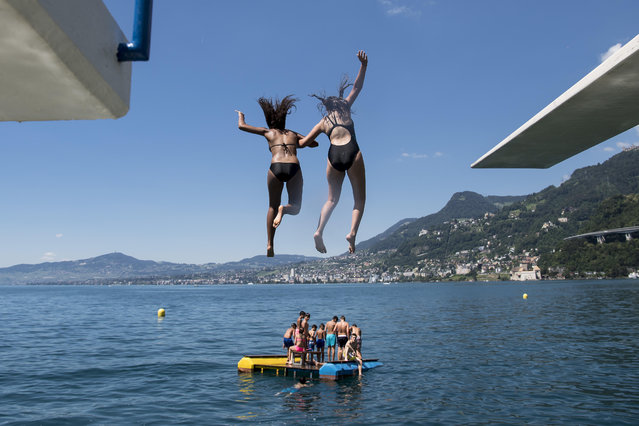
In this July 9, 2016 file photo, girls jump from a diving platform into the Geneva Lake and enjoy sunny and warm weather, in Villeneuve, Switzerland. After nearly 90 years, women can legally swim topless in Geneva’s lake and Rhone River without running the risk of a fine. Geneva’s regional council has voted to modify a 1929 ordinance that banned women from swimming topless in the city’s main natural waterways, though the change doesn’t apply to public swimming pools or swimming totally naked. Nicolas Bolle, an official with Geneva’s security department, on Thursday, April 6, 2017 confirmed the council’s action a day earlier. (Photo by Jean-Christophe Bott/Keystone via AP Photo)

In this July 9, 2016 file photo, girls jump from a diving platform into the Geneva Lake and enjoy sunny and warm weather, in Villeneuve, Switzerland. After nearly 90 years, women can legally swim topless in Geneva’s lake and Rhone River without running the risk of a fine. Geneva’s regional council has voted to modify a 1929 ordinance that banned women from swimming topless in the city’s main natural waterways, though the change doesn’t apply to public swimming pools or swimming totally naked. Nicolas Bolle, an official with Geneva’s security department, on Thursday, April 6, 2017 confirmed the council’s action a day earlier. (Photo by Jean-Christophe Bott/Keystone via AP Photo)
Details
08 Apr 2017 09:39:00
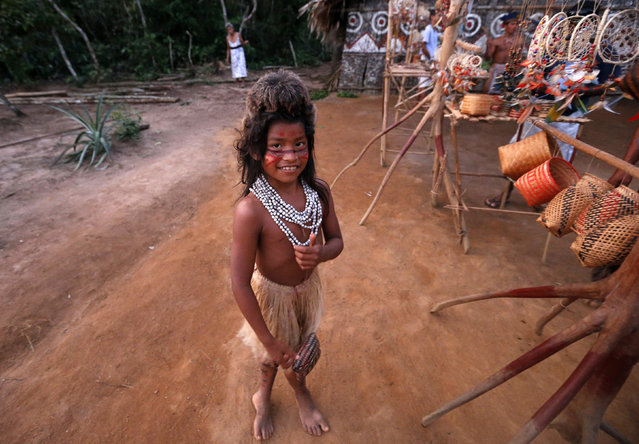
A girl of the Amazonian Tatuyo tribe poses while waiting to sell crafts to tourists in her village in the Rio Negro (Black River) near Manaus city, a World Cup host city, June 23, 2014. Because of their proximity to host city Manaus and their warm welcome, the Tatuyo have enjoyed three weeks of brisk business thanks to the World Cup. Usually, they host between 10 and 30 tourists a day. During the World Cup, this number has rocketed to 250 a day, They have become richer and other communities now come to them to sell them juices and fishes. (Photo by Andres Stapff/Reuters)

A girl of the Amazonian Tatuyo tribe poses while waiting to sell crafts to tourists in her village in the Rio Negro (Black River) near Manaus city, a World Cup host city, June 23, 2014. Because of their proximity to host city Manaus and their warm welcome, the Tatuyo have enjoyed three weeks of brisk business thanks to the World Cup. Usually, they host between 10 and 30 tourists a day. During the World Cup, this number has rocketed to 250 a day, They have become richer and other communities now come to them to sell them juices and fishes. (Photo by Andres Stapff/Reuters)
Details
27 Jun 2014 10:30:00
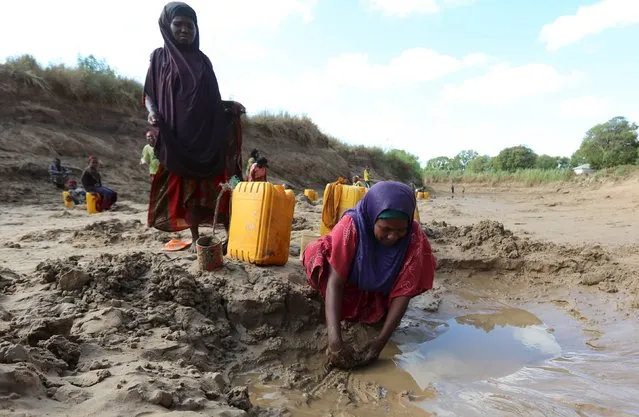
People collect water from shallow wells dug along the Shabelle River bed, which is dry due to drought in Somalia's Shabelle region, March 19, 2016. The cabinet ministers of the federal republic of Somalia have held on Thursday their weekly meeting in Mogadishu and discussed on the drought situation in parts of the country and its humanitarian consequences. Chaired by the acting PM and justice minister Abdullah Ahmed Jama (Ilka-Jir), the cabinet noted with deep concern the the prevailing situation in Somalia, with one of the worst ever drought in two decades. (Photo by Feisal Omar/Reuters)

People collect water from shallow wells dug along the Shabelle River bed, which is dry due to drought in Somalia's Shabelle region, March 19, 2016. The cabinet ministers of the federal republic of Somalia have held on Thursday their weekly meeting in Mogadishu and discussed on the drought situation in parts of the country and its humanitarian consequences. Chaired by the acting PM and justice minister Abdullah Ahmed Jama (Ilka-Jir), the cabinet noted with deep concern the the prevailing situation in Somalia, with one of the worst ever drought in two decades. (Photo by Feisal Omar/Reuters)
Details
20 Mar 2016 11:38:00
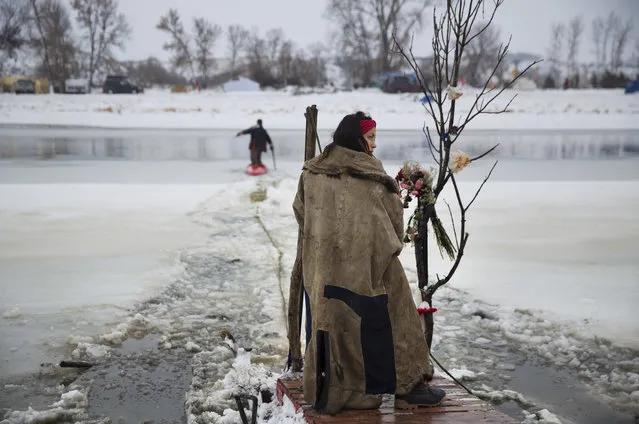
In this Thursday, December 1, 2016 photo, Cat Bigney, part of the Oglala Native American tribe, waits on the shore of the Cannonball river for travelers to arrive by canoe at the Oceti Sakowin camp where people have gathered to protest the Dakota Access oil pipeline in Cannon Ball, N.D. So far, those at the camp have shrugged off the heavy snow, icy winds and frigid temperatures. But if they defy next week's government deadline to abandon the camp, demonstrators know the real deep freeze lies ahead. Life-threatening wind chills and towering snow drifts could mean the greatest challenge is simple survival. (Photo by David Goldman/AP Photo)

In this Thursday, December 1, 2016 photo, Cat Bigney, part of the Oglala Native American tribe, waits on the shore of the Cannonball river for travelers to arrive by canoe at the Oceti Sakowin camp where people have gathered to protest the Dakota Access oil pipeline in Cannon Ball, N.D. So far, those at the camp have shrugged off the heavy snow, icy winds and frigid temperatures. But if they defy next week's government deadline to abandon the camp, demonstrators know the real deep freeze lies ahead. Life-threatening wind chills and towering snow drifts could mean the greatest challenge is simple survival. (Photo by David Goldman/AP Photo)
Details
06 Dec 2016 10:22:00
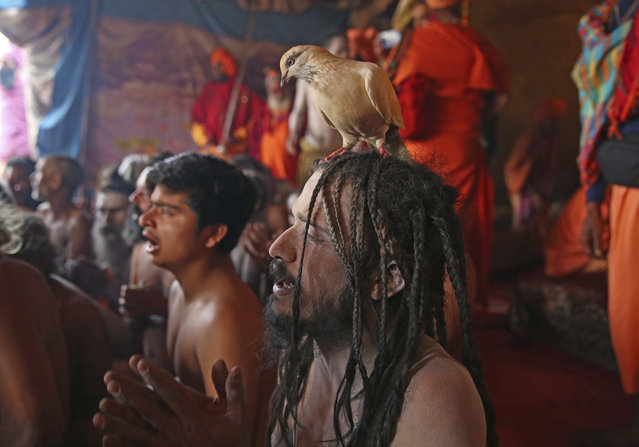
In this January 27, 2019, photo, Hindu holy men of monastic order Juna Akhara participate in a ritual before becoming Naga Sadhus or naked holy men at Sangam, the confluence of three holy rivers during the Kumbh Mela or pitcher festival in Prayagraj Uttar Pradesh state, India. At every Kumbh, including this year's, thousands of devotees were initiated into the reclusive sect of the Naga Sadhus, naked, ash-smeared cannabis-smoking Hindu warriors and onetime-armed defenders of the faith who for centuries have lived as ascetics in jungles and caves. (Photo by Rajesh Kumar Singh/AP Photo)

In this January 27, 2019, photo, Hindu holy men of monastic order Juna Akhara participate in a ritual before becoming Naga Sadhus or naked holy men at Sangam, the confluence of three holy rivers during the Kumbh Mela or pitcher festival in Prayagraj Uttar Pradesh state, India. At every Kumbh, including this year's, thousands of devotees were initiated into the reclusive sect of the Naga Sadhus, naked, ash-smeared cannabis-smoking Hindu warriors and onetime-armed defenders of the faith who for centuries have lived as ascetics in jungles and caves. (Photo by Rajesh Kumar Singh/AP Photo)
Details
18 Feb 2019 00:05:00
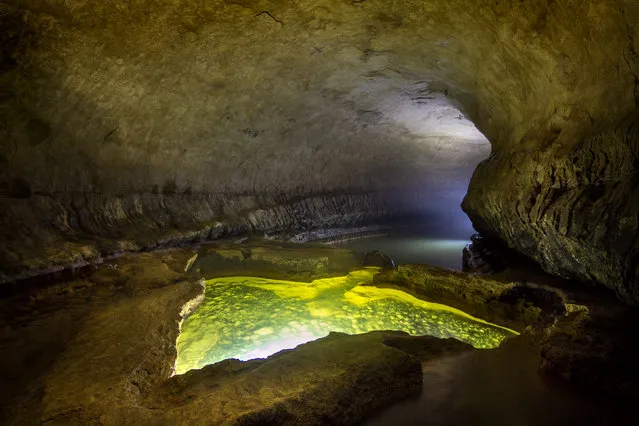
A large pool of water inside one of the tunnels. (Photo by Vladimir Mulde/Caters News)

These otherworldly images give a rare glimpse inside caves barely ever seen by the human eye. With its peculiar pools of water and strange colored sediments, the bizarre looking tunnels of the Shakuranskaya cave could be a set straight out of a science fiction film. Found in the disputed region of Abkhazia, around 75 miles outside of Sochi, Russia, it is rumored the incredible underground chambers were formed after a huge earthquake struck the area in 1892. After causing part of a nearby mountain to collapse into the Amtkel River, it is thought the dam-like affect has created a series of interconnecting underground tunnels. Here: a large pool of water inside one of the tunnels. (Photo by Vladimir Mulde/Caters News)
Details
07 Nov 2014 12:45:00
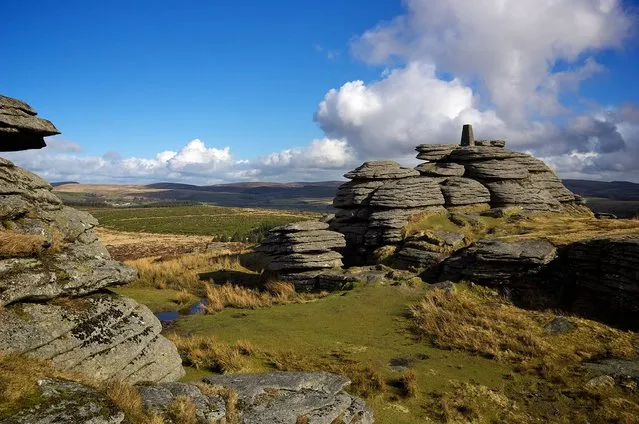
Dartmoor National Park. Located in South Devon and just a 30 minute drive away from Exeter, the Dartmoor National Park features rushing rivers, sprawling moorland and spooky forests. This stunning backdrop was the main reason it was chosen as the setting for Steven Spielberg’s film, Warhorse. (Photo by Diana Jarvis/VisitEngland)

Every year National Parks Week gives visitors a chance to celebrate the incredible woodland spaces around the UK. This year the National Parks Week runs from 28 July – 3 August and there are 10 national parks across England to explore. Each one has created a special event to celebrate the National Parks Week, from picnics and treasure hunt in the park to cycle rides, safari or outdoor art exhibition. (Photo by Diana Jarvis/VisitEngland)
Details
23 Jul 2014 10:15:00
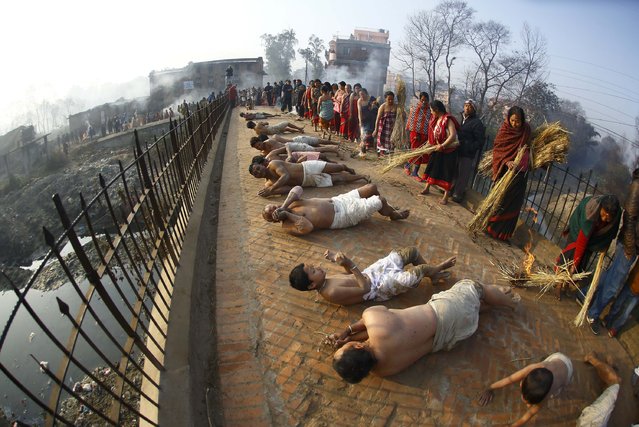
Devotees offer prayer by rolling on the street during the final day of the month-long Swasthani festival of Bhaktapur, near Kathmandu, February 3, 2015. During the festival, devotees recite one chapter of a Hindu tale daily from the 31-chapter sacred Swasthani Brata Katha book, that is dedicated to God Madhavnarayan and Goddess Swasthani, alongside various other gods and goddesses and the miraculous feats performed by them. (Photo by Navesh Chitrakar/Reuters)

Devotees offer prayer by rolling on the street during the final day of the month-long Swasthani festival of Bhaktapur, near Kathmandu, February 3, 2015. During the festival, devotees recite one chapter of a Hindu tale daily from the 31-chapter sacred Swasthani Brata Katha book, that is dedicated to God Madhavnarayan and Goddess Swasthani, alongside various other gods and goddesses and the miraculous feats performed by them. The devotees also go on pilgrimages to various temples, perform religious rituals, take a holy bath in the rivers and fast for a month, especially among women who believe fasting helps in their family's well-being or in getting them a good husband. (Photo by Navesh Chitrakar/Reuters)
Details
04 Feb 2015 12:44:00