Giant panda Xiao Qi Ji plays at his enclosure at the Smithsonian National Zoo in Washington, Thursday, September 28, 2023. (Photo by Jose Luis Magana/AP Photo)
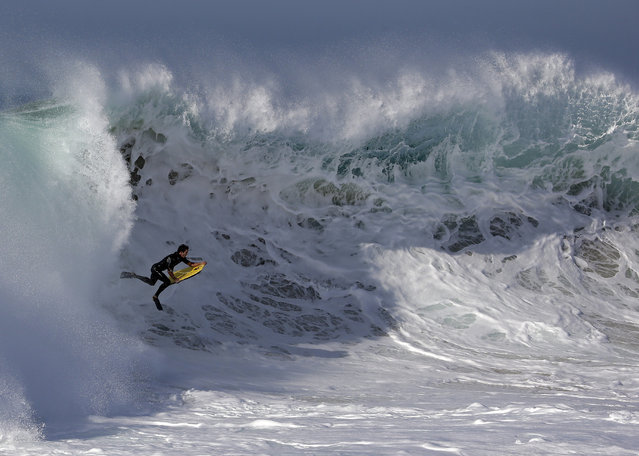
A bogieboarder rides a wave at the wedge in Newport Beach, Calif., Wednesday, August 27, 2014. Southern California beachgoers experienced much higher than normal surf, brought on by Hurricane Marie spinning off the coast of Mexico. (Photo by Chris Carlson/AP Photo)
“On the Li River near Xingping in China, Cormorant fishermen work the waterways before dawn amidst the spectacular limestone towers of the Karst landscape. The birds are trained to fetch fish from the inky depths but not swallow them. The fisherman accepts the fish from the birds who dive back for more. Here, still before dawn, the fisherman and his birds head for home”. (Photo and caption by Neville Jones/2014 Sony World Photography Awards)
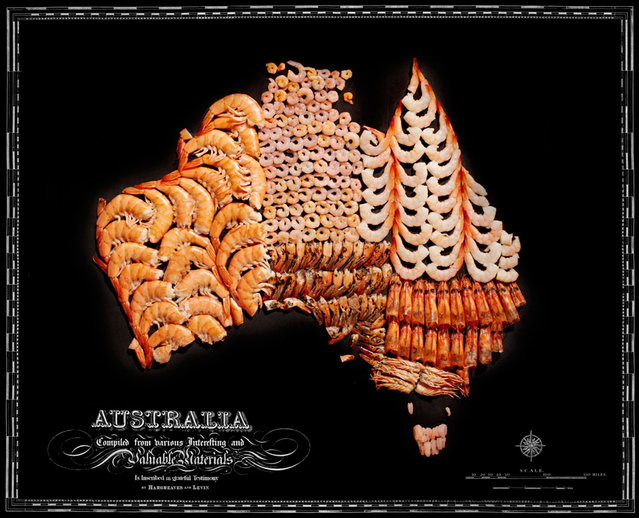
Photographer Henry Hargreaves and artist Caitlin Levin have been working together for about decade. Their shared love for “food, photography, travel, and art” has found an outlet in a series of maps that they have illustrated with food.
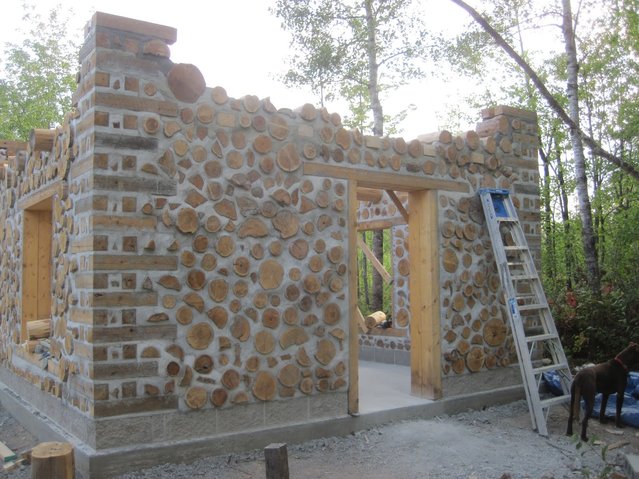
Cordwood construction is a method of natural building that originated roughly one thousand years ago in Greece and Siberia. This method involves using pieces of wood that slightly protrude from the mortar, giving the walls an attractive appearance. Usually, the walls are made 12 to 24 inches thick. However, in some parts of Canada, the walls can be as thick as 36 inches. This method appeals to many people due to its ease of construction economy of resources. Cordwood Construction can be separated into two main types: mortar-insulation-mortar (M-I-M) and Throughwall. M-I-M is a more preferable and widely used choice as it allows for better insulating properties.