Loading...
Done
White House Press Secretary Jen Psaki (R) is hugged by current Principal Deputy Press Secretary Karine Jean-Pierre during a press briefing in the Brady Press Briefing Room of the White House in Washington, DC, May 5, 2022, after it was announced Psaki would step down from her role next week and be replaced by Jean-Pierre. US President Joe Biden on May 5, 2022 named Karine Jean-Pierre as the next White House press secretary, the first Black woman to hold the high-profile post. Jean-Pierre, who will also be the first openly LGBTQ+ person in the role, will replace Jen Psaki, under whom she served as deputy, from May 13, according to a White House statement. (Photo by Saul Loeb/AFP Photo)

White House Press Secretary Jen Psaki (R) is hugged by current Principal Deputy Press Secretary Karine Jean-Pierre during a press briefing in the Brady Press Briefing Room of the White House in Washington, DC, May 5, 2022, after it was announced Psaki would step down from her role next week and be replaced by Jean-Pierre. (Photo by Saul Loeb/AFP Photo)
Details
09 May 2022 05:45:00
Cuban-American artist Jorge Rodriguez-Gerada's six-acre sand and soil “facescape” stretches across the JFK Hockey Field on the north side of the Reflecting Pool along the National Mall October 1, 2014 in Washington, DC. Titled “Out of Many, One” and composed of 2,500 tons of sand, 800 tons of top soil and eight miles of string, the piece is the artist's interpreative blending of 30 different men's faces. (Photo by Chip Somodevilla/Getty Images)

Cuban-American artist Jorge Rodriguez-Gerada's six-acre sand and soil “facescape” stretches across the JFK Hockey Field on the north side of the Reflecting Pool along the National Mall October 1, 2014 in Washington, DC. Titled “Out of Many, One” and composed of 2,500 tons of sand, 800 tons of top soil and eight miles of string, the piece is the artist's interpreative blending of 30 different men's faces. Rodriguez-Gereda used high-precision global positioning satellites to place 10,000 wood pegs as waypoints for the giant face. The piece will be open to the public beginning October 4 and will eventually be tilled back into the earth. (Photo by Chip Somodevilla/Getty Images)
Details
04 Oct 2014 11:39:00
Developed for the British American Ambulance Corps, this new motorcycle ambulance is capable of speeding wounded soldiers 90 miles an hour from the front lines to field hospitals. Its springs are synchronized with the patient?s heartbeat to avoid increasing fever when traveling over various Terrain. Viewing it in New York  August 27, 1941, are left to right: constable Herbert Scott of England, driver; William E. Detlor, whose firm developed the vehicle; M. W. Stand, inspector-general of Civilian Defense, and Maj. Edward Riekert, also. (Photo by AP Photo)

Developed for the British American Ambulance Corps, this new motorcycle ambulance is capable of speeding wounded soldiers 90 miles an hour from the front lines to field hospitals. Its springs are synchronized with the patient's heartbeat to avoid increasing fever when traveling over various Terrain. Viewing it in New York August 27, 1941, are left to right: constable Herbert Scott of England, driver; William E. Detlor, whose firm developed the vehicle; M. W. Stand, inspector-general of Civilian Defense, and Maj. Edward Riekert, also. (Photo by AP Photo)
Details
28 Aug 2015 11:51:00
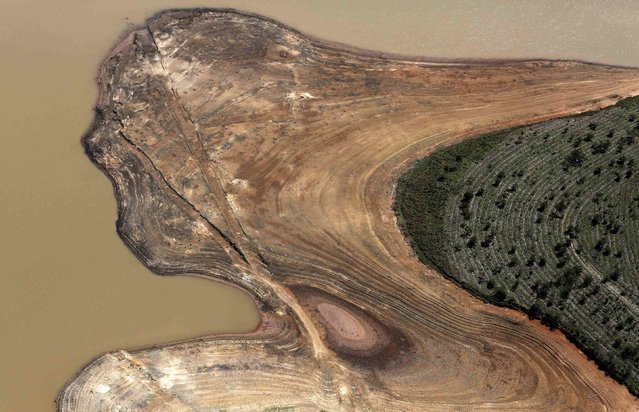
An aerial view of the Atibainha dam, part of the Cantareira reservoir, during a drought in Nazare Paulista, Sao Paulo state November 18, 2014. (Photo by Nacho Doce/Reuters)

An aerial view of the Atibainha dam, part of the Cantareira reservoir, during a drought in Nazare Paulista, Sao Paulo state November 18, 2014. Brazil's worst drought in 80 years has left the Cantareira system, that provides greater Sao Paulo with most of its water, with the lowest water level on record, with daily rationing becoming common in the region's smaller cities, according to the state authorities and the two main reservoirs serving metropolitan Sao Paulo, South America's largest city, could dry out by February if relief does not arrive in the upcoming rainy season. (Photo by Nacho Doce/Reuters)
Details
20 Nov 2014 12:19:00
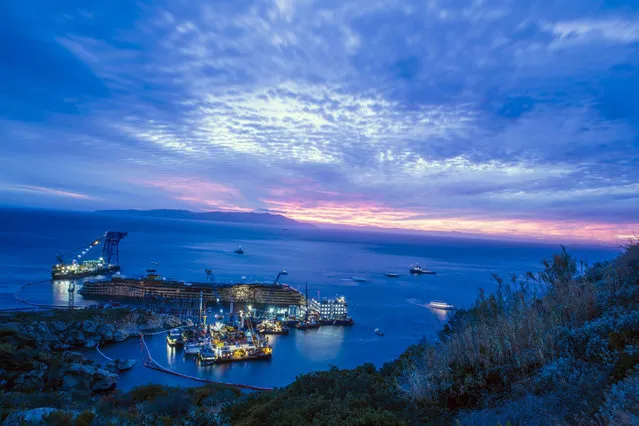
A general view showing the shipwrecked cruise ship Costa Concordia in an upright position after the salvage operations in Giglio island, Italy, 17 September 2013. Salvage crews pulled off a major engineering feat when they straightened the listed Costa Concordia cruise ship from the rocks it had been wedged against for the past 20 months. The delicate operation took 19 hours and was completed at 4 am (0200 GMT). The vessel ran aground near the island of Giglio, in Tuscany, in an accident that made world-wide news. (Photo by Angelo Carconi/EPA)

A general view showing the shipwrecked cruise ship Costa Concordia in an upright position after the salvage operations in Giglio island, Italy, 17 September 2013. Salvage crews pulled off a major engineering feat when they straightened the listed Costa Concordia cruise ship from the rocks it had been wedged against for the past 20 months. The delicate operation took 19 hours and was completed at 4 am (0200 GMT). The vessel ran aground near the island of Giglio, in Tuscany, in an accident that made world-wide news. (Photo by Angelo Carconi/EPA)
Details
18 Sep 2013 09:27:00
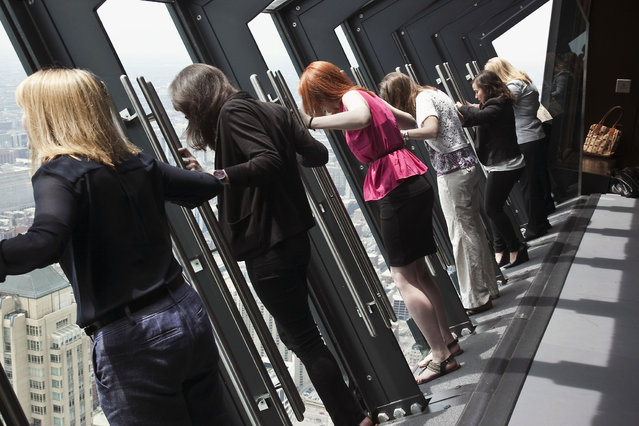
In this Thursday, May 8, 2014 photo, guests look down from the Tilt!, a new tourist attraction that provides guests a unique view of the downtown area from the 94th floor of the John Hancock Building, after it was unveiled in Chicago. People hold onto handrails as the glass and steel facade tilts forward 30 degrees. (Photo by Ashlee Rezin/AP Photo/Sun-Times Media)

In this Thursday, May 8, 2014 photo, guests look down from the Tilt!, a new tourist attraction that provides guests a unique view of the downtown area from the 94th floor of the John Hancock Building, after it was unveiled in Chicago. People hold onto handrails as the glass and steel facade tilts forward 30 degrees. (Photo by Ashlee Rezin/AP Photo/Sun-Times Media)
Details
10 May 2014 14:30:00
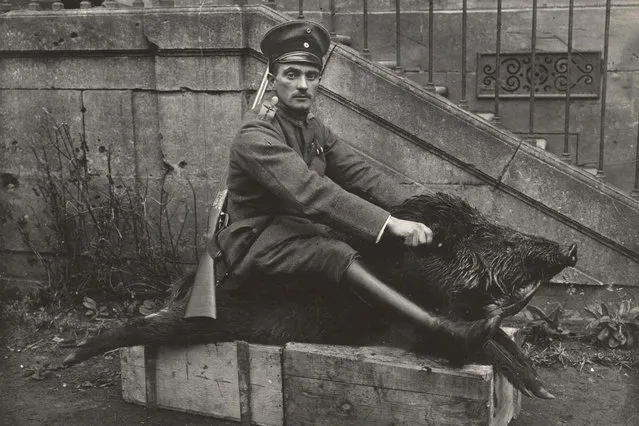
A German Air Force Officer sits astride a dead boar outside a house where he is stationed near the Western Front, in this 1918 handout picture. This picture is part of a previously unpublished set of World War One (WWI) images from a private collection. The pictures offer an unusual view of varied and contrasting aspects of the conflict, from high tech artillery to mobile pigeon lofts, and from officers partying in their headquarters to the grim reality of life and death in the trenches. The year 2014 marks the centenary of the start of the war. (Photo by Reuters/Archive of Modern Conflict London)

A German Air Force Officer sits astride a dead boar outside a house where he is stationed near the Western Front, in this 1918 handout picture. This picture is part of a previously unpublished set of World War One (WWI) images from a private collection. The pictures offer an unusual view of varied and contrasting aspects of the conflict, from high tech artillery to mobile pigeon lofts, and from officers partying in their headquarters to the grim reality of life and death in the trenches. The year 2014 marks the centenary of the start of the war. (Photo by Reuters/Archive of Modern Conflict London)
Details
26 Jun 2014 12:13:00
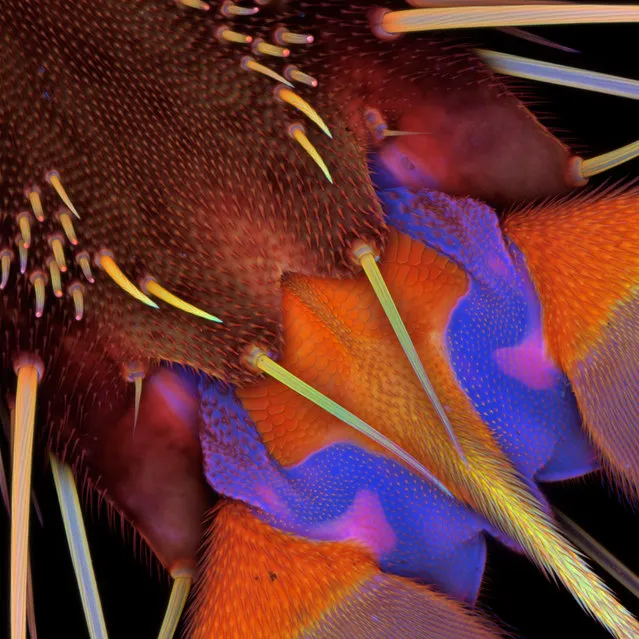
Pretarsus of the third leg of a female drone fly (Eristalis tenax), ventral view, by Dr. Jan Michels, Institute of Zoology, Christian-Albrechts-University of Kiel, Germany. (Photo by Olympus BioScapes)

“Microscope images forge an extraordinary bond between science and art, said Hidenao Tsuchiya, Olympus America's Vice President and General Manager for the Scientific Equipment Group. We founded this competition to focus on the fascinating stories coming out of today's life science research laboratories. The thousands of images that people have shared with the competition over the years reflect some of the most exciting work going on in research today – work that can help shed light on the living universe and ultimately save lives. We look at BioScapes and these beautiful images as sources of education and inspiration to us and the world”. – OlympusBioScapes

Photo: Pretarsus of the third leg of a female drone fly (Eristalis tenax), ventral view, by Dr. Jan Michels, Institute of Zoology, Christian-Albrechts-University of Kiel, Germany. (Photo by Olympus BioScapes)
Details
29 Jul 2012 09:20:00