Loading...
Done


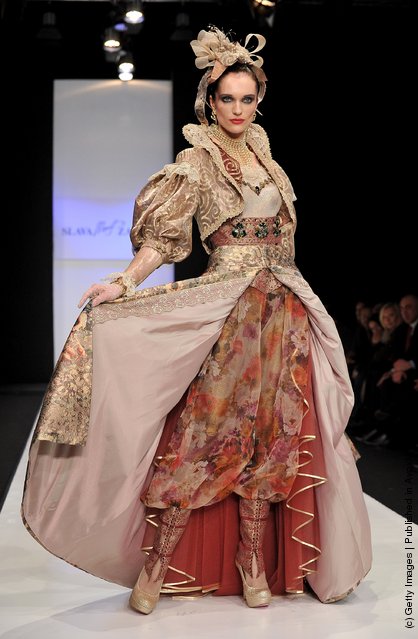
“Vyacheslav Mikhailovich Zaitsev (Russian: Вячеслав Михайлович Зайцев), more commonly known as Slava Zaitsev (Russian: Слава Зайцев), born 2 March 1938 in Ivanovo, Russian Soviet Federative Socialist Republic, is a Russian fashion designer, painter, graphic artist and theatrical costume designer”. – Wikipedia

Photo: A models wears a creation by designer Slava Zaitsev during his fashion show on Day 1 of the Mercedes-Benz Fashion Week Russia Fall/Winter 2011/2012 at the Congress Hall on March 31, 2011 in Moscow, Russia. (Photo by Pascal Le Segretain/Getty Images)
Details
03 Apr 2011 11:29:00
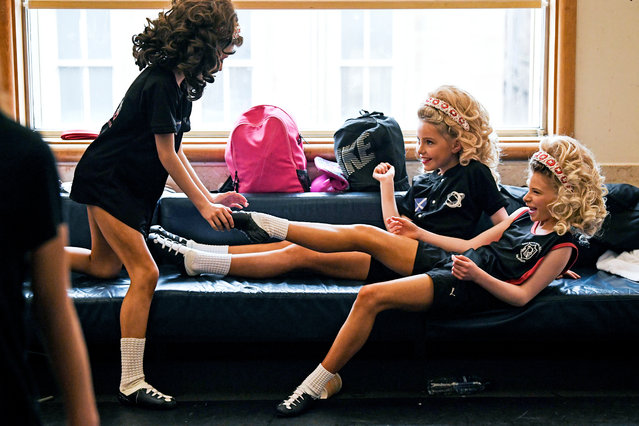
Competitors stretch before taking part in day three of the World Irish Dancing Championships on March 26, 2018 in Glasgow, Scotland. (Photo by Jeff J. Mitchell/Getty Images)

Competitors stretch before taking part in day three of the World Irish Dancing Championships on March 26, 2018 in Glasgow, Scotland. The World Irish Dancing Championships are taking place in Glasgow this week at the Royal Concert Hall, with more than 14,500 dancers and supporters expected to travel to the championships which has run for more than forty years. (Photo by Jeff J. Mitchell/Getty Images)
Details
30 Mar 2018 00:05:00
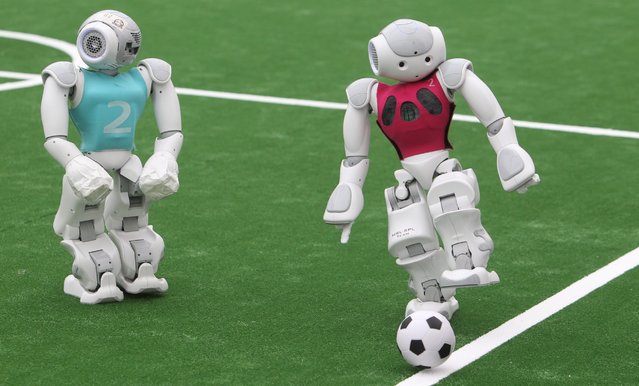
Humanoid robots compete in a group match of the 20th RoboCup in Leipzig, Germany, June 30, 2016. Thousands of participants from over 40 countries are competing this year in RoboCup 2016 with their humanoid soccer playing robots in Leipzig, Germany. “When established in 1997, the original mission was to field a team of robots capable of winning against the human soccer World Cup champions by 2050”, according to RoboCup. Now participants compete in five different soccer categories as well as RoboCup Rescue, which researches robotic effectiveness and usefulness to first responders. (Photo by Sebastian Willnow/EPA)

Humanoid robots compete in a group match of the 20th RoboCup in Leipzig, Germany, June 30, 2016. About 3,500 participants from 45 countries and regions compete in the robot world championship until 04 July. (Photo by Sebastian Willnow/EPA)
Details
02 Jul 2016 12:39:00
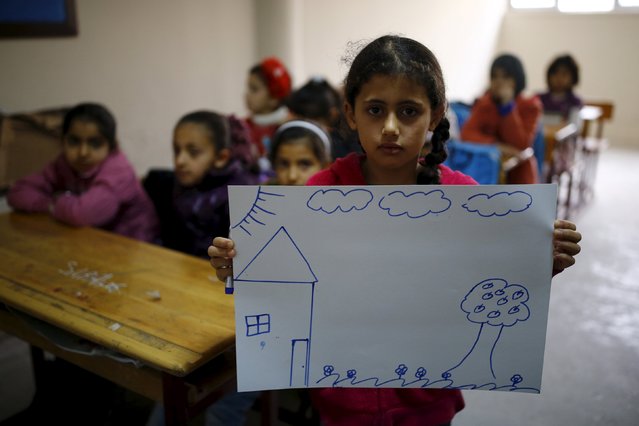
Syrian refugee girl Nur El-Huda, 9, shows a drawing of her home in Syria, in her classroom in Yayladagi refugee camp in Hatay province near the Turkish-Syrian border, Turkey, December 16, 2015. (Photo by Umit Bektas/Reuters)

Syrian refugee girl Nur El-Huda, 9, shows a drawing of her home in Syria, in her classroom in Yayladagi refugee camp in Hatay province near the Turkish-Syrian border, Turkey, December 16, 2015. Syria's conflict has left hundreds of thousands dead, pushed millions more into exile, and had a profound effect on children who lost their homes or got caught up in the bloodletting. The drawings of young refugees living in Turkey show their memories of home and hopes for its future. The pictures also point to the mental scars borne by 2.3 million Syrian refugees living in Turkey, more than half of them children. (Photo by Umit Bektas/Reuters)
Details
16 Jan 2016 08:05:00
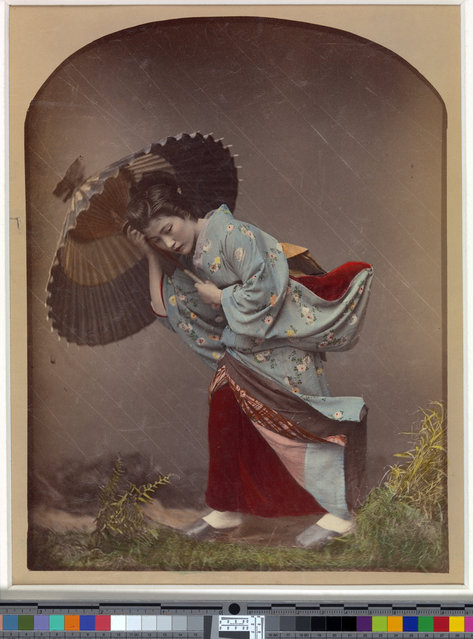
“Woman with Umbrella in Rain” by Raimund von Stillfried. Artist: Kusakabe Kimbei (Japanese, 1841–1934), 1870s. (Photo courtesy of The Metropolitan Museum of Art)

“Woman with Umbrella in Rain” by Raimund von Stillfried. Artist: Kusakabe Kimbei (Japanese, 1841–1934), 1870s. Commercial photography studios in Meiji-era Japan were renowned for the subtlety and refinement of their coloring techniques. This hand-tinted image of a young woman caught in a heavy rainstorm achieved its naturalistic effect by knitting together multiple strands of artifice: the greenery in the foreground was a studio prop; the flaps of the kimono were suspended by thin wires to create the impression of a strong wind; and long, diagonal marks were made on the negative to suggest streaks of rain. (Photo courtesy of The Metropolitan Museum of Art)
Details
12 May 2013 10:13:00


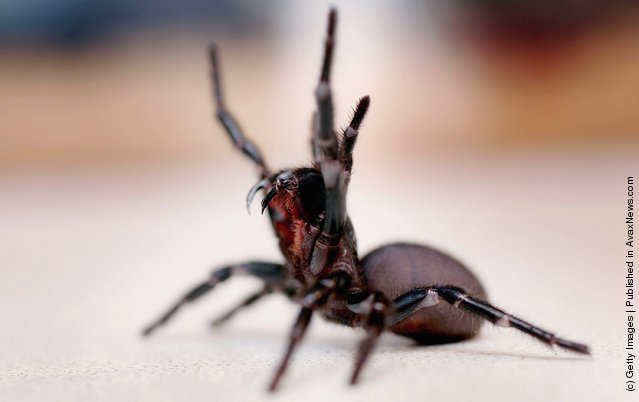
A Funnel Web spider is pictured at the Australian Reptile Park January 23, 2006 in Sydney, Australia. The Funnel Web is one of Australia's deadliest animals, with a venom that is packed with at least 40 different toxic proteins. A bite from a Funnel Web causes massive electrical over-load in the body's nervous system. Finally, fatalities occur from either heart attack or a pulmonary oedema, where the capillaries around the lungs begin to leak fluid and the patient effectively drowns. Death can come as quickly as two hours after a bite if no medical treatment is sought. Due to advances in anti-venom, there has been no death from a Funnel Web bite in Australia since 1980. Australia is home to some of the most deadly and poisonous animals on earth. (Photo by Ian Waldie/Getty Images)
Details
25 Apr 2011 07:49:00
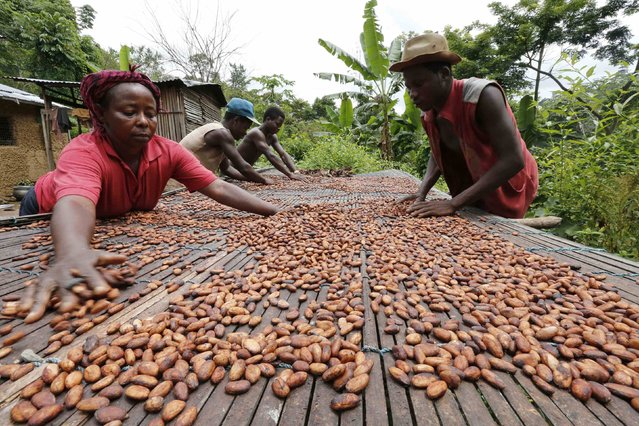
People work with cocoa beans in Enchi June 17, 2014. Picture taken June 17, 2014. Ghana emerged as a success story during the 2000s, when war, political instability and a disastrous liberalization brought Ivory Coast's cocoa sector to its knees. Ghana's output more than tripled from 340,000 tons in the 2001/02 season to a record 1,025,000 tons a decade later. Strict controls cemented its reputation as a producer of top quality beans, establishing a brand that fetches a premium. (Photo by Thierry Gouegnon/Reuters)

People work with cocoa beans in Enchi June 17, 2014. Picture taken June 17, 2014. Ghana emerged as a success story during the 2000s, when war, political instability and a disastrous liberalization brought Ivory Coast's cocoa sector to its knees. Ghana's output more than tripled from 340,000 tons in the 2001/02 season to a record 1,025,000 tons a decade later. Strict controls cemented its reputation as a producer of top quality beans, establishing a brand that fetches a premium. (Photo by Thierry Gouegnon/Reuters)
Details
03 Aug 2014 07:17:00
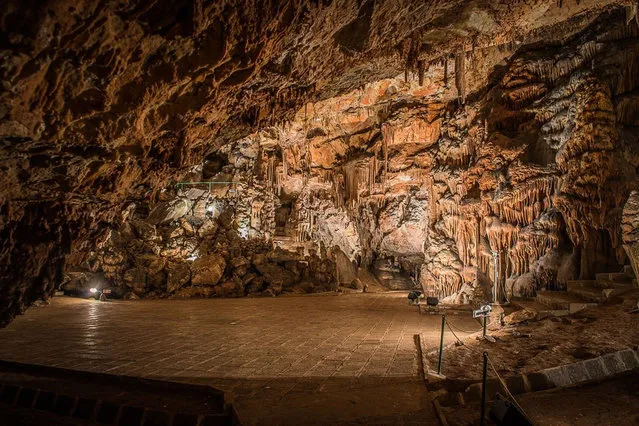
Saeva Dupka Cave

Saeva dupka (Bulgarian: Съева дупка) is a cave in Northern Bulgaria near the village of Brestnitsa, Lovech Province (43°2′N 24°11′E). Its five halls and 400 metres of corridors offer some of the most beautiful cave formations in the country. Besides that the cave has hosted many Choral music performances, thanks to the excellent acoustic conditions. Saeva dupka was named after two brothers Seyu and Sae who used it as a hiding place during the Ottoman occupation of Bulgaria. Recent excavations have showed the cave was inhabited since Roman times. Currently Saeva dupka is one of the 100 Tourist Sites of Bulgaria.
Details
20 Feb 2013 11:30:00