Loading...
Done


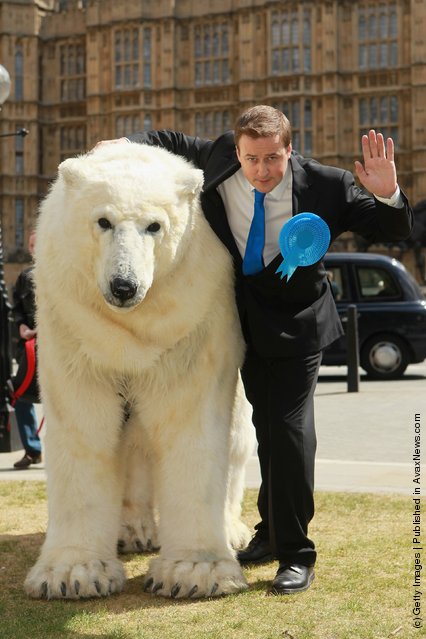
A David Cameron look-alike poses with a polar bear model outside the Houses of Parliament as part of a Greenpeace protest on May 13, 2011 in London, England. The environmental charity Greenpeace arranged the protest to highlight the first anniversary of David Cameron’s speech when he pledged to make his new government the greenest ever. In April 2006 Mr Cameron traveled by huskie-drawn sledge when he visited the island of Svalbard in Norway to witness the effects of climate change. (Photo by Oli Scarff/Getty Images)
Details
14 May 2011 13:59:00
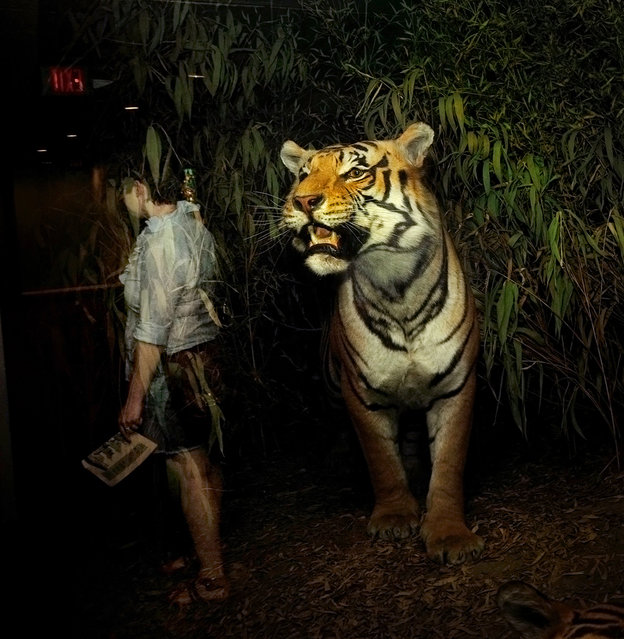
“Natural History”: Tiger. (Photo by Traer Scott)

“Natural History” is a series of completely candid single exposure images that merge the living and the dead to create allegorical narratives of our troubled co-existence with nature. Ghost-like reflections of modern visitors viewing wildlife dioramas are juxtaposed against the antique taxidermied subjects housed behind thick glass, their faces molded into permanent expressions of fear, aggression or fleeting passivity. After decades of over-hunting, climate change, poaching and destruction of habitat, many of these long dead diorama specimens now represent endangered or completely extinct species”. – Traer Scott. (Photo by Traer Scott)
Details
27 Oct 2014 11:39:00
Beltane Fire Society performers celebrate the coming of summer by participating in the Beltane Fire Festival on Calton Hill April 30, 2019 in Edinburgh, Scotland. (Photo by Jeff J. Mitchell/Getty Images)

Beltane Fire Society performers celebrate the coming of summer by participating in the Beltane Fire Festival on Calton Hill April 30, 2019 in Edinburgh, Scotland. The event celebrates the ending of winter and is a revival of the ancient Celtic and Pagan festival of Beltane, the Gaelic name for the month of May. This years festival was highlighting climate change, with the central character The May Queen being seen to express her rage at the damage done to Earth. (Photo by Jeff J. Mitchell/Getty Images)
Details
03 May 2019 00:03:00
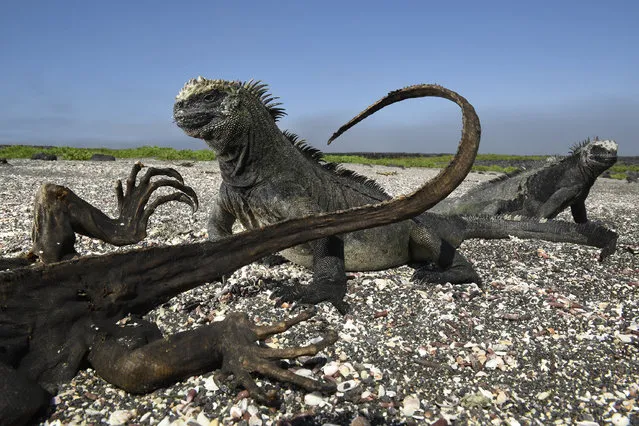
Galapagos – Rocking the Cradle: Four major ocean currents converge along the Galapagos archipelago, creating the conditions for an extraordinary diversity of animal life, April 25, 2016. The islands are home to at least 7,000 flora and fauna species, of which 97 percent of the reptiles, 80 percent of the land birds, 50 percent of the insects and 30 percent of the plants are endemic. The local ecosystem is highly sensitive to the changes in temperature, rainfall and ocean currents that characterize the climatic events known as El Niño and La Niña. These changes cause marked fluctuations in weather and food availability. Many scientists expect the frequency of El Niño and La Niña to increase as a result of climate change, making the Galapagos a possible early-warning location for its effects. (Photo by Thomas P. Peschak for National Geographic/World Press Photo)

Galapagos – Rocking the Cradle: Four major ocean currents converge along the Galapagos archipelago, creating the conditions for an extraordinary diversity of animal life, April 25, 2016. The islands are home to at least 7,000 flora and fauna species, of which 97 percent of the reptiles, 80 percent of the land birds, 50 percent of the insects and 30 percent of the plants are endemic. (Photo by Thomas P. Peschak for National Geographic/World Press Photo)
Details
16 Apr 2018 00:01:00
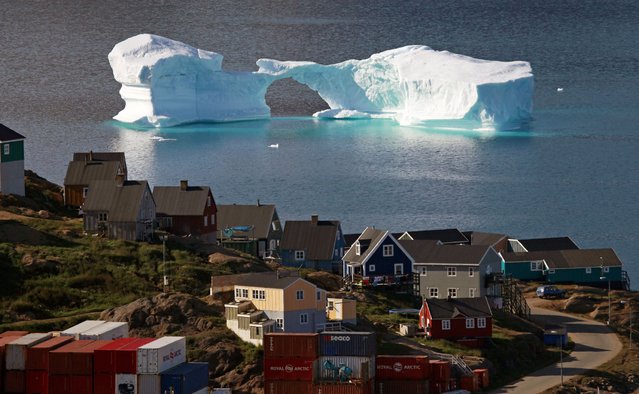
File photo of an iceberg floating near a harbour in the town of Kulusuk, east Greenland August 1, 2009. The United Nations 19th Climate Change Conference (COP19) will take place November 11-22, 2013 in Warsaw. The main goal of the talks with almost almost 200 nations assembled, is to lay the foundation for the new global climate agreement, aiming at further emission reduction, which is to be signed in 2015 in Paris and be launched in 2020. (Photo by Bob Strong/Reuters)

It's taken roughly five months, but a massive iceberg has separated from Antarctica's Pine Island Glacier. According to NASA's Earth Observatory, the estimated size of this iceberg, named B-31, is around 660 square kilometres (33 km long by 20 km wide) – a city-sized block of ice that has slowly migrated away from the continent, and is now floating out to sea. Take a look at some massive icebergs afloat in the oceans. Photo: File photo of an iceberg floating near a harbour in the town of Kulusuk, east Greenland August 1, 2009. (Photo by Bob Strong/Reuters)
Details
27 Apr 2014 07:47:00
In this February 22, 2021, file photo, climate activist Disha Ravi, 22, travels in a car as she is taken to a court in New Delhi, India. To her friends, Ravi, was most concerned about her future in a world where temperatures are rising. But her life changed last month as she became a household name in the country, dominating news coverage after police charged her with sedition, a colonial-era law which carries a sentence up to life. Her alleged crime: sharing an online document to help amplify months-long farmer protests in India on Twitter. She was released after 10 days in custody. (Photo by Dinesh Joshi/AP Photo/File)

In this February 22, 2021, file photo, climate activist Disha Ravi, 22, travels in a car as she is taken to a court in New Delhi, India. To her friends, Ravi, was most concerned about her future in a world where temperatures are rising. But her life changed last month as she became a household name in the country, dominating news coverage after police charged her with sedition, a colonial-era law which carries a sentence up to life. Her alleged crime: sharing an online document to help amplify months-long farmer protests in India on Twitter. She was released after 10 days in custody. (Photo by Dinesh Joshi/AP Photo/File)
Details
12 Mar 2021 09:56:00
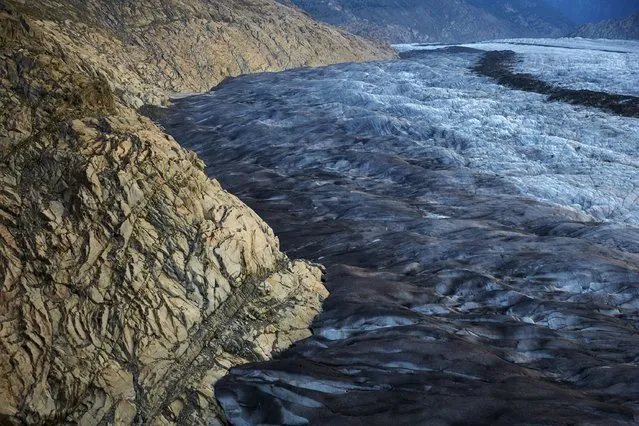
The Aletsch Glacier is pictured at dusk in Fiesch, Switzerland, August 11, 2015. (Photo by Denis Balibouse/Reuters)

The Aletsch Glacier is pictured at dusk in Fiesch, Switzerland, August 11, 2015. One of Europe's biggest glaciers, the Great Aletsch coils 23 km (14 miles) through the Swiss Alps – and yet this mighty river of ice could almost vanish in the lifetimes of people born today because of climate change. The glacier, 900 metres (2,950 feet) thick at one point, has retreated about 3 km (1.9 miles) since 1870 and that pace is quickening. (Photo by Denis Balibouse/Reuters)
Details
18 Oct 2015 08:05:00
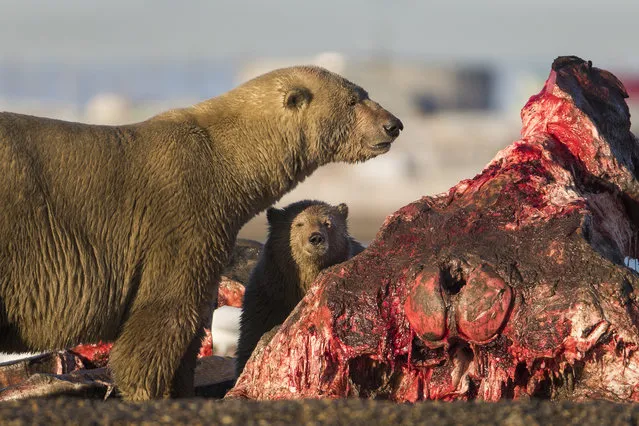
Polar bears prepare to feast on the remains of a bowhead whale, harvested legally by whalers during their annual subsistence hunt, just outside the Inupiat village of Kaktovik, Alaska, USA, 10 September 2017. (Photo by Jim Lo Scalzo/EPA/EFE)

Polar bears prepare to feast on the remains of a bowhead whale, harvested legally by whalers during their annual subsistence hunt, just outside the Inupiat village of Kaktovik, Alaska, USA, 10 September 2017. As climate change shrinks their natural habitat, polar bears are turning Kaktovik into their very own sanctuary city. (Photo by Jim Lo Scalzo/EPA/EFE)
Details
28 Sep 2017 07:33:00