Loading...
Done
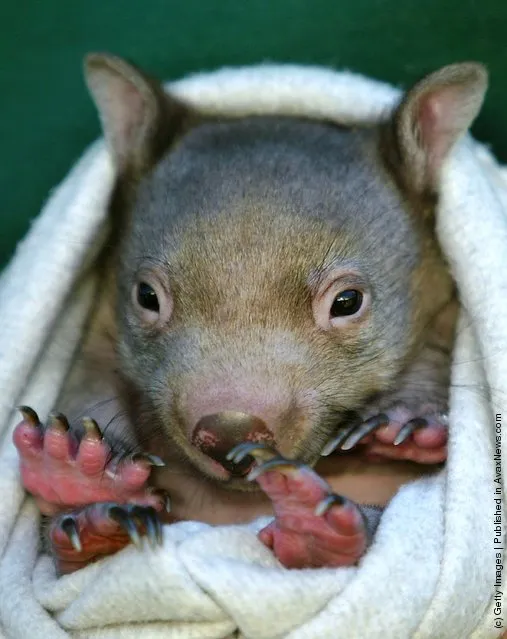
A baby Common Wombat

“Wombats are Australian marsupials; they are short-legged, muscular quadrupeds, approximately 1 metre (39 in) in length with a short, stubby tail. They are adaptable in their habitat tolerances, and are found in forested, mountainous, and heathland areas of south-eastern Australia, including Tasmania, as well as an isolated patch of about 300 ha in Epping Forest National Park in central Queensland”. – Wikipedia

Photo: “Abdul”, a baby Common Wombat, is one of the marsupials on show during the spring baby boom at Taronga Zoo September 1, 2005 in Sydney, Australia. “Abdul” was orphaned when his mother was killed by a car. (Photo by Mark Nolan/Getty Images)
Details
20 Aug 2011 11:23:00
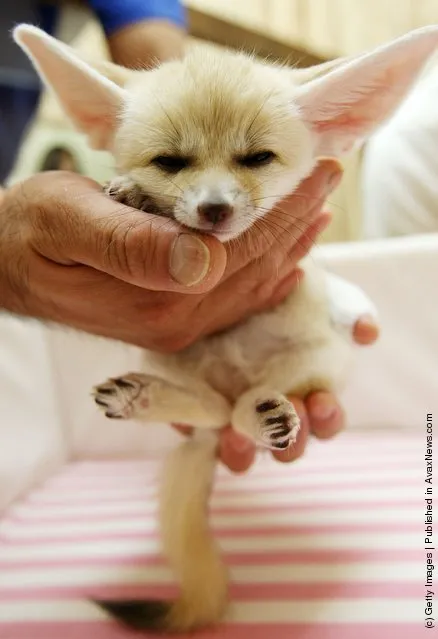
Baby Fennec Fox

“The fennec fox is a small nocturnal fox found in the Sahara of North Africa. Its most distinctive feature is unusually large ears. The name “fennec” comes from the Arabic word for fox, and the species name zerda has a Greek origin that refers to its habitat. The fennec is the smallest species of canid in the world; coat, ears and kidney functions have adapted to a high-temperature, low-water, desert environment. In addition, its hearing is sensitive enough to hear prey moving underground”. – Wikipedia

Photo: A Baby Fennec is seen at Sunshine International Aquarium on June 24, 2009 in Tokyo, Japan. The small nocturnal fox babies were born on May 17 2009. (Photo by Junko Kimura/Getty Images)
Details
16 Sep 2011 12:02:00
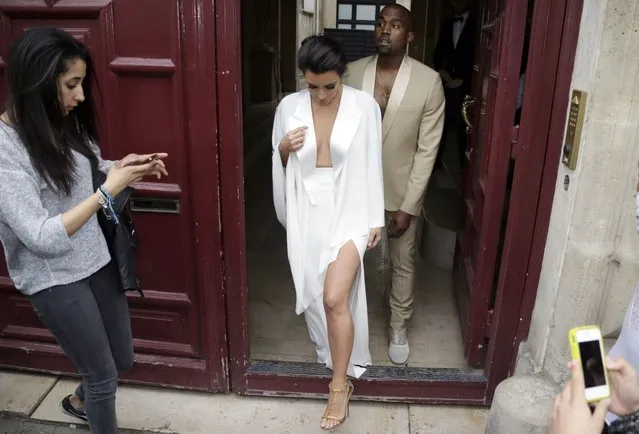
Kim Kardashian and Kanye West leave their residence in Paris, on May 23, 2014. (Photo by Kenzo Tribouillard/AFP Photo)

Kim Kardashian and Kanye West leave their residence in Paris, on May 23, 2014. (Photo by Kenzo Tribouillard/AFP Photo)
Details
26 May 2014 14:05:00


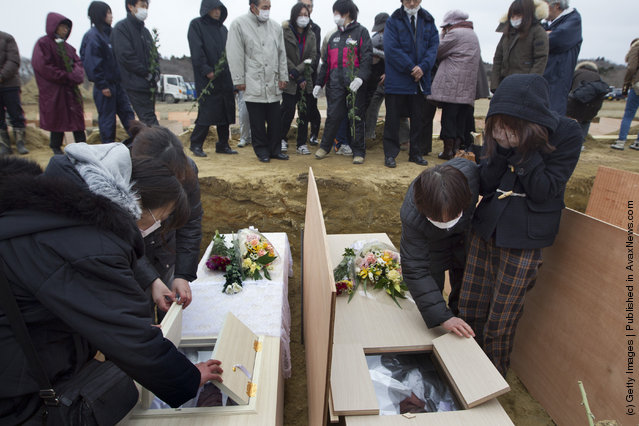
Families and relatives of the dead cry as they identify their family members at a temporary burial ground March 25, 2011 in Higashi Matsushima , Japan. (Photo by Paula Bronstein /Getty Images)
Details
25 Mar 2011 15:43:00
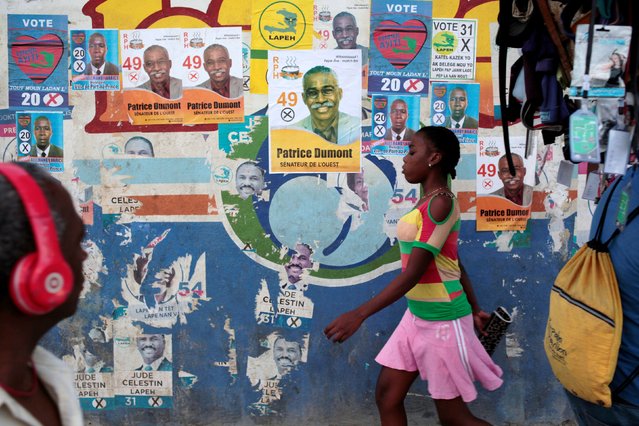
Residents walk past electoral posters in Port-au-Prince, Haiti, January 28, 2017. (Photo by Andres Martinez Casares/Reuters)

Residents walk past electoral posters in Port-au-Prince, Haiti, January 28, 2017. (Photo by Andres Martinez Casares/Reuters)
Details
01 Feb 2017 06:21:00
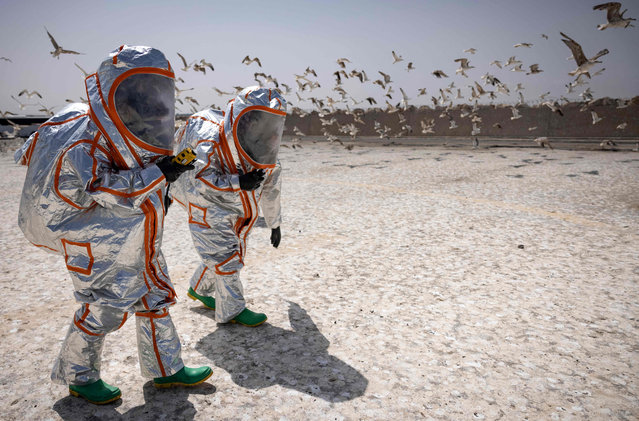
Members of the Moroccan Royal Armed Forces Rescue and Relief Unit take part in a biochemical simulation organized by the US Defense Threat Reduction Agency (DTRA) as part of the “African Lion” military exercise, in the port of Agadir, on June 15, 2021. (Photo by Fadel Senna/AFP Photo)

Members of the Moroccan Royal Armed Forces Rescue and Relief Unit take part in a biochemical simulation organized by the US Defense Threat Reduction Agency (DTRA) as part of the “African Lion” military exercise, in the port of Agadir, on June 15, 2021. (Photo by Fadel Senna/AFP Photo)
Details
26 Jun 2021 09:42:00
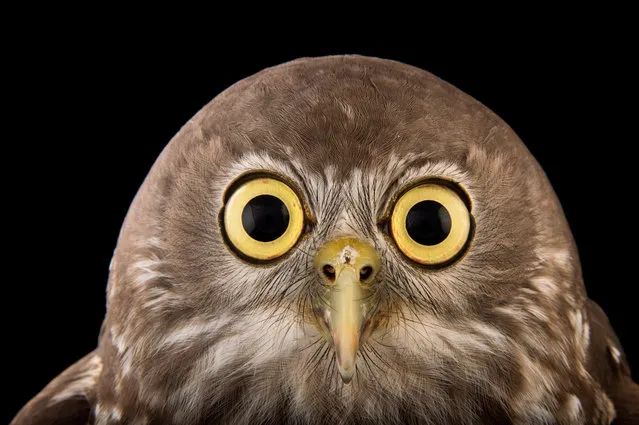
The National Geographic Photo Ark is a travelling exhibition of photographer Joel Sartore’s quest to create a photo archive of biodiversity around the world. So far, Sartore has captured studio portraits of more than 6,000 species – a number that he hopes to double. On 1 July, the ark will open at Melbourne zoo – the first time it has been exhibited in the southern hemisphere. More than 50 portraits will be on display, including many of Australian endangered animals being protected by programs at the zoo itself. These captions have been edited from text supplied by Melbourne zoo. Here: Barking owl. So-named because its call sounds like a barking dog, these birds are native to Australia, Indonesia and Papua New Guinea. In Victoria they are listed as an endangered species, and in 2003 there were estimated to be fewer than 50 breeding pairs. The main threat to the species in Victoria is loss of habitat, especially large trees with hollows in which they can nest and on which many of their prey depend. Apart from a bark, they may utter a chilling scream when they feel threatened. (Photo by Joel Sartore/National Geographic Photo Ark/The Guardian)

The National Geographic Photo Ark is a travelling exhibition of photographer Joel Sartore’s quest to create a photo archive of biodiversity around the world. So far, Sartore has captured studio portraits of more than 6,000 species – a number that he hopes to double. On 1 July, the ark will open at Melbourne zoo – the first time it has been exhibited in the southern hemisphere. More than 50 portraits will be on display, including many of Australian endangered animals being protected by programs at the zoo itself. These captions have been edited from text supplied by Melbourne zoo. Here: Barking owl. (Photo by Joel Sartore/National Geographic Photo Ark/The Guardian)
Details
01 Jul 2017 07:45:00
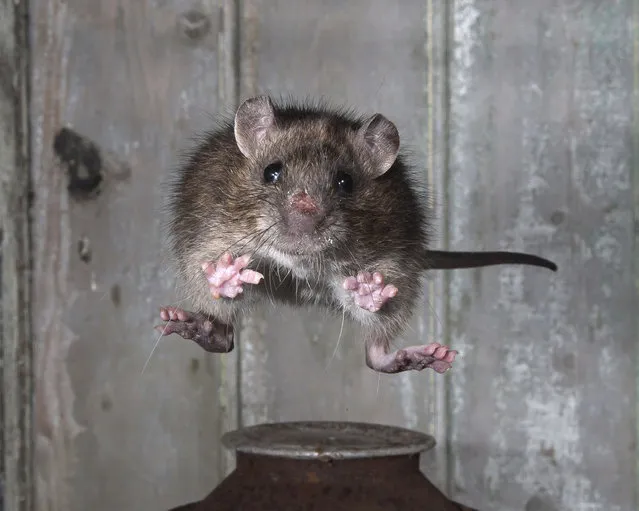
A) 1st place WINNER – Roy Rimmer. This rat was in an outdoor set I made, the set up is two meters long and a meter wide made of Perspex,it has a plywood front with holes cut in for my camera and flash guns, I placed two rusty paint cans in the set up and the rat would leap from one can too the other, I had to use flash to freeze the action.

A) 1st place WINNER – Roy Rimmer. “This rat was in an outdoor set I made, the set up is two meters long and a meter wide made of Perspex,it has a plywood front with holes cut in for my camera and flash guns, I placed two rusty paint cans in the set up and the rat would leap from one can too the other, I had to use flash to freeze the action”.
Details
08 Mar 2013 14:49:00