Loading...
Done
Two women react to the camera as Nightclub Circus hosts the first dance event, which will welcome 6,000 clubbers to the city's Bramley-Moore Dock warehouse on April 30, 2021 in Liverpool, England. The event is part of the national Events Research Programme which will provide data on how events could be permitted to safely reopen. (Photo by Anthony Devlin/Getty Images)

Two women react to the camera as Nightclub Circus hosts the first dance event, which will welcome 6,000 clubbers to the city's Bramley-Moore Dock warehouse on April 30, 2021 in Liverpool, England. The event is part of the national Events Research Programme which will provide data on how events could be permitted to safely reopen. (Photo by Anthony Devlin/Getty Images)
Details
01 May 2021 09:04:00
Alien-themed decorations are seen at the Alien Research Center in Hiko, September 19, 2019. Scores of UFO enthusiasts converged on rural Nevada for a pilgrimage of sorts to the U.S. installation known as Area 51, long rumored to house government secrets about alien life, as law enforcement officials beefed up security around the military base. (Photo by Jim Urquhart/Reuters)

Alien-themed decorations are seen at the Alien Research Center in Hiko, September 19, 2019. Scores of UFO enthusiasts converged on rural Nevada for a pilgrimage of sorts to the U.S. installation known as Area 51, long rumored to house government secrets about alien life, as law enforcement officials beefed up security around the military base. (Photo by Jim Urquhart/Reuters)
Details
21 Sep 2019 00:03:00
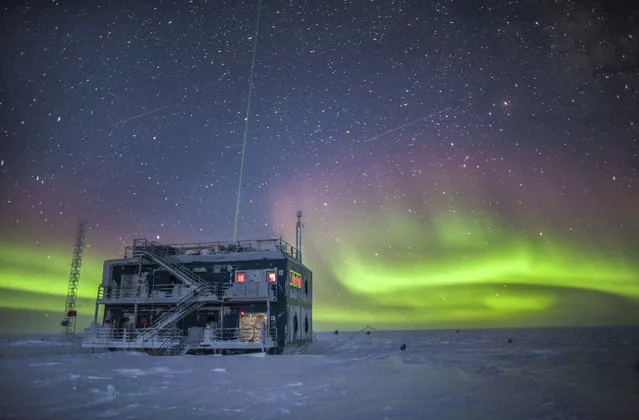
This undated photo provided by NOAA in May 2018 shows aurora australis near the South Pole Atmospheric Research Observatory in Antarctica. When a hole in the ozone formed over Antarctica, countries around the world in 1987 agreed to phase out several types of ozone-depleting chemicals called chlorofluorocarbons (CFCs). Production was banned, emissions fell and the hole shriveled. But according to a study released on Wednesday, May 16, 2018, scientists say since 2013, there’s more of a banned CFC going into the atmosphere. (Photo by Patrick Cullis/NOAA via AP Photo)

This undated photo provided by NOAA in May 2018 shows aurora australis near the South Pole Atmospheric Research Observatory in Antarctica. When a hole in the ozone formed over Antarctica, countries around the world in 1987 agreed to phase out several types of ozone-depleting chemicals called chlorofluorocarbons (CFCs). Production was banned, emissions fell and the hole shriveled. But according to a study released on Wednesday, May 16, 2018, scientists say since 2013, there’s more of a banned CFC going into the atmosphere. (Photo by Patrick Cullis/NOAA via AP Photo)
Details
15 Aug 2018 00:05:00
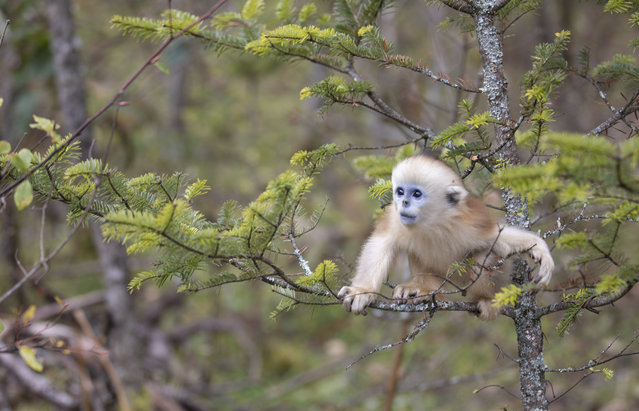
Photo taken on October 11, 2020 shows a golden monkey at Dalongtan Golden Monkey Research Center in Shennongjia National Park of central China's Hubei Province. With the efforts of local authority and improvement of the environment in the past many years, the number of golden monkeys in Shennongjia area reached nearly 1,500 nowadays. (Photo by Xinhua News Agency/Rex Features/Shutterstock)

Photo taken on October 11, 2020 shows a golden monkey at Dalongtan Golden Monkey Research Center in Shennongjia National Park of central China's Hubei Province. With the efforts of local authority and improvement of the environment in the past many years, the number of golden monkeys in Shennongjia area reached nearly 1,500 nowadays. (Photo by Xinhua News Agency/Rex Features/Shutterstock)
Details
18 Oct 2020 00:03:00
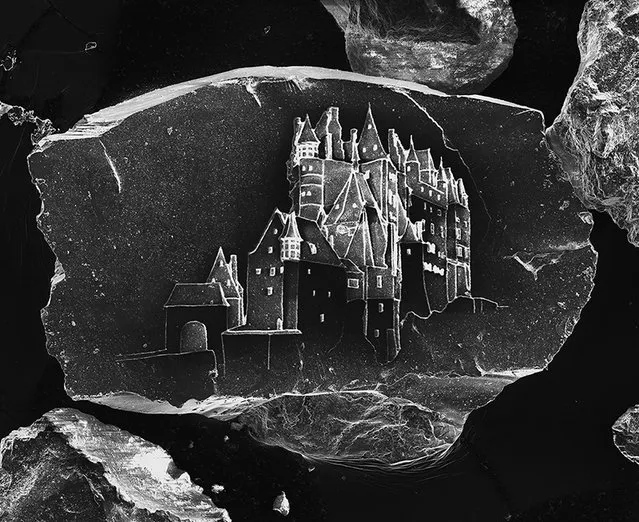
Castles Etched on Grains of Sand

Artist Vik Muniz is known for his gigantic composite installations and sculptures created from thousands of individual objects. In this new collaboration with artist and MIT researcher Marcelo Coelho, Muniz takes the opposite approach and explores the microscopic with a new series of sandcastles etched onto individual grains of sand.
Details
13 Apr 2014 08:55:00
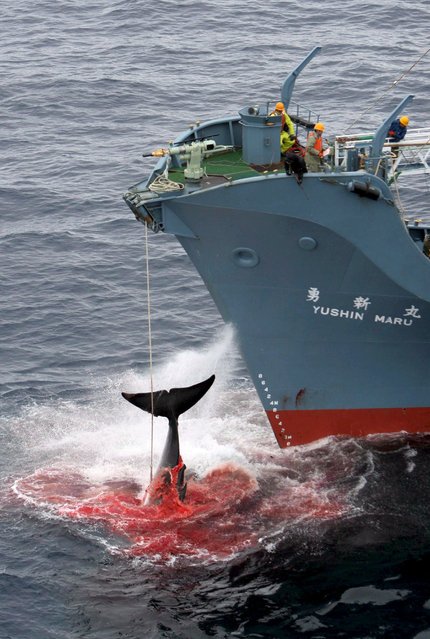
A file photograph dated 07 January 2006 and released by Greenpeace, showing the Yushin Maru, a factory ship in a Japanese whaling fleet, injuring a whale with it's first harpoon attempt. A UN court in The Hague on 31 March 2014 halted Japan's much-criticized whaling programme, ruling that it contravenes a 1986 moratorium on whale hunting. Japan must end its 'research whaling' programme, the International Court of Justice (ICJ) said. (Photo by Kate Davison/EPA)

A file photograph dated 07 January 2006 and released by Greenpeace, showing the Yushin Maru, a factory ship in a Japanese whaling fleet, injuring a whale with it's first harpoon attempt. A UN court in The Hague on 31 March 2014 halted Japan's much-criticized whaling programme, ruling that it contravenes a 1986 moratorium on whale hunting. Japan must end its 'research whaling' programme, the International Court of Justice (ICJ) said. Japan said the programme was for scientific research and permitted under international conventions. Australia had brought the case to the ICJ in 2010, charging that Japan was breaching international law by killing hundreds of whales every year for commercial purposes. Japan was “deeply disappointed” by the ruling, an unnamed government official was quoted by the Kyodo News agency as saying. But the official said Japan would stand by the ruling. (Photo by Kate Davison/EPA)

Details
01 Apr 2014 08:38:00
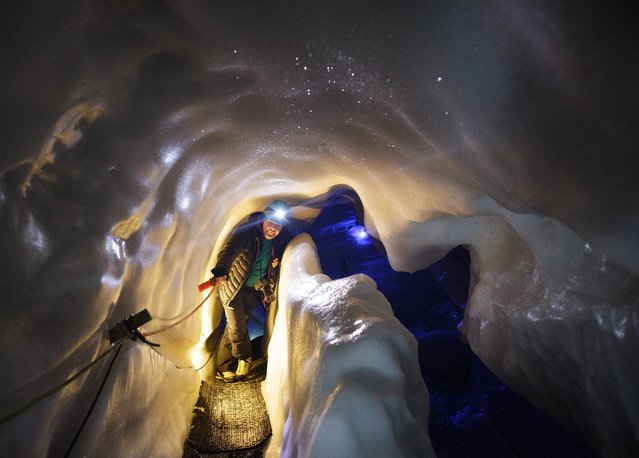
A tourist walks inside the Ice Palace glacier hollow at Hintertux glacier, located at around 3250 meters above sea level, in Zillertal, Austria, 02 March, 2016. The hollow's temperature remains constant at 0 degrees Celsius, in summer and winter alike, and is also used by the University of Innsbruck for scientific research projects. (Photo by Lisi Niesner/EPA)

A tourist walks inside the Ice Palace glacier hollow at Hintertux glacier, located at around 3250 meters above sea level, in Zillertal, Austria, 02 March, 2016. The hollow's temperature remains constant at 0 degrees Celsius, in summer and winter alike, and is also used by the University of Innsbruck for scientific research projects. (Photo by Lisi Niesner/EPA)
Details
03 Mar 2016 11:44:00
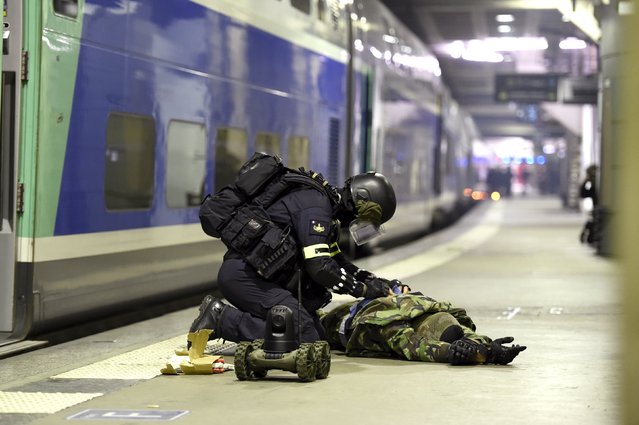
A member of the National Gendarmerie Intervention Group (GIGN) deactivates a bomb from a supposed terrorist during a training exercise in the event of a terrorist attack in collaboration with Recherche Assistance Intervention Dissuasion (RAID) and Research and Intervention Brigades (BRI) in presence of the French Interior minister Bernard Cazeneuve at la Gare Montparnasse, in central Paris on April 20, 2016. (Photo by Miguel Medina/Reuters)

A member of the National Gendarmerie Intervention Group (GIGN) deactivates a bomb from a supposed terrorist during a training exercise in the event of a terrorist attack in collaboration with Recherche Assistance Intervention Dissuasion (RAID) and Research and Intervention Brigades (BRI) in presence of the French Interior minister Bernard Cazeneuve at la Gare Montparnasse, in central Paris on April 20, 2016. (Photo by Miguel Medina/Reuters)
Details
21 Apr 2016 11:54:00