Loading...
Done
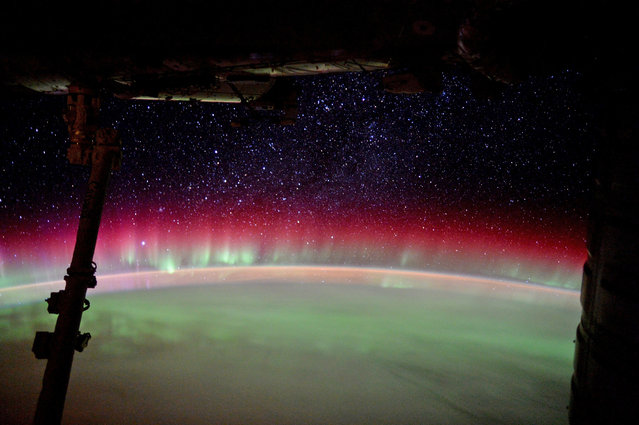
ESA astronaut Tim Peake posted this stunning image on his social media channels, commenting: “Station passed through magnificent aurora Australis last night”. Tim is set to return to Earth on 18 June 2016, bringing his six-month Principia mission to the ISS to an end. During his stay he performed more than 30 scientific experiments for ESA and taking part in numerous others from ESA's international partners. ESA and the UK Space Agency have partnered to develop many exciting educational activities around the Principia mission, aimed at sparking the interest of young children in science and space. (Photo by Tim Peake/ESA/NASA)

ESA astronaut Tim Peake posted this stunning image on his social media channels, commenting: “Station passed through magnificent aurora Australis last night”. Tim is set to return to Earth on 18 June 2016, bringing his six-month Principia mission to the ISS to an end. During his stay he performed more than 30 scientific experiments for ESA and taking part in numerous others from ESA's international partners. ESA and the UK Space Agency have partnered to develop many exciting educational activities around the Principia mission, aimed at sparking the interest of young children in science and space. (Photo by Tim Peake/ESA/NASA)
Details
31 Dec 2016 10:21:00
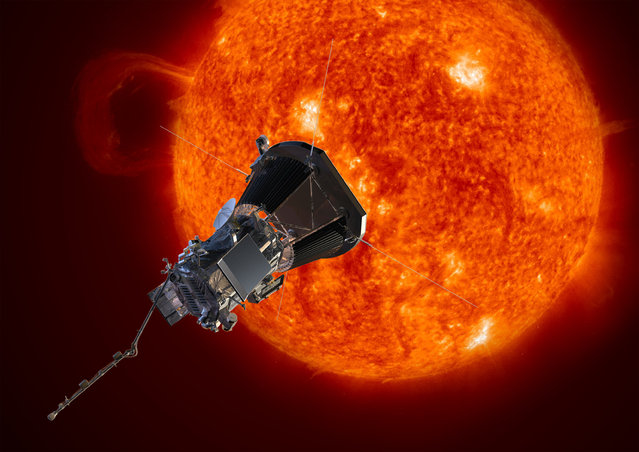
This image made available by the Johns Hopkins University Applied Physics Laboratory on Wednesday, May 31, 2017 depicts NASA's Solar Probe Plus spacecraft approaching the sun. On Wednesday, NASA announced it will launch the probe in summer 2018 to explore the solar atmosphere. It will be subjected to brutal heat and radiation like no other man-made structure before. (Photo by Johns Hopkins University Applied Physics Laboratory via AP Photo)

This image made available by the Johns Hopkins University Applied Physics Laboratory on Wednesday, May 31, 2017 depicts NASA's Solar Probe Plus spacecraft approaching the sun. On Wednesday, NASA announced it will launch the probe in summer 2018 to explore the solar atmosphere. It will be subjected to brutal heat and radiation like no other man-made structure before. (Photo by Johns Hopkins University Applied Physics Laboratory via AP Photo)
Details
08 Sep 2017 09:42:00
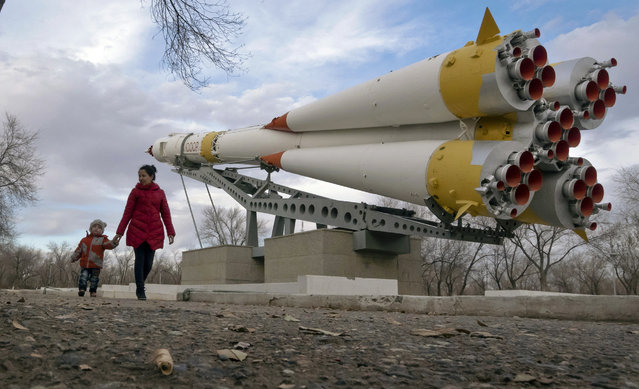
A woman walks with her child past a Soyuz rocket, installed as a monument at the Russian leased Baikonur cosmodrome, the world's first and largest operational space launch facility, in Baikonur, Kazakhstan, Saturday, November 12, 2016. The new Soyuz mission to the International Space Station (ISS) is scheduled for Friday, Nov. 18. (Photo by Dmitri Lovetsky/AP Photo)

A woman walks with her child past a Soyuz rocket, installed as a monument at the Russian leased Baikonur cosmodrome, the world's first and largest operational space launch facility, in Baikonur, Kazakhstan, Saturday, November 12, 2016. The new Soyuz mission to the International Space Station (ISS) is scheduled for Friday, Nov. 18. (Photo by Dmitri Lovetsky/AP Photo)
Details
08 Feb 2017 00:03:00
Free Xiangnong Primary School At Ganzi Tibetan

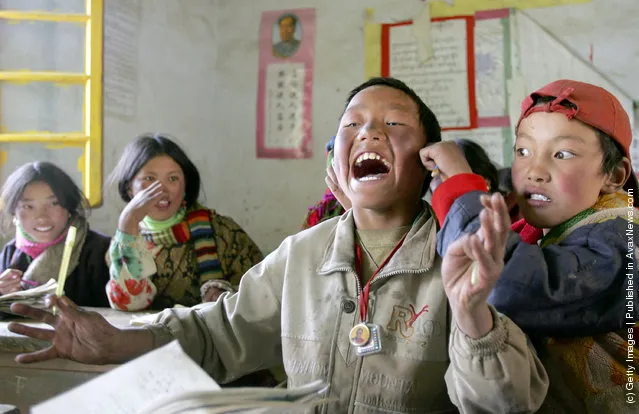
Tibetan students play at a class break at the Xiangnong primary school on April 15, 2005 in Kangding County of Ganzi Tibetan Autonomous Prefecture, Sichuan Province, southwest China. There is only one teahcer in the Tagong Village, 12 Tibetan students get free education from him in Xiangnong primary school. (Photo by China Photos/Getty Images)
Details
27 Aug 2011 14:40:00
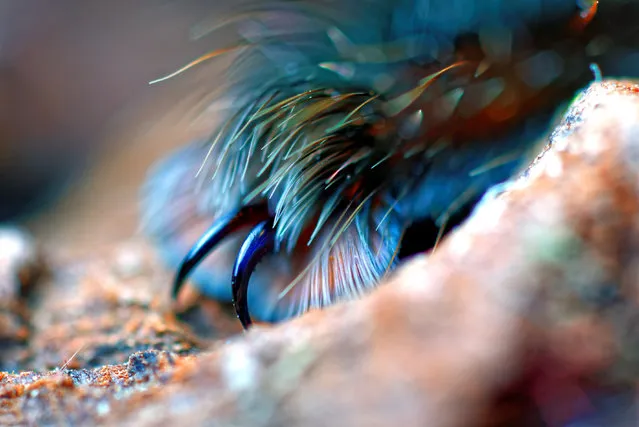
Brachypelma albopilosum, foot detail. (Photo by Michael Pankratz/Caters News Agency)

Michael Pankratz’s intriguing works focus specifically on the feet of tarantulas – an appendage that many have perhaps never focused on. The extreme close-ups of tarantulas’ “paws” show fine, colourful hairs, and sharp claws. Here: Brachypelma albopilosum, foot detail. (Photo by Michael Pankratz/Caters News Agency)
Details
19 Oct 2017 09:17:00
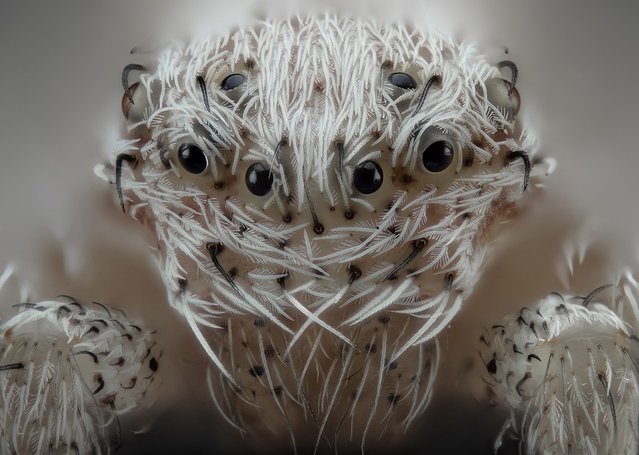
Try not to get hypnotised by this spider. (Photo by Javier Ruperez/Solent News & Photo Agency)

This extraordinary series of close-up photos turns mundane insects into terrifying beasts from another world. The bugs are captured in intricate detail by photographer Javier Ruperez, using a special lens, revealing just how complex the tiny creatures are. (Photo by Javier Ruperez/Solent News & Photo Agency)
Details
21 Jun 2018 00:03:00
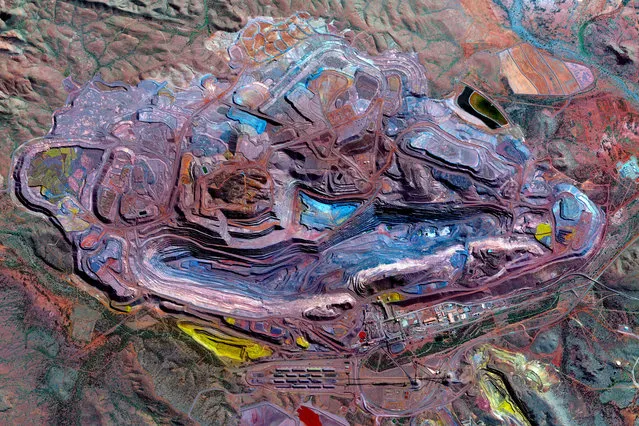
Mount Whaleback iron ore mine 23°21’32.3”S, 119°40’40.1”E. The Mount Whaleback Iron Ore Mine in the Pilbara region of Western Australia. Roughly 98% of the world’s mined iron ore is used to make steel and is thus a significant component in the construction of buildings, automobiles, and appliances such as refrigerators. (Photo by Daily Overview/DigitalGlobe, a Maxar Company)

Mount Whaleback iron ore mine 23°21’32.3”S, 119°40’40.1”E. The Mount Whaleback Iron Ore Mine in the Pilbara region of Western Australia. Roughly 98% of the world’s mined iron ore is used to make steel and is thus a significant component in the construction of buildings, automobiles, and appliances such as refrigerators. (Photo by Daily Overview/DigitalGlobe, a Maxar Company)
Details
16 Nov 2018 00:03:00
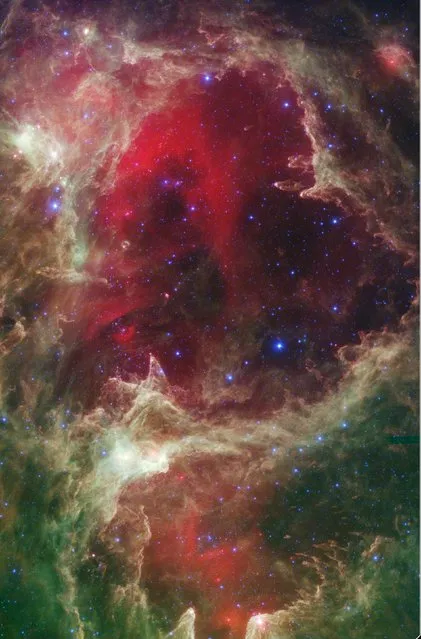
An infrared portrait from NASA's Spitzer Space Telescope which shows generations of stars is seen in this undated NASA handout image released February 14, 2013. In this wispy star-forming region, called W5, the oldest stars can be seen as blue dots in the centers of the two hollow cavities (other blue dots are background and foreground stars not associated with the region). Red shows heated dust that pervades the region's cavities, while green highlights dense clouds. (Photo by NASA/Reuters/JPL-Caltech/Harvard-Smithsonian/Handout)

An infrared portrait from NASA's Spitzer Space Telescope which shows generations of stars is seen in this undated NASA handout image released February 14, 2013. In this wispy star-forming region, called W5, the oldest stars can be seen as blue dots in the centers of the two hollow cavities (other blue dots are background and foreground stars not associated with the region). Red shows heated dust that pervades the region's cavities, while green highlights dense clouds. (Photo by NASA/Reuters/JPL-Caltech/Harvard-Smithsonian/Handout)
Details
03 Mar 2013 08:44:00