Loading...
Done
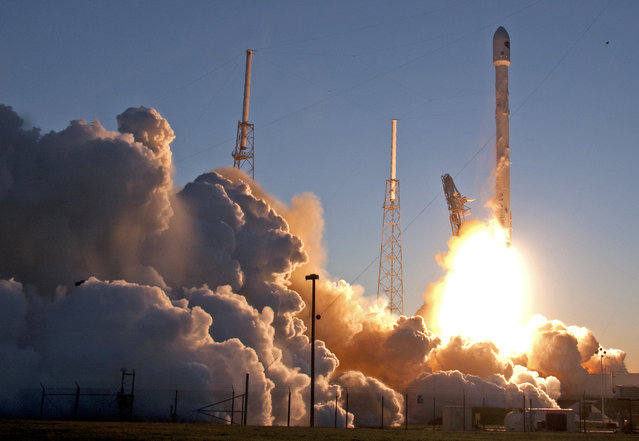
An unmanned Falcon 9 SpaceX rocket lifts off from launch complex 40 at the Cape Canaveral Air Force Station, Wednesday, February 11, 2015, in Cape Canaveral, Fla. On board is the Deep Space Climate Observatory, which will head toward a solar-storm lookout point a million miles away. (Photo by John Raoux/AP Photo)

An unmanned Falcon 9 SpaceX rocket lifts off from launch complex 40 at the Cape Canaveral Air Force Station, Wednesday, February 11, 2015, in Cape Canaveral, Fla. On board is the Deep Space Climate Observatory, which will head toward a solar-storm lookout point a million miles away. (Photo by John Raoux/AP Photo)
Details
13 Feb 2015 13:07:00
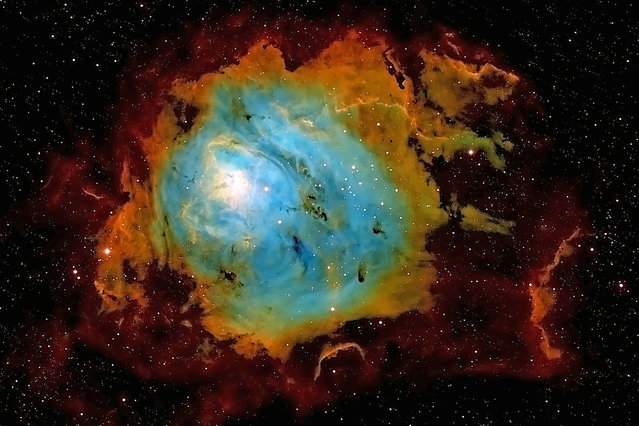
Lagoon Master. These amazing pictures of nebula thousands of light years from Earth have been captured by an amateur astronomer Dr. Dennis Roscoe snapped the beautiful celestial formations from his own personal observatory. His telescope looks into deep space at the nebula, which show both the birth and death of stars, like our very own Sun. (Photo by Dennis Roscoe/Caters News)

Lagoon Master. These amazing pictures of nebula thousands of light years from Earth have been captured by an amateur astronomer Dr. Dennis Roscoe snapped the beautiful celestial formations from his own personal observatory. His telescope looks into deep space at the nebula, which show both the birth and death of stars, like our very own Sun. (Photo by Dennis Roscoe/Caters News)
Details
23 Sep 2014 13:12:00
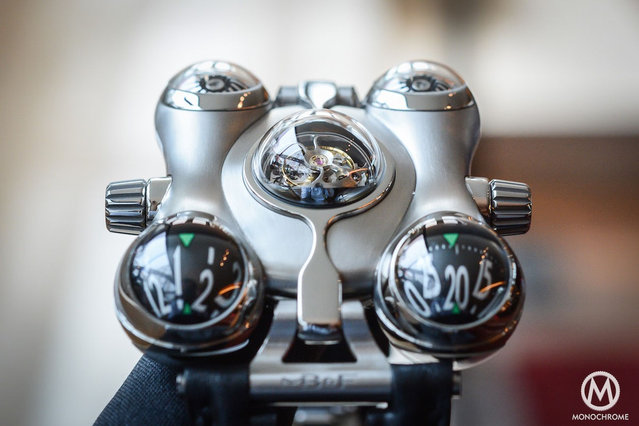
MB&F Horological Machine No. 6 Space Pirate

All throughout history of mankind people were fascinated by time, its flow, and how to measure it. Thus, the science of horology can into being, as people invented more and more sophisticated ways of measuring the passage of time. Truly, it’s one of the most profound characteristics of being a human, to feel and to ponder the meaning of time, its properties, and will we ever be able to move through it, not with it. Now, however, horology is mainly referred to the art of mechanical watchmaking. (Photo by MB&F)
Details
14 Nov 2014 13:51:00
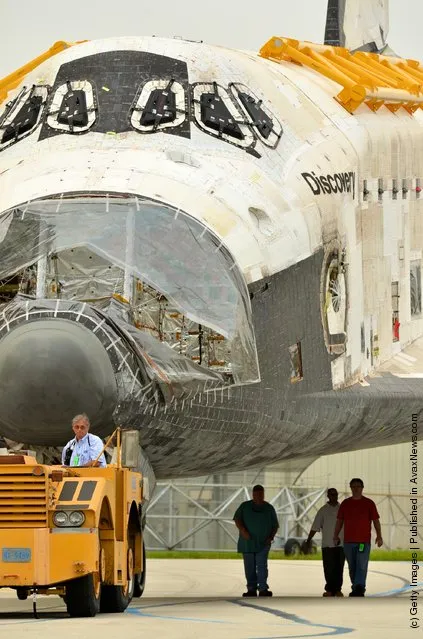
Discovery And Endeavour Space Shuttles Move Locations At Kennedy Space Center

Space Shuttle Discovery leaves the Vehicle Assembly Building (VAB) on its way to the Orbiter Processing Facility at Kennedy Space Center August 11, 2011 in Cape Canaveral, Florida. Space Shuttles Endeavour and Discovery switched buildings as they are being decommissioned with the end of the Shuttle program. (Photo by Roberto Gonzalez/Getty Images)
Details
13 Aug 2011 12:48:00


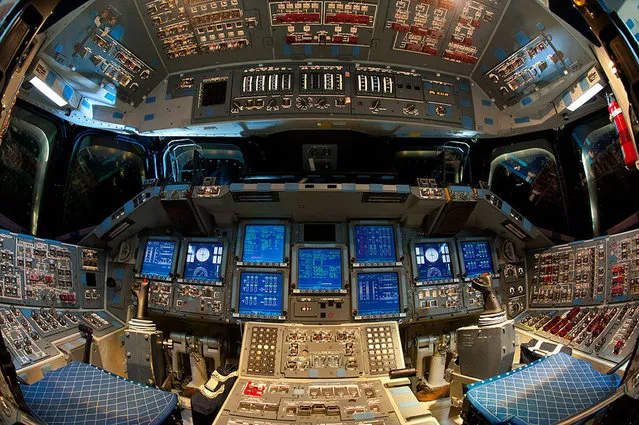
These rare photos capture the Flight Deck (cockpit) of the Space Shuttle Endeavour, fully powered for one of the final times. Just a few weeks later, at 9:58am EDT on May 11, Endeavour was powered down for the final time in history. It was the last of the three space shuttles to have power. Below, other views show the mid-deck, gutted of its lockers and storage areas, and three final photos show the white room entrance in the Orbiter Processing Facility, signed by thousands over the years.
Details
03 Oct 2012 13:49:00


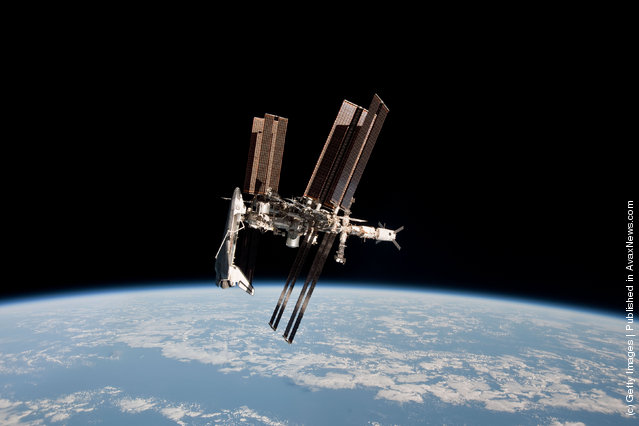
In this handout image provided by the European Space Agency (ESA) and NASA, the International Space Station and the docked space shuttle Endeavour orbit Earth during Endeavour's final sortie on May 23, 2011 in Space. Italian astronaut Paolo Nespoli captured the first-ever images of an orbiter docked to the International Space Station from the viewpoint of a departing vessel as he returned to Earth in a Soyuz capsule. (Photo by Paolo Nespoli - ESA/NASA via Getty Images)
Details
09 Jun 2011 11:28:00


Space Shuttle Atlantis lands at the Kennedy Space Center July 21, 2011 in Cape Canaveral, Florida. The landing brings to a close the 30-year era of the space shuttle program that began in 1981, and has included 135 missions. (Photo by Bill Ingalls/NASA via Getty Images)
Details
22 Jul 2011 10:49:00
European Space Agency astronaut Tim Peake will return home after a six-month long mission on the International Space Station,on June 18, 2016. Peake was the first British ESA astronaut to visit the ISS and captured hundreds of photographs of the Earth during his mission. Here: “Lots of sun-glint right now during our whole orbit – we haven't seen a sunset for over 3 days”, he wrote. (Photo by Tim Peake/ESA/NASA)

European Space Agency astronaut Tim Peake will return home after a six-month long mission on the International Space Station,on June 18, 2016. Peake was the first British ESA astronaut to visit the ISS and captured hundreds of photographs of the Earth during his mission. Here: “Lots of sun-glint right now during our whole orbit – we haven't seen a sunset for over 3 days”, he wrote. (Photo by Tim Peake/ESA/NASA)
Details
18 Jun 2016 13:08:00