Loading...
Done
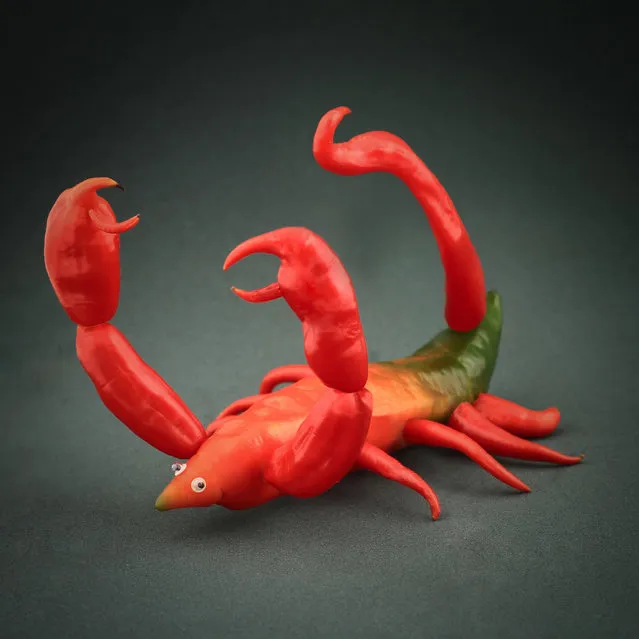
“Red Pepperpion. (Photo by Vanessa Dualib)

“Red Pepperpion. Red Pepperpions are secretive, nocturnal arachilli which can be spotted in kitchens of arid climates all around the world.

Red Pepperpions are equipped with a delicious (and depending on the quantity...deadly!) stinger at the end of its tail. If you happen to get bitten (or if you bite him!) it will produce a burning sensation on your taste nerves.

However, there is no need to worry, since the fact is that his potent stinger is usually only used when hunting or whenever the Pepperpion feels like he might become part of someones meal...

At daylight or when encountering a larger foe, such as a Saucier Chef, they retreat into burrows inside the fridge or hide beneath the oven”. (Photo and comment by Vanessa Dualib)


Details
08 Feb 2013 09:24:00
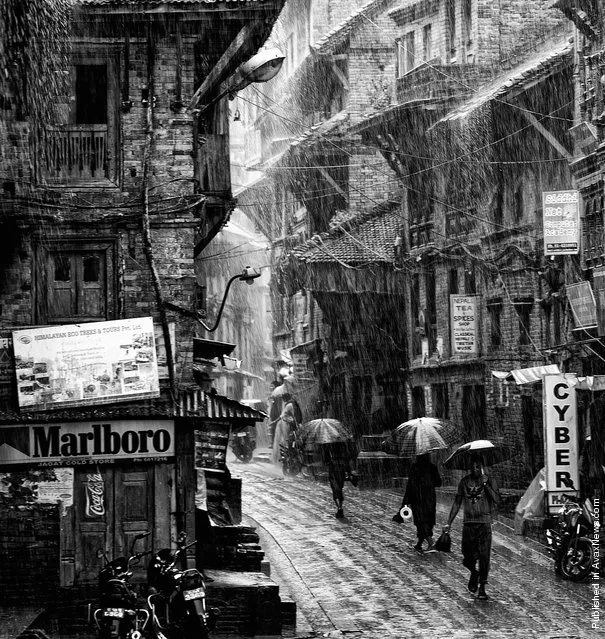
Cyber Monsoon

“Cyber Monsoon”, honorable mention in Places category. A torrential monsoon rain in Bhaktapur, Nepal. (© Anuar Patjane)
Details
07 Apr 2012 11:51:00
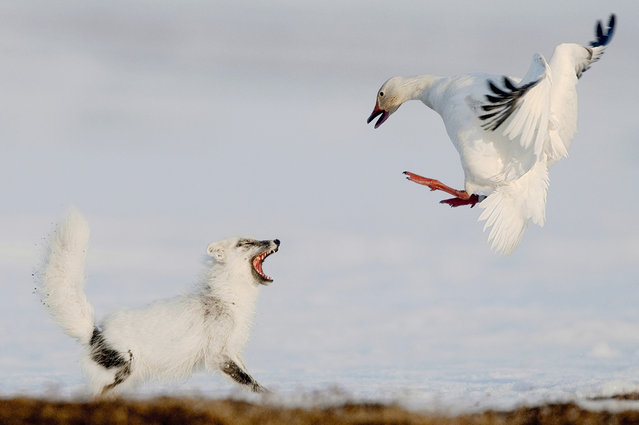
Commended. In late May, about a quarter of a million snow geese arrive from North America to nest on Wrangel Island, in northeastern Russia. They form the world's largest breeding colony of snow geese. Photographer Sergey Gorshkov spent two months on the remote island photographing the unfolding dramas. (Photo by Sergey Gorshkov/Veolia Environnement Wildlife Photographer)

Commended. In late May, about a quarter of a million snow geese arrive from North America to nest on Wrangel Island, in northeastern Russia. They form the world's largest breeding colony of snow geese. Photographer Sergey Gorshkov spent two months on the remote island photographing the unfolding dramas. Arctic foxes take advantage of the abundance of eggs, caching surplus eggs for leaner times. But a goose (here the gander) is easily a match for a fox, which must rely on speed and guile to steal eggs. “The battles were fairly equal”, notes Sergey, “and I only saw a fox succeed in grabbing an egg on a couple of occasions, despite many attempts”. Surprisingly, “the geese lacked any sense of community spirit”, he adds, “and never reacted when a fox harassed a neighboring pair nesting close by”. (Photo by Sergey Gorshkov/Veolia Environnement Wildlife Photographer)
Details
16 Jun 2015 12:30:00
Reading the Metro, enjoying some Swedish meatballs. (Photo by Svetlana Valyiskaya/Mercury)

It's often said that pets and their owners can start to look alike, but these adorable photographs take the old mantra to a new extreme. They are the work of Svetlana Valyiskaya (27), from St Petersburg, who snaps pets in everyday poses in her spare time from her job as a commercial photographer. The vibrant costumes and scenes, which Svetlana designs herself, have made the photos a hit in her native Russia – and it's not hard to see why. She said: “I really love animals, they are loyal, faithful and true and always interesting to work with – plus they never criticise the photographs afterwards”. (Photo by Svetlana Valyiskaya/Mercury)
Details
03 Sep 2014 10:44:00
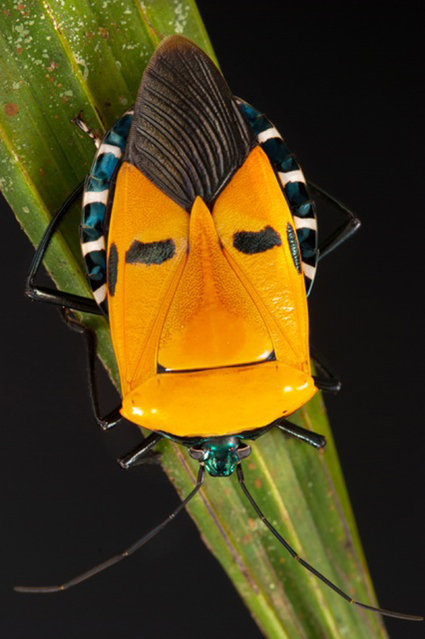
Pentomid bug. (Photo by Darlyne Murawsk/National Geographic Creative/Caters News)

It’s a bug’s life for these colorful insects – whose natural markings resemble incredible smiling faces. These dazzling insects, with their colorful patterns and markings, look as if they are living a happy bugs life. But they’re also the spitting image of a whole host of stars from stage and screen from a creeping Charlie Chaplin to Elvis Presley. Photo: Pentomid bug. (Photo by Darlyne Murawsk/National Geographic Creative/Caters News)
Details
29 Apr 2014 10:08:00
Kunar province, 1980. Armed mujahideen carry animal skins to use as inflatable buoys to cross rapids. (Photo by  Steve McCurry/Taschen/Magnum Photos/The Guardian)

Afghanistan, published by Taschen later July, is a retrospective portfolio of the Magnum photographer Steve McCurry’s most striking images of the country, from 1979 to 2016. Here: Kunar province, 1980. Armed mujahideen carry animal skins to use as inflatable buoys to cross rapids. (Photo by Steve McCurry/Taschen/Magnum Photos/The Guardian)
Details
12 Aug 2017 05:54:00
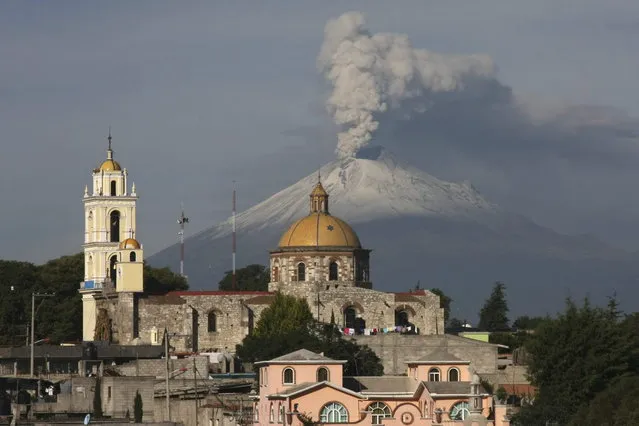
The main church in the town of San Damian Texoloc, Mexico stands in front of the Popocatepetl volcano as is spews ash and vapor early Tuesday, July 9, 2013. Last Saturday, Mexico's National Center for Disaster Prevention raised the volcano alert from Stage 2 Yellow to Stage 3 Yellow, the final step before a Red alert, when possible evacuations could be ordered after the Popocatepetl volcano spit out a cloud of ash and vapor 2 miles (3 kilometers) high over several days of eruptions. (Photo by J. Guadalupe Perez/AP Photo)

The main church in the town of San Damian Texoloc, Mexico stands in front of the Popocatepetl volcano as is spews ash and vapor early Tuesday, July 9, 2013. Last Saturday, Mexico's National Center for Disaster Prevention raised the volcano alert from Stage 2 Yellow to Stage 3 Yellow, the final step before a Red alert, when possible evacuations could be ordered after the Popocatepetl volcano spit out a cloud of ash and vapor 2 miles (3 kilometers) high over several days of eruptions. (Photo by J. Guadalupe Perez/AP Photo)
Details
10 Jul 2013 08:45:00
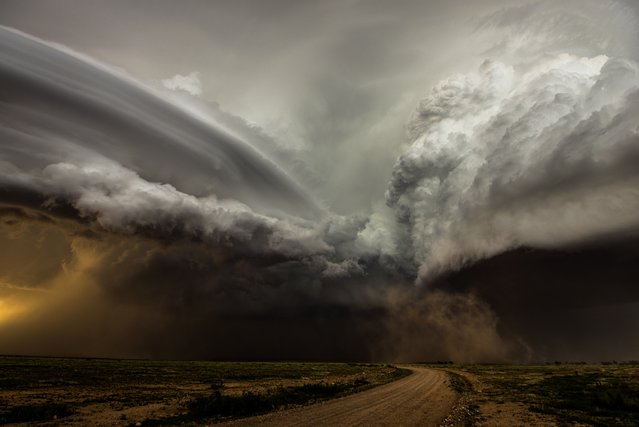
Clash of the storms, New Mexico, US by Camelia Czuchnicki. “A clash between two storm cells in New Mexico, US, each with its own rotating updraft. The curved striations of the oldest noticeable against the new bubbling convection of the newer. It was a fantastic sight to watch and it’s the rarity of such scenes that keep drawing me back to the US Plains each year”. (Photo by Camelia Czuchnicki/Weather Photographer of the Year 2016)

Clash of the storms, New Mexico, US by Camelia Czuchnicki. “A clash between two storm cells in New Mexico, US, each with its own rotating updraft. The curved striations of the oldest noticeable against the new bubbling convection of the newer. It was a fantastic sight to watch and it’s the rarity of such scenes that keep drawing me back to the US Plains each year”. (Photo by Camelia Czuchnicki/Weather Photographer of the Year 2016)
Details
16 Sep 2016 11:11:00