Loading...
Done
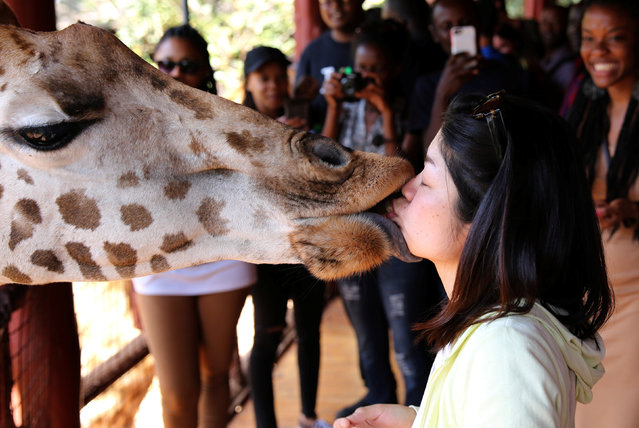
A visitor feeds a food pellet to a giraffe in the Giraffe Centre in Nairobi, Kenya January 15, 2017. (Photo by Goran Tomasevic/Reuters)

A visitor feeds a food pellet to a giraffe in the Giraffe Centre in Nairobi, Kenya January 15, 2017. (Photo by Goran Tomasevic/Reuters)
Details
16 Jan 2017 10:34:00
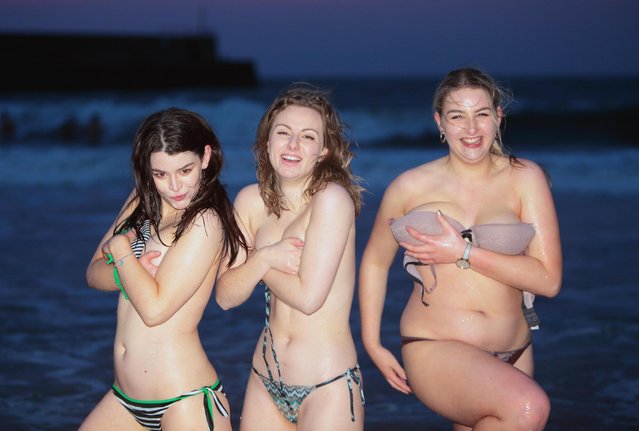
St Andrews University students skinny dip in the sea as May Day celebrations in St Andrews, Scotland on April 30, 2017. Hundreds of revellers ditched their clothes and bravely jumped into the bitterly cold North Sea. (Photo by Alamy Stock Photos)

St Andrews University students skinny dip in the sea as May Day celebrations in St Andrews, Scotland on April 30, 2017. Hundreds of revellers ditched their clothes and bravely jumped into the bitterly cold North Sea. (Photo by Alamy Stock Photos)
Details
02 May 2017 09:53:00
Members of the samba school of the Grupo Especial Independencia Tricolor participate in the carnival celebration at the Anhembi sambodrome in Sao Paulo, Brazil, 09 February 2018. (Photo by Sebastiao Moreira/EPA/EFE)

Members of the samba school of the Grupo Especial Independencia Tricolor participate in the carnival celebration at the Anhembi sambodrome in Sao Paulo, Brazil, 09 February 2018. (Photo by Sebastiao Moreira/EPA/EFE)
Details
12 Feb 2018 00:03:00
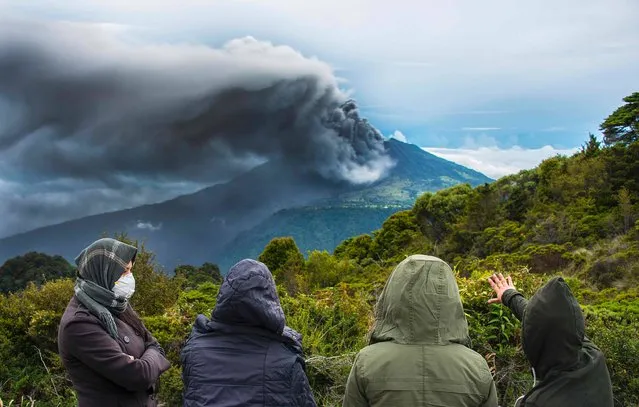
People look at the Turrialba volcano as it spewes ashes on May 20, 2016, in Cartago, Costa Rica. The Turrialba volcano started erupting columns of smoke and ash that the wind extended towards the Costa Rican capital, in what according to experts is the strongest eruption in the past six years. (Photo by Ezequiel Becerra/AFP Photo)

People look at the Turrialba volcano as it spewes ashes on May 20, 2016, in Cartago, Costa Rica. The Turrialba volcano started erupting columns of smoke and ash that the wind extended towards the Costa Rican capital, in what according to experts is the strongest eruption in the past six years. (Photo by Ezequiel Becerra/AFP Photo)
Details
22 May 2016 07:31:00
Body builders preparing at the backstage during the Bodybuilding Cup in Kiev, Ukraine on November 7, 2015 which includes classic bodybuilding, physicist and body fitness and bikini in the competition. (Photo by Nazar Furyk/Pacific Press)

Body builders preparing at the backstage during the Bodybuilding Cup in Kiev, Ukraine on November 7, 2015 which includes classic bodybuilding, physicist and body fitness and bikini in the competition. (Photo by Nazar Furyk/Pacific Press)
Details
10 Nov 2015 13:32:00


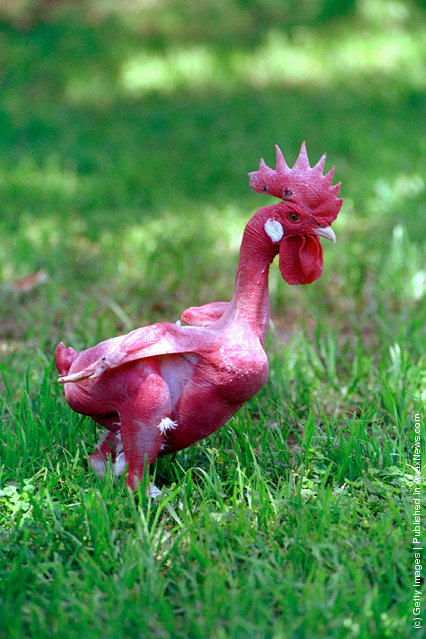
A genetically engineered featherless rooster struts around the campus of the Hebrew University of Jerusalem's Department of Agriculture May 22, 2002 in Rehovot, Israeli. After two years of research, departmental scientists announced the naked chicken, as it has been dubbed, as a low calorie bird because the lack of feathers means the chicken has less fat. It also matures earlier than its feathered counterparts. (Photo by Moshe Milner/GPO/Getty Images)
Details
29 Mar 2011 14:15:00
Rats

Trained by Dutch photographer Ellen van Deelen to hold different musical instruments and pose for the camera, the Roosendaal Rats are considered very talented by their owner. She confesses rats weren’t exactly her favorite creatures, but, after buying these two, she realized they are highly intelligent creatures.

Details
18 Jul 2012 11:49:00
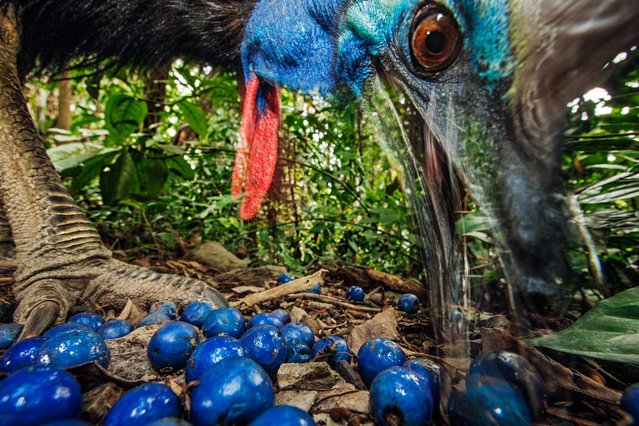
“Cassowaries are large, flightless birds related to emus and (more distantly) to ostriches, rheas, and kiwis”, writes Olivia Judson in the September issue of National Geographic magazine. (Photo by Christian Ziegler/National Geographic)

“Cassowaries are large, flightless birds related to emus and (more distantly) to ostriches, rheas, and kiwis”, writes Olivia Judson in the September issue of National Geographic magazine. How large? People-size: Adult males stand well over five foot five and top 110 pounds. Females are even taller, and can weigh more than 160 pounds. Dangerous when roused, they’re shy and peaceable when left alone. But even birds this big and tough are prey to habitat loss. The dense New Guinea and Australia rain forests where they live have dwindled. Today cassowaries might number 1,500 to 2,000. And because they help shape those same forests – by moving seeds from one place to another – “if they vanish”, Judson writes, “the structure of the forest would gradually change” too. (Photo by Christian Ziegler/National Geographic)
Details
06 Jan 2014 12:21:00