Loading...
Done
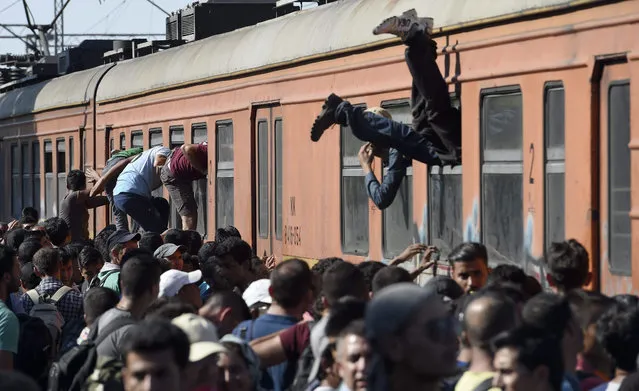
Migrants climb through the windows of a train bound for Serbia at the train station in Gevgelija, The Former Yugoslav Republic of Macedonia, 19 July 2015. Thousands of migrants who crossed Greece are on their way through Macedonia towards Serbia in order to access other European countries. (Photo by Georgi Licovski/EPA)

Migrants climb through the windows of a train bound for Serbia at the train station in Gevgelija, The Former Yugoslav Republic of Macedonia, 19 July 2015. Thousands of migrants who crossed Greece are on their way through Macedonia towards Serbia in order to access other European countries. Hungary in mid-July started to put up a fence on its border with Serbia, which makes the situation with the migrants in the transit countries even more complicated. The European countries on 20 July will discuss the quota of how many migrants each country should accept. (Photo by Georgi Licovski/EPA)
Details
20 Jul 2015 09:52:00
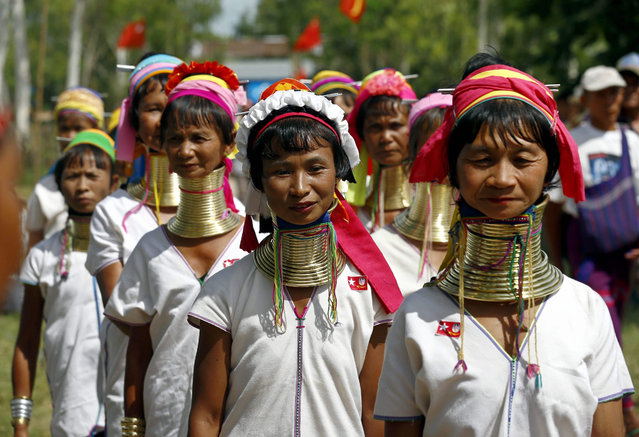
Padaung ethnic women arrive to listen to the speech of Myanmar opposition leader Aung San Suu Kyi (not in picture), Chairwoman of the National League for Democracy (NLD) party, during Suu Kyi's first official election campaign at Demoso township of Kayah State, eastern Myanmar, 10 September 2015. (Photo by Lynn Bo Bo/EPA)

Padaung ethnic women arrive to listen to the speech of Myanmar opposition leader Aung San Suu Kyi (not in picture), Chairwoman of the National League for Democracy (NLD) party, during Suu Kyi's first official election campaign at Demoso township of Kayah State, eastern Myanmar, 10 September 2015. Suu Kyi is on a three-day visit to Kayah State near the Thai-Myanmar border, as part of her first official election campaign. Myanmar political parties and candidates started their campaigns on 08 September ahead of the upcoming general election, which will be held on 08 November 2015. (Photo by Lynn Bo Bo/EPA)
Details
12 Sep 2015 13:44:00
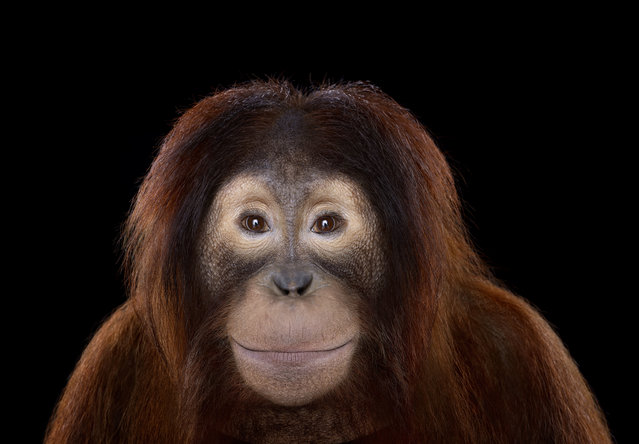
A talented portrait photographer has moved on from capturing traditional human subjects – instead photographing a stunning variety of wild animals. Brad Wilson, 51, stands just feet away from the likes of tigers, rhinos, elephants and primates. Each animal is given the same respect and dignity as any human subject, with Brad setting up a full photographic studio, either at or near sanctuaries and zoos across the U.S. (Photo by Brad Wilson/Caters News)

A talented portrait photographer has moved on from capturing traditional human subjects – instead photographing a stunning variety of wild animals. Brad Wilson, 51, stands just feet away from the likes of tigers, rhinos, elephants and primates. Each animal is given the same respect and dignity as any human subject, with Brad setting up a full photographic studio, either at or near sanctuaries and zoos across the U.S. The works are the second part of Brad's Affinity series, which the photographer – based in Los Angeles, California, first started working on in 2010. Here: Orangutan. (Photo by Brad Wilson/Caters News)
Details
16 Sep 2015 14:53:00
An Indian artist gives the finishing touches to a figure of the elephant-headed Hindu god Ganesha at a workshop ahead of the Ganesh Chaturthi festival in New Delhi on September 15, 2015. (Photo by Sajjad Hussain/AFP Photo)

An Indian artist gives the finishing touches to a figure of the elephant-headed Hindu god Ganesha at a workshop ahead of the Ganesh Chaturthi festival in New Delhi on September 15, 2015. The idol is meant for the forthcoming festival Ganesha Chaturthi, a ten-day long event which is celebrated all over India. During the Ganpati festival, that is celebrated as the birthday of Lord Ganesha, idols of the Hindu deity are worshipped at hundreds of pandals or makeshift tents before they are immersed into water bodies. This year, the festival starts on 17 September 2015. (Photo by Sajjad Hussain/AFP Photo)
Details
17 Sep 2015 10:38:00
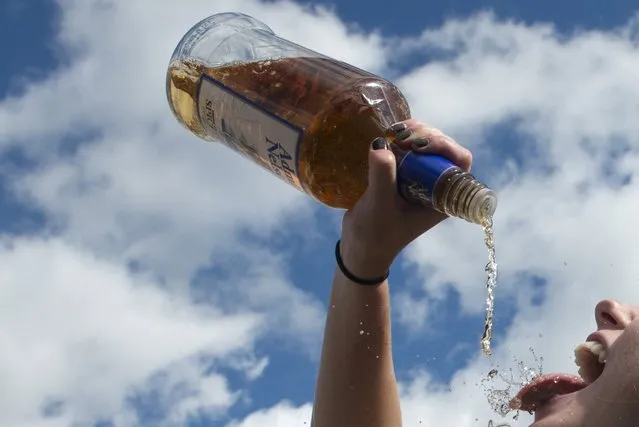
A woman pours alcohol from the bottle into her mouth at the Far Hills Race Day at Moorland Farms in Far Hills, New Jersey, October 17, 2015. (Photo by Stephanie Keith/Reuters)

A woman pours alcohol from the bottle into her mouth at the Far Hills Race Day at Moorland Farms in Far Hills, New Jersey, October 17, 2015. Young locals in New Jersey catch up with friends from school and college days at the Far Hills Race Day, which started as a fox-hunting event in the early 1900s. Many racegoers first went to the Hunt, as it's known locally, as children, but nowadays it's an alcohol-fuelled party for them. Makeshift bars are set up in cars, with the horses' efforts on the turf sometimes a backdrop to the main event. (Photo by Stephanie Keith/Reuters)
Details
26 Oct 2015 08:00:00
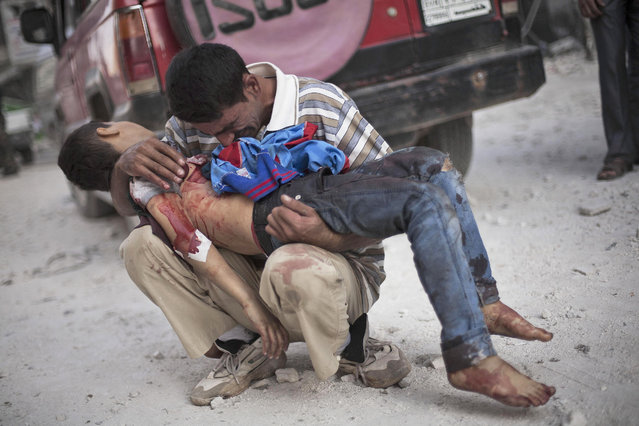
A Syrian man cries while holding the body of his son, killed by the Syrian Army, near Dar El Shifa hospital in Aleppo, Syria, Wednesday, October 3, 2012. (Photo by Manu Brabo/AP Photo)

Manu Brabo was born in Spain in 1981. After studying Photography in The School of Arts and Crafts in Oviedo, he moved to Madrid where he started Journalism in Carlos III University while he was working as a photographer for several humble newspapers and agencies. In 2011, Manu was held captive and then released by by Libyan forces. Brabo, along with fellow AP photographers were awarded the 2013 Pulitzer Prize for Breaking News Photography. Here: a Syrian man cries while holding the body of his son, killed by the Syrian Army, near Dar El Shifa hospital in Aleppo, Syria, Wednesday, October 3, 2012. (Photo by Manu Brabo/AP Photo)
Details
27 Oct 2015 08:04:00
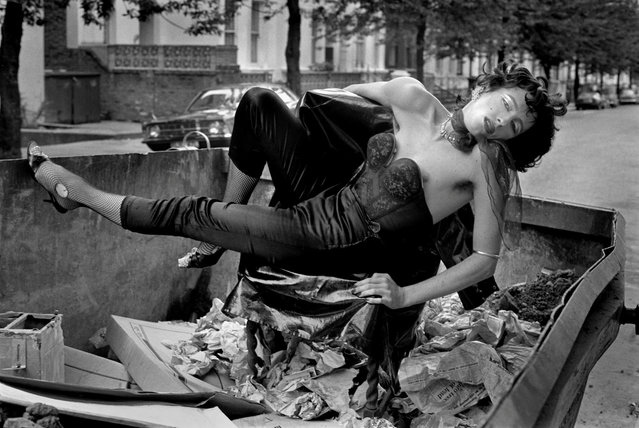
“A very delicate person, beneath the flamboyance”. Jasper, Ladbroke Grove, 1977. “In the 1970s, Australia was rather cut off. I’d always wanted to live abroad, so I moved to Rome and then London. I was an art historian, but started studying photography part-time. I was interested in the demi-monde culture and began mixing in all sorts of circles. Jasper was a rather wonderful character. He was from Sydney, but he was living downstairs from me in Ladbroke Grove, in a flat rented to some gay friends. It was fairly eclectic. Jasper was always playing around with clothes and makeup. If he was looking particularly wonderful, I might get out my lights and take a shot. Or he might put makeup on me. He wasn’t always in drag, but he was permanently in diva mode, dependably louche, funny and naughty. I think all that comes across in the image. He was actually a very delicate person, though, beneath the wit and flamboyance. Jasper floated through London all too briefly. His real name was Peter MacMahon, but to us he was only ever Jasper Havoc, an alter ego he’d created while part of a transvestite troupe called Sylvia and the Synthetics. They were legendary in Sydney gay culture. On this day, we’d been taking some pictures inside and had gone out into the streets to fool around some more. Jasper was wearing a corset and fishnets ensemble, with other bits and pieces, and we joked about him being trashy as he lay in the skip. We just took the shot for ourselves. It wasn’t done with any publication in mind, or anything else. This was way before the internet and people didn’t share images. If you dressed up, it was just for that moment”. (Photo by Jane England)

“A very delicate person, beneath the flamboyance”. Jasper, Ladbroke Grove, 1977. “In the 1970s, Australia was rather cut off. I’d always wanted to live abroad, so I moved to Rome and then London. I was an art historian, but started studying photography part-time. I was interested in the demi-monde culture and began mixing in all sorts of circles. Jasper was a rather wonderful character...”. (Photo by Jane England)
Details
26 Jun 2017 09:04:00
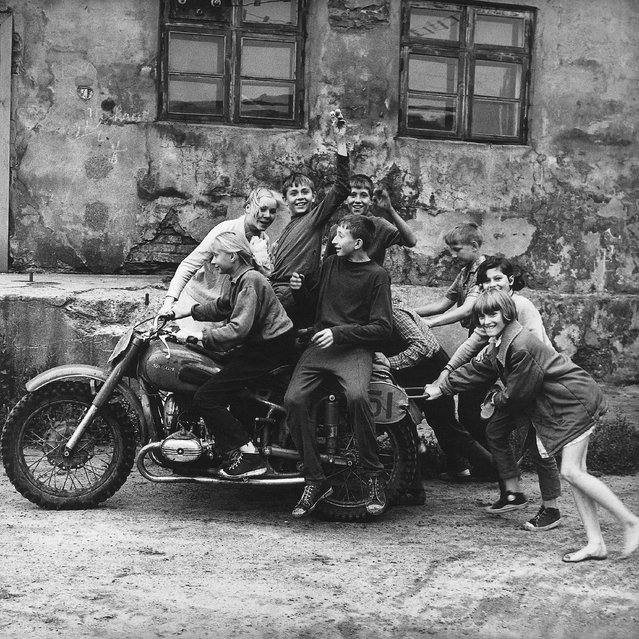
When he started using a camera there were very few documentary photographers working outside the government. Sutkus instead looked to writers and film-makers, and says he drew inspiration from the works of Franz Kafka, Jean-Paul Sartre, Ernest Hemingway and Vladimir Nabokov. Here: The first Lithuanian bikers, 1974. (Photo by Antanas Sutkus)

Rebelling against political propaganda, acclaimed photographer Antanas Sutkus embarked on a life-long journey to capture the everyday scenes around him. Antanas Sutkus, born in 1939, studied journalism at Vilnius University in the late 1950s before becoming disillusioned by the confines of the Soviet-controlled press. He began taking photographs instead, and soon co-founded the Lithuanian Association of Art Photographers. Here: The first Lithuanian bikers, 1974. (Photo by Antanas Sutkus)
Details
11 Apr 2016 10:54:00