Loading...
Done
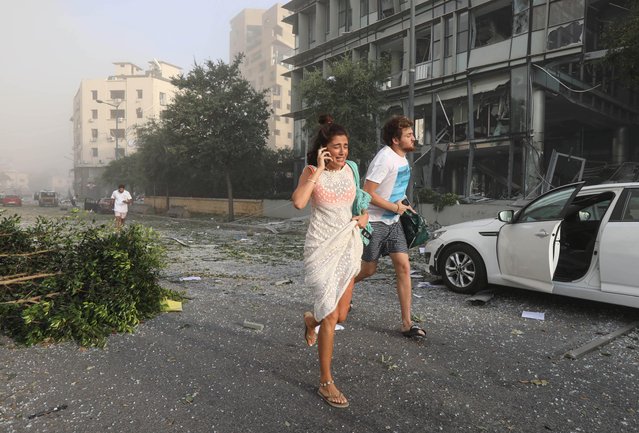
People run for cover following an explosion in Beirut's port area, Lebanon on August 4, 2020. (Photo by Mohamed Azakir/Reuters)

People run for cover following an explosion in Beirut's port area, Lebanon on August 4, 2020. A mega-blast tore through the harbour in the heart of the Lebanese capital with the force of an earthquake, killing more than 100 people and injuring over 4,000. (Photo by Mohamed Azakir/Reuters)
Details
07 Aug 2020 00:01:00
Voodoo pilgrims bathe in a waterfall believed to have purifying powers during the annual celebration in Saut d' Eau, Haiti, Saturday, July 16, 2016. Annually, the falls are the site of a large, important religious pilgrimage, during the festival of Our Lady of Carmel, from July 14–16. A Eucharistic rite is held during the festival, as well as various vodou rituals, but the penultimate devotional activity is bathing in the waters of the falls, and asking favors of the Virgin or Erzulie. After bathing, voodoo pilgrims throw away the dresses they wore to the site, and don new clothes for good luck. (Photo by Dieu Nalio Chery/AP Photo)

Voodoo pilgrims bathe in a waterfall believed to have purifying powers during the annual celebration in Saut d' Eau, Haiti, Saturday, July 16, 2016. Annually, the falls are the site of a large, important religious pilgrimage, during the festival of Our Lady of Carmel, from July 14–16. A Eucharistic rite is held during the festival, as well as various vodou rituals, but the penultimate devotional activity is bathing in the waters of the falls, and asking favors of the Virgin or Erzulie. After bathing, voodoo pilgrims throw away the dresses they wore to the site, and don new clothes for good luck. (Photo by Dieu Nalio Chery/AP Photo)
Details
18 Jul 2016 13:02:00
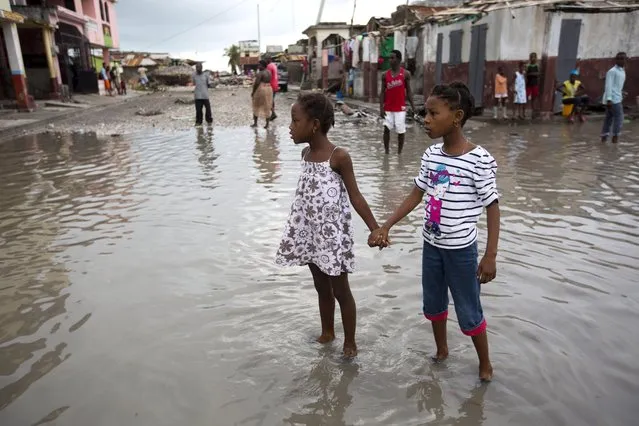
Girls hold hands as they help each other wade through a flooded street after the passing of Hurricane Matthew in Les Cayes, Haiti, Thursday, October 6, 2016. Two days after the storm rampaged across the country's remote southwestern peninsula, authorities and aid workers still lack a clear picture of what they fear is the country's biggest disaster in years. (Photo by Dieu Nalio Chery/AP Photo)

Girls hold hands as they help each other wade through a flooded street after the passing of Hurricane Matthew in Les Cayes, Haiti, Thursday, October 6, 2016. Two days after the storm rampaged across the country's remote southwestern peninsula, authorities and aid workers still lack a clear picture of what they fear is the country's biggest disaster in years. (Photo by Dieu Nalio Chery/AP Photo)
Details
07 Oct 2016 09:32:00
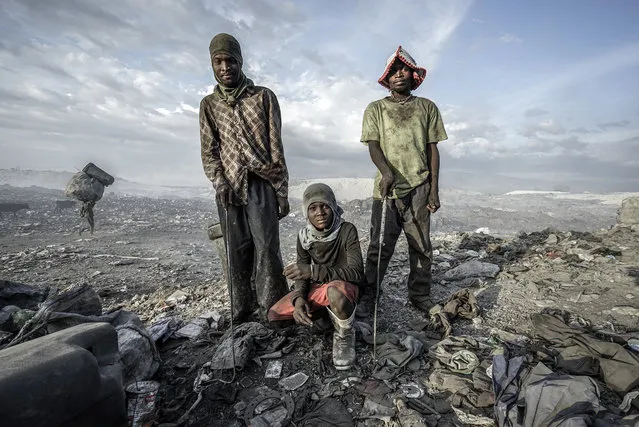
In a 200-acre-plus dump 5 kilometers north of Haiti’s capital, Port-au-Prince, hundreds of men, women and children scavenge day and night through the burning wasteland. They earn $12 to $15 a day – on a good day – for recycling plastics as well as clothing, household items and aluminum (for smelting). Some 5,000 tons of waste is created each day in the Port-au-Prince area. (Photo and caption by Giles Clarke/Getty Images Reportage)

In a 200-acre-plus dump 5 kilometers north of Haiti’s capital, Port-au-Prince, hundreds of men, women and children scavenge day and night through the burning wasteland. They earn $12 to $15 a day – on a good day – for recycling plastics as well as clothing, household items and aluminum (for smelting). Some 5,000 tons of waste is created each day in the Port-au-Prince area. (Photo and caption by Giles Clarke/Getty Images Reportage)
Details
02 Feb 2015 11:21:00
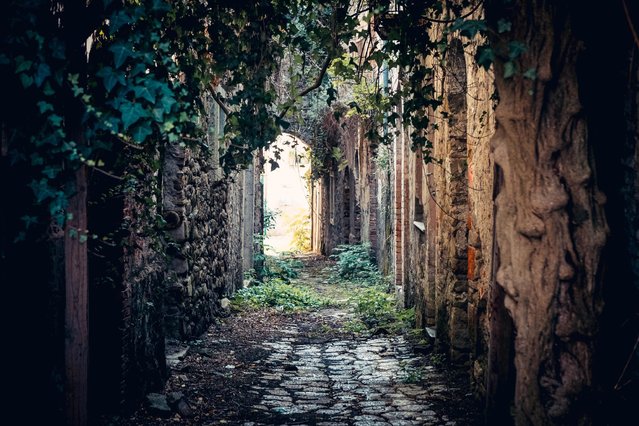
A deserted alley in the ghost town of Apice, in the province of Benevento, southern Italy, 22 November 2016. (Photo by Cesare Abbate/EPA)

A deserted alley in the ghost town of Apice, in the province of Benevento, southern Italy, 22 November 2016. After the Irpinia earthquake that took place in southern Italy on 23 November 1980, leaving at least 2,500 people dead, 8,000 injured and 250,000 homeless, the town in the heart of the Sannio area was evacuated and its residents moved into what has become the new Apice. Only recently the narrow streets and the tragically abandoned buildings have started, slowly, to repopulate. (Photo by Cesare Abbate/EPA)
Details
23 Nov 2016 11:30:00


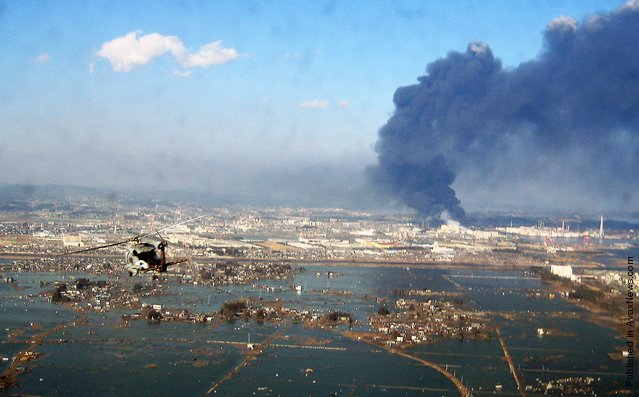
“With a fourth explosion rocking the Fukushima nuclear plant on Tuesday, danger of the spent nuke fuel pool boiling and radiation levels at the facility's gate increasing hundredfold, fears of a meltdown in Japan skyrocket”. – Russia Today

Photo: In this handout image provided by U.S. Navy, an aerial view of tsunami and earthquake damage is seen from an SH-60B helicopter assigned to the Chargers of Helicopter Antisubmarine Squadron (HS) 14 from Naval Air Facility Atsugi March 12, 2011 seen from the air of Sendai, Japan. (Photo by U.S. Navy via Getty Images)
Details
16 Mar 2011 10:19:00
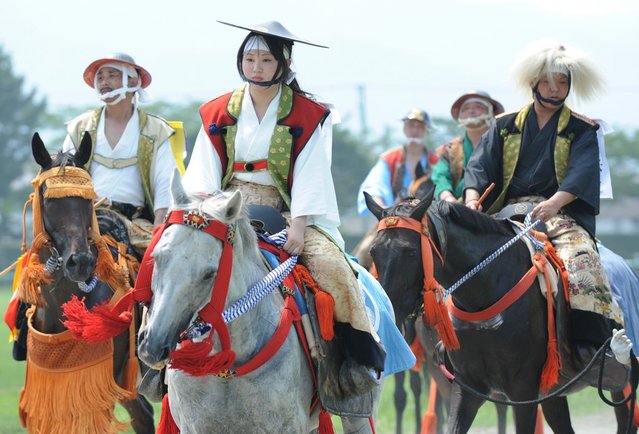
A young woman (C) clad in samurai costume leads other local poeple as she rides her horse during a parade at the annual Soma Nomaoi festival in Minamisoma, Fukushima Prefecture, on July 28, 2012.  The traditional full-scale festival kicked off for the first time after the accident of the Fukushima Dai-ichi Nuclear Power Plant following the massive earthquake and the tsunami on March 11, 2011. (Photo by Toru Yamanaka/AFP Photo)

Soma-Nomaoi is a festival that recreates a battle scene from more than 1,000 years ago. It is annually held for 4 days from July 22 to 25 in Haramachi City, Fukushima Prefecture, in the eastern part of Japan. In this historical event, 600 mounted samurai in traditional Japanese armor, with long swords at their side and ancestral flagstaffs streaming from their backs, ride across open fields. Soma-Nomaoi has been designated an Important Intangible Folk Cultural Property.

Photo: A young woman (C) clad in samurai costume leads other local poeple as she rides her horse during a parade at the annual Soma Nomaoi festival in Minamisoma, Fukushima Prefecture, on July 28, 2012. The traditional full-scale festival kicked off for the first time after the accident of the Fukushima Dai-ichi Nuclear Power Plant following the massive earthquake and the tsunami on March 11, 2011. (Photo by Toru Yamanaka/AFP Photo)
Details
02 Aug 2012 12:59:00
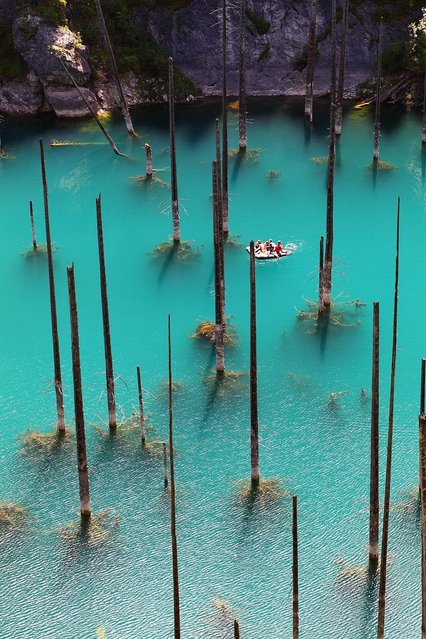
Kaindy Lake in Kazakhstan

Kaindy Lake (Kazakh: Қайыңды көлі, Qayındı köli) is a 400 metre long lake in Kazakhstan that reaches depths near 30 metres in some areas. It is located 129 km ESE of the city of Almaty and is 2,000 metres above sea level. It was created by the result of an enormous limestone landslide, triggered by the 1911 Kebin earthquake. The track to Kaindy lake has many scenic views to the Saty Gorge, the Chilik River valley and the Kaindy Gorge. Dried-out trunks of submerged Picea schrenkiana trees rise above the surface.
Details
06 Aug 2012 09:58:00