Loading...
Done
Floating on clear deep water and reflections near the cave entrance. Visitors can either bring their own kayaks or rent boats from the local community to paddle deep inside the cave and marvel at its wonders on March 2015 at Tham Khoun Ex, Laos. Tham Khoun Xe, commonly known as the Xe Bang Fai River Cave, in Laos, has over 15km of passages filled with awe-inspiring views and wide expanses of water. (Photo by John Spies/Barcroft Media/ABACAPress)

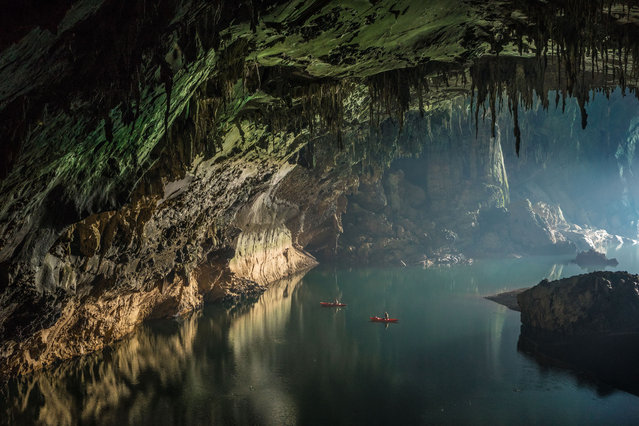
Floating on clear deep water and reflections near the cave entrance. Visitors can either bring their own kayaks or rent boats from the local community to paddle deep inside the cave and marvel at its wonders on March 2015 at Tham Khoun Ex, Laos. Tham Khoun Xe, commonly known as the Xe Bang Fai River Cave, in Laos, has over 15km of passages filled with awe-inspiring views and wide expanses of water. Photographer, John Spies, 59, captured scenes from the entrances of the huge underground river passages, intricate cave formations and views from a passage high above the water. The cave is formed by the Xe Bang Fai river, a major tributary of the Mekong and in the dry season can be traversed using inflatable kayaks. (Photo by John Spies/Barcroft Media/ABACAPress)
Details
11 Apr 2015 09:56:00
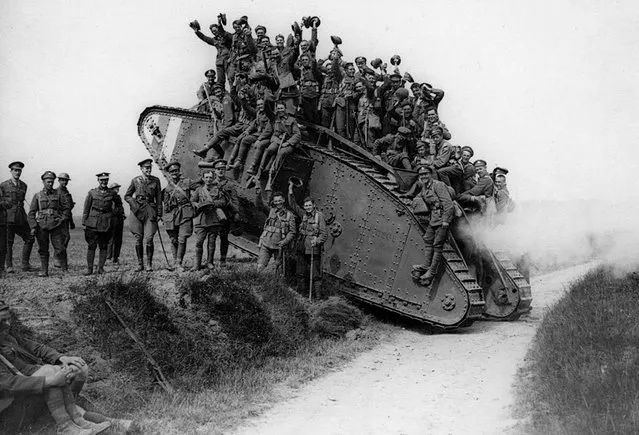
These black-and-white photos are taken from the new book “Armoured Warfare in the First World War 1916 – 1918” by Anthony Tucker-Jones and published by Pen & Sword Military. “Interestingly the British, French and Germans took completely different approaches with varying results”. The British military produced “Little Willie” in Autumn 1915 weighing 18 tonnes, which had a crew of two plus four gunners. “Inspired by a tracked artillery tractor “Little Willie” was referred to as a water tank – hence the name tank – to ensure secrecy”, said Anthony. “This led to the strange looking Mark I with its peculiar rhomboid shape, designed to cross trenches with guns in sponsons on either side. The Germans saw the tank as unchivalrous and were slow to grasp its utility. They favoured the Stormtrooper (specialist soldiers used to infiltrate enemy trenches) and artillery, not the tank”, said Anthony. “However, they didn’t hesitate to make use of captured British tanks. Although the tank helped secure victory and German soldiers dubbed it “Germany’s Downfall” the country was ultimately brought to its knees by the Allies blockade”. Here: British troops hitch a ride on a Mark IV after the massed tank fleet spearheading attack at Cambrai on November 20, 1917. (Photo by Anthony Tucker-Jones/Mediadrumworld.com)

These black-and-white photos are taken from the new book “Armoured Warfare in the First World War 1916 – 1918” by Anthony Tucker-Jones and published by Pen & Sword Military. Here: British troops hitch a ride on a Mark IV after the massed tank fleet spearheading attack at Cambrai on November 20, 1917. (Photo by Anthony Tucker-Jones/Mediadrumworld.com)
Details
23 Feb 2017 00:02:00
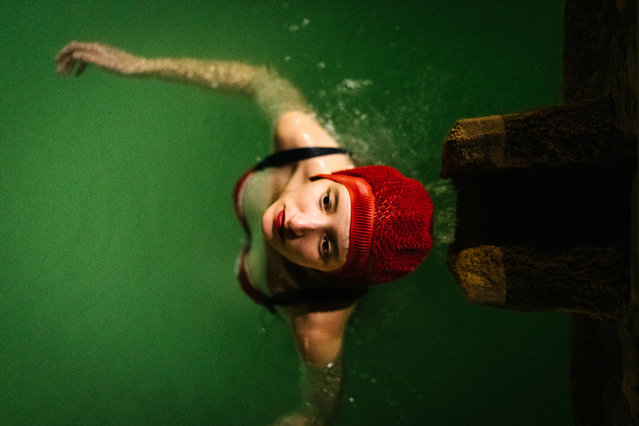
Shortlist, open competition, lifestyle. Healing Vibes – the hot springs of Bagno Vignoni in Italy flow out at a temperature of about 49°C. They were appreciated by the Romans for their healing powers, and have been used as therapeutic treatments since the 12th century, under Emperor Federico II. (Photo by Stefano Butturini/Sony World Photography Awards)

Shortlist, open competition, lifestyle. Healing Vibes – the hot springs of Bagno Vignoni in Italy flow out at a temperature of about 49°C. They were appreciated by the Romans for their healing powers, and have been used as therapeutic treatments since the 12th century, under Emperor Federico II. (Photo by Stefano Butturini/Sony World Photography Awards)
Details
20 Mar 2021 10:27:00
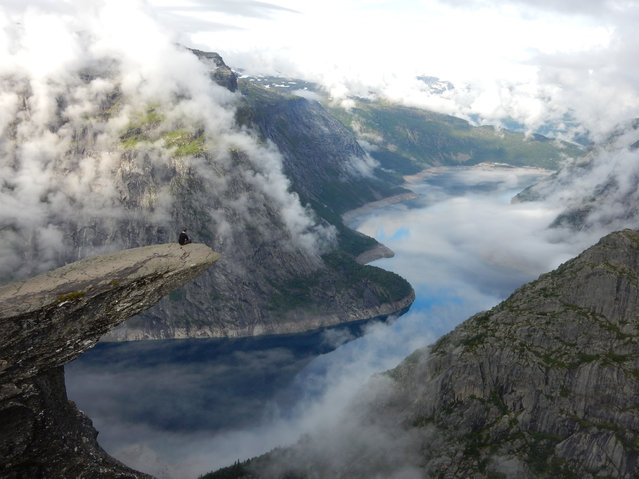
Taking it all in at Trolltunga, a piece of rock which juts horizontally out of a mountain, 700 metres above lake Ringedalsvatnet in Norway. (Photo by Sam Rogers/GuardianWitness)

Taking it all in at Trolltunga, a piece of rock which juts horizontally out of a mountain, 700 metres above lake Ringedalsvatnet in Norway. (Photo by Sam Rogers/GuardianWitness)
Details
05 May 2017 07:31:00
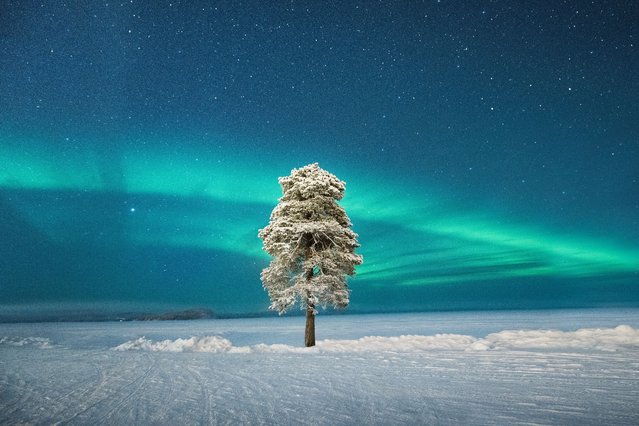
Aurorae category runner-up: Lone Tree under a Scandinavian Aurora by Tom Archer (UK). The photographer decided to explore the area around the hotel on a very crisp -35C evening in Finnish Lapland. When he found this tree, he decided to wait for the misty conditions to change and could not believe his luck when the sky cleared and the aurora came out in the perfect spot. Archer spent about an hour photographing it before his camera started to lock up because of the harsh conditions, but by then he was happy to call it a night. (Photo by Tom Archer/2020 Astronomy Photographer of the Year)

Aurorae category runner-up: Lone Tree under a Scandinavian Aurora by Tom Archer (UK). The photographer decided to explore the area around the hotel on a very crisp -35C evening in Finnish Lapland. When he found this tree, he decided to wait for the misty conditions to change and could not believe his luck when the sky cleared and the aurora came out in the perfect spot. Archer spent about an hour photographing it before his camera started to lock up because of the harsh conditions, but by then he was happy to call it a night. (Photo by Tom Archer/2020 Astronomy Photographer of the Year)
Details
17 Sep 2020 00:03:00
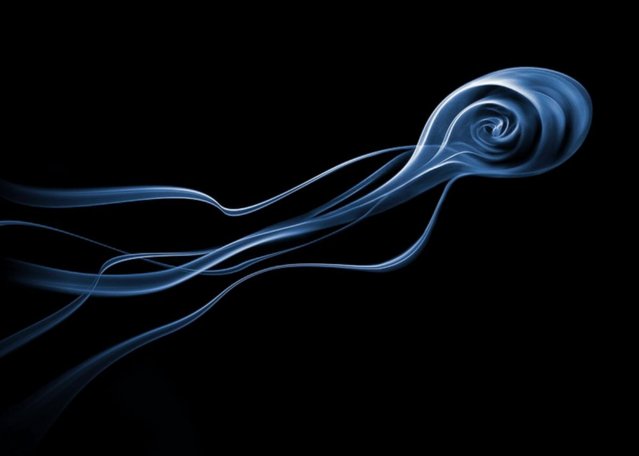
These photographs have been featured in arts fairs such as ART Cologne, ART Karlsruhe, Art Fair Hong Kong, as well as several exhibitions. (Photo by Thomas Herbrich)

While photographer Thomas Herbrich is not a smoker, he said he has always been fascinated by cigarette smoke. These photographs have been featured in arts fairs such as ART Cologne, ART Karlsruhe, Art Fair Hong Kong, as well as several exhibitions. (Photo by Thomas Herbrich)
Details
25 Sep 2014 13:25:00
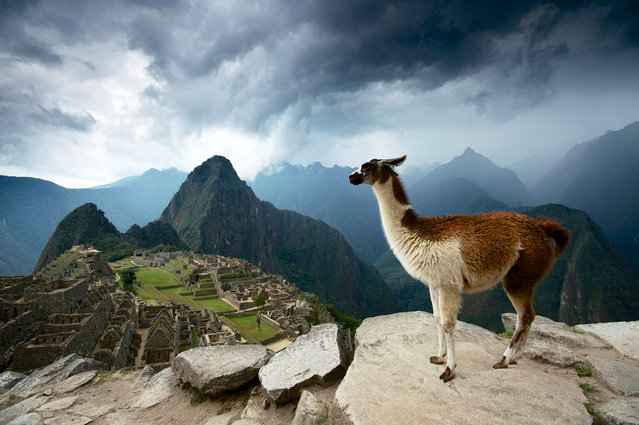
Machu Picchu, Peru. A llama’s-eye view of the legendary Inca settlement at Machu Picchu, isolated high in the Peruvian Andes. (Photo by Jim Turner/National Geographic)

Machu Picchu, Peru. A llama’s-eye view of the legendary Inca settlement at Machu Picchu, isolated high in the Peruvian Andes. (Photo by Jim Turner/National Geographic)
Details
16 Nov 2015 08:13:00
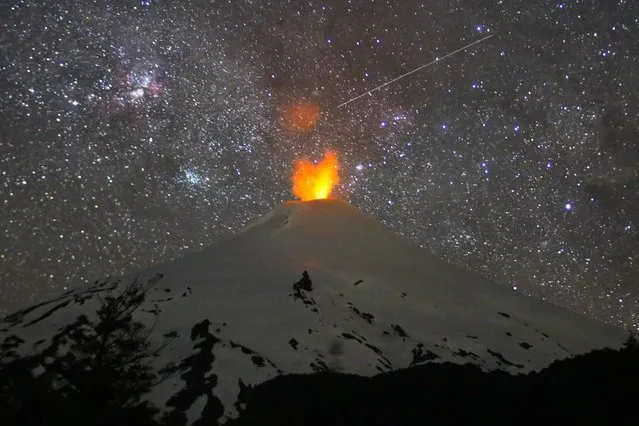
The Villarrica volcano shows signs of activity, as seen from Pucon, some 800 kilometers south of Santiago, on November 21, 2022. Villarrica volcano is among the most active in South America. (Photo by Mario Quilodran/AFP Photo)

The Villarrica volcano shows signs of activity, as seen from Pucon, some 800 kilometers south of Santiago, on November 21, 2022. Villarrica volcano is among the most active in South America. (Photo by Mario Quilodran/AFP Photo)
Details
17 Aug 2023 04:03:00