Loading...
Done
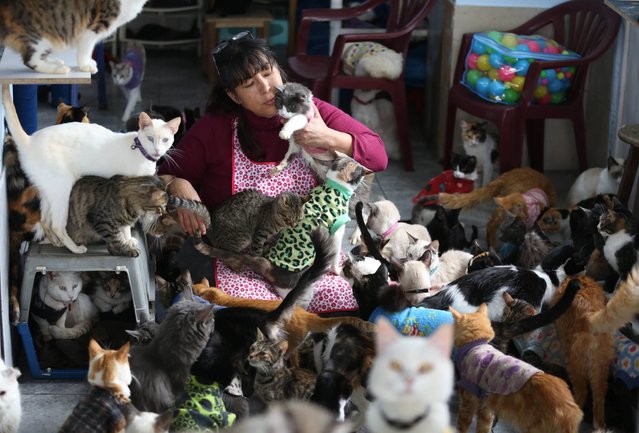
In this August 2, 2014 photo, Maria Torero, plays with a group of 175 cats with leukemia in her home in Lima, Peru. Torero says caring for cats with feline leukemia is her responsibility. Anybody else can care for healthy animals. (Photo by Martin Mejia/AP Photo)

“At her job, Maria Torero cares for sick human beings. At home, she lavishes love on slowly dying cats – 175 of them at last count. The 45-year-old nurse has turned her two-story, eight-room apartment into a hospice for cats with feline leukemia, scattering it with scores of feeding dishes and at least two dozen boxes litter boxes. Some have suggested she shelter healthy cats instead. “That's not my role”, she told The Associated Press. “I'm a nurse. My duty is to the cats that nobody cares about”. She said that “people don't adopt adult cats, especially if they are terminally ill”. – Franklin Briceno via Associated Press. (Photo by Martin Mejia/AP Photo)
Details
24 Aug 2014 09:28:00
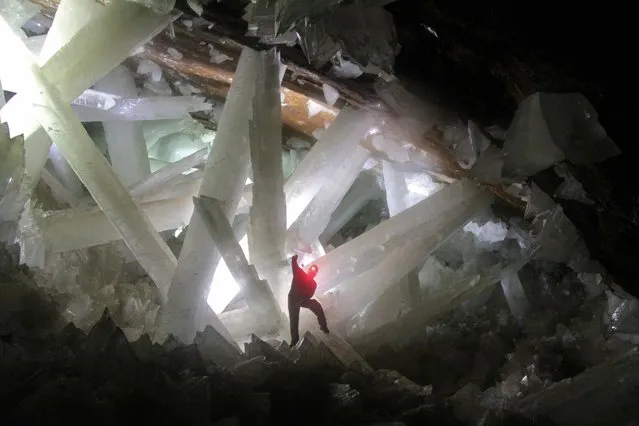
Giant Crystal Cave in Naica, Mexico

Cave of the Crystals or Giant Crystal Cave is a cave connected to the Naica Mine 300 metres (980 ft) below the surface in Naica, Chihuahua, Mexico. The main chamber contains giant selenite crystals (gypsum, CaSO4·2 H2O), some of the largest natural crystals ever found. The cave's largest crystal found to date is 12 m (39 ft) in length, 4 m (13 ft) in diameter and 55 tons in weight. The cave is extremely hot with air temperatures reaching up to 58 °C (136 °F) with 90 to 99 percent humidity. The cave is relatively unexplored due to these factors. Without proper protection people can only endure approximately ten minutes of exposure at a time.
Details
20 May 2014 07:56:00
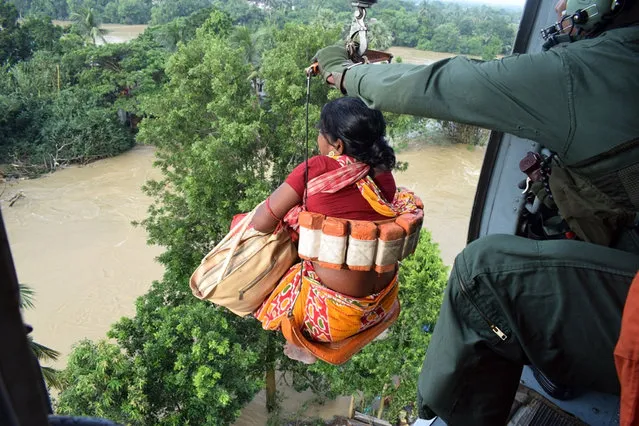
A handout photo made available by the Indian Air Force (IAF) showing an IAF helicopters during the rescue operation in flood affected areas of Dhanyaghari of Khanakul in West Bengal, India, 02 August 2021. According to the IAF, helicopters of Indian Air Force rescued 31 people from rooftops and brought them to safety to Arambaug. The helicopters also dropped emergency food supplies in the affected areas after the torrential rain in the state has thrown life out of gear and created flood like situation in many districts. (Photo by Indian Air Force/Handout via EPA/EFE)

A handout photo made available by the Indian Air Force (IAF) showing an IAF helicopters during the rescue operation in flood affected areas of Dhanyaghari of Khanakul in West Bengal, India, 02 August 2021. According to the IAF, helicopters of Indian Air Force rescued 31 people from rooftops and brought them to safety to Arambaug. The helicopters also dropped emergency food supplies in the affected areas after the torrential rain in the state has thrown life out of gear and created flood like situation in many districts. (Photo by Indian Air Force/Handout via EPA/EFE)
Details
10 Aug 2021 09:44:00
(L-R) Chris Diamantopoulos,  AnnaLynne McCord, Matt Jones and Jane Seymour visit the Build Series at Build Studio on January 23, 2018 in New York City, United States. (Photo by Brad Barket/Getty Images)

(L-R) Chris Diamantopoulos, AnnaLynne McCord, Matt Jones and Jane Seymour visit the Build Series at Build Studio on January 23, 2018 in New York City, United States. (Photo by Brad Barket/Getty Images)
Details
25 Jan 2018 09:08:00
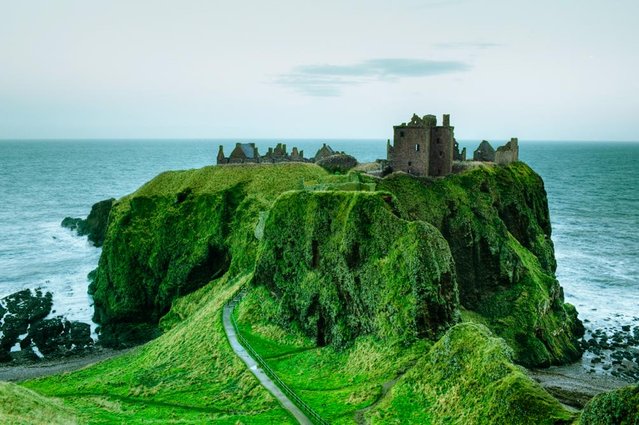
Dunnottar Castle In Scottish

Dunnottar Castleis a ruined medieval fortress located upon a rocky headland on the north-east coast of Scotland, about 3 kilometres (1.9 mi) south of Stonehaven. The surviving buildings are largely of the 15th and 16th centuries, but the site is believed to have been fortified in the Early Middle Ages. Dunnottar has played a prominent role in the history of Scotland through to the 18th-century Jacobite risings because of its strategic location and the strength of its situation. Dunnottar is best known as the place where the Honours of Scotland, the Scottish crown jewels, were hidden from Oliver Cromwell's invading army in the 17th century. The property of the Keiths from the 14th century, and the seat of the Earl Marischal, Dunnottar declined after the last Earl forfeited his titles by taking part in the Jacobite rebellion of 1715. The castle was restored in the 20th century and is now open to the public.
Details
13 Jan 2014 11:31:00


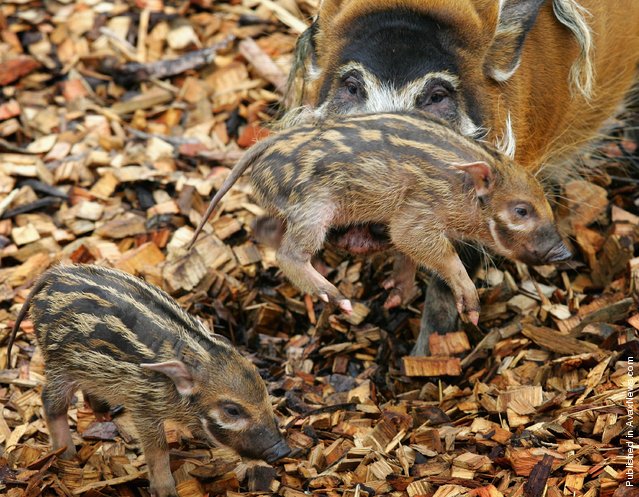
“The Red River Hog (Potamochoerus porcus), also known as the Bush Pig (but not to be confused with P. larvatus, common name “Bushpig”), is a wild member of the pig family living in Africa, with most of its distribution in the Guinean and Congolian forests. It is rarely seen away from rainforests, and generally prefers areas near rivers or swamps.

Red River Hogs eat grass, berries, roots, insects, molluscs, small vertebrates and carrion. They are capable of causing damage to plantations. Red River Hogs typically live in herds of 6-20 members led by a dominant boar. Sows rear 3-6 piglets at a time.”

Photo: Two 17 day old red river hoglet twins forage for food next to their mother Bahiti at London Zoo on August 23, 2007 in London, England. Red River hoglets inhabit the forests and swamps of West and Central Africa. The recent additions to the London Zoo pig pen have been eagerly awaited by zoo keepers. (Photo by Chris Jackson/Getty Images)
Details
18 Mar 2011 15:15:00


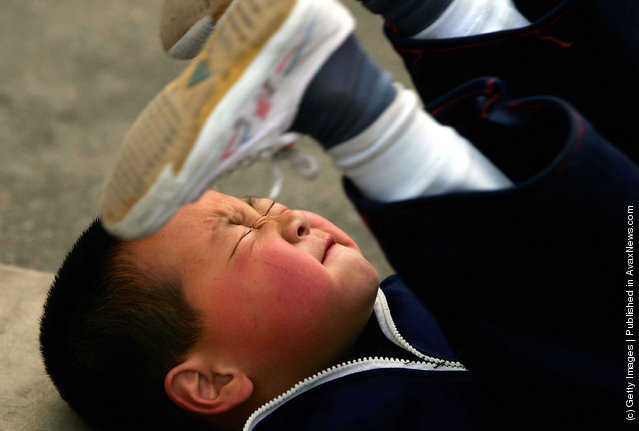
Wang Zeyu, 4, a fee-paying enthusiast of kung fu, practises during a training class at a kung fu school near the Shaolin Temple April 10, 2005 in Dengfeng, Henan Province, China. Zeyu's father sent him to the school from his home in Jiangsu Province, thousands kilometres away from Dengfeng, when he was just 3 years old. And his father must pay 9,800 yuan (US$1195) for one year's tuition at the school, a huge amount for most Chinese. There are more than 80 kung fu schools that line the road from the city of Dengfeng to the Shaolin Temple with hundreds and thousands of young kung-fu lovers from all over the country and beyond studying here. All the schools use the Shaolin name to attract students as the Shaolin Temple is the birthplace of Chinese Kung Fu. (Photo by Cancan Chu/Getty Images)
Details
06 Jul 2011 11:21:00


“The Portuguese Water Dog is a breed of working dog as classified by the American Kennel Club. Portuguese Water Dogs are originally from the Portuguese region of the Algarve, from where the breed expanded to all around Portugal's coast, where they were taught to herd fish into fishermen's nets, to retrieve lost tackle or broken nets, and to act as couriers from ship to ship, or ship to shore. Portuguese Water Dogs rode in bobbing fishing trawlers as they worked their way from the warm Atlantic waters of Portugal to the frigid fishing waters off the coast of Iceland where the fleets caught cod to bring home. Portuguese Water Dogs were often taken with sailors during the Portuguese discoveries”. – Wikipedia

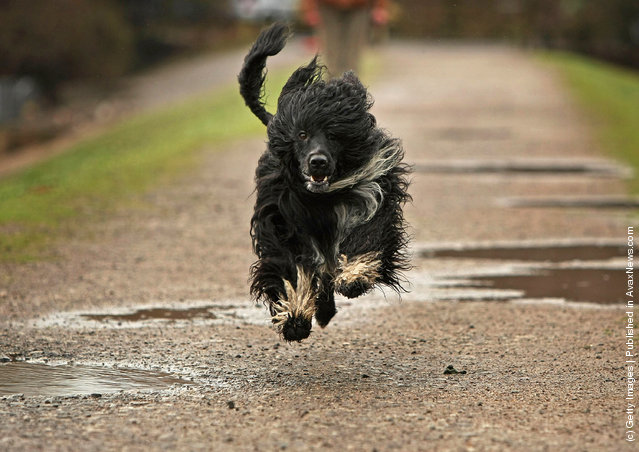
Photo: Kix, a Portuguese Water Dog , enjoys a walk around the muddy fields near his home before the grooming and preparation starts for this years Crufts on March 3, 2009 in Telford, England. (Photo by Christopher Furlong/Getty Images)
Details
26 Jul 2011 11:27:00