Loading...
Done
Son And Dad Nicolas and  Weston Cage

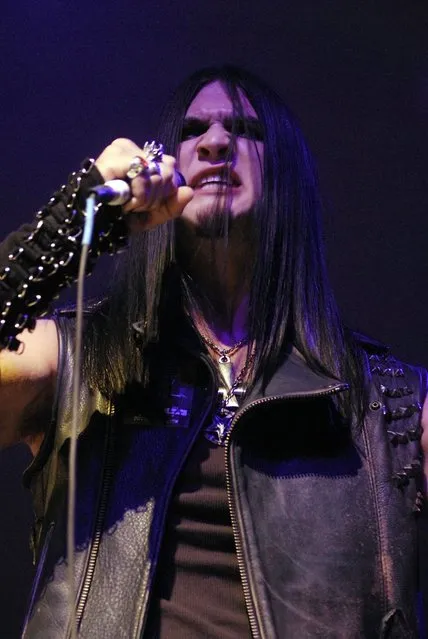
Weston Coppola Cage (born Weston Coppola on December 26, 1990) is the son of Nicolas Cage and Christina Fulton. Weston appeared in Cage's film Lord of War as Vladimir, a young Ukrainian mechanic who quickly disarms a Mil Mi-24 helicopter. He also appeared in the vampire film Raven in 2009 and was featured on the soundtrack for the film Drive Angry.

Weston is lead singer of black metal bands Eyes of Noctum and Arsh Anubis (With the moroccan bass player Soufiane Elyamouni "Apophis" n the Egyptian Guitar player Alhussain Sherif "Izund" ). He has also created a comic book with his father, Nicolas Cage, called Voodoo Child, which was published by Virgin Comics in 2007.
Details
09 Jan 2013 13:30:00
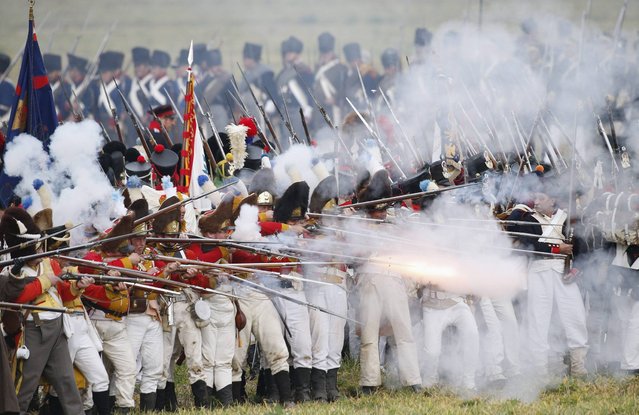
Performers wearing 19th century French military uniforms fire their weapons as they attack Allied forces during a reenactment of the Battle of the Nations, in a field in the village of Markkleeberg near Leipzig October 20, 2013. (Photo by Fabrizio Bensch/Reuters)

Performers wearing 19th century French military uniforms fire their weapons as they attack Allied forces during a reenactment of the Battle of the Nations, in a field in the village of Markkleeberg near Leipzig October 20, 2013. The east German city of Leipzig commemorated the 200th anniversary of the largest battle of the Napoleonic Wars on Sunday by reenacting the Battle of the Nations, with 6,000 military-historic association enthusiasts from all over Europe. The decisive encounter in which tens of thousands of soldiers were killed, took place from October 17-19, 1813, just outside of Leipzig. At the height of the hostilities Napoleon fielded more than 200,000 men against an Allied force of some 360,000 soldiers which included troops from Russia, Austria, Prussia and Sweden. (Photo by Fabrizio Bensch/Reuters)
Details
21 Oct 2013 11:19:00
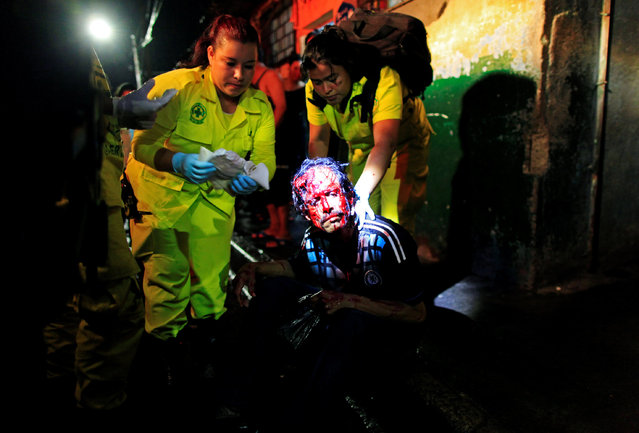
Comandos de Salvamento rescuers Maria Martinez (L) and Ana Chichilla attend to a wounded homeless man in San Salvador, El Salvador July 16, 2016. The man was attacked with a machete by suspected gang members. (Photo by Jose Cabezas/Reuters)

Comandos de Salvamento rescuers Maria Martinez (L) and Ana Chichilla attend to a wounded homeless man in San Salvador, El Salvador July 16, 2016. The man was attacked with a machete by suspected gang members. In 2015, El Salvador registered a record 103 homicides per 100,000 habitants, making it one of the most dangerous countries in the world outside a war zone. But for many young people who have few chances to distance themselves from rivalries between so-called maras in their schools and neighbourhoods, a civil-society organisation called the Comandos de Salvamento, or Rescue Corps, has been a refuge. (Photo by Jose Cabezas/Reuters)
Details
16 Nov 2016 11:10:00
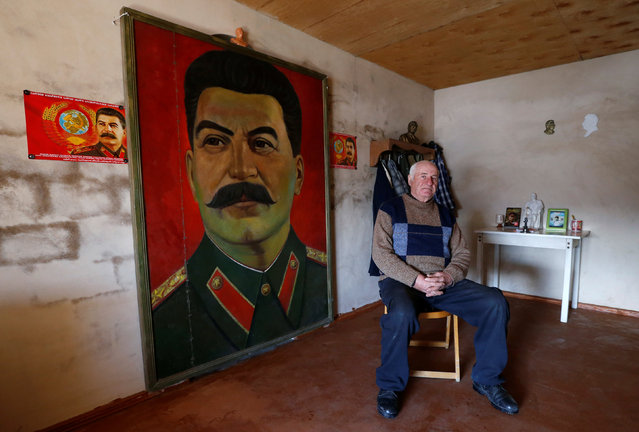
Retired builder Vasili Sidamonidze, 70, poses for a portrait at his home in Gori, Georgia, December 6, 2016. “Unfortunately, Stalin is not popular nowadays. Our people don't respect him. Only we, members of the (Communist) Party, respect him”, Sidamonidze said. “I always try to attend Stalin's birthday anniversaries in Gori. Unfortunately many people don't want to join us even if they live nearby. They look at us from their windows”. Stalin, who was born in Gori in 1878 and died in 1953, is largely reviled today in Georgia, which regained its independence during the 1991 collapse of the Soviet Union. Over the years, his memorials have been dismantled, most recently in 2010 when authorities removed a statue of the dictator from Gori's central square. But Stalin is still revered by a small group of mainly elderly supporters who stress his role in the industrialisation of the Soviet Union and in defeating Nazi Germany in World War Two. Each Dec. 21, a few dozen people mark his birthday by gathering outside a Gori museum dedicated to Stalin, where they make speeches and walk to the square where a 6-meter-high bronze statue of him once stood, calling for it to be reinstated. Opponents say it was a symbol of Moscow's still lingering shadow. In 2008, Russia fought a brief war with Georgia and recognised its breakaway regions of Abkhazia and South Ossetia as independent states. (Photo by David Mdzinarishvili/Reuters)

Retired builder Vasili Sidamonidze, 70, poses for a portrait at his home in Gori, Georgia, December 6, 2016. “Unfortunately, Stalin is not popular nowadays. Our people don't respect him. Only we, members of the (Communist) Party, respect him”, Sidamonidze said. “I always try to attend Stalin's birthday anniversaries in Gori. Unfortunately many people don't want to join us even if they live nearby. They look at us from their windows”. (Photo by David Mdzinarishvili/Reuters)
Details
17 Dec 2016 07:59:00


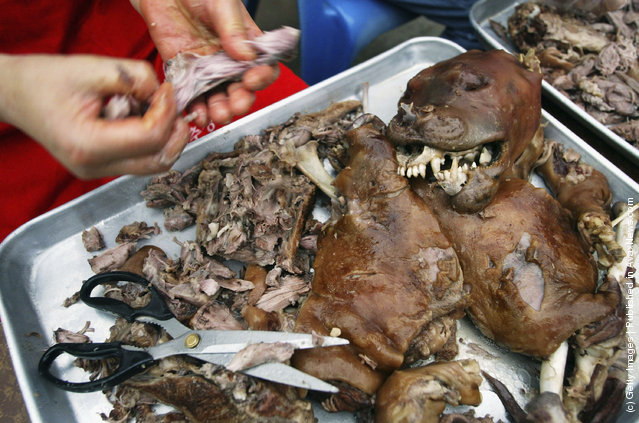
“Dog meat refers to edible parts and the flesh derived from (predominantly domestic) dogs. Human consumption of dog meat has been recorded in many parts of the world, including ancient China, ancient Mexico, and ancient Rome. According to contemporary reports, dog meat is consumed in a variety of countries such as Switzerland, China, Vietnam, the Philippines, and Korea. In addition, dog meat has also been used as survival food in times of war and/or other hardships”. – Wikipedia

Photo: A chef prepares dog meat at a restaurant on July 4, 2005 in Gwacheon, South Korea. Dog meat is a traditional dish in Korea dating back to the Samkuk period (period of the three kingdoms BC 57 – AD 668). Although many recipes existed historically for dog meat, now chefs only make soups, or dishes using boiled or roasted meat. Koreans traditionally eat dog meat on the hottest day of the summer, for it's reputed benefits of virility, invigoration and health. (Photo by Chung Sung-Jun/Getty Images)
Details
24 Jul 2011 13:21:00
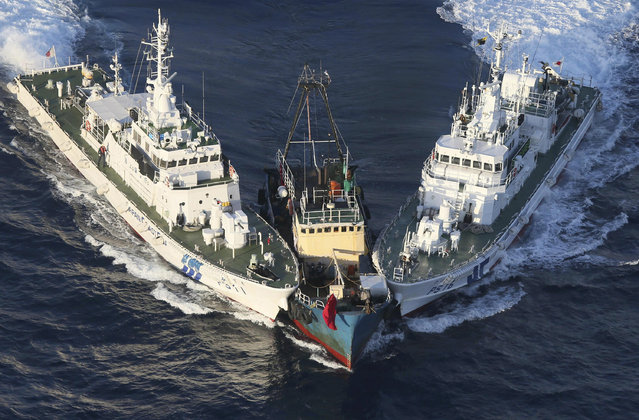
A boat, center, is surrounded by Japan Cost Guard's patrol boats after some activists descended from the boat on Uotsuri Island, one of the islands of Senkaku in Japanese and Diaoyu in Chinese, in East China Sea Wednesday, Aug. 15, 2012. (Photo by Yomiuri Shimbun/Masataka Morita/AP Photo)

A boat, center, is surrounded by Japan Cost Guard's patrol boats after some activists descended from the boat on Uotsuri Island, one of the islands of Senkaku in Japanese and Diaoyu in Chinese, in East China Sea Wednesday, Aug. 15, 2012. Regional tensions flared on the emotional anniversary of Japan's World War II surrender as activists from China and South Korea used Wednesday's occasion to press rival territorial claims, prompting 14 arrests by Japanese authorities. The 14 people had traveled by boat from Hong Kong to the disputed islands controlled by Japan but also claimed by China and Taiwan. (Photo by Yomiuri Shimbun/Masataka Morita/AP Photo)
Details
18 Sep 2012 09:02:00
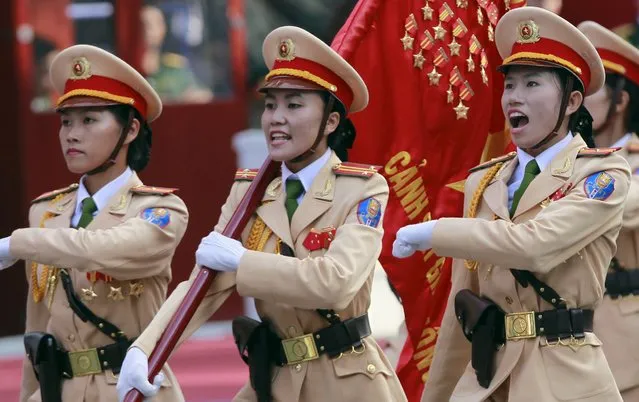
Vietnamese female traffic police officers march during a rehearsal for a military parade as part of the 40th anniversary of the fall of Saigon in southern Ho Chi Minh City (formerly Saigon City), Vietnam, on April 26, 2015. (Photo by Reuters/Kham)

Vietnamese female traffic police officers march during a rehearsal for a military parade as part of the 40th anniversary of the fall of Saigon in southern Ho Chi Minh City (formerly Saigon City), Vietnam, on April 26, 2015. Vietnam marks the 40th anniversary of the fall of Saigon on April 30, the event that ended a war that lasted over 30 years, killing up to four million Vietnamese, the Vietnamese government said, and more than 58,000 U.S troops, the U.S. Department of Defense has said. (Photo by Reuters/Kham)
Details
27 Apr 2015 10:11:00
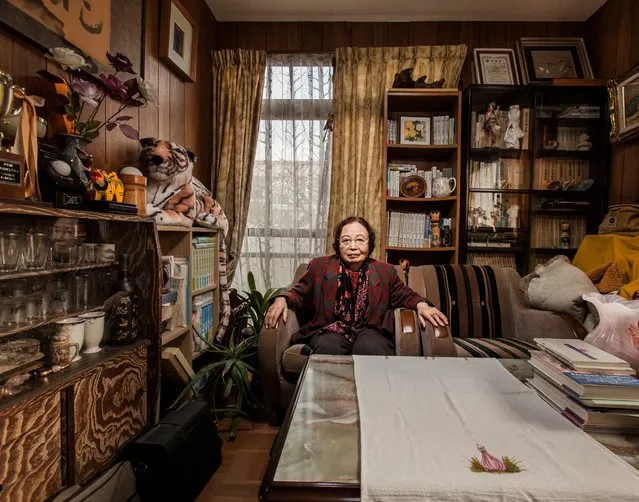
Takeoka Chisaka, Hiroshima, Japan. “One morning in August 1945, I was walking home from the night shift at a factory in Hiroshima. As I reached my door, there was a huge explosion. When I came to, my head was bleeding and I had been blasted 30m away”. (Photo and caption by Sasha Maslov)

Takeoka Chisaka, Hiroshima, Japan. “One morning in August 1945, I was walking home from the night shift at a factory in Hiroshima. As I reached my door, there was a huge explosion. When I came to, my head was bleeding and I had been blasted 30m away. The atomic bomb had detonated. When I found my mother, her eyes were badly burned. A doctor said they had to come out, but he didn’t have the proper tools so used a knife instead. It was hellish. I became a peace-worker after the war. In the 1960s, at a meeting at the UN, I met one of the people who created the atomic bomb. He apologised”. (Photo and caption by Sasha Maslov)
Details
11 May 2015 11:56:00