Loading...
Done
Fun Laws In America By Olivia Locher

Many laws still in existence throughout the united states are wildly outdated, rendering them completely ridiculous, useless and bizarre. The absurdity is illustrated by new York-based photographer Olivia Locher, who catalogs the crazy rules and regulations of each state in a playful photographic series ‘I fought the law’. Readers might be surprised to learn that in Rhode island, it is illegal to wear transparent clothing, nobody is allowed to ride a bicycle in a swimming pool in California and Arizona residents may not have more than two dildos in a house. Take a look at the ongoing series below to find out more about the peculiar oddities present in the American legal system.
Details
09 Jun 2014 11:36:00
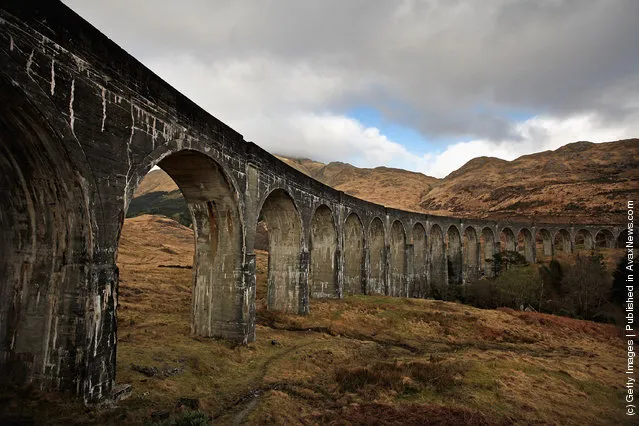
A view of the Glenfinnan Viaduct

“Glenfinnan Viaduct is a railway viaduct on the West Highland Line in Glenfinnan, Lochaber, Highland, Scotland. It was built between 1897 and 1901. Located at the top of Loch Shiel in the West Highlands of Scotland, the viaduct overlooks the Glenfinnan Monument and the waters of Loch Shiel”. – Wikipedia

Photo: A view of the Glenfinnan Viaduct on March 30, 2012 in Glenfinnan, Scotland. Built by Sir Robert McAlpine, the single track viaduct that is made up of 21 arches is considered to have been one of the largest engineering projects of its time. Today, it is still used by ScotRail and was recently used for scenes in three of the Harry Potter films. (Photo by Jeff J. Mitchell/Getty Images)
Details
31 Mar 2012 09:21:00
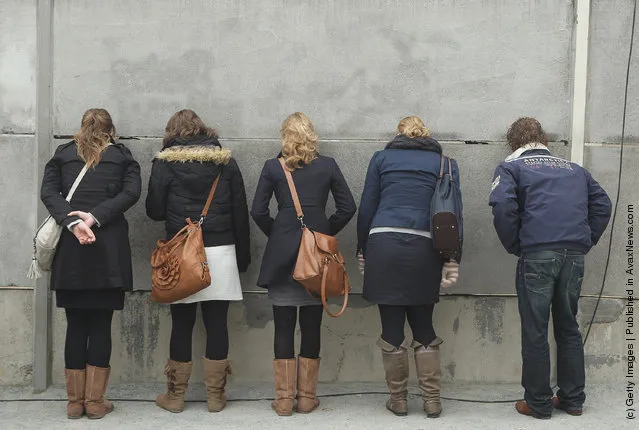
Berlin Marks 22nd Anniversary Of Berlin Wall Fall

Tourists from Holland peak through a crack in a still-existing portion of the Berlin Wall at the main memorial to the Wall in Bernauer Strasse on the 22nd anniversary of the fall of the Wall on November 9, 2011 in Berlin, Germany. The Berlin Wall, erected by the communist authorities of then East Germany in 1961, divided the city and prevented East Germans from travelling west until the collapse of the Eastern Bloc in 1989. (Photo by Sean Gallup/Getty Images)
Details
10 Nov 2011 09:25:00
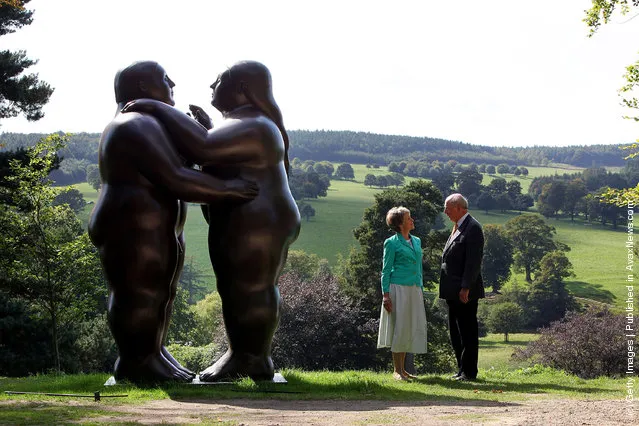
Dancers  by artist Fernando Botero

“Fernando Botero Angulo (born April 19, 1932) is a Colombian figurative artist. His works feature a figurative style, called by some “Boterismo”, which gives them an unmistakable identity. Botero depicts women, men, daily life, historical events and characters, milestones of art, still-life, animals and the natural world in general, with exaggerated and disproportionate volumetry, accompanied by fine details of scathing criticism, irony, humor, and ingenuity”. – Wikipedia

Photo: The Duke and Duchess of Devonshire view “Dancers” by artist Fernando Botero in the gardens of their home Chatsworth House on September 10, 2009, Chatsworth, England. (Photo by Christopher Furlong/Getty Images)
Details
29 Nov 2011 10:02:00
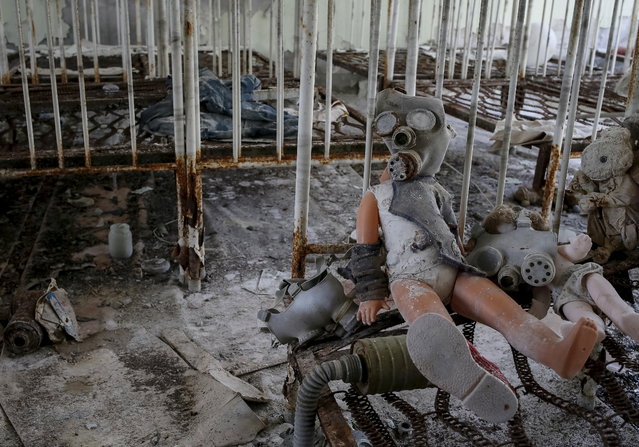
A doll in a children's gas mask is seen amongst beds at a kindergarten in the abandoned city of Pripyat near the Chernobyl nuclear power plant in Ukraine on March 28, 2016. (Photo by Gleb Garanich/Reuters)

A doll in a children's gas mask is seen amongst beds at a kindergarten in the abandoned city of Pripyat near the Chernobyl nuclear power plant in Ukraine on March 28, 2016. Deadly radiation still spews from Chernobyl 30 years after the worst nuclear meltdown in history, as a newly built giant arch is pulled into place to cover the stricken reactor for the next century. (Photo by Gleb Garanich/Reuters)
Details
03 Apr 2016 11:47:00
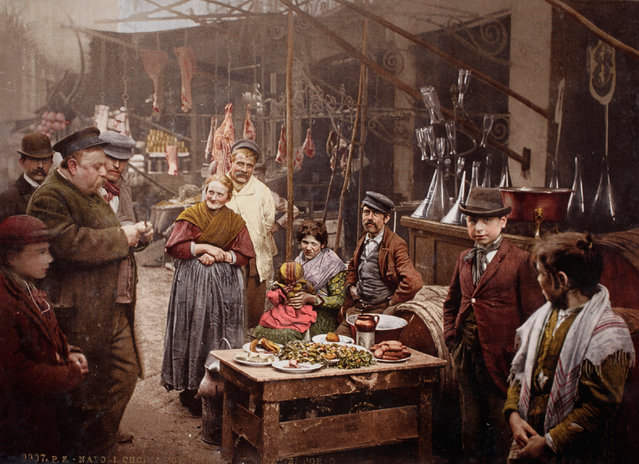
The finished photochromes were produced using at least six different tint stones, although many more were often used. Here: Street food in the Strada del Porto in Naples, Italy, 1899. (Photo by Swiss Camera Museum/The Guardian)

Photochromes are vibrant and nuanced prints hand-coloured from black-and-white negatives. Created using a process pioneered in the 1880s, these images offer a fascinating insight into the world when colour photography was still in its infancy. A Tour of the World in Photochromes is at the Swiss Camera Museum, Vevey, until 21 August. Here: Street food in the Strada del Porto in Naples, Italy, 1899. (Photo by Swiss Camera Museum/The Guardian)
Details
07 Jul 2016 10:56:00
Rescue workers help the injured at the site of a multi-storey building collapse  in the capital Nairobi, Kenya Sunday, January 4, 2015. (Photo by AP Photo)

Rescue workers help the injured at the site of a multi-storey building collapse in the capital Nairobi, Kenya Sunday, January 4, 2015. The residential building in the Huruma neighborhood of Nairobi collapsed on Sunday and according to the Kenya Red Cross, a dozen people have so far been rescued but an unknown number are still feared trapped. (Photo by AP Photo)
Details
05 Jan 2015 13:06:00
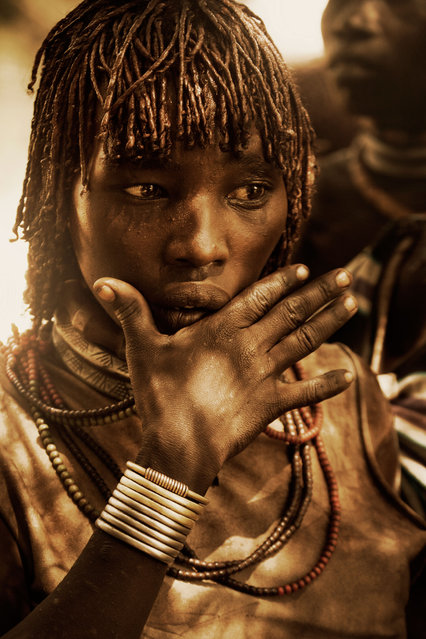
The Hamar people traditionally use red ocher clay to braid the hair of their women. (Photo by Diego Arroyo)

During his time in Ethiopia, New York-based art director and photographer Diego Arroyo spent time with the Hamar, Mursi, Dassanech, and Arbore Tribes. They, along with several others tribes, make up the 200,000 people situated in Africa’s Great Rift Valley. The people of the Omo Valley are still primarily herders and farmers, living an isolated and simple life. While they have yet to be truly touched by globalization, they could soon disappear. Their way of life is being threatened by a massive hydroelectric dam. (Photo by Diego Arroyo)
Details
13 Aug 2014 10:00:00