Loading...
Done
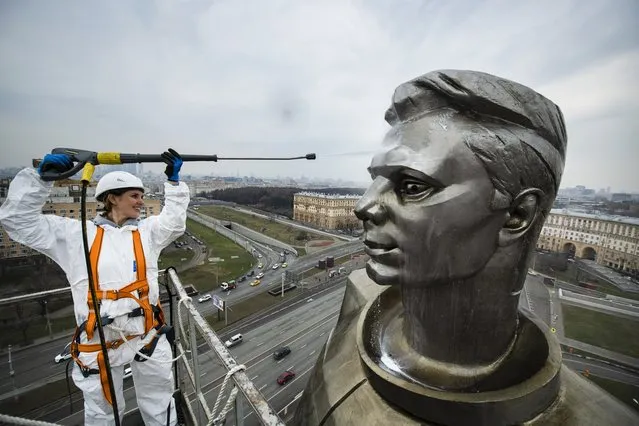
A worker cleans the statue of Yuri Gagarin, the first person who flew to space, ahead of Cosmonautics Day celebrated on April 12, in Moscow, Russia, Wednesday April 10, 2019. Cosmonautics Day marks when Soviet cosmonaut Yuri Gagarin became the first man to fly in space, in 1961, orbiting the earth once before making a safe landing. (Photo by Maxim Marmur/AP Photo)

A worker cleans the statue of Yuri Gagarin, the first person who flew to space, ahead of Cosmonautics Day celebrated on April 12, in Moscow, Russia, Wednesday April 10, 2019. Cosmonautics Day marks when Soviet cosmonaut Yuri Gagarin became the first man to fly in space, in 1961, orbiting the earth once before making a safe landing. (Photo by Maxim Marmur/AP Photo)
Details
12 Apr 2019 00:07:00
A woman runs along a bridge in front of a Stalin-era skyscraper in central Moscow on June 29, 2020. (Photo by Yuri Kadobnov/AFP Photo)

A woman runs along a bridge in front of a Stalin-era skyscraper in central Moscow on June 29, 2020. (Photo by Yuri Kadobnov/AFP Photo)
Details
11 Jul 2020 00:03:00
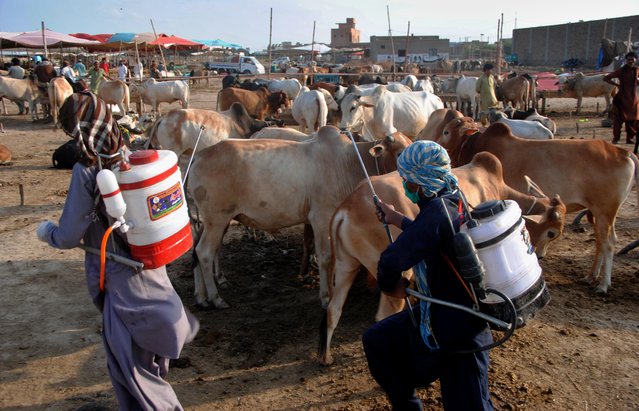
Health workers wearing face masks spray disinfectant liquid on sacrificial animals amid concerns over the spread of the SARS-CoV-2 coronavirus that causes the pandemic COVID-19 disease ahead of the Muslim festival of Eid al-Adha at an animal market in Hyderabad, southern Pakistan, 21 July 2020. Eid al-Adha, also known as the Festival of the Sacrifice, is the second and holiest of the two main Islamic holidays celebrated each year (the other one being Eid al-Fitr). Every year, on the 10th day of the Islamic lunar month of Dhu al-Hijjah, Muslims around the world ritually slaughter a sacrificial animal and split the meat into three parts: one is reserved for the family, another for friends and relatives, and the third is given to the poor and needy. The Saudi Supreme Court has declared that the first day of Eid al-Adha this year falls on 31 July. (Photo by Nadeem Khawar/EPA/EFE)

Health workers wearing face masks spray disinfectant liquid on sacrificial animals amid concerns over the spread of the SARS-CoV-2 coronavirus that causes the pandemic COVID-19 disease ahead of the Muslim festival of Eid al-Adha at an animal market in Hyderabad, southern Pakistan, 21 July 2020. (Photo by Nadeem Khawar/EPA/EFE)
Details
23 Jul 2020 00:07:00
Princess Diana relaxes on the sand during a visit to the beach on the Caribbean Island of Nevis January 4, 1993. (Photo by Mark Cardwell/Reuters)

Princess Diana relaxes on the sand during a visit to the beach on the Caribbean Island of Nevis January 4, 1993. (Photo by Mark Cardwell/Reuters)
Details
01 Sep 2017 05:35:00
Adolf Hitler (left), German Nazi politician, in a deck chair next to is niece Angela (Geli) Raubal – around 1930. (Photo by Ullstein Bild/Ullstein Bild via Getty Images)

Adolf Hitler (left), German Nazi politician, in a deck chair next to is niece Angela (Geli) Raubal – around 1930. (Photo by Ullstein Bild/Ullstein Bild via Getty Images)
Details
03 Sep 2018 08:06:00
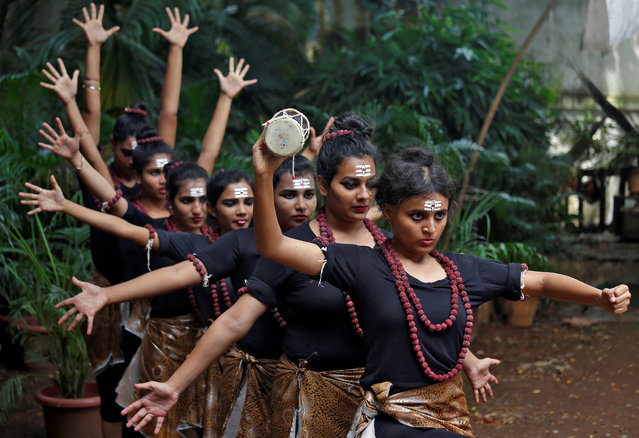
Students dressed as Hindu Lord Shiva, also known as Nataraja, the Lord of Dancers, during a religious event in Mumbai, India, August 30, 2018. (Photo by Francis Mascarenhas/Reuters)

Students dressed as Hindu Lord Shiva, also known as Nataraja, the Lord of Dancers, during a religious event in Mumbai, India, August 30, 2018. (Photo by Francis Mascarenhas/Reuters)
Details
17 Sep 2018 00:01:00
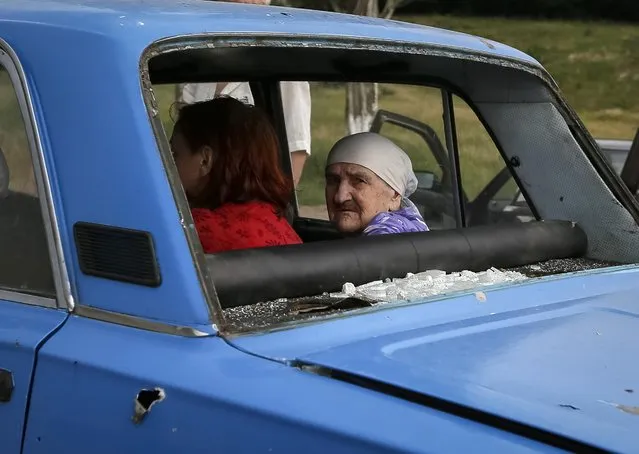
Caught In East Ukraine Crossfire

An old woman looks from inside a car with bullet holes and shattered windows as she flees fighting in the eastern Ukrainian town of Slaviansk June 9, 2014. REUTERS/Gleb Garanich.
Details
10 Jun 2014 11:15:00
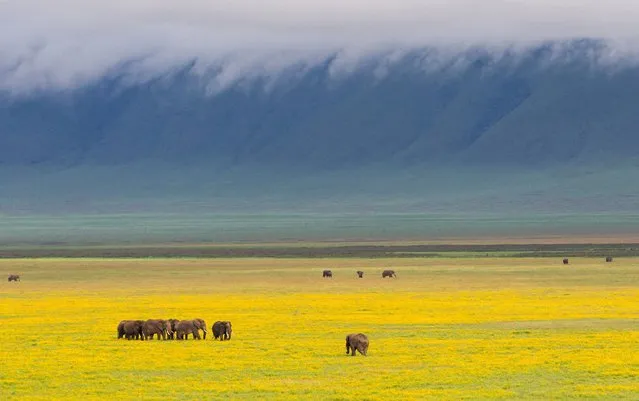
Ngorongoro Crater (Tanzania). At 610m deep and 260 sq km, this is the largest unflooded caldera in the world. A blue-green vision from above it's a haven for engangered wildlife and Maasai livestock. The crater was formed three million years ago when a giant volcano, which could have been as high as Kilimanjaro, exploded and collapsed. The caldera formed the concentric fractures in the crust cracked down to a magma reservoir deep underground. (Photo by John Bryant/Getty Images)

Ngorongoro Crater (Tanzania). At 610m deep and 260 sq km, this is the largest unflooded caldera in the world. A blue-green vision from above it's a haven for engangered wildlife and Maasai livestock. The crater was formed three million years ago when a giant volcano, which could have been as high as Kilimanjaro, exploded and collapsed. The caldera formed the concentric fractures in the crust cracked down to a magma reservoir deep underground. (Photo by John Bryant/Getty Images)
Details
28 Mar 2014 08:08:00