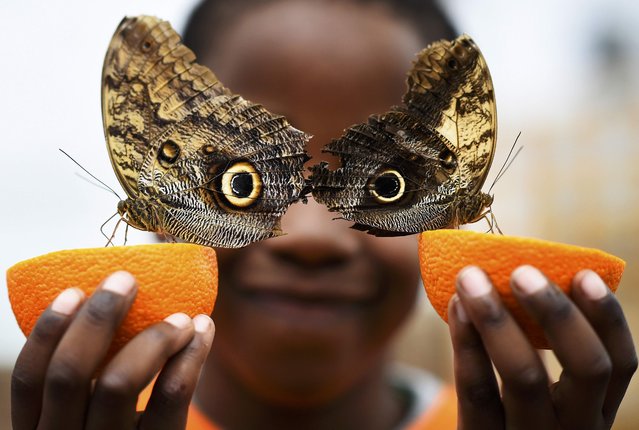
Bjorn, aged 5, smiles as he poses with a Owl butterfly during an event to launch the Sensational Butterflies exhibition at the Natural History Museum in London, Britain March 23, 2016. The exhibition opens to the public on March 24 and runs until September 11. (Photo by Dylan Martinez/Reuters)
A combination picture shows participants in costume at a Halloween parade in Kawasaki, south of Tokyo, October 25, 2015. More than 100,000 spectators turned up to watch the parade, where 2,500 participants dressed up in costumes, according to the organiser. (Photo by Yuya Shino/Reuters)
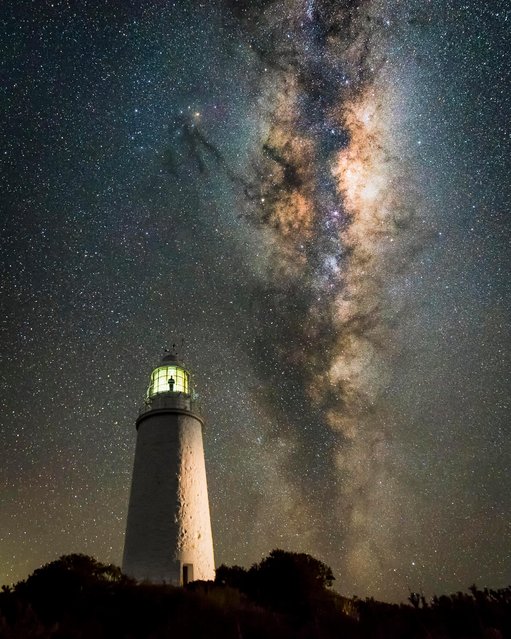
The competition is run by Royal Observatory Greenwich sponsored by Insight Investment and in association with BBC Sky at Night Magazine. This year astrophotographers from 91 countries sent in more than 4,200 spectacular entries. Here: The Milky Way rises above an isolated lighthouse in Tasmania. Shot by James Stone of Australia. (Photo by James Stone/Astronomy Photographer of the Year 2018)
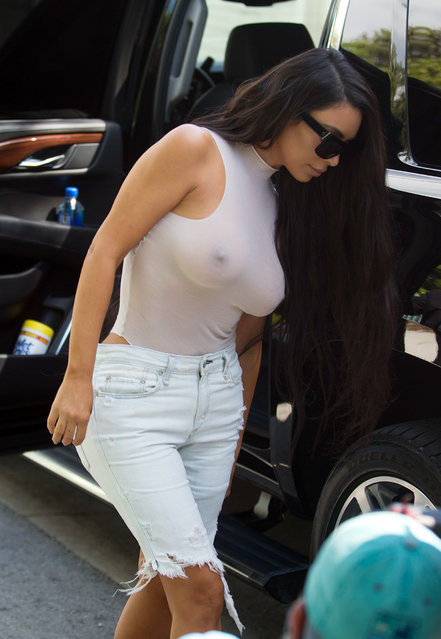
American media personality and socialite Kourtney Kardashian in the second decade of October 2022 promotes her Lemme gummy vitamins. (Photo by kourtneykardash/Instagram)
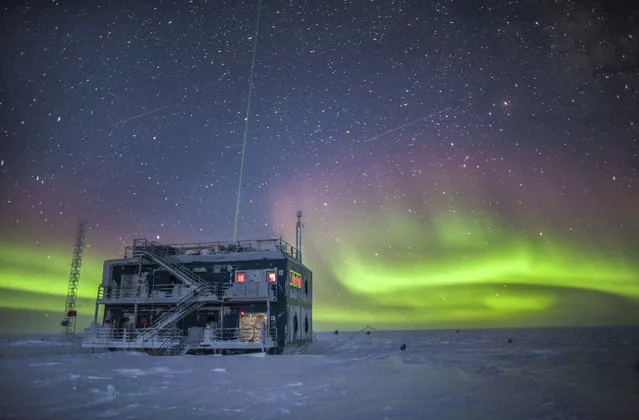
This undated photo provided by NOAA in May 2018 shows aurora australis near the South Pole Atmospheric Research Observatory in Antarctica. When a hole in the ozone formed over Antarctica, countries around the world in 1987 agreed to phase out several types of ozone-depleting chemicals called chlorofluorocarbons (CFCs). Production was banned, emissions fell and the hole shriveled. But according to a study released on Wednesday, May 16, 2018, scientists say since 2013, there’s more of a banned CFC going into the atmosphere. (Photo by Patrick Cullis/NOAA via AP Photo)
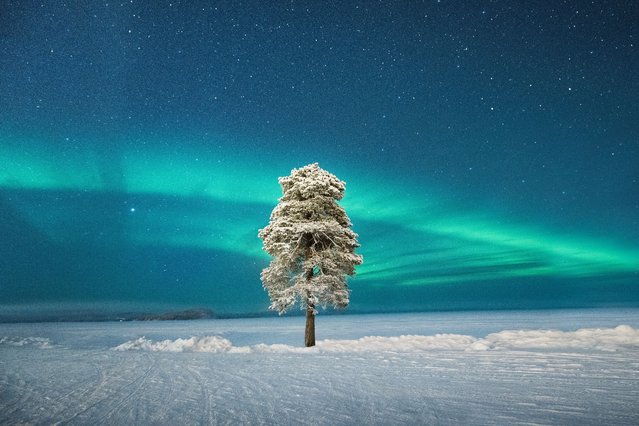
Aurorae category runner-up: Lone Tree under a Scandinavian Aurora by Tom Archer (UK). The photographer decided to explore the area around the hotel on a very crisp -35C evening in Finnish Lapland. When he found this tree, he decided to wait for the misty conditions to change and could not believe his luck when the sky cleared and the aurora came out in the perfect spot. Archer spent about an hour photographing it before his camera started to lock up because of the harsh conditions, but by then he was happy to call it a night. (Photo by Tom Archer/2020 Astronomy Photographer of the Year)