This handout photo taken on August 31, 2023 and provided by the South Korean Defence Ministry shows South Korean soldiers participating in an air assault drill at a training field in Jangseong, as part of the annual Ulchi Freedom Shield joint military drills between South Korea and the United States. (Photo by Handout/South Korean Defence Ministry/AFP Photo)
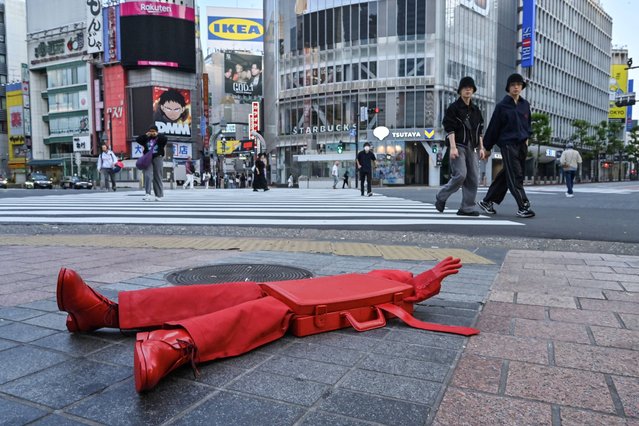
Pedestrians walk past an art installation by French street artist James Colomina called the “The Briefcase” (bottom) at Shibuya Crossing in the Shibuya district of central Tokyo on May 20, 2025. The display shows a red briefcase – a symbol of work and conformity – with arms, legs and a tie poking out on the ground to illustrate a “salaryman” who has lost his identity, swallowed by his daily routine. (Photo by Richard A. Brooks/AFP Photo)
The archerfish (spinner fish or archer fish) are a family (Toxotidae) of fish known for their habit of preying on land based insects and other small animals by literally shooting them down with water droplets from their specialized mouths. The family is small, consisting of seven species in the genus Toxotes; which typically inhabit brackish waters of estuaries and mangroves, but can also be found in the open ocean as well as far upstream in fresh water They can be found from India to the Philippines, Australia, and Polynesia.
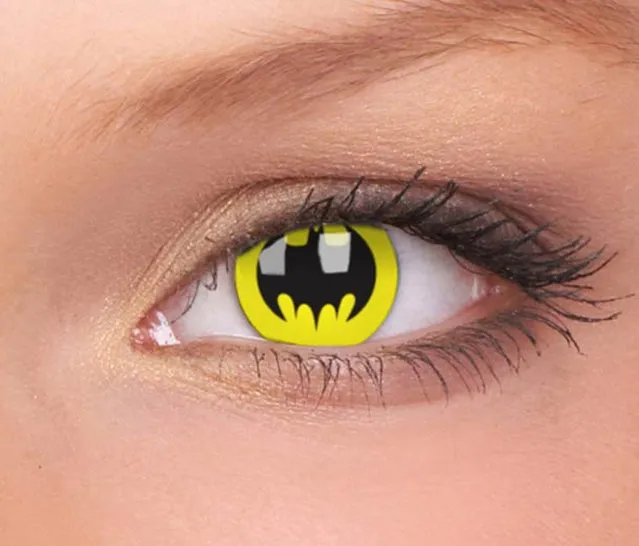
The Batman logo displayed in your eyes? Geeky contact lenses: Batman, the Eye of Sauron, Zombie, Saw, Naruto, X-Men, Terminator, Twilight, Blade, Exorcist… Some kitsch gadgets, but I’m curious to try!
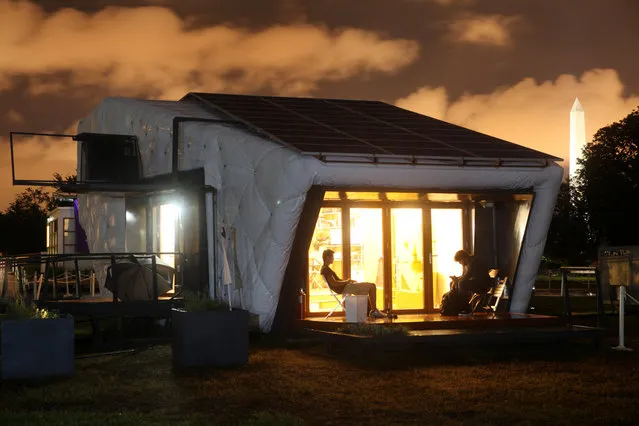
CHIP is a prefab, net-zero solar-powered house designed and built by a student-run team from two Southern California schools: Southern California Institute of Architecture (SCI-Arc) and California Institute of Technology (Caltech). The house is the team's entry for the U.S. Department of Energy Solar Decathlon 2011 competition.
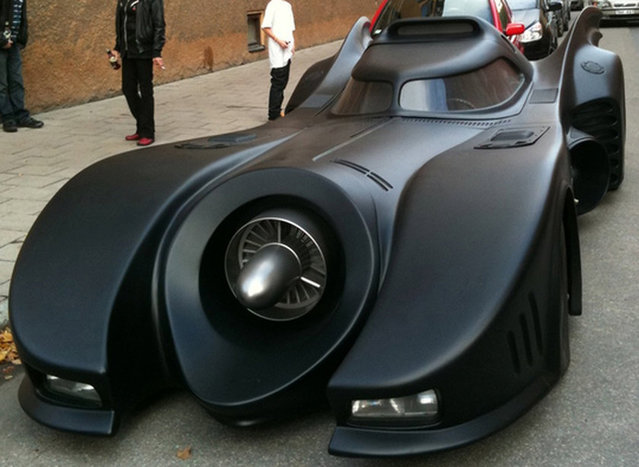
A Swedish guy built it from a 1973 Lincoln Continental. It took him over $1 million USD and 3.5 years to complete, or some 20.000 hours of work.
It features a lot of gadgets like satellite navigation, voice recognition, reversing cameras, a DVD player, a plasma TV...
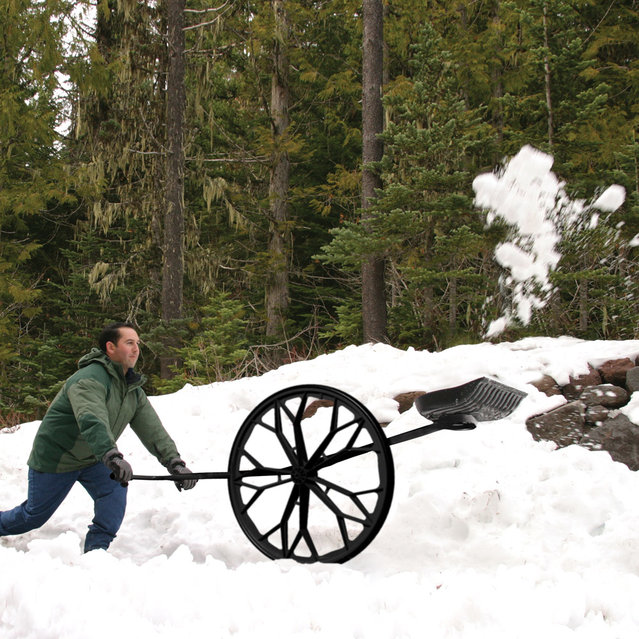
The Wovel could possibly be the most advanced human snow removal machine ever created, next to simply getting someone else to do it. The revolutionary wheel design reduces the risks associated with heart attacks and back injuries because it uses adjustable leverage and your own body weight to push, lift, and throw snow up to 18" deep. The best feature about the Wovel is compared to a gas-powered snow blower, this one will always start.