A spectator shows off her green, white and gold eyelashes as the annual Saint Patrick's day parade takes place on March 17, 2018 in Dublin, Ireland. Dublin hosts the largest Saint Patrick's day parade in the world with a route spanning 2.5 km. The Irish annals for the fifth century date Patrick's arrival in Ireland in the year 432 with the patron saint of Ireland's remains believed to be buried at Down Cathedral in County Down. (Photo by Charles McQuillan/Getty Images)
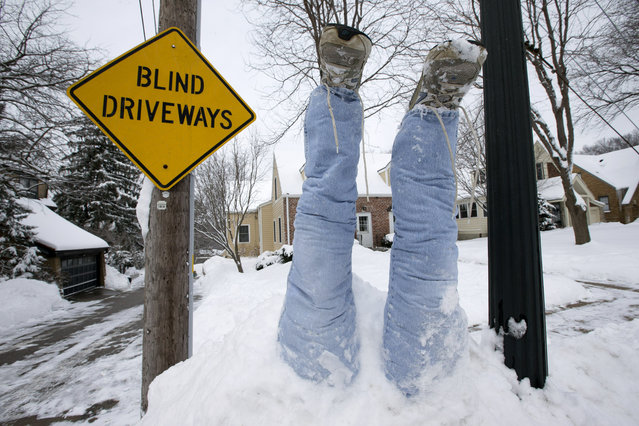
An upside-down pair of pants is seen atop a mound of snow, Wednesday, February 20, 2019, the result of yet another snow storm to hit Omaha, Neb. The latest winter storm dumped more snow on top of the existing snow, creating a problem of what to do with all the cleared snow. (Photo by Nati Harnik/AP Photo)
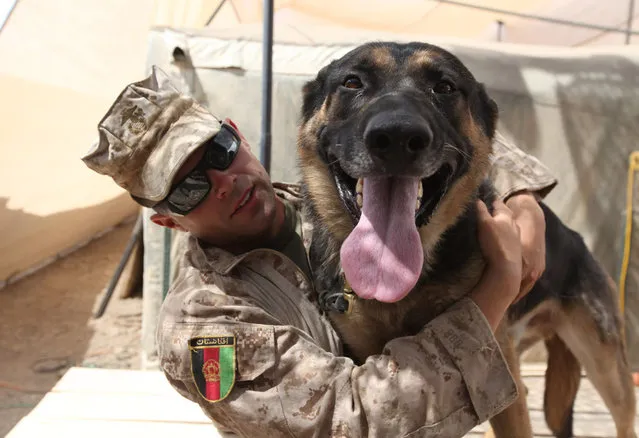
Throughout the course of the long war in Afghanistan, Coalition troops have relied on thousands of military working dogs to help keep them safe, and make their jobs easier. The dogs are trained to detect explosives, to find illegal drugs, to search for missing comrades, or target enemy combatants. Not only are they active on the front lines, but behind the lines they serve as therapy dogs, service dogs, and loyal companions. They also share the same risks as the ground troops, suffering injuries and sometimes death on the battlefields. Gathered here are images of these dogs and their handlers in Afghanistan and back home, from over the past several years, part of the ongoing series here on Afghanistan.
A containment shelter for the damaged fourth reactor (L) and the New Safe Confinement (NSC) structure (R) at the Chernobyl Nuclear Power Plant are seen from Ukraine's abandoned town of Pripyat, Ukraine, April 22, 2016. (Photo by Gleb Garanich/Reuters)
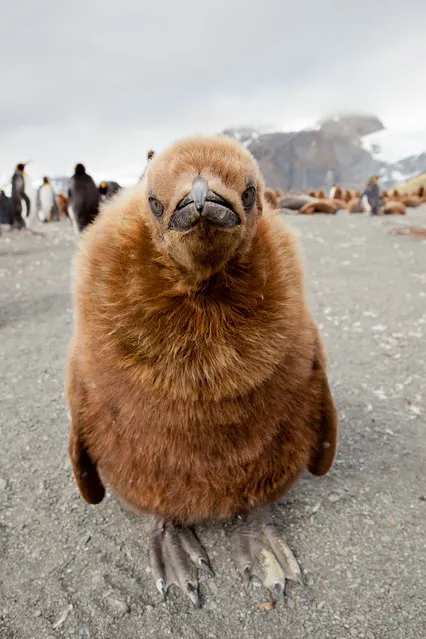
“Cub”. In the colony of penguins in South Georgia. (Photo and caption by Ondrej Zaruba/National Geographic Traveler Photo Contest)
ATTENTION! All pictures are presented in high resolution. To see Hi-Res images – just TWICE click on any picture. In other words, click small picture – opens the BIG picture. Click BIG picture – opens VERY BIG picture.
A fan wipes her lip after she was hit on the mouth by a foul ball hit by Kansas City Royals' Brandon Moss during the third inning of the Royals' baseball game against the Chicago White Sox, Friday, September 22, 2017, in Chicago. (Photo by David Banks/AP Photo)
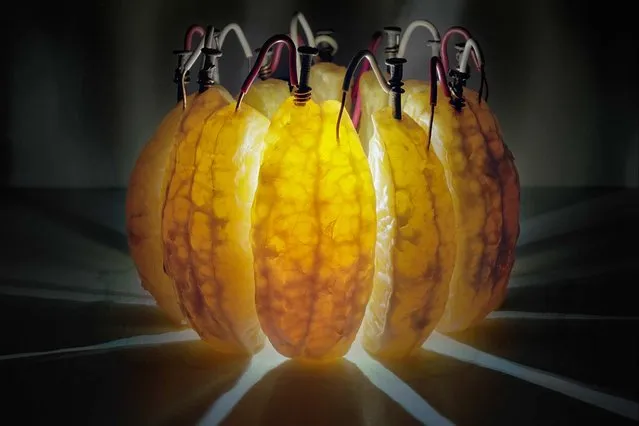
Wedges of an orange generate enough current and electrical juice – 3.5 volts – to power an LED. The fruit’s citric acid helps electrons flow from galvanized nails to copper wire in this 14-hour exposure. This image was published in September’s Visions of Earth, a trio of photos that appear in each issue of National Geographic. (Photo by Caleb Charland/National Geographic)