Loading...
Done
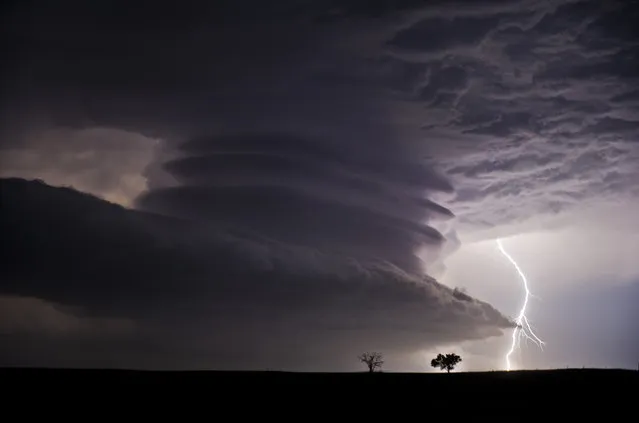
“Stacked Supercell with Lightning”. This huge mesocyclone supercell was near the Nebraska / Kansas border on the night of June 22nd, 2012. What a stunning structure! (Photo and caption by Jennifer Brindley/National Geographic Traveler Photo Contest)

“Stacked Supercell with Lightning”. This huge mesocyclone supercell was near the Nebraska / Kansas border on the night of June 22nd, 2012. What a stunning structure! (Photo and caption by Jennifer Brindley/National Geographic Traveler Photo Contest)

ATTENTION! All pictures are presented in high resolution. To see Hi-Res images – just TWICE click on any picture. In other words, click small picture – opens the BIG picture. Click BIG picture – opens VERY BIG picture.
Details
25 Jun 2013 13:12:00
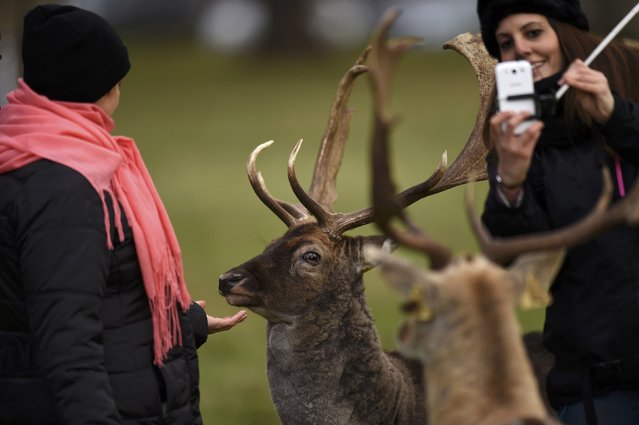
People take pictures of deer in the Phoenix Park in Dublin, Ireland December 5, 2016. (Photo by Clodagh Kilcoyne/Reuters)

People take pictures of deer in the Phoenix Park in Dublin, Ireland December 5, 2016. (Photo by Clodagh Kilcoyne/Reuters)
Details
11 Dec 2016 12:53:00
A Star Wars fan in an R2-D2 costume poses for a photo outside the venue during a fan convention called the Star Wars Celebration in Chiba, near Tokyo, Friday, April 18, 2025. (Photo by Hiro Komae/AP Photo)

A Star Wars fan in an R2-D2 costume poses for a photo outside the venue during a fan convention called the Star Wars Celebration in Chiba, near Tokyo, Friday, April 18, 2025. (Photo by Hiro Komae/AP Photo)
Details
22 May 2025 02:25:00
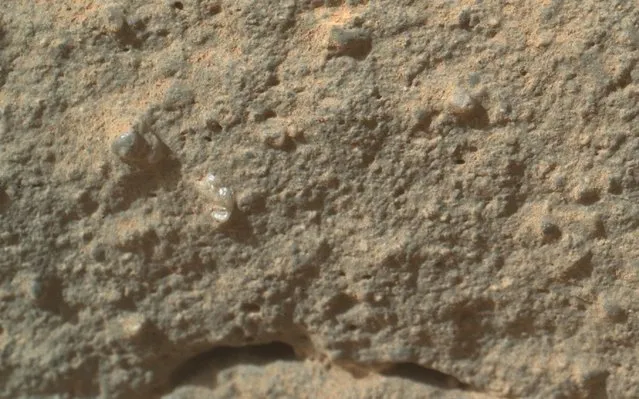
Scientists say that a “Martian flower”, seen here in an image from the Curiosity rover's Mars Hand Lens Imager, is a 2-millimeter-wide grain or pebble that's embedded in the surrounding rock. Another, darker-colored mineral grain can be seen above and to the left. (Photo by NASA)

“The scientists behind NASA's $2.5 billion Curiosity rover mission on Mars on Tuesday explained the nature of a tiny, gleaming "flower" embedded in Red Planet rock, and revealed where they'll be using the SUV-sized robot's drill for the first time”. – Alan Boyle via NBCNews.com

Photo: Scientists say that a “Martian flower”, seen here in an image from the Curiosity rover's Mars Hand Lens Imager, is a 2-millimeter-wide grain or pebble that's embedded in the surrounding rock. Another, darker-colored mineral grain can be seen above and to the left. (Photo by NASA)
Details
16 Jan 2013 11:12:00
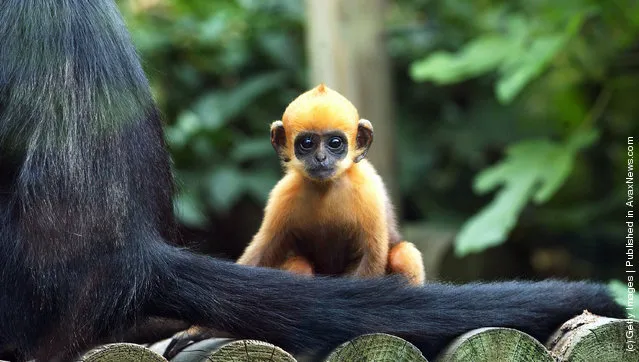
Baby Francois' Langur

“Francois' langur is one of several species of leaf monkeys. Over 50% of its diet is made up of young leaves. It will also consume fruits (17.2%), seeds, flowers, stems, roots, bark and occasionally minerals and insects off of rock surfaces and cliffs. This langur consumes its favorite food, young leaves, at the highest rate during the dry season, April through September, also known as the young leaf-lean period”. – Wikipedia

Photo: An endangered baby Francois' Langur monkey called Laa Laa settles in following her July 6 birth at London Zoo, Regent's Park on August 5, 2004 in London. The bright ginger youngster was born to glossy black parents Max and Shaneka and has the typical orange baby coat which is in stark contrast against the black of her parent's and older brother Grub's fur. (Photo by Steve Finn/Getty Images)
Details
22 Sep 2011 11:28:00
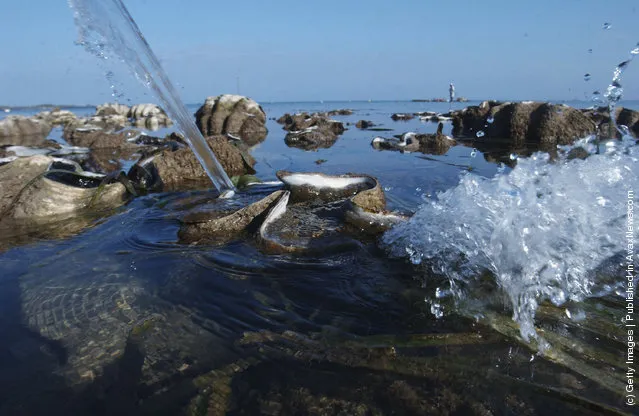
Tridacna Gigas, or Giant Clams

“The giant clam, Tridacna gigas (known as pā’ua in Cook Islands Māori), is the largest living bivalve mollusc. T. gigas is one of the most endangered clam species. It was mentioned as early as 1825 in scientific reports. One of a number of large clam species native to the shallow coral reefs of the South Pacific and Indian oceans, they can weigh more than 200 kilograms (440 lb) measure as much as 120 cm (47 in) across, and have an average lifespan in the wild of 100 years or more”. – Wikipedia

Photo: Tridacna Gigas, or Giant Clams spew water as a traditional fisherman passes by a small sanctuary on January 23, 2004 near Bolinao in the Northern Philippines. The clams, prime builders for coral reefs and providing shelter for spawning fish and other marine life, are exposed by low tides in the sanctuary. Overfishing and pollution throughout the country are not only threatening food security, but are also starting to choke one of the few working clam sanctuaries in the world. (Photo by David Greedy/Getty Images)
Details
01 Oct 2011 13:10:00
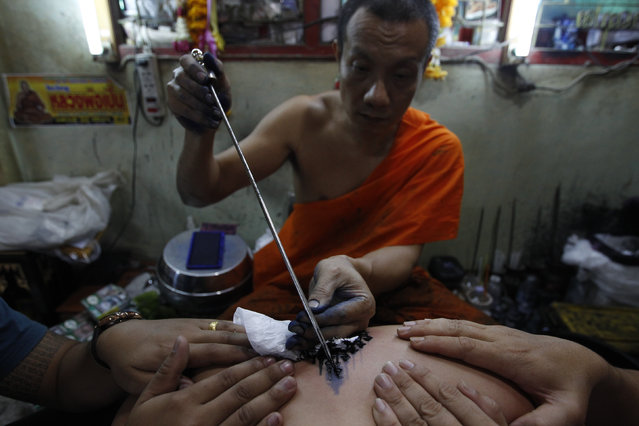
A Buddhist monk uses a traditional needle to tattoo the body of a man at Wat Bang Phra in Nakhon Pathom province on the outskirts of Bangkok, Thailand,  March 18, 2016. (Photo by Chaiwat Subprasom/Reuters)

A Buddhist monk uses a traditional needle to tattoo the body of a man at Wat Bang Phra in Nakhon Pathom province on the outskirts of Bangkok, Thailand, March 18, 2016. Believers from across Thailand travel to the monastery to have their bodies adorned with tattoos and to pay their respects to the temple's master tattooist. They believe the tattoos have mystical powers, ward off bad luck and protect them from harm. (Photo by Chaiwat Subprasom/Reuters)
Details
19 Mar 2016 12:44:00

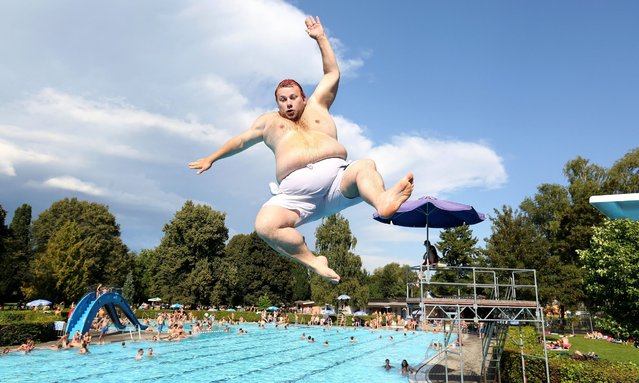
Thomas jumps into the water from a spring board at a public swimming pool in Mengen, Germany, 28 August 2016. (Photo by Thomas Warnack/EPA)

Thomas jumps into the water from a spring board at a public swimming pool in Mengen, Germany, 28 August 2016. (Photo by Thomas Warnack/EPA)
Details
29 Aug 2016 07:45:00