Loading...
Done
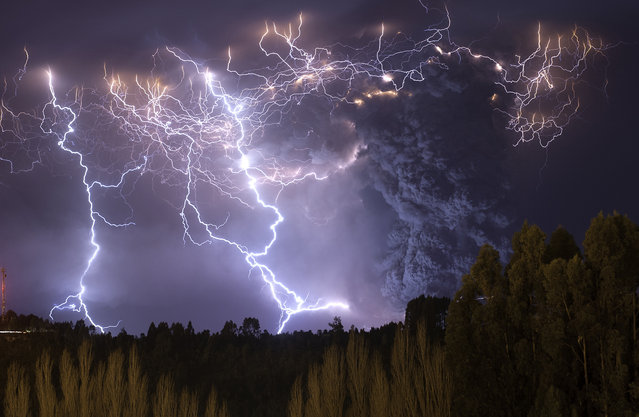
The eruption of Cordon Caulle began on June 4, 2011, located in the Region of Los Rios in Chile. For about 12 months, people and animals became accustomed to living with the daily fall of ash, which also caused problems in the air traffic in South America. The explosions and lightning during first days of the eruption could be seen from hundreds of miles around. This photograph was taken on the second night of eruption from the town of Lago Ranco. (Photo and caption by Francisco Negroni/National Geographic Traveler Photo Contest)

The eruption of Cordon Caulle began on June 4, 2011, located in the Region of Los Rios in Chile. For about 12 months, people and animals became accustomed to living with the daily fall of ash, which also caused problems in the air traffic in South America. The explosions and lightning during first days of the eruption could be seen from hundreds of miles around. This photograph was taken on the second night of eruption from the town of Lago Ranco. (Photo and caption by Francisco Negroni/National Geographic Traveler Photo Contest)

ATTENTION! All pictures are presented in high resolution. To see Hi-Res images – just TWICE click on any picture. In other words, click small picture – opens the BIG picture. Click BIG picture – opens VERY BIG picture.
Details
23 Jun 2013 11:24:00
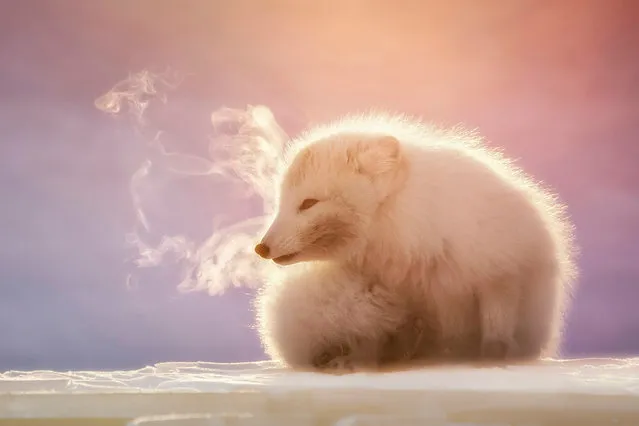
Breath of an Arctic fox by Marco Gaiotti, Italy. Marco was watching this little Arctic fox as it incessantly called another nearby. Gradually he noticed the fox’s wet breath was quickly freezing in the air after each call. It was late winter in Spitsbergen, Svalbard, and the air was -35C (-31F). Photographing Arctic foxes is often frustrating, as they are normally running around fast in search of food, but this one was very relaxed and let Marco get close enough to focus on it, with the light glowing perfectly in the background. (Photo by Marco Gaiotti/Wildlife Photographer of the Year 2021)

Breath of an Arctic fox by Marco Gaiotti, Italy. Marco was watching this little Arctic fox as it incessantly called another nearby. Gradually he noticed the fox’s wet breath was quickly freezing in the air after each call. It was late winter in Spitsbergen, Svalbard, and the air was -35C (-31F). Photographing Arctic foxes is often frustrating, as they are normally running around fast in search of food, but this one was very relaxed and let Marco get close enough to focus on it, with the light glowing perfectly in the background. (Photo by Marco Gaiotti/Wildlife Photographer of the Year 2021)
Details
05 Dec 2021 06:36:00
From the “Paradise Revisited” story in the November 2013 issue of National Geographic magazine, this image is a beautiful vision of father and son fishermen as they move through the multicolored coral gardens of Kembe Bay, Papua New Guinea, in a traditional outrigger canoe. (Photo by David Doubilet/National Geographic Creative)

From the “Paradise Revisited” story in the November 2013 issue of National Geographic magazine, this image is a beautiful vision of father and son fishermen as they move through the multicolored coral gardens of Kembe Bay, Papua New Guinea, in a traditional outrigger canoe. (Photo by David Doubilet/National Geographic Creative)
Details
29 Apr 2017 07:28:00
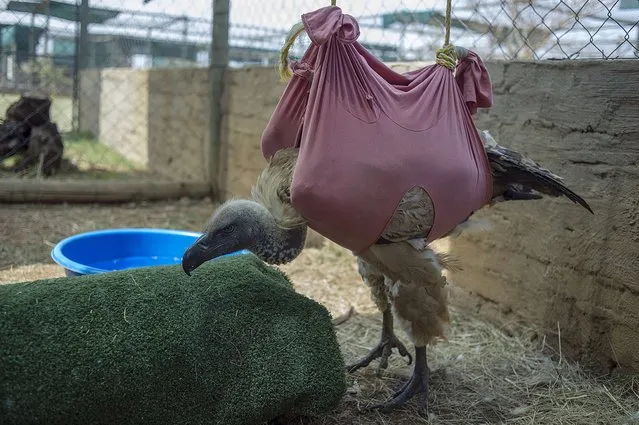
An injured vulture is treated at the VulPro Vulture Rehabilitation Centre in Hartebeepoortdam in the Magalisburg region on September 15, 2015. Confined to southern Africa, just under 4,000 breeding pairs of Cape Vultures remain in the wild, mostly in South Africa, Lesotho and Botswana. Unless conservation efforts are successful, Africa's largest vulture species may be facing eventual extinction. (Photo by Mujahid Safodien/AFP Photo)

An injured vulture is treated at the VulPro Vulture Rehabilitation Centre in Hartebeepoortdam in the Magalisburg region on September 15, 2015. Confined to southern Africa, just under 4,000 breeding pairs of Cape Vultures remain in the wild, mostly in South Africa, Lesotho and Botswana. Unless conservation efforts are successful, Africa's largest vulture species may be facing eventual extinction. (Photo by Mujahid Safodien/AFP Photo)
Details
19 Sep 2015 12:27:00
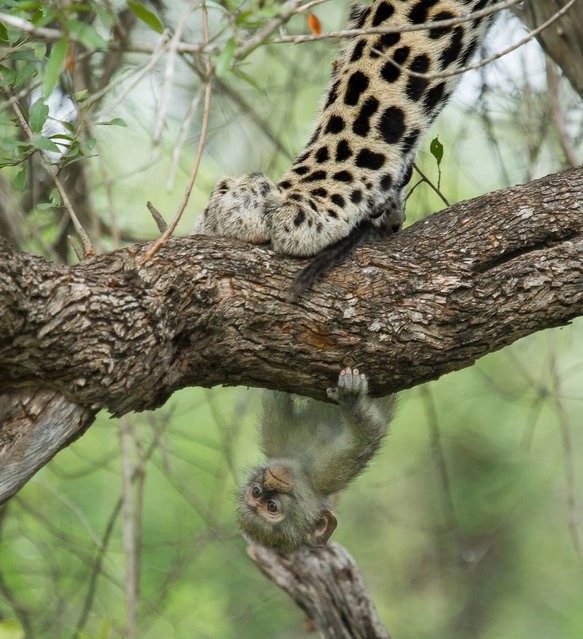
Chris Renshaw has recently been awarded the 2015 Africa Geographic “Photographer of the Year” award. Chris tells that his love “for anything wild and adventurous came from a deep rooted attachment to the African continent. This image shows that timing, a bit of anticipation, and luck allowed this incredible moment in time to be captured”. (Photo by Chris Renshaw)

Chris Renshaw has recently been awarded the 2015 Africa Geographic “Photographer of the Year” award. Chris tells that his love “for anything wild and adventurous came from a deep rooted attachment to the African continent. This image shows that timing, a bit of anticipation, and luck allowed this incredible moment in time to be captured”. (Photo by Chris Renshaw)
Details
19 Nov 2015 08:00:00
A history enthusiast, dressed as a soldier, fights during the re-enactment of Napoleon's famous battle of Austerlitz near the southern Moravian town of Slavkov u Brna December 5, 2015. (Photo by David W. Cerny/Reuters)

A history enthusiast, dressed as a soldier, fights during the re-enactment of Napoleon's famous battle of Austerlitz near the southern Moravian town of Slavkov u Brna December 5, 2015. Hundreds of history enthusiasts gathered near the city of Slavkov before a re-enactment of Napoleon's famous battle of Austerlitz on Saturday to mark its 210th anniversary. (Photo by David W. Cerny/Reuters)
Details
07 Dec 2015 08:00:00
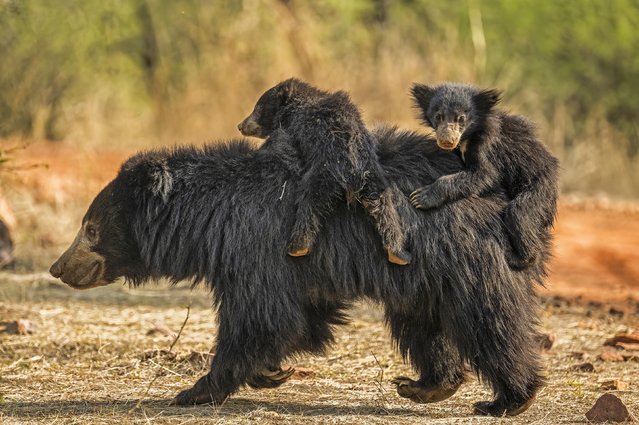
These young sloth bears hitch a ride on their mother's back as she forages for food in the Ranthambhore Tiger Reserve in the Indian state of Rajasthan in May 2023. (Photo by Aditya Singh/Solent News)

These young sloth bears hitch a ride on their mother's back as she forages for food in the Ranthambhore Tiger Reserve in the Indian state of Rajasthan in May 2023. (Photo by Aditya Singh/Solent News)
Details
04 Jun 2023 05:05:00
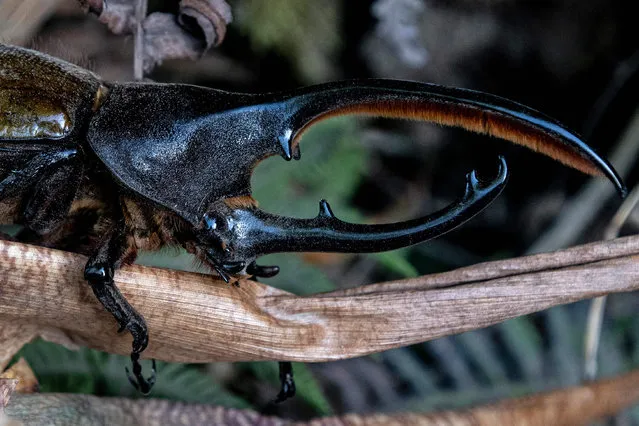
A Hercules beetle, one of the largest species of its kind, in seen at the Monteverde Cloud Forest Biological Reserve, in Puntarenas, Costa Rica, on May 23, 2023. In the Monteverde cloud forest, dense fog among the lush vegetation is increasingly rare and temperatures are increasing each year due to climate change. (Photo by Ezequiel Becerra/AFP Photo)

A Hercules beetle, one of the largest species of its kind, in seen at the Monteverde Cloud Forest Biological Reserve, in Puntarenas, Costa Rica, on May 23, 2023. In the Monteverde cloud forest, dense fog among the lush vegetation is increasingly rare and temperatures are increasing each year due to climate change. (Photo by Ezequiel Becerra/AFP Photo)
Details
21 Sep 2023 03:34:00