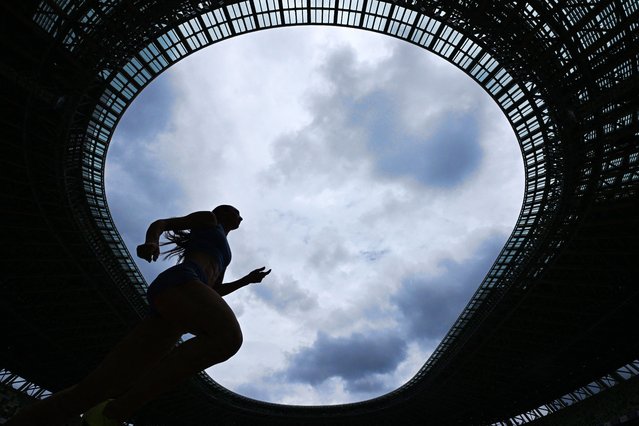
An athlete takes part in a warm-up around the track of the National Stadium in Tokyo on September 12, 2025, ahead of the World Athletics Championships. (Photo by Kirill Kudryavtsev/AFP Photo)
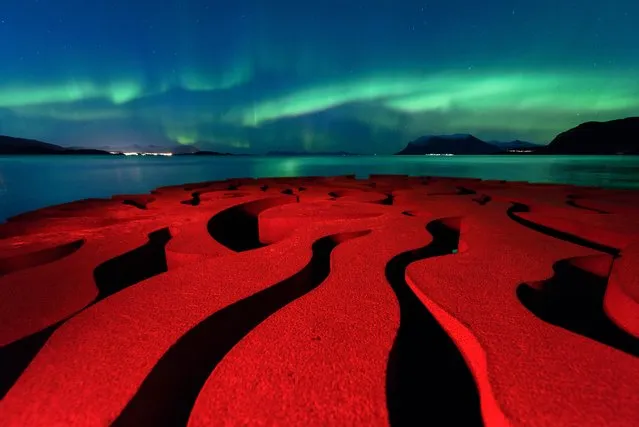
Gorgeous galaxies and stunning stars make up this selection of pictures from the shortlisted entries for this year’s Insight Astronomy Photographer of the Year award. The winners will be announced on 15 September, and an exhibition of the winning images will be will be displayed in a free exhibition at the Royal Observatory Greenwich’s Astronomy Centre from 17 September. Here: “Seven Magic Points”. The rusty red swirls of the circular, iron sculpture Seven Magic Points in Brattebergan, Norway mirror the rippling aurora above. (Photo by Rune Engebø/Royal Observatory Greenwich’s Astronomy Photographer of the Year 2016/National Maritime Museum)
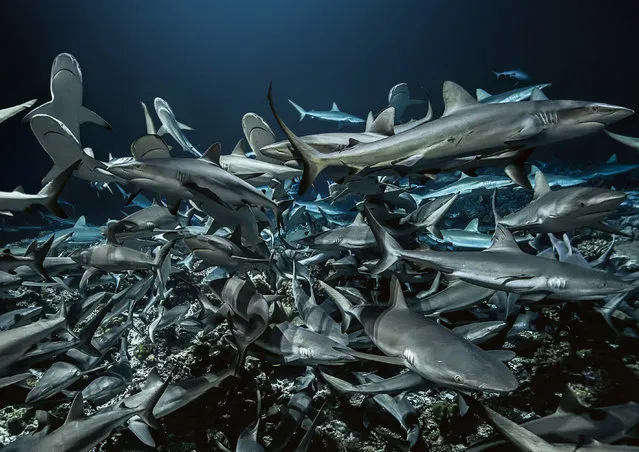
ne committed photographer spent a grand total of 3,000 dive hours trying to get the perfect shots, capturing beautiful images of a rare shark feeding frenzy. Laurent Ballesta’s images show the glimmering gray reef sharks hunting in swift packs, flying through the water and feasting on the likes of helpless grouper. (Photo by Laurent Ballesta/Caters News Agency)
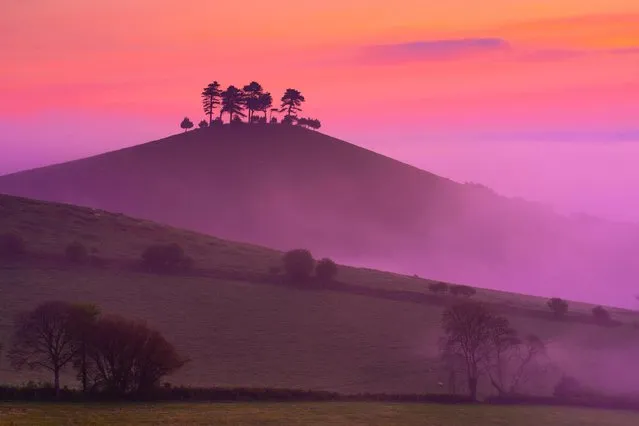
The trees on the iconic local landmark are silhouetted against glorious sunrise colours on a misty morning near Colmers Hill in Dorset, England on May 1, 2019. (Photo by Celia McMahon/Alamy Live News)
Women in Pathein, Myanmar, construct in the last decade of August 2024 parasols that they will paint in vibrant colours to sell in nearby markets. (Photo by Nantapon Pattamakijsakul/Solent News)
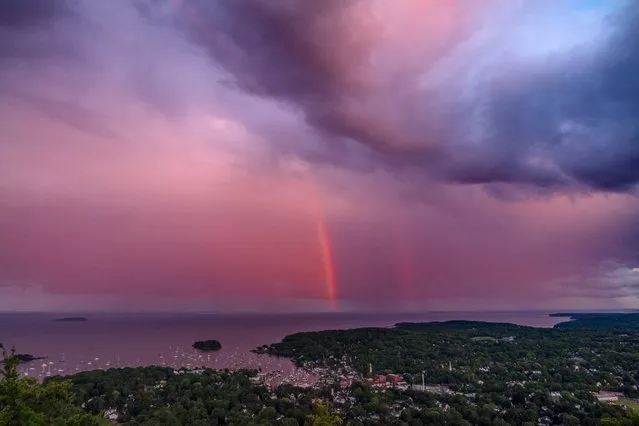
A rainstorm moves over the Atlantic Ocean after passing through Camden, Maine, at sunset, Tuesday, August 1, 2023. (Photo by Robert F. Bukaty/AP Photo)
A woman spreads out fish to dry at Ngapali Beach near a fishing village in Myanmar's western Rakhine State, Saturday, December 31, 2022. (Photo by Aung Shine Oo/AP Photo)
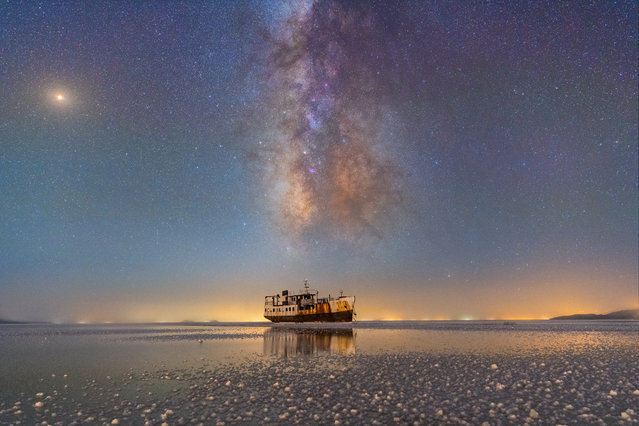
Sharafkhaneh port and lake Urmia. Masoud Ghadiri (Iran). The summer Milky Way is very prominent in this photo. On the galaxy zone, Saturn is located besides the Lagoon nebula. On the right of the horizon, you can see the extreme light pollution of Urmia, which is caused by ever-increasing city development. (Photo by Masoud Ghadiri/National Maritime Museum)