Loading...
Done
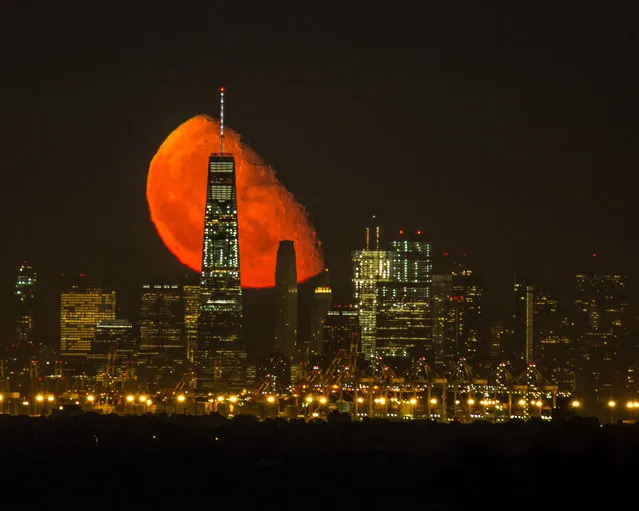
An incredible moon rise behind the World Trade Center, Manhattan, New York on August 23, 2016. The breath-taking photo was taken by photographer Jennifer Khordi. She said: it was just absolutely amazing to see this. (Photo by Jennifer Khordi/Caters News Agency)

An incredible moon rise behind the World Trade Center, Manhattan, New York on August 23, 2016. The breath-taking photo was taken by photographer Jennifer Khordi. She said: it was just absolutely amazing to see this. (Photo by Jennifer Khordi/Caters News Agency)
Details
25 Aug 2016 09:45:00
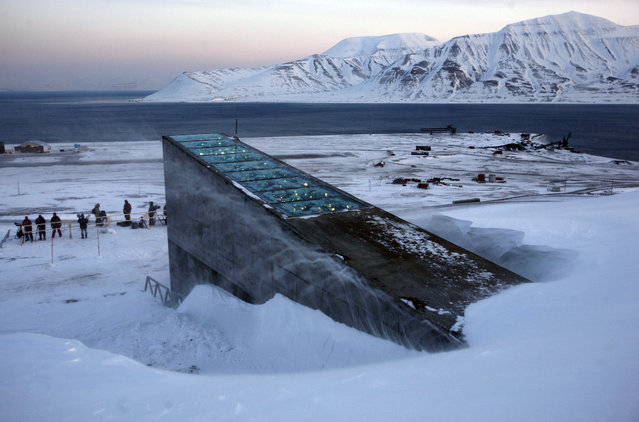
Snow blows off the Svalbard Global Seed Vault before being inaugurated at sunrise, Tuesday, February 26, 2008. (Photo by John McConnico/AP Photo)

Snow blows off the Svalbard Global Seed Vault before being inaugurated at sunrise, Tuesday, February 26, 2008. (Photo by John McConnico/AP Photo)
Details
24 Sep 2015 08:00:00
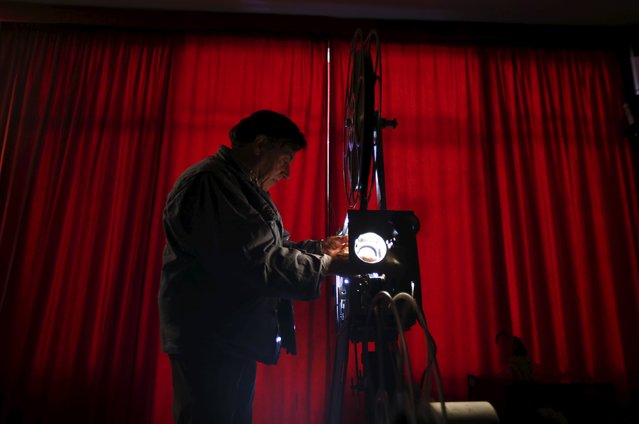
Projectionist Antonio Feliciano, 75, checks his projector before showing a film in Monforte, Portugal May 16, 2015. (Photo by Rafael Marchante/Reuters)

Projectionist Antonio Feliciano, 75, checks his projector before showing a film in Monforte, Portugal May 16, 2015. Shades of Oscar-winning classic "Cinema Paradiso" run through the life of Feliciano, a sprightly 75-year-old who fears he may be the last of Portugal's travelling film projectionists.After six decades travelling four million km (2.5 million miles) to screen 4,000 films in Portugal's far-flung villages, Feliciano does not plan to retire just yet. But he is resigned to the fact that the Internet, digital TV and distribution monopolies have made his craft obsolete. (Photo by Rafael Marchante/Reuters)

Details
12 Nov 2015 08:06:00
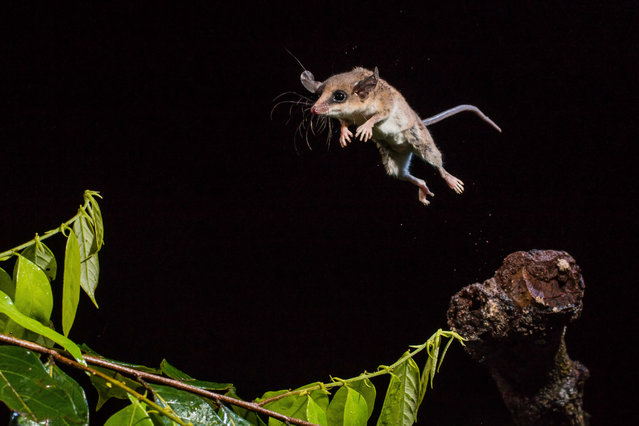
Tropical acrobatics by Adrià López Baucells in Manaus, Brazil. An unidentified South American marsupial, although the characteristic black markings on its face indicate it may be a mouse opossum. These small creatures are nocturnal and feed on bugs, fruit and bird eggs. (Photo by Adrià López Baucells/2019 Royal Society of Biology Photography Competition)

Tropical acrobatics by Adrià López Baucells in Manaus, Brazil. An unidentified South American marsupial, although the characteristic black markings on its face indicate it may be a mouse opossum. These small creatures are nocturnal and feed on bugs, fruit and bird eggs. (Photo by Adrià López Baucells/2019 Royal Society of Biology Photography Competition)
Details
10 Oct 2019 00:03:00
Jamaica's Tissanna Hickling competes in the Women's Long Jump heats at the 2019 IAAF Athletics World Championships at the Khalifa International stadium in Doha on October 5, 2019. (Photo by Dylan Martinez/Reuters)

Jamaica's Tissanna Hickling competes in the Women's Long Jump heats at the 2019 IAAF Athletics World Championships at the Khalifa International stadium in Doha on October 5, 2019. (Photo by Dylan Martinez/Reuters)
Details
14 Oct 2019 00:05:00
People attend the second day of the Lollapalooza Chile Music festival, in the commune of Cerrillos, Santiago, Chile, 22 March 2025. (Photo by Ailen Diaz/EPA)

People attend the second day of the Lollapalooza Chile Music festival, in the commune of Cerrillos, Santiago, Chile, 22 March 2025. (Photo by Ailen Diaz/EPA)
Details
23 Apr 2025 03:45:00
An athlete takes part in a warm-up around the track of the National Stadium in Tokyo on September 12, 2025, ahead of the World Athletics Championships. (Photo by Kirill Kudryavtsev/AFP Photo)

An athlete takes part in a warm-up around the track of the National Stadium in Tokyo on September 12, 2025, ahead of the World Athletics Championships. (Photo by Kirill Kudryavtsev/AFP Photo)
Details
11 Oct 2025 05:30:00
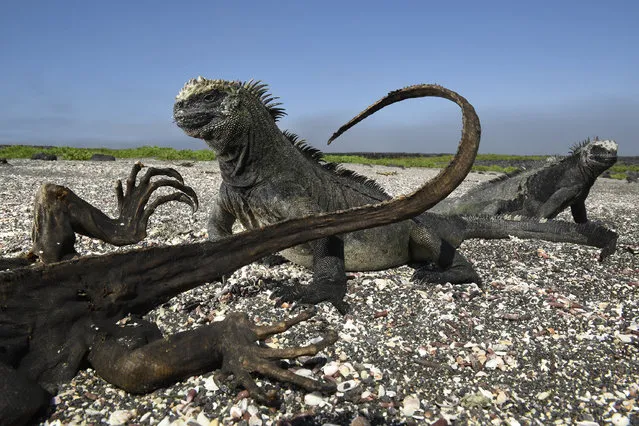
Galapagos – Rocking the Cradle: Four major ocean currents converge along the Galapagos archipelago, creating the conditions for an extraordinary diversity of animal life, April 25, 2016. The islands are home to at least 7,000 flora and fauna species, of which 97 percent of the reptiles, 80 percent of the land birds, 50 percent of the insects and 30 percent of the plants are endemic. The local ecosystem is highly sensitive to the changes in temperature, rainfall and ocean currents that characterize the climatic events known as El Niño and La Niña. These changes cause marked fluctuations in weather and food availability. Many scientists expect the frequency of El Niño and La Niña to increase as a result of climate change, making the Galapagos a possible early-warning location for its effects. (Photo by Thomas P. Peschak for National Geographic/World Press Photo)

Galapagos – Rocking the Cradle: Four major ocean currents converge along the Galapagos archipelago, creating the conditions for an extraordinary diversity of animal life, April 25, 2016. The islands are home to at least 7,000 flora and fauna species, of which 97 percent of the reptiles, 80 percent of the land birds, 50 percent of the insects and 30 percent of the plants are endemic. (Photo by Thomas P. Peschak for National Geographic/World Press Photo)
Details
16 Apr 2018 00:01:00