Loading...
Done
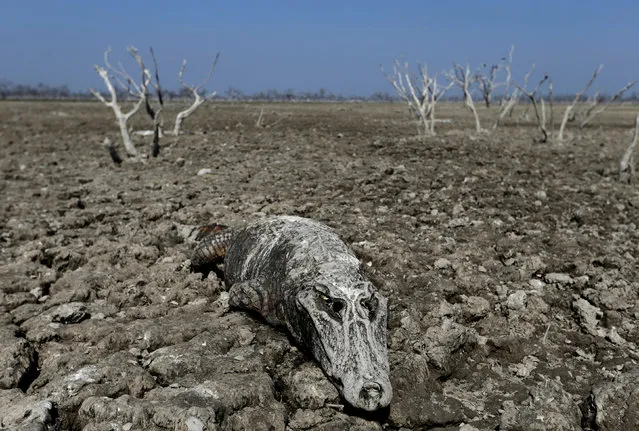
The carcass of a yacare caiman lies in the dried-up river bed of the Pilcomayo river in Boqueron, Paraguay, August 14, 2016. In Paraguay, alongside the Pilcomayo River, black vultures flew over a shrinking pond where a group of crocodilian reptiles known as yacare caimans sought refuge. Water from the river, which divides Paraguay and Argentina in the area of the Gran Chaco, was scarce. This is not an uncommon sight in the region of General Diaz, about 700 kilometres (435 miles) northwest of the country's capital Asuncion, where the Pilcomayo's waters form lakes and streams that give life to capybaras, birds and caimans. “The river's situation is critical. No water is forecast to enter the basin until December, as happens every year”, said Alcides Gonzalez, a resident of the area. (Photo by Jorge Adorno/Reuters)

The carcass of a yacare caiman lies in the dried-up river bed of the Pilcomayo river in Boqueron, Paraguay, August 14, 2016. In Paraguay, alongside the Pilcomayo River, black vultures flew over a shrinking pond where a group of crocodilian reptiles known as yacare caimans sought refuge. Water from the river, which divides Paraguay and Argentina in the area of the Gran Chaco, was scarce. This is not an uncommon sight in the region of General Diaz, about 700 kilometres (435 miles) northwest of the country's capital Asuncion, where the Pilcomayo's waters form lakes and streams that give life to capybaras, birds and caimans. (Photo by Jorge Adorno/Reuters)
Details
03 Nov 2016 12:40:00
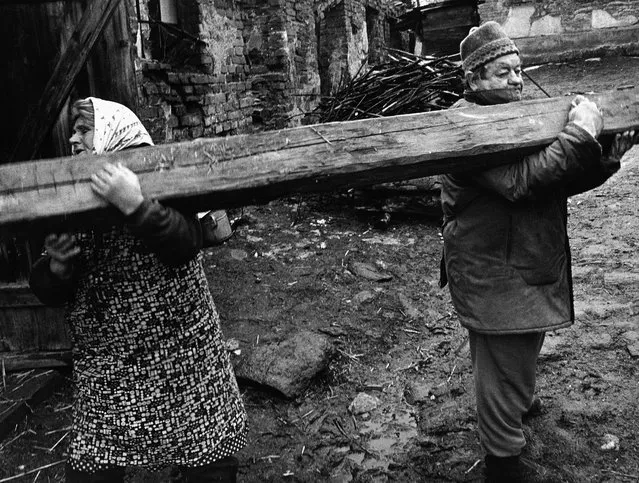
A love story with two log choppers. “In 1993, I was working on a project about life in the Olomouc region of Czechoslovakia. One day, I came to the village of Dlouhá Loučka-Křivá and went into a courtyard where I saw two old people, a husband and wife, sawing firewood for winter. They were working quietly, concentrating. I watched them fetch a beam from a wrecked barn, but they didn’t discuss how they planned to carry it to the saw. The woman faced one way, the man the other. When they realised, the woman eventually turned and followed her husband. The picture I took is the picture of many relationships – when each partner wants something different, but they have to come to an agreement, pull together eventually”. (Photo by Jindrich Streit)

A love story with two log choppers. “In 1993, I was working on a project about life in the Olomouc region of Czechoslovakia. One day, I came to the village of Dlouhá Loučka-Křivá and went into a courtyard where I saw two old people, a husband and wife, sawing firewood for winter. They were working quietly, concentrating. I watched them fetch a beam from a wrecked barn, but they didn’t discuss how they planned to carry it to the saw. The woman faced one way, the man the other. When they realised, the woman eventually turned and followed her husband. The picture I took is the picture of many relationships – when each partner wants something different, but they have to come to an agreement, pull together eventually”. (Photo by Jindrich Streit)
Details
04 Aug 2016 12:34:00
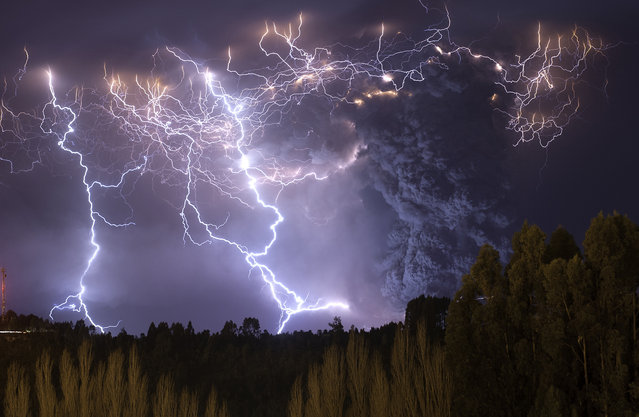
The eruption of Cordon Caulle began on June 4, 2011, located in the Region of Los Rios in Chile. For about 12 months, people and animals became accustomed to living with the daily fall of ash, which also caused problems in the air traffic in South America. The explosions and lightning during first days of the eruption could be seen from hundreds of miles around. This photograph was taken on the second night of eruption from the town of Lago Ranco. (Photo and caption by Francisco Negroni/National Geographic Traveler Photo Contest)

The eruption of Cordon Caulle began on June 4, 2011, located in the Region of Los Rios in Chile. For about 12 months, people and animals became accustomed to living with the daily fall of ash, which also caused problems in the air traffic in South America. The explosions and lightning during first days of the eruption could be seen from hundreds of miles around. This photograph was taken on the second night of eruption from the town of Lago Ranco. (Photo and caption by Francisco Negroni/National Geographic Traveler Photo Contest)

ATTENTION! All pictures are presented in high resolution. To see Hi-Res images – just TWICE click on any picture. In other words, click small picture – opens the BIG picture. Click BIG picture – opens VERY BIG picture.
Details
23 Jun 2013 11:24:00
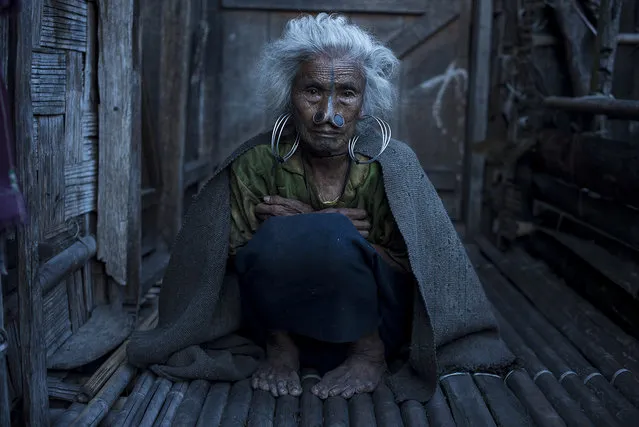
“YagYang”. The Apatani are tribal people living in north east of India in the region of Arunachal Pradesh. Tattooing and stuffing of large nose plugs is the particularity of these women. YagYang 75 years old, her husband passed away few months ago and she feels very alone, during my visit I was very fond of this woman and I wanted to spend some more time with her, so I asked her which was her favorite dish. Photo location: India. (Photo and caption by Passarini Mattia/National Geographic Photo Contest)

“YagYang”. The Apatani are tribal people living in north east of India in the region of Arunachal Pradesh. Tattooing and stuffing of large nose plugs is the particularity of these women. YagYang 75 years old, her husband passed away few months ago and she feels very alone, during my visit I was very fond of this woman and I wanted to spend some more time with her, so I asked her which was her favorite dish. The next day i returned with the fresh fish, as she mentioned, and when she saw me she was very happy and welcomed me with a big smile. Photo location: India. (Photo and caption by Passarini Mattia/National Geographic Photo Contest)
Details
05 Nov 2014 11:55:00
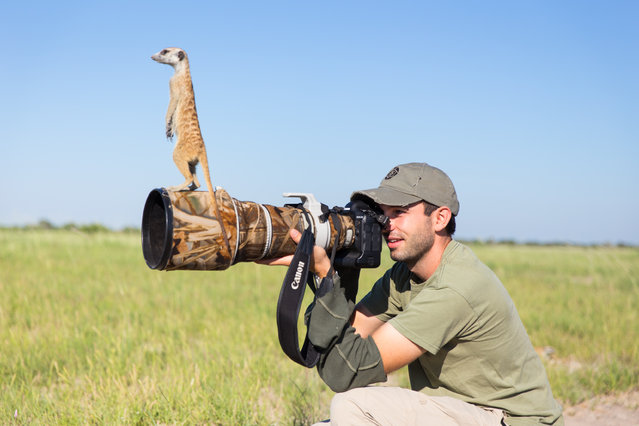
Will Burrard-Lucas takes a photo while a Meerkat perches on his lens on January 2014 in Makgadikgadi, Botswana. These adorable Meerkats used a photographer as a look out post before trying their hand at taking pictures. The beautiful images were caught by wildlife photographer Will Burrard-Lucas after he spent six days with the quirky new families in the Makgadikgadi region of Botswana. Will has photographed Meerkats in the past and was delighted when he realised he would be shooting new arrivals. (Photo by Will Burrard-Lucas/Barcroft Media)

Will Burrard-Lucas takes a photo while a Meerkat perches on his lens on January 2014 in Makgadikgadi, Botswana. These adorable Meerkats used a photographer as a look out post before trying their hand at taking pictures. The beautiful images were caught by wildlife photographer Will Burrard-Lucas after he spent six days with the quirky new families in the Makgadikgadi region of Botswana. Will has photographed Meerkats in the past and was delighted when he realised he would be shooting new arrivals. (Photo by Will Burrard-Lucas/Barcroft Media)

P.S. All pictures are presented in high resolution. To see Hi-Res images – just TWICE click on any picture. In other words, click small picture – opens the BIG picture. Click BIG picture – opens VERY BIG picture (if available; this principle works anywhere on the site AvaxNews)
Details
13 Apr 2014 08:42:00
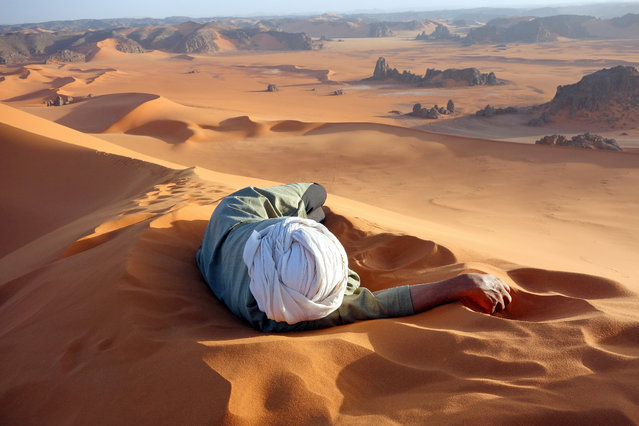
“A Well Earned Rest in the Sahara”. This photo of Moussa Macher, our Tuareg guide, was taken at the summit of Tin-Merzouga, the largest dune (or erg) in the Tadrat region of the Sahara desert in southern Algeria. Moussa rested while waiting for us to finish our 45-minute struggle to the top. Photo location: Summit of Tin-Merzouga, Tadrat, Tassili N'Ajjer National Park, Algeria. (Photo and caption by Evan Cole/National Geographic Photo Contest)

Merit Prize Winner: “A Well Earned Rest in the Sahara”. This photo of Moussa Macher, our Tuareg guide, was taken at the summit of Tin-Merzouga, the largest dune (or erg) in the Tadrat region of the Sahara desert in southern Algeria. Moussa rested while waiting for us to finish our 45-minute struggle to the top. It only took ten minutes of rolling, running, and jumping to get back down. The Tadrat is part of the Tassili N'Ajjer National Park World Heritage area, famous for its red sand and engravings and rock paintings of cattle, elephants, giraffes, and rhinos that lived there when the climate was milder. Photo location: Summit of Tin-Merzouga, Tadrat, Tassili N'Ajjer National Park, Algeria. (Photo and caption by Evan Cole/National Geographic Photo Contest)
Details
01 Aug 2014 11:38:00
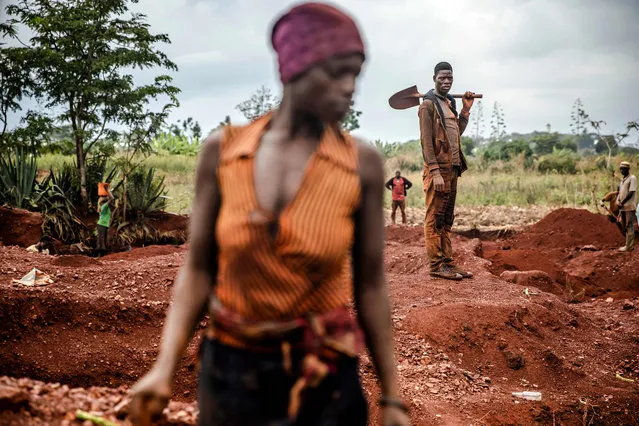
A gold miner observes from the distance how some women miners work at an open-pit gold mine in Nyarugusu, Geita Region, Tanzania on May 27, 2022. Tanzania is a land rich in minerals and one of the main gold producers in Africa, with gold representing more than 90% of the country's mineral exports. Artisanal and small-scale gold mining have culturally and historically relegated women's participation. The extractive sector in Tanzania has historically been a male-dominated industry with high levels of harassment, sеxual abuse, discrimination and misconceptions over women's involvement, and contributions following traditional beliefs. (Photo by Luis Tato/AFP Photo)

A gold miner observes from the distance how some women miners work at an open-pit gold mine in Nyarugusu, Geita Region, Tanzania on May 27, 2022. Tanzania is a land rich in minerals and one of the main gold producers in Africa, with gold representing more than 90% of the country's mineral exports. Artisanal and small-scale gold mining have culturally and historically relegated women's participation. The extractive sector in Tanzania has historically been a male-dominated industry with high levels of harassment, sеxual abuse, discrimination and misconceptions over women's involvement, and contributions following traditional beliefs. (Photo by Luis Tato/AFP Photo)
Details
13 Jun 2022 04:31:00
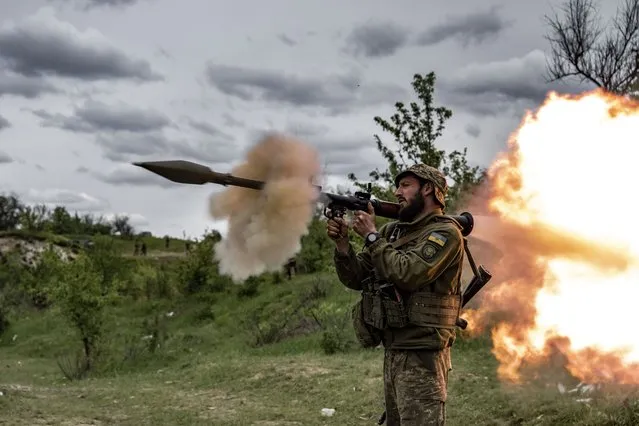
A soldier fires a rocket gun as Ukrainian soldiers in the Donetsk region, where the country's most intense clashes occur, attend intensive combat training by using both domestic and foreign weapons amid Russia-Ukraine war in Donetsk, Ukraine on May 08, 2023. Infantry is always prepared in a conflict where heavy weaponry like aircraft, helicopters, tanks and other heavy armored vehicles, artillery systems, and mortars are widely deployed on frontline. Combat readiness and experience training of the 57th Brigade of the Ukrainian army continues in Donetsk. (Photo by Muhammed Enes Yildirim/Anadolu Agency via Getty Images)

A soldier fires a rocket gun as Ukrainian soldiers in the Donetsk region, where the country's most intense clashes occur, attend intensive combat training by using both domestic and foreign weapons amid Russia-Ukraine war in Donetsk, Ukraine on May 08, 2023. Infantry is always prepared in a conflict where heavy weaponry like aircraft, helicopters, tanks and other heavy armored vehicles, artillery systems, and mortars are widely deployed on frontline. Combat readiness and experience training of the 57th Brigade of the Ukrainian army continues in Donetsk. (Photo by Muhammed Enes Yildirim/Anadolu Agency via Getty Images)
Details
29 May 2023 03:28:00