Loading...
Done


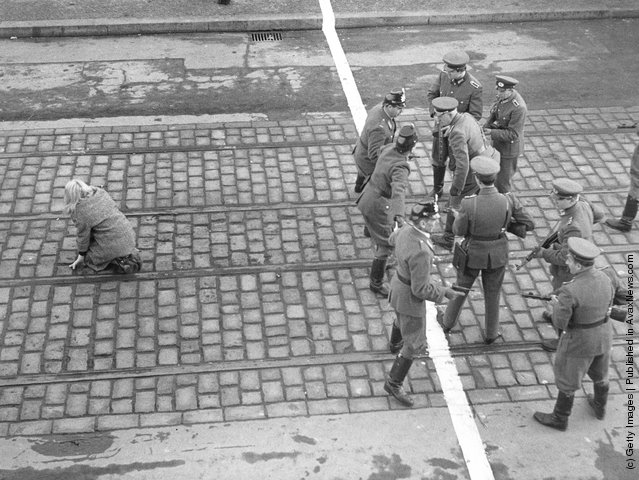
“The Berlin Wall (German: Berliner Mauer) was a barrier constructed by the German Democratic Republic (GDR, East Germany) starting on 13 August 1961, that completely cut off West Berlin from surrounding East Germany and from East Berlin. The barrier included guard towers placed along large concrete walls, which circumscribed a wide area (later known as the “death strip”) that contained anti-vehicle trenches, “fakir beds” and other defenses. The Soviet-dominated Eastern Bloc officially claimed that the wall was erected to protect its population from fascist elements conspiring to prevent the “will of the people” in building a socialist state in East Germany. However, in practice, the Wall served to prevent the massive emigration and defection that marked Germany and the communist Eastern Bloc during the post-World War II period”. – Wikipedia

Photo: West Berlin policemen and East German Volkspolizei face each other across the border in Berlin, circa 1955. (Photo by Three Lions/Hulton Archive/Getty Images)
Details
22 May 2011 10:49:00
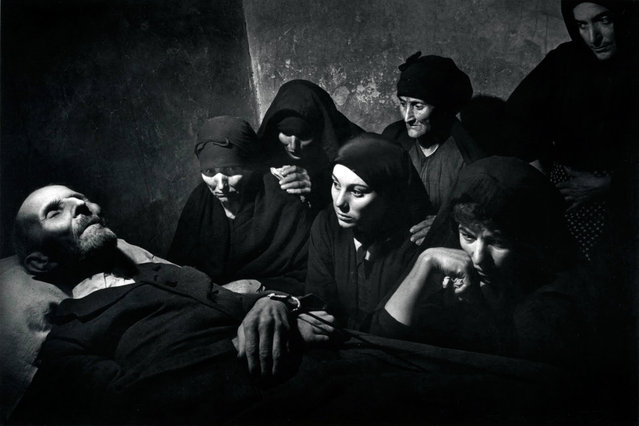
His wife, daughter, granddaughter and friends have their last earthly visit with a villager. (Photo by W. Eugene Smith/Time & Life Pictures)

“Originally published in the April 9, 1951, issue of LIFE magazine, W. Eugene Smith’s photo essay, «Spanish Village», has been lauded for more than six decades as the most moving photographic portrait ever made of daily life in rural Spain during the rule of dictator Francisco Franco”. – Time & Life Pictures. Photo: His wife, daughter, granddaughter and friends have their last earthly visit with a villager. (Photo by W. Eugene Smith/Time & Life Pictures)
Details
30 Apr 2013 10:11:00
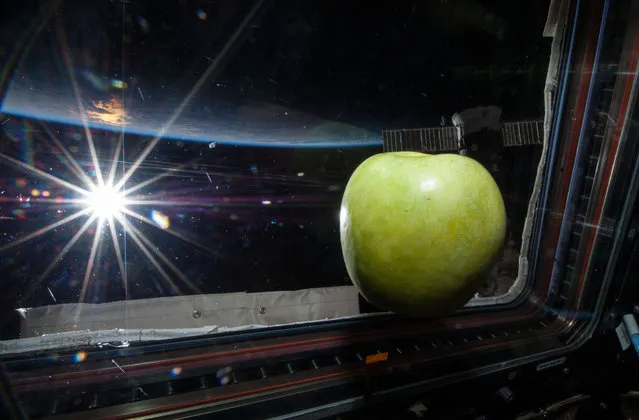
Viewing The Earth From Space

Despite any political differences between the United States and Russia, the space agencies of the two countries continue their cooperative work in Earth's orbit, aboard the International Space Station. Apart from the research being done in microgravity, ISS crew members continue to send back amazing images of our home world, photographed from low Earth orbit. Gathered here are recent images of Earth from aboard the ISS, and from a handful of other NASA satellites.
Details
01 Jun 2014 12:36:00
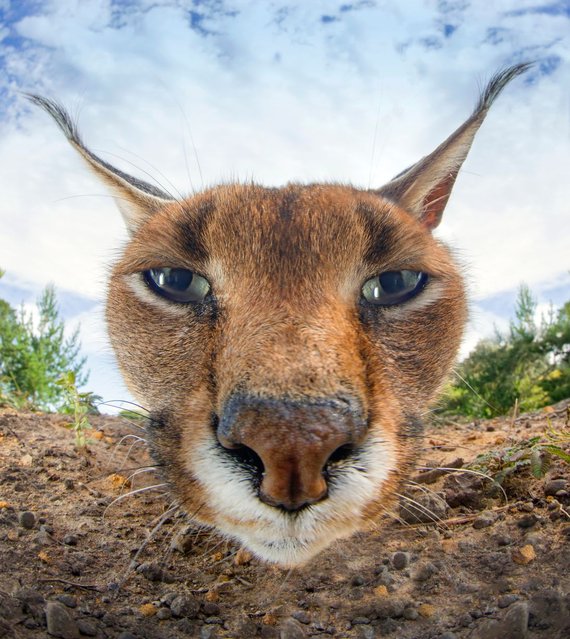
A close up of a caracal lynx's face looking into a camera on January 2014 in Western Cape, South Africa. (Photo by Dale Morris/Barcroft Media)

A close up of a caracal lynx's face looking into a camera on January 2014 in Western Cape, South Africa. (Photo by Dale Morris/Barcroft Media)
Details
30 Mar 2014 11:50:00
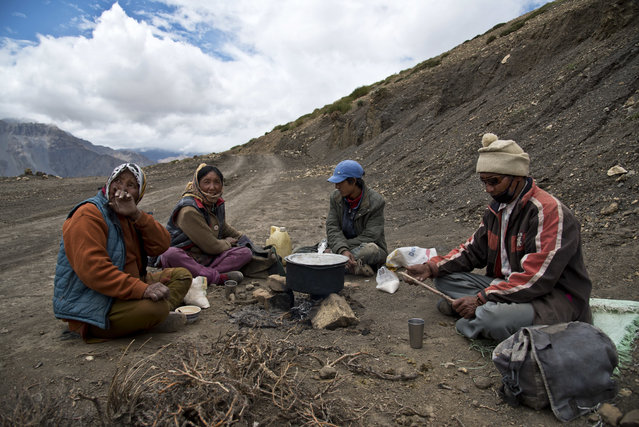
In this August 17, 2016, photo, from left to right, Chhering Chodom, 60, Tashi Yangzom, 50, Lobsang Chhering, 27, and Dorje Tandup, 58, drink milk tea on the side of the road. For centuries, the sleepy valley nestled in the Indian Himalayas remained a hidden Buddhist enclave forbidden to outsiders. Enduring the harsh year-round conditions of the high mountain desert, the people of Spiti Valley lived by a simple communal code – share the Earth's bounty, be hospitable to neighbors, and eschew greed and temptation at all turns. That's all starting to change, for better or worse. Since India began allowing its own citizens as well as outsiders to visit the valley in the early 1990s, tourism and trade have boomed. And the marks of modernization, such as solar panels, asphalt roads and concrete buildings, have begun to appear around some of the villages that dot the remote landscape at altitudes above 4,000 meters (13,000 feet). (Photo by Thomas Cytrynowicz/AP Photo)

In this August 17, 2016, photo, from left to right, Chhering Chodom, 60, Tashi Yangzom, 50, Lobsang Chhering, 27, and Dorje Tandup, 58, drink milk tea on the side of the road. For centuries, the sleepy valley nestled in the Indian Himalayas remained a hidden Buddhist enclave forbidden to outsiders. Enduring the harsh year-round conditions of the high mountain desert, the people of Spiti Valley lived by a simple communal code – share the Earth's bounty, be hospitable to neighbors, and eschew greed and temptation at all turns. That's all starting to change, for better or worse. (Photo by Thomas Cytrynowicz/AP Photo)
Details
15 Sep 2016 09:22:00
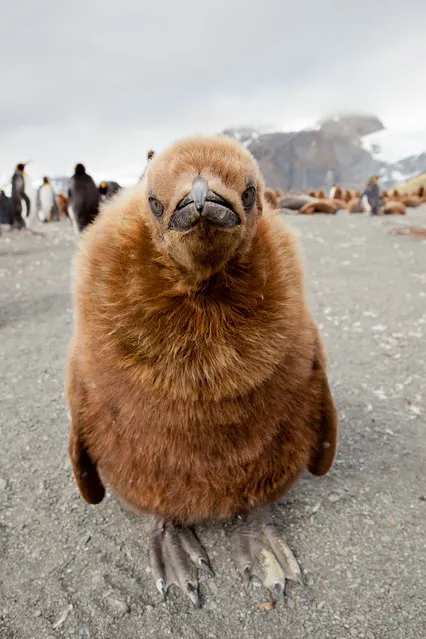
“Cub”. In the colony of penguins in South Georgia. (Photo and caption by Ondrej Zaruba/National Geographic Traveler Photo Contest)

“Cub”. In the colony of penguins in South Georgia. (Photo and caption by Ondrej Zaruba/National Geographic Traveler Photo Contest)

ATTENTION! All pictures are presented in high resolution. To see Hi-Res images – just TWICE click on any picture. In other words, click small picture – opens the BIG picture. Click BIG picture – opens VERY BIG picture.
Details
28 Jun 2013 12:32:00
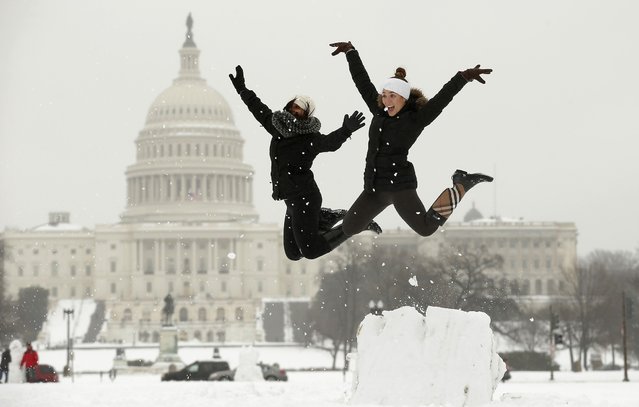
Adrienne Sipe (L) and Brooke Gilliam of Washington D.C. leap off a snow podium they made near the U.S. Capitol in Washington February 13, 2014. A deadly and intensifying winter storm packing heavy snow, sleet and rain pelted a huge swath of the U.S. East Coast on Thursday, grounding flights and shuttering schools and government offices. (Photo by Kevin Lamarque/Reuters)

Adrienne Sipe (L) and Brooke Gilliam of Washington D.C. leap off a snow podium they made near the U.S. Capitol in Washington February 13, 2014. A deadly and intensifying winter storm packing heavy snow, sleet and rain pelted a huge swath of the U.S. East Coast on Thursday, grounding flights and shuttering schools and government offices. (Photo by Kevin Lamarque/Reuters)
Details
14 Feb 2014 09:20:00
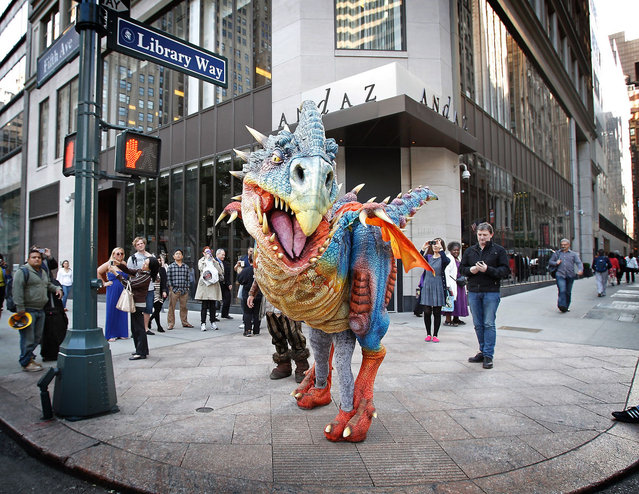
The Baby Nager dragon, from DreamWorks’ new “How to Train Your Dragon” Live Spectacular touring musical, shows off it’s colors outside of the New York Public Library

The Baby Nager dragon, from DreamWorks’ new “How to Train Your Dragon” Live Spectacular touring musical, shows off it’s colors outside of the New York Public Library. (Photo by Mark Von Holden)
Details
19 May 2012 13:05:00