Loading...
Done
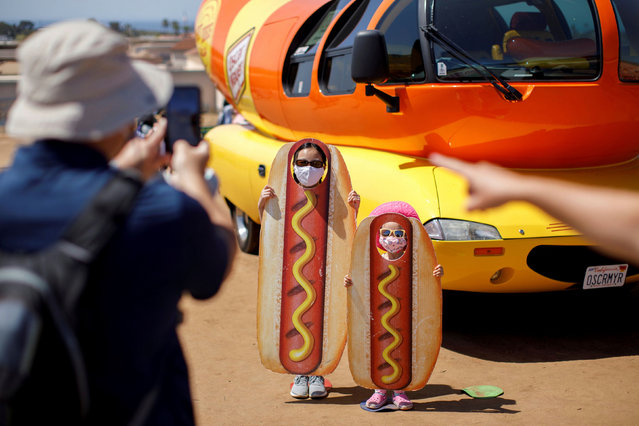
A family takes a picture at the Oscar Myer Wienermobile during a visit to “The Flower Fields”, as California opens up from the pandemic, in Carlsbad, California, U.S., March 31, 2021. (Photo by Mike Blake/Reuters)

A family takes a picture at the Oscar Myer Wienermobile during a visit to “The Flower Fields”, as California opens up from the pandemic, in Carlsbad, California, U.S., March 31, 2021. (Photo by Mike Blake/Reuters)
Details
07 Apr 2021 09:46:00
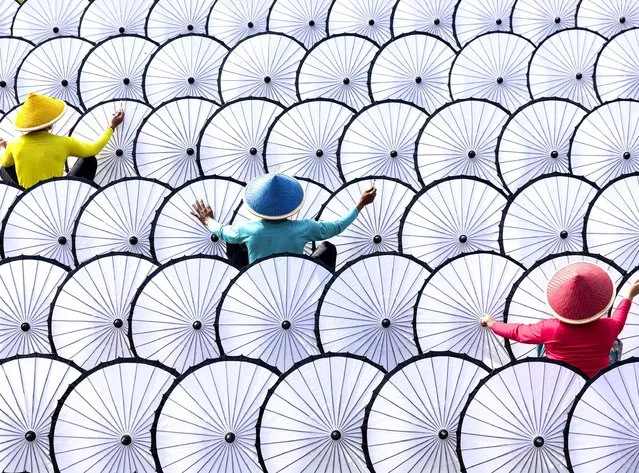
Workers lay out hundreds of umbrellas in neat lines ready for painting on May 26, 2022. The parasols are handmade using thick paper in Bogor, West Java, Indonesia. (Photo by Lisdiyanto Suhardjo/Solent News)

Workers lay out hundreds of umbrellas in neat lines ready for painting on May 26, 2022. The parasols are handmade using thick paper in Bogor, West Java, Indonesia. (Photo by Lisdiyanto Suhardjo/Solent News)
Details
04 Jun 2022 05:15:00
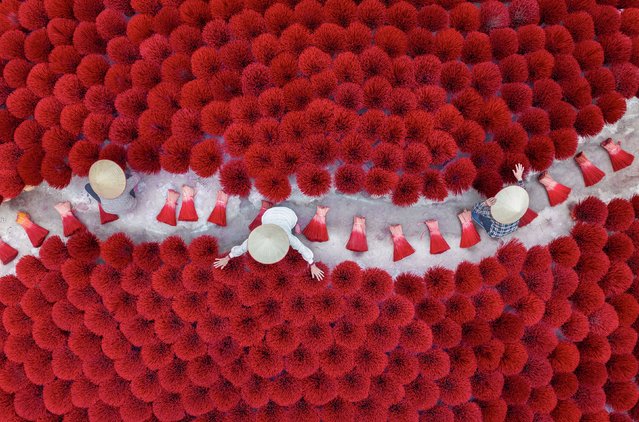
Workers lay out hundreds of bundles of dyed joss sticks to cure in the sun in Hanoi, Vietnam in the last decade of September 2024. They will next be coated with incense powder made from Canarium sap and charcoal. (Photo by Piyush Paul/Solent News)

Workers lay out hundreds of bundles of dyed joss sticks to cure in the sun in Hanoi, Vietnam in the last decade of September 2024. They will next be coated with incense powder made from Canarium sap and charcoal. (Photo by Piyush Paul/Solent News)
Details
07 Nov 2024 03:41:00
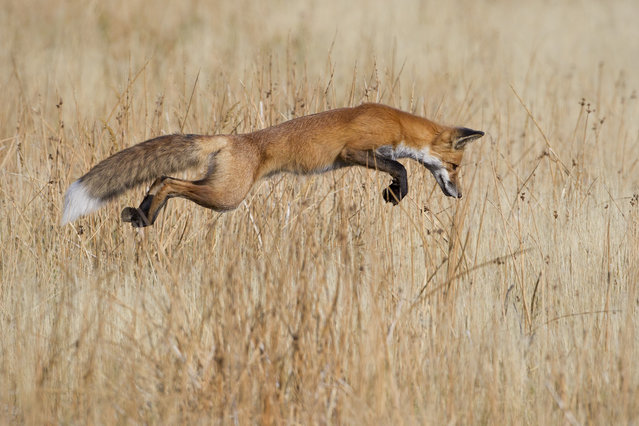
Canada: “Lucky pounce”. (Photo by Connor Stefanison/Wildlife Photographer of the Year 2013)

The winners of The London’s Natural History Museum's prestigious Wildlife Photographer of the Year for 2013 have finally been unveiled. Selected from almost 43,000 entries from 96 countries, the winners offer a glimpse of the stunning array of natural beauty on our planet. Photo: Canada: “Lucky pounce”. “Anticipating the pounce – that was the hardest part”, says Connor, who had come to Yellowstone National Park, Wyoming, USA, in search of wildlife as much as the spectacular landscape. He had found this fox, his first ever, on his last day in the park. It was so absorbed in hunting that Connor had plenty of time to get out of the car and settle behind a rock. It quartered the grassland, back and forth, and then started staring intently at a patch of ground, giving Connor just enough warning of the action to come. When it sprung up, Connor got his shot. And when it landed, the fox got his mouse. (Photo by Connor Stefanison/Wildlife Photographer of the Year 2013)

Details
17 Oct 2013 08:12:00
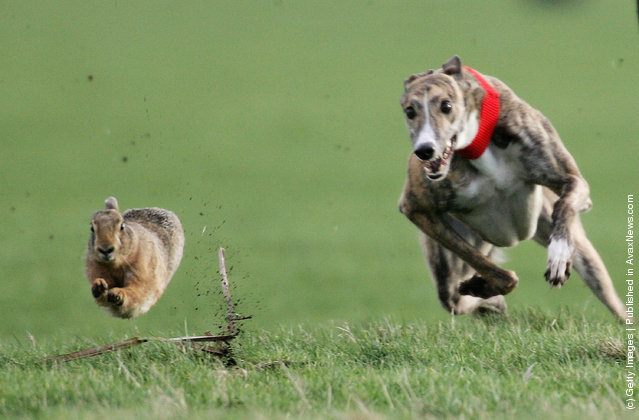
Greyhounds race after a Hare at the last Waterloo Cup Hare coursing event

“The Waterloo Cup was a coursing event. The three day event was run annually at Great Altcar in Lancashire, England from 1836 to 2005 and it used to attract tens of thousands of spectators to watch and gamble on the coursing matches. It was founded by William Philip Molyneux, 2nd Earl of Sefton, and, originally, was supported by his patronage”. – Wikipedia

Photo: A Greyhound races after Hare at the last Waterloo Cup Hare coursing event, February 14, 2005, near Liverpool, England. (Photo by Christopher Furlong/Getty Images)
Details
18 Feb 2012 11:26:00
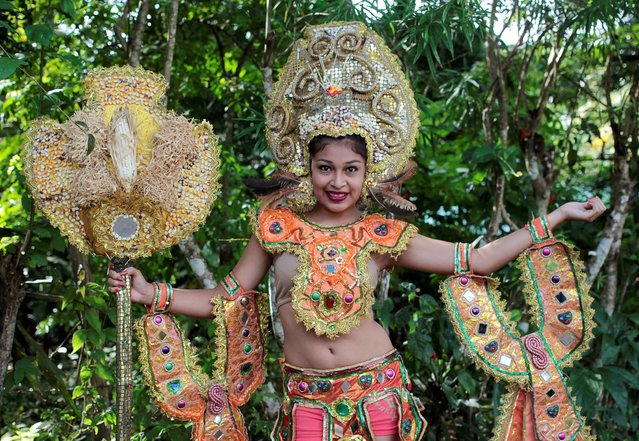
An Indigenous schoolchild dressed in traditional attire takes part in a rally to commemorate Indigenous Resistance Day in Catarina town, Nicaragua October 12, 2016. (Photo by Oswaldo Rivas/Reuters)

An Indigenous schoolchild dressed in traditional attire takes part in a rally to commemorate Indigenous Resistance Day in Catarina town, Nicaragua October 12, 2016. This holiday coincides with Columbus Day which commemorates Christopher Columbus landing in America in 1492. But rather than celebrating the discovery of the Americas, the Nicaraguans observe Indigenous Resistance Day to celebrate the bravery of the indigenous population in the fight against the Spanish conquistadors. (Photo by Oswaldo Rivas/Reuters)
Details
14 Oct 2016 12:04:00
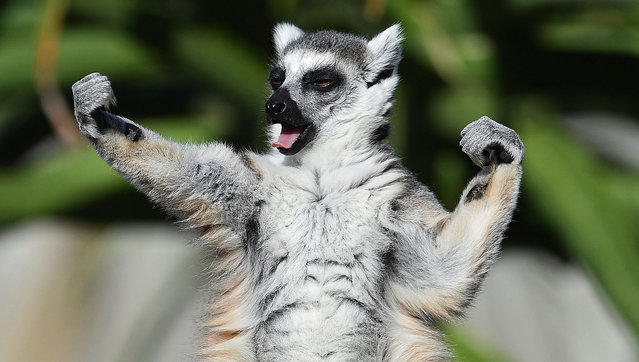
A ring-tailed lemur sunbakes at Melbourne Zoo in Melbourne, Victoria, Australia on December 21 2016. (Photo by Julian Smith/EPA)

A ring-tailed lemur sunbakes at Melbourne Zoo in Melbourne, Victoria, Australia on December 21 2016. (Photo by Julian Smith/EPA)
Details
01 Jan 2017 09:12:00
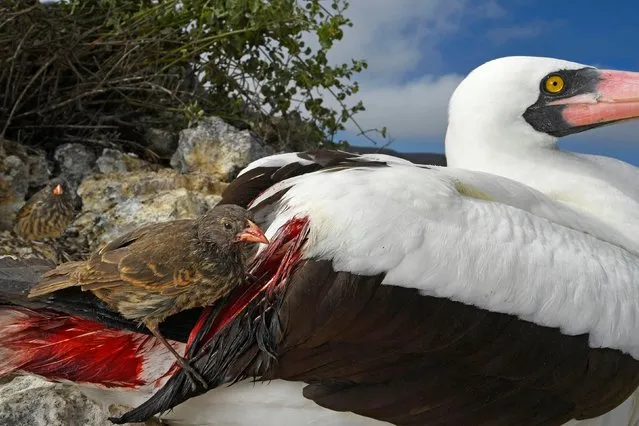
Bloodthirsty by Thomas P Peschak, Germany/South Africa — winner, Behaviour: birds. When rations run short on Wolf Island, in the remote northern Galápagos, the sharp-beaked ground finches become vampires. Their sitting targets are Nazca boobies and other large birds. The finches rely on a scant diet of seeds and insects, which regularly dries up, so they drink blood to survive. ‘I’ve seen more than half a dozen finches drinking from a single Nazca booby,’ says Tom. Rather than leave their nests the boobies tolerate the vampires, and the blood loss doesn’t seem to cause permanent harm. (Photo by Thomas P Peschak/2018 Wildlife Photographer of the Year)

Bloodthirsty by Thomas P. Peschak, Germany/South Africa — winner, Behaviour: birds. When rations run short on Wolf Island, in the remote northern Galápagos, the sharp-beaked ground finches become vampires. Their sitting targets are Nazca boobies and other large birds. The finches rely on a scant diet of seeds and insects, which regularly dries up, so they drink blood to survive. ‘I’ve seen more than half a dozen finches drinking from a single Nazca booby,’ says Tom. Rather than leave their nests the boobies tolerate the vampires, and the blood loss doesn’t seem to cause permanent harm. (Photo by Thomas P. Peschak/2018 Wildlife Photographer of the Year)
Details
19 Oct 2018 00:05:00