Loading...
Done
Afghanistan: Dogs of War Part 2

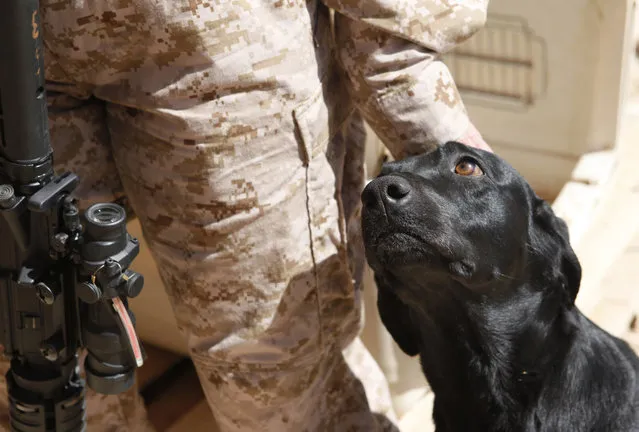
Throughout the course of the long war in Afghanistan, Coalition troops have relied on thousands of military working dogs to help keep them safe, and make their jobs easier. The dogs are trained to detect explosives, to find illegal drugs, to search for missing comrades, or target enemy combatants. Not only are they active on the front lines, but behind the lines they serve as therapy dogs, service dogs, and loyal companions. They also share the same risks as the ground troops, suffering injuries and sometimes death on the battlefields. Gathered here are images of these dogs and their handlers in Afghanistan and back home, from over the past several years, part of the ongoing series here on Afghanistan.
Details
05 Jun 2014 21:10:00
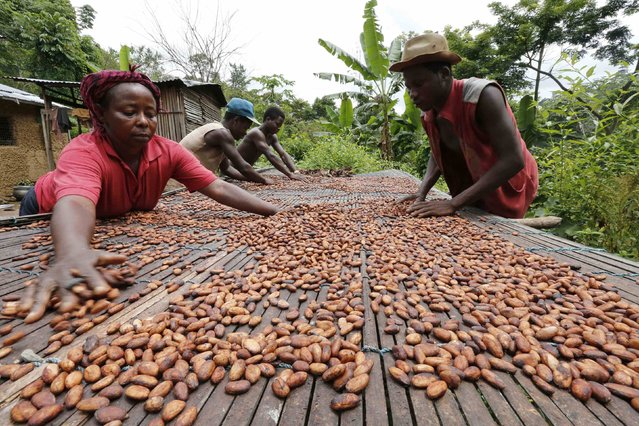
People work with cocoa beans in Enchi June 17, 2014. Picture taken June 17, 2014. Ghana emerged as a success story during the 2000s, when war, political instability and a disastrous liberalization brought Ivory Coast's cocoa sector to its knees. Ghana's output more than tripled from 340,000 tons in the 2001/02 season to a record 1,025,000 tons a decade later. Strict controls cemented its reputation as a producer of top quality beans, establishing a brand that fetches a premium. (Photo by Thierry Gouegnon/Reuters)

People work with cocoa beans in Enchi June 17, 2014. Picture taken June 17, 2014. Ghana emerged as a success story during the 2000s, when war, political instability and a disastrous liberalization brought Ivory Coast's cocoa sector to its knees. Ghana's output more than tripled from 340,000 tons in the 2001/02 season to a record 1,025,000 tons a decade later. Strict controls cemented its reputation as a producer of top quality beans, establishing a brand that fetches a premium. (Photo by Thierry Gouegnon/Reuters)
Details
03 Aug 2014 07:17:00
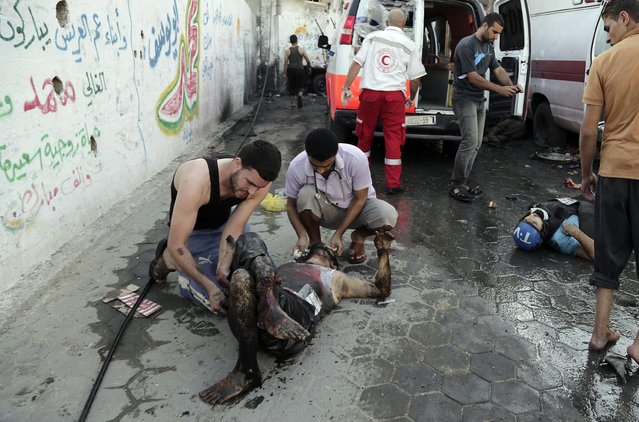
In this July 30, 2014 photo, neighbors help gravely injured Mohammed al-Selek, 39, wounded by an Israeli mortar strike as he lays next to the body of Palestinian journalist Rami Reyan who was killed, in the Shijaiyah neighborhood of the northern Gaza Strip. Al-Selek's life changed forever last July 30, when the shells slammed into his home killing all his three children, his father and six other relatives. (Photo by Adel Hana/AP Photo)

In this July 30, 2014 photo, neighbors help gravely injured Mohammed al-Selek, 39, wounded by an Israeli mortar strike as he lays next to the body of Palestinian journalist Rami Reyan who was killed, in the Shijaiyah neighborhood of the northern Gaza Strip. Al-Selek's life changed forever last July 30, when the shells slammed into his home killing all his three children, his father and six other relatives. A year later, al-Selek, who lost his leg during the airstrike, still struggles to recover and come to terms with his family's loss in the 50-day Israel-Hamas war. (Photo by Adel Hana/AP Photo)
Details
07 Jul 2015 11:28:00
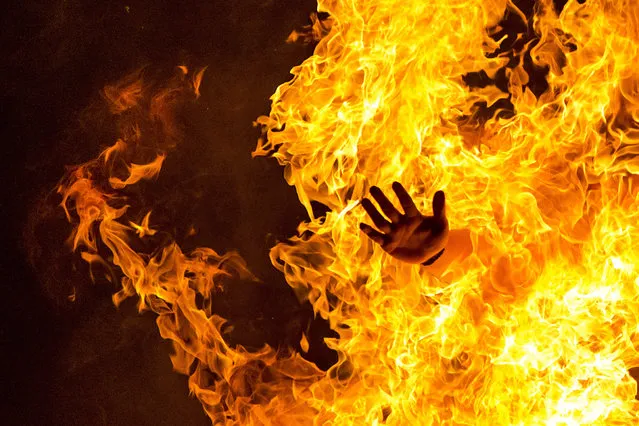
A reveler jumps over a bonfire during the night of San Juan in Alcobendas near Madrid, Spain, Wednesday, June 24, 2015. The San Juan night coincides with the Summer solstice and it's the welcome to Summer. This celebration takes place during the shortest night of the year in almost all cities and towns of Spain. (Photo by Andres Kudacki/AP Photo)

A reveler jumps over a bonfire during the night of San Juan in Alcobendas near Madrid, Spain, Wednesday, June 24, 2015. The San Juan night coincides with the Summer solstice and it's the welcome to Summer. This celebration takes place during the shortest night of the year in almost all cities and towns of Spain. (Photo by Andres Kudacki/AP Photo)
Details
30 Jul 2015 12:35:00
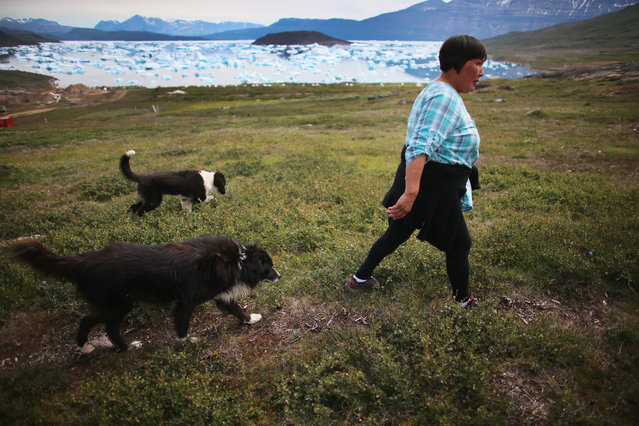
Arnaq Egede walks to the potato field on her family's farm on July 31, 2013 in Qaqortoq, Greenland. The farm, the largest in Greenland, has seen an extended crop growing season due to climate change. (Photo by Joe Raedle/Getty Images)

Arnaq Egede walks to the potato field on her family's farm on July 31, 2013 in Qaqortoq, Greenland. The farm, the largest in Greenland, has seen an extended crop growing season due to climate change. (Photo by Joe Raedle/Getty Images)
Details
22 Aug 2015 12:08:00
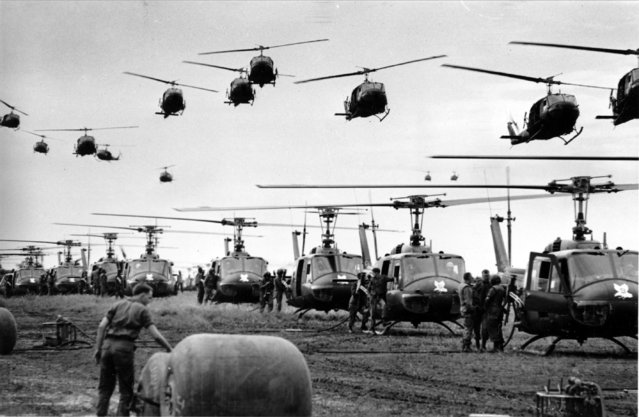
U.S. Army helicopters providing support for U.S. ground troops  fly into a staging area fifty miles northeast of Saigon, Vietnam, August 28, 1966. Helicopter fuel is stored in the large rubber tanks, foreground. (Photo by Henri Huet/AP Photo)

U.S. Army helicopters providing support for U.S. ground troops fly into a staging area fifty miles northeast of Saigon, Vietnam, August 28, 1966. Helicopter fuel is stored in the large rubber tanks, foreground. (Photo by Henri Huet/AP Photo)
Details
29 Aug 2015 11:05:00
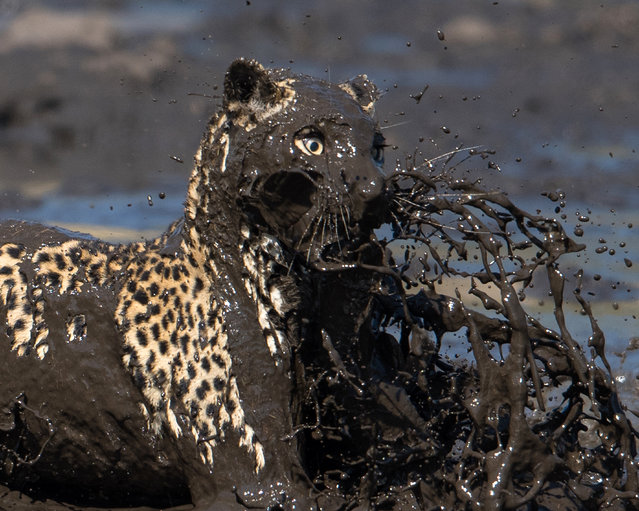
A leopard leaps into a muddy waterhole to catch a fish on August 13, 2015, in the Savuti Channel in Botswana. A leopard leaps into a muddy waterhole to catch a fish in the Savuti Channel in Botswana. The spotted predator stood poised waiting for a fish to appear – before leaping in ferociously with lightening reflexes. (Photo by Greatstock/Barcroft Media)

A leopard leaps into a muddy waterhole to catch a fish on August 13, 2015, in the Savuti Channel in Botswana. A leopard leaps into a muddy waterhole to catch a fish in the Savuti Channel in Botswana. The spotted predator stood poised waiting for a fish to appear – before leaping in ferociously with lightening reflexes. Coated in a layer of thick dark mud the big cat emerged from the water clutching the fish in its jaws. The fishing leopards of Savuti are known for their unique skills in catching fish – but have rarely been photographed. (Photo by Greatstock/Barcroft Media)
Details
06 Sep 2015 13:00:00
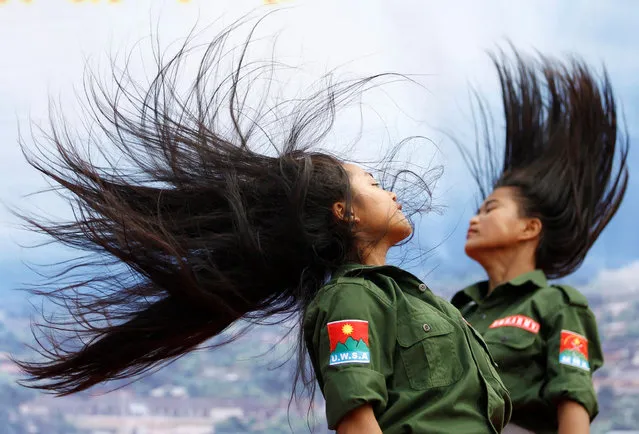
Ethnic Wa performer dressed as United Wa State Army (UWSA) soldiers perform a traditional dance in Mongmao, Wa territory in northeast Myanmar October 1, 2016. (Photo by Soe Zeya Tun/Reuters)

Ethnic Wa performer dressed as United Wa State Army (UWSA) soldiers perform a traditional dance in Mongmao, Wa territory in northeast Myanmar October 1, 2016. Wa State is an unrecognised state in Myanmar (Burma) and is currently subsumed under the official Wa Special Region 2 of northern Shan State. The Wa were once known as the “Wild Wa” by the British due to their practice of headhunting. (Photo by Soe Zeya Tun/Reuters)
Details
30 Dec 2016 10:18:00